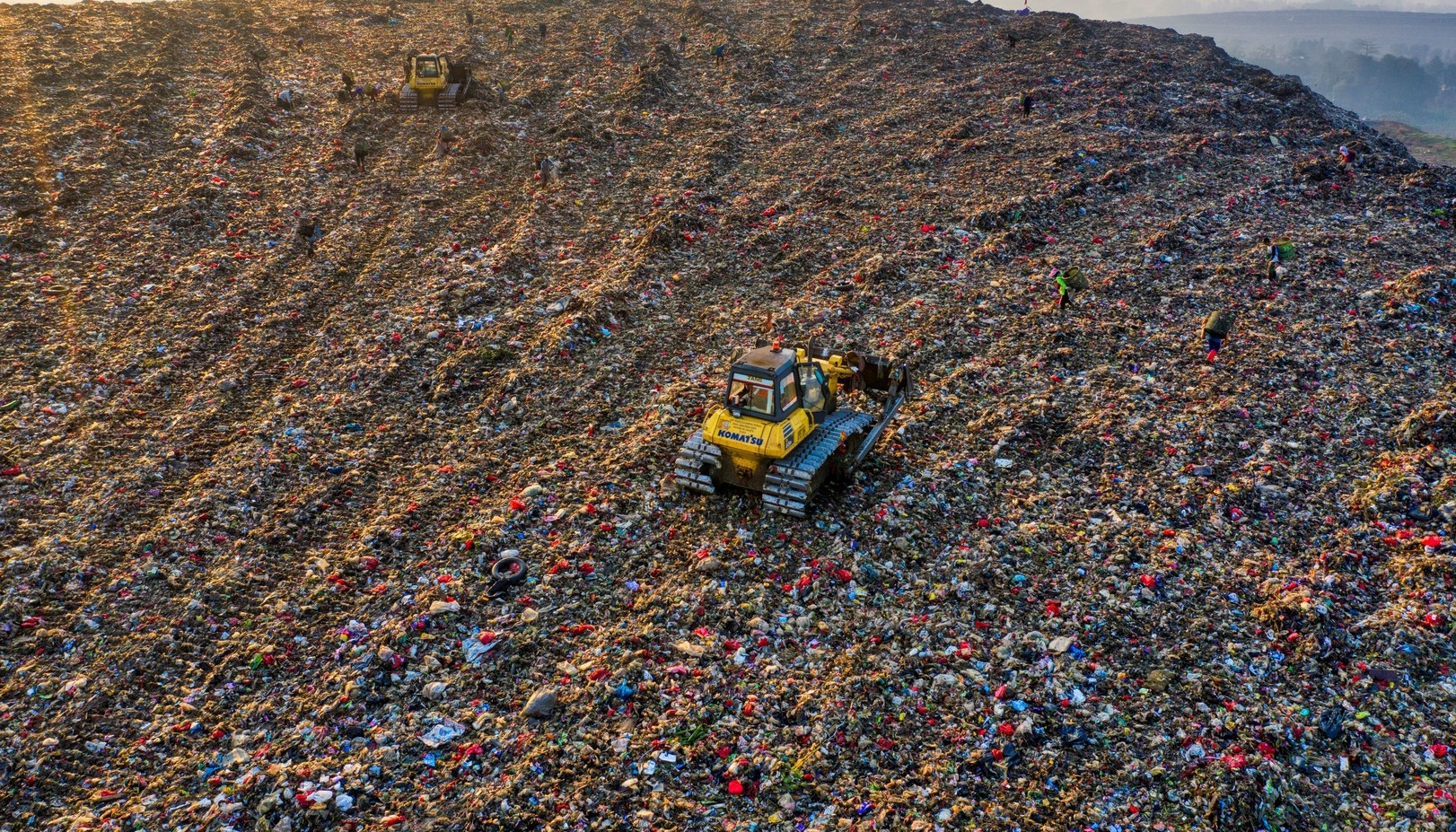
Since riding my bike past the long-closed Pennsylvania and Fountain Avenue landfills on the Belt Parkway bike path as a kid in Brooklyn, I’ve been interested in waste management. Those mountains of garbage were impressive to a twelve-year-old boy. I used to wonder what was inside those growing mountains. A few weeks ago, I wrote about mining waste as a central element of a future sustainable circular economy. I observed then that:
“The linear economy leads to dumping valuable inorganic and organic materials into a hole in the ground. Some of the waste stream is burned for energy, and even with advanced waste sorting, there will probably always be some materials whose highest economic value is to burn the material for energy, while using any residual material that remains in constructing buildings or roads. A half-century of waste sorting at the source has essentially failed. Some waste is recycled, but most is not. The policy of recycling waste is a failure… Recycling is a half-century-long failure. Like the related environmental “solution” of reducing consumption to save the environment, it just doesn’t work. It relies on unrealistic assumptions about human behavior. We can change our patterns of consumption and can consume a less destructive mix of products and services, but people will not reduce consumption. No one wants to live alone with a candle in the dark to preserve the planet. We can create a circular economy, but not a less consumptive one. Human, home, and even business-based waste sorting doesn’t work. A far better long-term solution is to rely on Artificial Intelligence (AI) and robotics to sort a mixed stream of waste and mine the waste stream for raw materials.”
Recently, I also appeared in a video produced by the Wall Street Journal on New York City’s approach to waste management, where I discussed the growing cost of waste management and the need to reconceptualize waste from an expense to a potential revenue stream. The Journal video attracted a fair amount of attention, and I recently had a video chat with John Kelsey, the Chief Commercial Officer of AMP, a waste sorting company that is rapidly developing the technology of advanced waste sorting utilizing robotics and Artificial Intelligence.
The technology that I knew was being developed and would be widely available in the future turns out to already be in use. AMP builds and manages waste sorting facilities and is operating such a facility in Portsmouth, Virginia. There are about ten other companies competing with AMP, including the Canadian company Waste Robotics, as well as about twenty start-ups, some innovating with relatively untested technologies. As waste management technology develops, more of the raw materials in the waste stream will be capable of being recycled and sold to generate revenue. Organic waste is already being used for fertilizer and natural gas, and some of the waste materials now sorted can be used as construction materials.
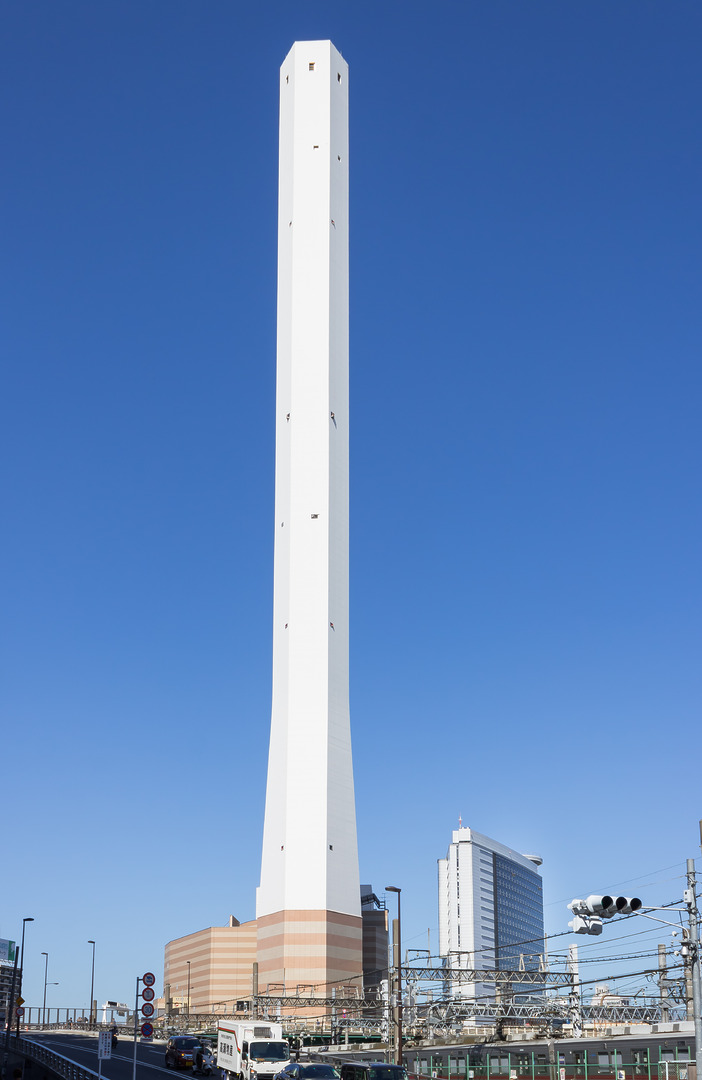
It is also possible to burn some of the waste stream and use it to generate electricity. Waste-to-energy plants are a well-established technology. In Japan, over 75% of the garbage is incinerated, and most of that is used to generate electricity. Land is too scarce in Japan for landfills, but in the long run, waste mining should be combined with waste-to-energy to ensure that valuable resources are recovered and not wasted. We shouldn’t burn all the garbage, but reuse whatever generates revenue.
Perhaps more importantly in the short term is that all these waste technologies ensure that garbage is diverted from landfills. Landfills are not only sources of both air and groundwater pollution, but they are also increasingly expensive to use. As land becomes scarcer and more valuable, “tipping fees” are constantly increasing. The funds now spent to transport and dump waste hundreds and even thousands of miles away could be used to invest in the facilities needed to sort and recycle waste materials. While there are parts of the United States that still have plenty of inexpensive land for landfills, on the east and west coasts, those areas are fast disappearing. New York City closed its last landfill a quarter century ago. Today, we New Yorkers spend about half a billion dollars a year to “export” garbage.

There is an element of environmental advocacy, sometimes reflected in environmental policy, that views pollution as an ethical problem caused by bad people. In this view, “good people” sort their waste, reduce consumption, and minimize their negative impact on the planet. In this view, environmental protection is a moral issue. This sometimes results in regulation that seeks to change behavior through compulsion.
The problem with this approach is that people do not like to be told they cannot do something they want to do. There are limits to the impact of rules. Certainly, rules against stealing and killing are quite effective, but rules requiring households to sort their garbage are difficult to enforce and tend to be ignored. A careful analysis of successful efforts to reduce pollution finds that most of the progress we have made in cleaning the environment comes from the same source that pollutes the environment: new technology.
Advances in sewage treatment technologies have helped make our waterways cleaner. Stack scrubbers and switching from coal to oil, from oil to gas, and from fossil fuels to renewable energy have made our air cleaner. Regulation, subsidies, public education, and incentives have helped force the adoption of new technologies, but there are clear limits to the effectiveness of rules and targets. Rules on auto safety and fuel efficiency have had an impact because consumers are attracted to cars that are cheaper to run and do a better job of protecting their families. But efforts to ban SUVs and the internal combustion engine have failed, as have rules requiring recycling.
Related Articles
Here is a list of articles selected by our Editorial Board that have gained significant interest from the public:
The technology of waste processing and mining has the advantage of several cost curves that are bending in its direction. One of the major costs of sorting and reprocessing waste is the cost of energy. These technologies are energy intensive. However, as the cost of renewable energy and battery technologies continues to come down, that element of the cost equation will be reduced. The second trend is the growing cost of mining finite resources. These costs will continue to increase because most easily accessible minerals and other resources have already been mined, and the deeper you dig or drill, the more expensive extraction becomes. New technologies like fracking can help reverse these trends, but in the end, finite is finite, and when a resource is mined and used, it’s gone. Unless the resource can be mined a second time from the waste stream. That doesn’t work for fossil fuels that are burned, but it will work for fossil fuels that have been used to manufacture plastic.
The issue with waste processing is often political, because no one wants a new waste facility located near their home. A siting strategy employed by AMP is to locate the waste sorting facility at existing waste transfer stations. The garbage is already being brought there, so the “not in my backyard” issues have already been addressed. In New York City, another possibility might be to build a new island in the middle of one of the city’s many waterways to host a facility and barge the waste from the city’s existing marine waste transfer stations. It may be that a single large waste processing plant would be more efficient than a group of smaller ones, but that would be a matter for study. Large facilities have the benefit of economies of scale, but smaller, decentralized plants might be easier to manage.
The goal of the field of sustainability management is to reduce the impact of our economic life on the planet, while continuing to grow the world’s economy. A city like New York has the density needed to produce the quantity of waste required to make investments in waste processing and mining cost-effective. Reusing waste is a prerequisite for a circular economy and for the development of a sustainable city and economy. Waste sorting technology is here and rapidly advancing. What is missing in New York City is the political will and vision needed to transform waste dumping to waste mining.
** **
This article was originally published by the Columbia University School of Professional Studies.
Editor’s Note: The opinions expressed here by the authors are their own, not those of Impakter.com