On Tuesday, 3000 Russian troops were involved in live-ammunition shooting drills, some of which took place in areas near Ukraine. This occurs in the middle of a week of negotiations, at the end of which NATO and Europe hope to achieve a de-escalation of a tense military build-up by the Border of Ukraine and Russia. In the past few months, around 100,000 Russians troops have steadily amassed at stations near the border, among them tanks and heavy artillery transported from across the country.
The shooting drills took place on the day after Russia’s negotiations with the US began in Geneva on Monday, which so far many have deemed unproductive, given that there have been no major commitments made as yet. Further talks are planned this week however, where progress may still be made.
Russia, despite the bolstering of its military presence in the region, has repeatedly claimed it has no intention of invading Ukraine, with Russia’s deputy foreign minister Sergei A. Ryabkov reiterated as much after negotiations on Monday. However, he also made clear that Russia would threaten the security of Europe if demands are not met, although the “military-technical” response described by Putin would not be revealed as yet.
Ukraine has been sceptical of Russia’s suggestion that no invasion is intended, as are many other US officials who suspect that Russia may be deliberately demanding unrealistic goals, so that military action would seem more justified once diplomacy fails. The US has responded with the threat of far-reaching economic sanctions, although the deterrent effect of these sanctions is doubted by some commentators.
In the past week, we and other researchers have noticed videos on social media showing military vehicles on trains in Russia's Far East, moving West.
Trucks, tanks IFVs and MLRS can be seen on the flatbed railcars. Eyewitnesses report several trains per week or even per day. pic.twitter.com/KCO7vjwA0n
— CIT (en) (@CITeam_en) January 12, 2022
For Ukrainians, the threat of violence from Russia is not a distant hypothetical
Unrest erupted in Ukraine in 2013 following former-President Viktor Yanukovych’s efforts to move closer to Russia, shunning the EU. Following the deaths of 130 pro-eu protesters and 18 police officers, Ukraine’s pro-Russian former President fled, and was replaced in 2014.
Russia, taking advantage of the chaos, invaded Ukraine’s Crimea region, leading to its annexation to Russia. It also backed separatist rebels in Luhansk and Donetsk, in Eastern Ukraine, sparking a perpetual state of war.
Since then, Russia has continued backing violent pro-Russia militia groups who have been fighting with Ukrainian military and paramilitary forces in Eastern Ukraine. It is estimated 14,000 have died so far, with civilians caught in the bloody crossfire. Around 1.5 million civilians have been displaced.
The talks with Russia have largely featured the US, with the voices of Ukraine and the EU being marginalised
The talks which began on Monday were between a U.S. delegation led by Deputy Secretary of State Wendy Sherman, and the Russian Federation represented by Russian Deputy Foreign Minister Sergey Ryabkov.
On Wednesday, NATO representatives from all 30 of the constituent states will meet with Russian envoys in Brussels. On Thursday Organization for Security and Co-operation in Europe (OSCE) representatives will meet with Russian representatives in Vienna. The OSCE comprises 57 countries spanning North America, Europe and Asia, and includes Ukraine.
The White House Press Secretary Jen Psaki’s statement on the 2nd of January made reference to a phrase, the usage of which is widespread in Ukraine, making clear the US and its allies commitment to the principle of “nothing about you without you.” The phrase refers to the idea that conversations and decisions about the situation of a people should not be made in their absence.
We have been clear with Russia that diplomacy is the only responsible way forward. I spoke with Ukrainian FM @DmytroKuleba today – we are consulting with Ukraine on every step of our engagements with Russia this week, and there will be nothing about Ukraine, without Ukraine.
— Secretary Antony Blinken (@SecBlinken) January 11, 2022
However, aside from marginal representation as part of the OSCE in Thursday’s upcoming meeting, Ukraine has, much to the chagrin of Ukrainians, not been involved in this week’s meetings. Ukraine’s President Volodymyr Zelenskiy however has agreed to resume meetings following the Normandy Four format, established in 2014, consisting of talks between Ukraine, Russia, Germany and France.
The Normandy Four meetings will likely continue negotiations between Ukraine and Russia begun in December, when Ukraine issued Russia with a 10-point plan, including three preliminary trust-building steps.
The steps included a ceasefire, the release of political prisoners, and the opening of crossing points facilitating easier movement of civilians trapped by the war in Eastern Ukraine.
The EU as a whole has also been excluded from the meetings this week, although NATO and OSCE includes EU members. Although the EU has made clear that its views should be included, even describing its inclusion as a priority, this is difficult given the lack of consensus within the EU as to the most suitable approach to Russia.
Related articles: Nato warns Russia against provoking Ukraine | Threat to Democracy: Russian Court Orders Closure of Country’s Oldest Human Rights Group
As pointed out by The Financial Times, the bloc has been split between Eastern countries wary of Russia’s security threat, and countries like France and Germany that are dependent on Russian gas.
There is however a strong likelihood that this reading of the situation is simplistic as it under-estimates the weight of the European Commission that can – should it decide to – exercise a strong unifying pull. But so far, we are still awaiting some sort of strong signal from Brussels.
The number of Russian troops at the border remains steady, and the US have described Russia’s core demands as “non-starters”
Specifically, the Russians have demanded a commitment that Ukraine, along with the other former U.S.S.R. regions like Georgia, will never become a member of NATO. The request has been met with outright refusal from the US.
Although Ukraine and Georgia were promised membership of NATO in 2008, neither country is currently close to real membership consideration, having been given no clear plan of entry.
The US however, have maintained that a proposal to entirely prohibit any country from NATO memberships will be off the table. According to U.S. Ambassador to NATO Julianne Smith, “it has become crystal clear that not a single ally inside the NATO alliance is willing to budge or negotiate anything as it relates to Nato’s open-door policy.”
Since 1997, 14 European countries have joined NATO, amongst them the former soviet states of Latvia, Lithuania and Estonia. The memberships have constituted an eastward expansion of NATO’s presence in Europe, towards Russia, with Ukraine caught in the middle. Russia has made clear its disapproval of the NATO European bloc formation.
#Ukraine
Russia rules out concessions at Ukraine talks with USThe military reserve of the Ukrainian Armes Forces on the frontline with Russia-backed separatists near to Avdiivka
📸 Anatolii STEPANOV #AFP pic.twitter.com/fOW4Cz3cDs
— AFP Photo (@AFPphoto) January 9, 2022
They demanded a de-escalation of NATO military presence in Europe, making clear that they want no NATO troops to be stationed in any of the 14 states to have joined the coalition since 1997. The US has also declined this proposal, with US Secretary of State Anthony Blinken saying that America would refuse to pull out troops from Eastern Europe.
According to Julianne Smith, “I think we’re operating in today’s world with Nato as it stands today, and I don’t think anyone inside the Nato alliance is interested in going back in time to revisit an era where Nato looked a lot different than it does today.”
The US did however, make clear that they are willing to cooperate in other demilitarisation efforts. Moscow has requested a cessation of US and NATO military operations in Ukraine and other former Soviet Eastern European regions, and a restriction on missiles which Putin has accused the US of bringing to “Russia’s doorstep.”
The US and NATO have expressed that they would be willing to pursue restrictions on the size and scope of the military exercises of both Russia and NATO in the area, as well as restrictions on the placement and deployment of both side’s missiles.
Although there is widespread cynicism about the utility of the talks, there is a possibility that they will lead to the drawing up of new rules governing NATO activity in Europe, in exchange for a moratorium on Russia’s antagonism throughout the region.
If successful, the talks, or subsequent negotiations between the Normandy Four, may help ease tensions in Eastern Ukraine, allowing the country to develop the stability needed to focus on improving the quality of life of it’s civilians, free from the tension of an impending war.
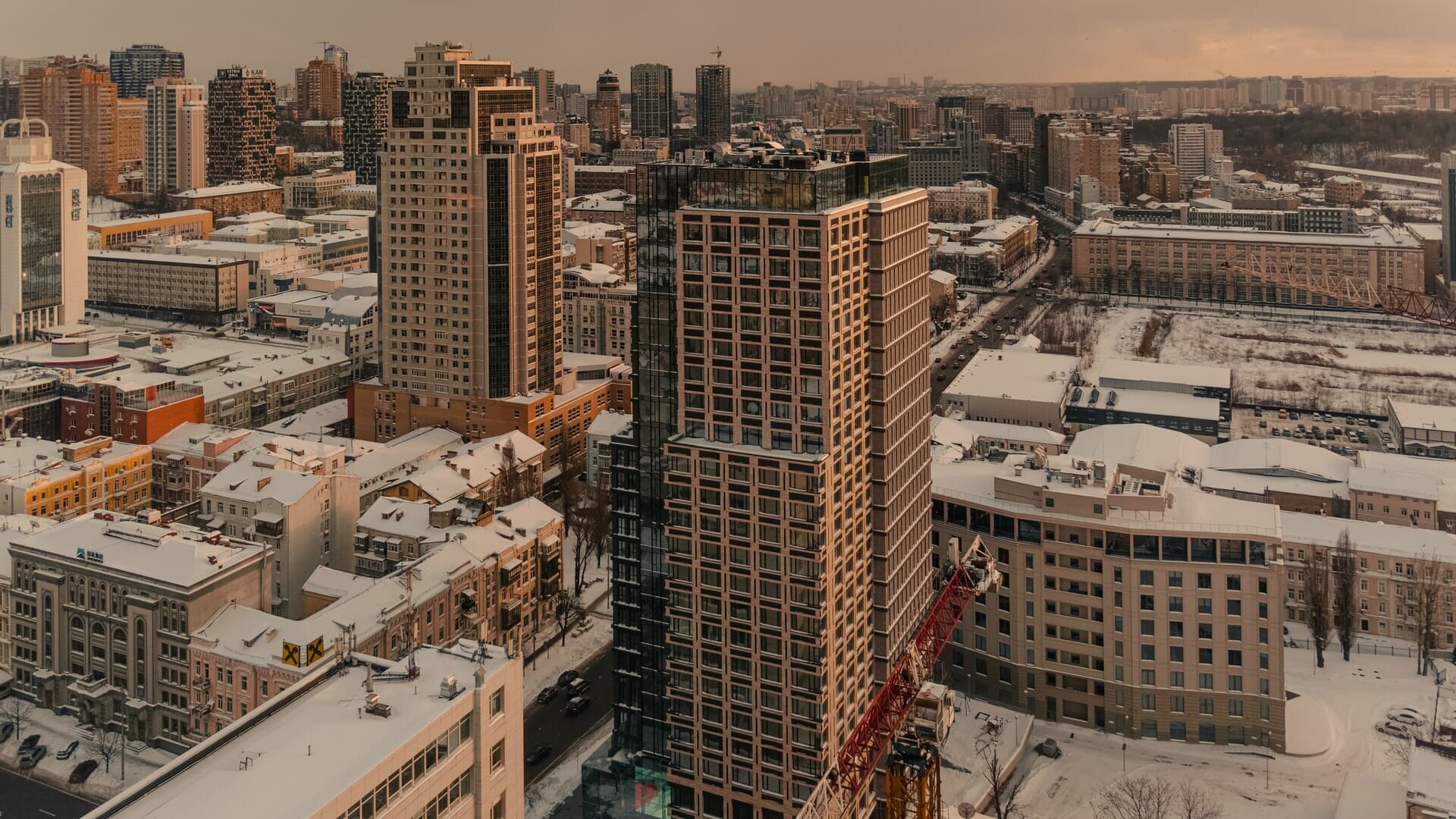
Editor’s Note: The opinions expressed here by Impakter.com columnists are their own, not those of Impakter.com. — In the Featured Photo: Kyiv, the capital of Ukraine, threatened by Russia’s de-stabilisation efforts. Featured Photo Credit: Simon Hrozian.