
In modern digital organizations, execution speed is no longer the sole competitive advantage – execution coherence is. Teams deliver late not because they lack effort, but because the chosen planning model does not match the nature of their work.
Kanban and Gantt charts represent two radically different philosophies of managing execution: one optimized for flow and adaptability, the other for structure and predictability. Understanding where each excels – and where it creates friction – is essential for leaders responsible for reliable delivery.
Too often, organizations treat these approaches as mutually exclusive. In reality, the strongest execution models emerge when leaders understand what problem they are trying to solve, rather than defaulting to a familiar method.
Gantt Charts: When Dependencies, Deadlines, and Predictability Matter Most
Gantt charts are built for environments where sequence matters. They shine in projects where tasks must happen in a specific order, where delays cascade, and where delivery dates are non-negotiable. By visualizing tasks on a timeline, Gantt charts make dependencies explicit and expose the critical path – the chain of activities that directly determines the project’s end date.
This approach is particularly effective in initiatives with:
- fixed scope and contractual deadlines,
- strong inter-task dependencies,
- limited tolerance for change once execution begins.
In these scenarios, a Gantt chart is not bureaucracy – it is risk control. Without a clear timeline, managers lose the ability to assess impact when something slips. Even small delays can remain hidden until recovery becomes costly or impossible.

What elevates modern Gantt planning beyond static charts is the integration of resources, risks, and progress tracking. Contemporary platforms allow managers to see not only when tasks happen, but who is responsible and how workload affects delivery. A practical deep dive into how modern Gantt planning works can be found here:
https://flexi-project.com/what-is-a-gantt-chart-and-how-do-you-create-one-example/
Used correctly, Gantt charts provide confidence and predictability – but they demand discipline and realistic planning. When priorities change frequently, this rigidity can quickly become a limitation.
Kanban: Optimizing Flow in Dynamic, High-Change Environments
Kanban takes a fundamentally different view of work. Instead of asking when something will be done, it focuses on how work flows through the system right now. Tasks move across clearly defined stages, and work-in-progress limits prevent teams from taking on more than they can realistically handle.
This makes Kanban especially powerful in environments where:
- priorities shift often,
- work arrives continuously rather than in batches,
- speed and responsiveness matter more than long-term predictability.
By limiting work in progress, Kanban exposes bottlenecks immediately. Teams see where tasks pile up, where capacity is constrained, and where attention is needed – without relying on forecasts that may become obsolete within days. This real-time visibility improves communication and reduces the hidden cost of multitasking.
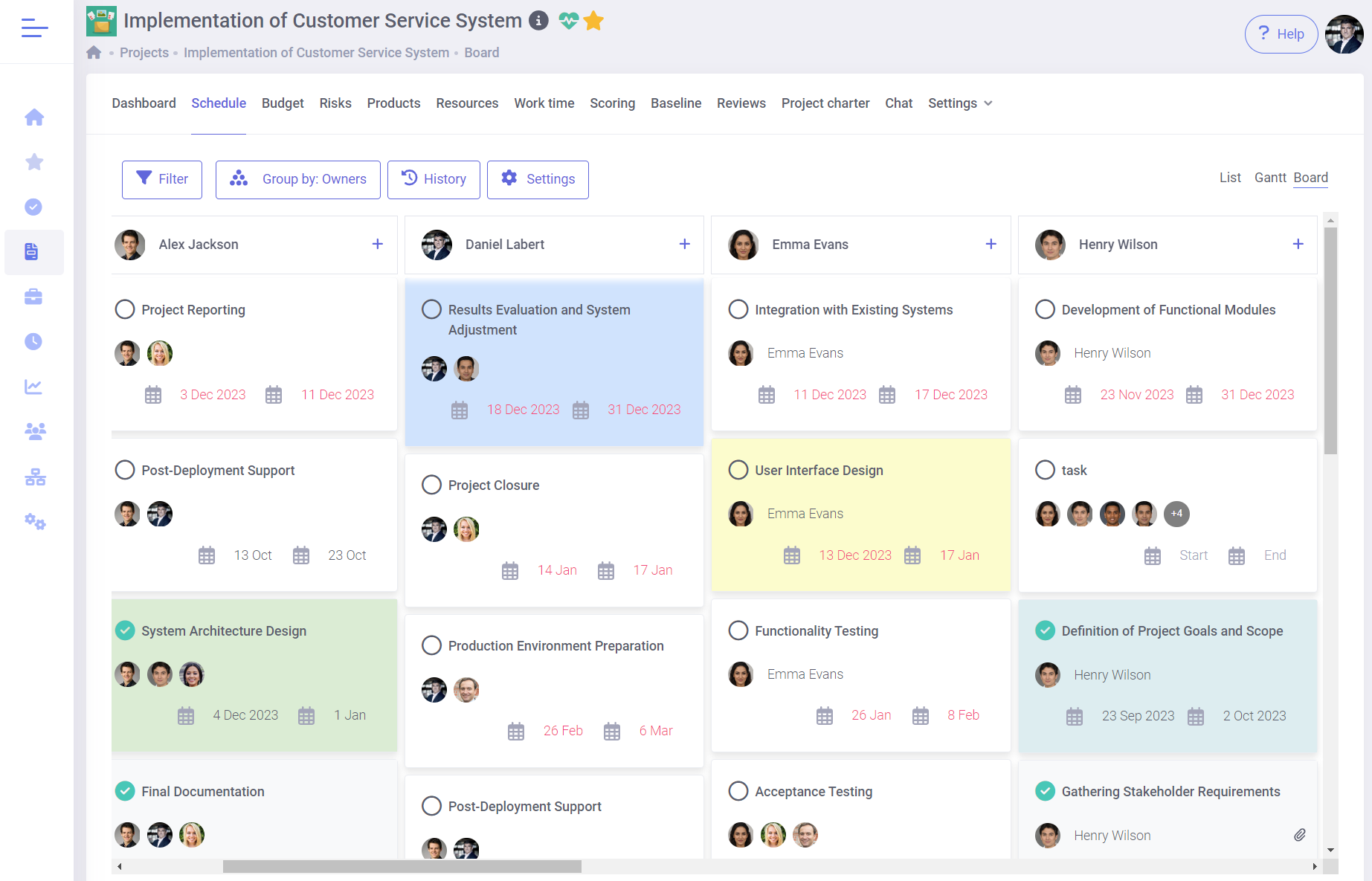
Kanban also supports a culture of continuous delivery. Instead of waiting for milestones, teams deliver value incrementally, day by day. For IT support, product maintenance, marketing operations, or service teams, this approach often outperforms timeline-driven planning. A detailed explanation of Kanban workflow design is available here:
https://flexi-project.com/kanban-how-to-effectively-manage-workflow/
The trade-off is clear: Kanban sacrifices long-term scheduling certainty in favor of adaptability and flow efficiency.
Choosing the Right Model – or Combining Both
The critical mistake many organizations make is forcing one method onto every type of work. In practice, the right approach depends on execution risk, volatility, and dependency density.
- If missing a deadline has serious financial or contractual consequences, Gantt-based planning provides the necessary structure.
- If priorities evolve rapidly and work must adapt in real time, Kanban prevents planning overhead from slowing teams down.
Increasingly, advanced teams combine both approaches. High-level initiatives may be planned using Gantt charts to manage milestones and dependencies, while execution teams operate day-to-day using Kanban boards to manage flow. This hybrid model offers strategic predictability without sacrificing operational agility.

Hybrid Execution: Combining Timeline Control with Flow Efficiency
Increasingly, organizations abandon the false choice between Kanban and Gantt in favor of hybrid execution models. Strategic initiatives are planned at a high level using Gantt charts to manage milestones, dependencies, and external commitments. Day-to-day execution within those initiatives is handled through Kanban boards that optimize team flow. This layered approach solves a common leadership dilemma: maintaining predictability without micromanagement. Executives see timelines and risks, while teams manage work in a way that reflects reality on the ground.
Platforms such as FlexiProject support this model by allowing teams to switch between Gantt and Kanban views using the same underlying data. There is no duplication of work, no loss of context, and no disconnect between planning and execution.
Choosing Execution Structure Is a Strategic Decision
Kanban and Gantt charts are not productivity hacks or stylistic preferences. They are execution architectures. Each shapes how teams think about work, handle change, and respond to pressure.
Leaders who consistently deliver do not ask which method is more popular. They ask which structure:
- reduces friction instead of adding it,
- makes risks visible early,
- aligns daily work with real business constraints.
The right choice – or combination – transforms execution from constant firefighting into a controlled, repeatable process. In complex digital environments, that capability is no longer optional. It is the foundation of sustainable delivery.
Editor’s Note: The opinions expressed here by Impakter.com columnists are their own, not those of Impakter.com — In the cover: Kanban vs Gantt Chart Cover Photo Credit:DSStudio