Impakter
  • Environment
    • Biodiversity
    • Climate Change
    • Circular Economy
    • Energy
  • FINANCE
    • ESG News
    • Sustainable Finance
    • Business
  • TECH
    • Start-up
    • AI & Machine Learning
    • Green Tech
  • Industry News
    • Entertainment
    • Food and Agriculture
    • Health
    • Politics & Foreign Affairs
    • Philanthropy
    • Science
    • Sport
  • Editorial Series
    • SDGs Series
    • Shape Your Future
    • Sustainable Cities
      • Copenhagen
      • San Francisco
      • Seattle
      • Sydney
  • About us
    • Company
    • Team
    • Global Leaders
    • Partners
    • Write for Impakter
    • Contact Us
    • Privacy Policy
No Result
View All Result
Impakter logo
No Result
View All Result
Investing in the future: youth-led research

Investing in the future: youth-led research

Investing in the future: youth-led research and its role in combating climate change

CGIARbyCGIAR
September 2, 2019
in Environment, Impact
0

Article in collaboration with: CGIAR Research Program on Climate Change, Agriculture and Food Security (CCAFS) seeks to address the increasing challenge of global warming and declining food security on agricultural practices, policies and measures through strategic, broad-based global partnerships.


In order to adapt to a changing climate, the global agriculture sector must tap into the potential of young people.

The world’s population, especially in developing countries, is young. Globally, about 1.8 billion people are between the ages of 10 and 24 years old. While today’s youth benefit from technological advances in nearly every facet of life, they face an incredibly uncertain future thanks to climate change.

Food security is an especially serious concern, compounded by environmental degradation, rapid urbanization and aging farmers. While millions of young people grow up in rural communities, with agriculture serving as the primary source of food and income, there is a disconnect between the importance of agriculture and its reputation as a back-breaking, low status position. It’s not enough, however, to just encourage young people to be farmers. As climate change continues to stress agriculture systems, innovative technologies and research are essential to feeding the world’s growing population. Additionally, young people must have an active and recognized role in shaping policy related to climate change.


Related topics: Can Sustainable Agriculture Mitigate Massive Youth Migration in Africa? – Empowering Youth through Agro-Entrepreneurship in Nepal


International Youth Day is the perfect opportunity to recognize the role of young people in shaping agricultural production, research and policy, especially as the effects of climate change become increasingly acute. This includes supporting young researchers through programs like the Climate, Food and Farming – Global Research Alliance Development Scholarships (CLIFF-GRADS). CLIFF-GRADS provides funding to early career and doctoral researchers from developing countries with the goal of increased knowledge and data on agriculture-based climate change mitigation. In 2019, a record 33 researchers were awarded scholarships through the program.

“We’re delighted to see this talented group of early-career scientists contributing to such a diverse range of research projects in so many regions of the world” said Hayden Montgomery, a Special Representative for the Global Research Alliance on Agricultural Greenhouse Gases (GRA) of the 2019 awardees. “The knowledge being developed by our CLIFF-GRADS fellows will be of vital importance to farmers and policy makers worldwide.”

Where do CLIFF-GRADS come from?

Samuel Weniga Anuga, a 2019 fellow from Ghana, explained the importance of the CLIFF-GRADS award to his development as a scientist, saying “The award for training and collaboration with the CCAFS/GRA scientists is an unparalleled platform for me to gain a better understanding of the science, tools and innovations for greenhouse gas accounting.”

Due to climate change, sustainable agriculture, and by extension food security, is one of the greatest challenges the world has ever faced. Providing opportunities for early career scientists means more youth-led research while also giving young people a platform to impact broader scientific, policy and agriculture sectors.


About the author: Kathlee Freeman is a Communications Consultant for the CGIAR Research Program on Climate Change, Agriculture and Food Security (CCAFS) Gender and Social Inclusion Unit.


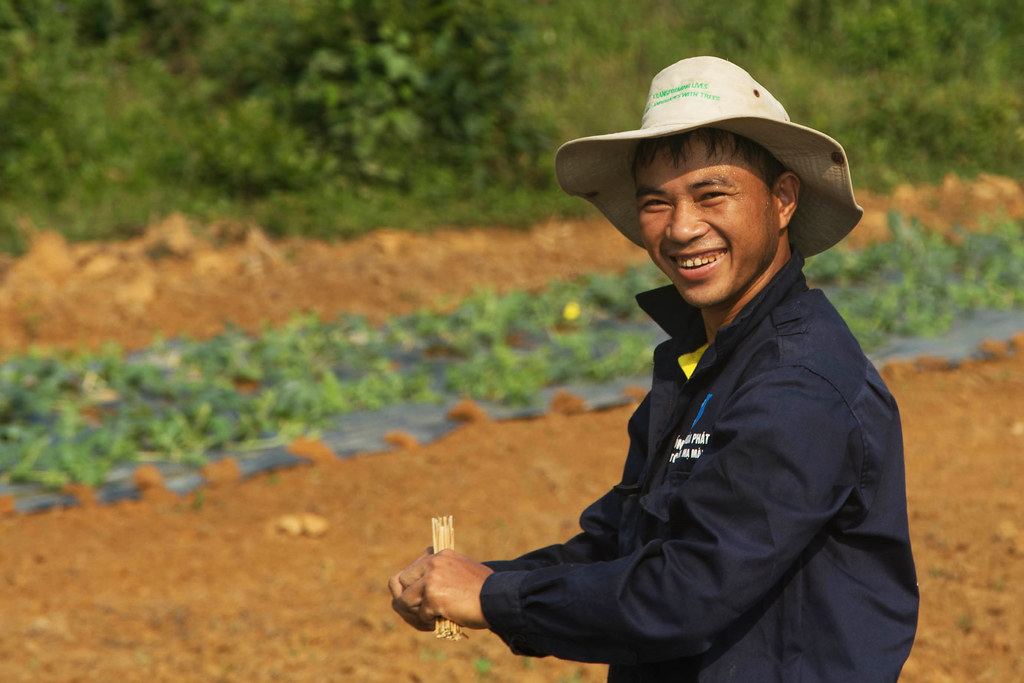
EDITOR’S NOTE: The opinions expressed here by Impakter.com columnists are their own, not those of Impakter.com.  Photo Credit: A watermelon farmer in My Loi Climate-Smart Village – Photo by Leo Sebastian/CCAFS SEA
Tags: africaEast AfricaInvesting in the futureresearchyouth-led research
Previous Post

Liter of Light: Making Solar Energy Accessible To All

Next Post

Increasing Diet Diversity in Low-Income Communities

Related Posts

US President Donald Trump
Politics & Foreign Affairs

Trumps ‘America First’ Policy in Africa: The Consequences

The Trump Administration’s “America First” doctrine prioritizes transactional relationships and reduced engagement abroad (theoretically), which has resulted in consequential shifts...

byRichard Seifman - Former World Bank Senior Health Advisor and U.S. Senior Foreign Service Officer
December 29, 2025
ESG News regarding the UK’s Updated Environmental Improvement Plan, modernizing Mauritania’s railway system, the EU carbon border tax, and the EU’s cross-border energy projects
Business

UK Unveils Updated Environmental Improvement Plan

Today’s ESG Updates UK Accelerates Nature Recovery: The government commits £500m to Landscape Recovery and targets 250,000 hectares of restored...

bySarah Perras
December 1, 2025
ESG News regarding: EU proposes to re-examine SFDR; Insurers struggle with mapping and managing climate risk in Africa; Fire at the climate summit in Brazil; UN demands Iran to disclose nuclear material stockpile.
Business

SFDR Re-examination Proposed by EU

Today’s ESG Updates Simplify ESG Reporting: The EU proposes simplifying ESG reporting for the financial sector.  Climate Risk in Africa:...

byPuja Doshi
November 21, 2025
ESG news regarding Microsoft and OpenAI deal, Germany and EU engine ban, Canada and oil emissions limit, India’s coal sector
Business

OpenAI Can Restructure Itself Following Non-Binding Deal with Microsoft

Today’s ESG Updates Microsoft, OpenAI Agree on For-Profit Restructure: A new non-binding deal lets OpenAI restructure as a for-profit company....

byYuxi Lim
September 12, 2025
ESG news regarding China leading the world in renewable energy, Ethiopia beginning operations on Africa’s largest hydroelectric dam, development banks making $137 billion in climate investments, and the EU’s high energy costs hindering competitiveness
Business

‘China is the Engine’ Driving the Clean Energy Shift

Today’s ESG Updates China Drives Global Renewable Shift: China is leading the global clean energy push with affordable solar, wind,...

bySarah Perras
September 9, 2025
science trust
Editors' Picks

Why Growing Mistrust of Science in America Matters

Although there have always been legitimate grounds for some questioning of science in the United States, the accepted notion has...

byRichard Seifman - Former World Bank Senior Health Advisor and U.S. Senior Foreign Service Officer
August 29, 2025
tariffs Africa
Editors' Picks

How Africa Is Responding to U.S. Tariff Policies

Kholofelo Kugler and Tani Washington examine how African countries are responding to the Trump administration’s sweeping new tariff regime. While...

byInternational Institute for Sustainable Development (IISD)
August 14, 2025
ESG news regarding U.S. EPA cuts $7 billion in federal solar power grants, Africa focuses on critical minerals in energy transition, India sees decline in coal use, and Australia activates BlackRock super battery
Business

U.S. to Slash $7 Billion in Solar Energy Funding

Today’s ESG Updates EPA Cuts Solar Grants for Low-Income Communities: Trump administration moves to cancel $7B “Solar for All” initiative,...

bySarah Perras
August 6, 2025
Next Post
Diet Diversity

Increasing Diet Diversity in Low-Income Communities

Recent News

Costumes for Purim

What to Consider When Selecting Costumes for Purim

January 15, 2026
Aerial view of U.S. farmland using regenerative agriculture practices to generate soil carbon credits

Microsoft’s Record Soil Carbon Credits Deal Signals Rising Pressure on Tech Emissions

January 15, 2026
Identity verification tool

Safety First: Using People Search Tools to Verify Identity

January 15, 2026
  • ESG News
  • Sustainable Finance
  • Business

© 2025 Impakter.com owned by Klimado GmbH

No Result
View All Result
  • Environment
    • Biodiversity
    • Climate Change
    • Circular Economy
    • Energy
  • FINANCE
    • ESG News
    • Sustainable Finance
    • Business
  • TECH
    • Start-up
    • AI & Machine Learning
    • Green Tech
  • Industry News
    • Entertainment
    • Food and Agriculture
    • Health
    • Politics & Foreign Affairs
    • Philanthropy
    • Science
    • Sport
  • Editorial Series
    • SDGs Series
    • Shape Your Future
    • Sustainable Cities
      • Copenhagen
      • San Francisco
      • Seattle
      • Sydney
  • About us
    • Company
    • Team
    • Global Leaders
    • Partners
    • Write for Impakter
    • Contact Us
    • Privacy Policy

© 2025 Impakter.com owned by Klimado GmbH