Land holds the past, present and future of humanity. Everything from nutritious food and thriving ecosystems to agricultural heritage and livelihoods rely on healthy and productive land. Yet every year, an average of 100 million hectares of land are degraded through unsustainable agriculture, urbanization and more frequent and prolonged droughts. Drylands cover over 40 percent of the world. However, land degradation and climate change are driving up the risk of desertification and biodiversity loss in these unique ecosystems.
Through its partnership with the Global Environment Facility (GEF), the Food and Agriculture Organization of the United Nations (FAO) is investing in the legacy of our lands by helping countries and communities scale up sustainable agrifood system solutions to reduce and reverse land degradation and build climate resilience for future generations.
All of this work is part of the United Nations Decade on Ecosystem Restoration, which aims to prevent, halt and reverse the degradation of ecosystems. Restoring our lands to drive back desertification and grow more resilient to drought and climate change protects the foundations of our prosperity.
Here are just three FAO-GEF projects investing in our lands:
Preventing desertification and restoring pasture in Kenya’s drylands
In the semi-arid lands in the shadow of Mount Kenya, seasonal rains sprout grass, which feeds the cows, goats, donkeys and camels on which the Maasai people of the Maiyanat community rely.
“We neither farm nor engage in other businesses. We only depend on our livestock,” said Iratino Macharia Shuel, the leader of the Maiyanat community land management organisation. “Donkeys are our vehicles. The cows and the goats are our pillars for food and income.”
With climate change, seasonal rains became unpredictable, and drylands contending with drought suddenly also face floods. Productive soils washed off into gullies, and feeding livestock became more challenging. “Often, we do not have enough grass. Our land is small compared to our human and livestock population. In Maiyanat, there is hardly a green place. Some places are bare lands with nothing.”
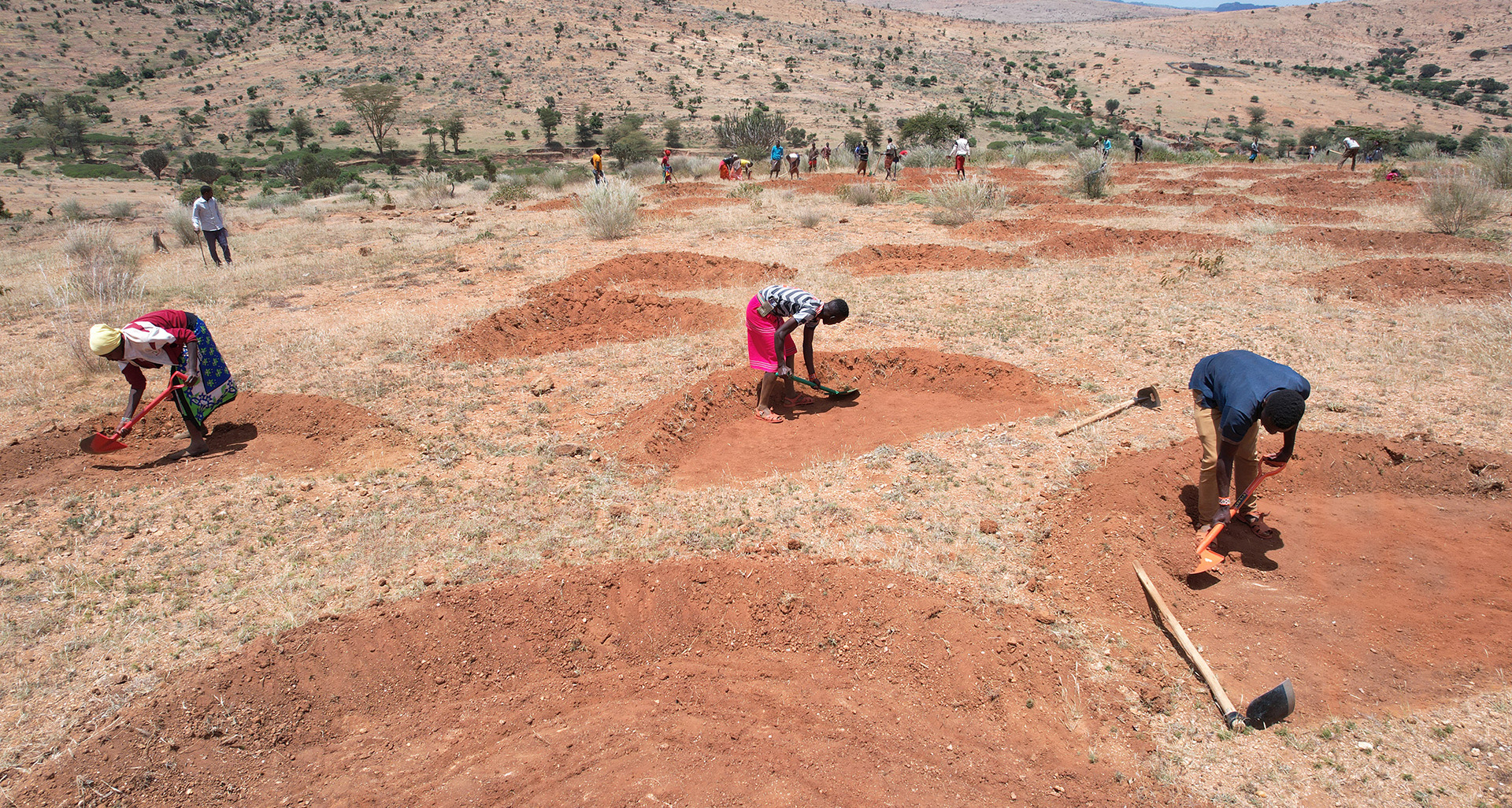
Through the GEF-funded Restoration Initiative, a joint programme of FAO, International Union for Conservation of Nature and United Nations Environment Program, local communities began implementing simple yet effective methods to revive indigenous greenery and prevent desertification. For example, community members dug semi-circles known as water bunds in degraded hills to capture rainwater, prevent soil erosion and restore landscapes. Using these methods, over 152,000 hectares of land will be improved, paving the way for greener, more climate-resilient pastures.
“We have seen growth of grass where there was none,” said Raison Letutan, a youth leader in the Maiyanat community organization. “All we want is to see grass everywhere. That is our ultimate joy.”
Related Articles: Seeds of Change: The Revolution of Regenerative Agriculture | How Does Climate Change Affect Agriculture? | Regenerative Agriculture as a Carbon Solution Powerhouse | Informed Farmers Are Successful Farmers | Can Massive Use of Locusts at Scale Help Reduce Their Threats?
Regenerative agriculture for land, biodiversity and climate in Mongolia
Spanning over 27 million hectares, the Eastern Mongolian Steppes are one of the world’s largest grassland ecosystems, but 57 percent of these grasslands are degraded. The Steppes are home to unique biodiversity, and the soil sequesters millions of tons of carbon. With sustainable agricultural practices, degraded grasslands can recover to sustain biodiversity and mitigate climate change.
Batnaran Batdeleg, a farmer in the Eastern Steppes, has been utilizing regenerative agriculture techniques since 2014. A GEF-funded, FAO and WWF-Mongolia project on dryland sustainable landscapes helped expand his intercropping practices.
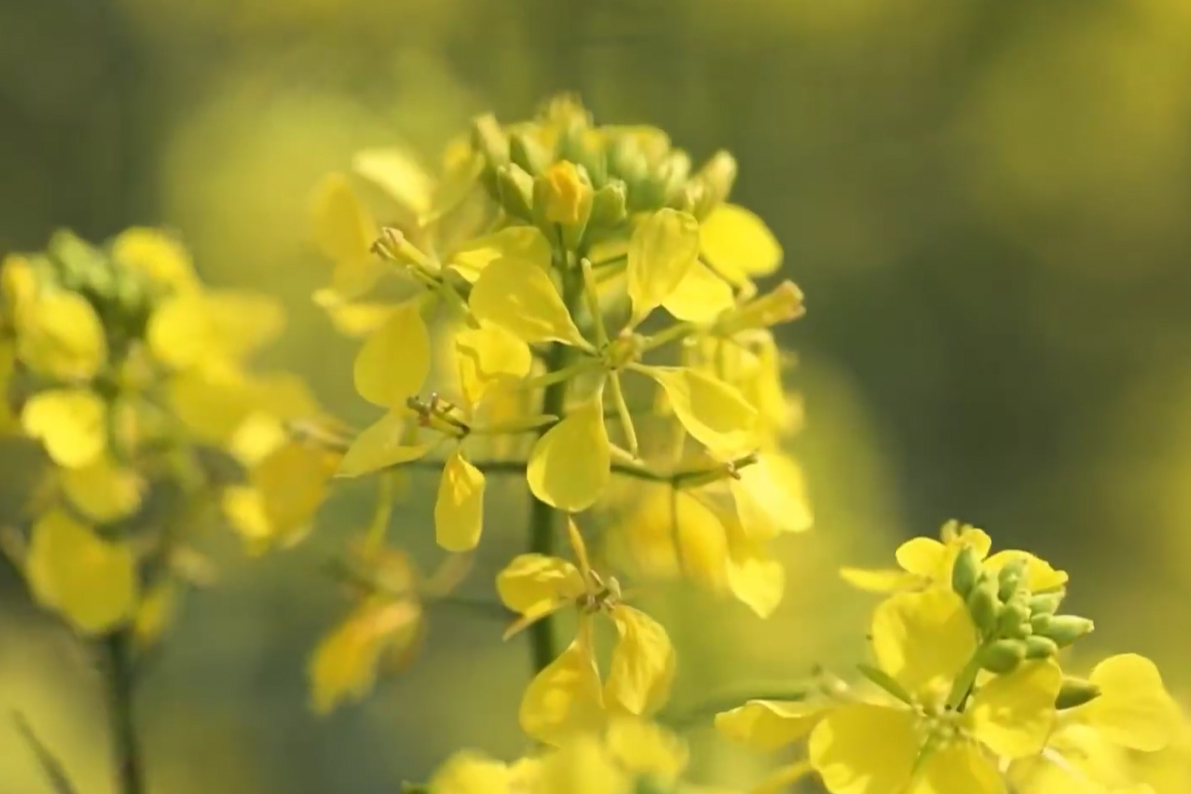
Previously, he planted crops such as mustard, peas, rapeseed and alfalfa to improve the soil. Now, he is reviving land that was abandoned for four decades by interplanting 12 types of crops. The crops benefit each other when grown together, and keeping some planted throughout the seasons keeps moisture, nutrients and biodiversity in the soil. With healthier soils, his yield has improved year by year, and he is passing on this knowledge to young farmers as well. Together, they are reviving nearly 3 700 hectares of cropland through these regenerative agricultural practices.
In total, FAO and WWF-Mongolia have helped communities restore over 292 200 hectares of natural grasslands and shrublands and reduce greenhouse gas emissions by 8.8 million metric tons.
Passing on lessons in the Republic of Moldova
Land degradation, made worse by drought and floods, has been dragging down the Republic of Moldova’s agricultural production and pushing rural communities below the poverty line. Students in Orhei and Rezina districts are learning how to change that from the ground up.
“Today we had a special lesson about soil. We learned that soil is as indispensable to our lives as air and water,” said Gabriela, a sixth grader.
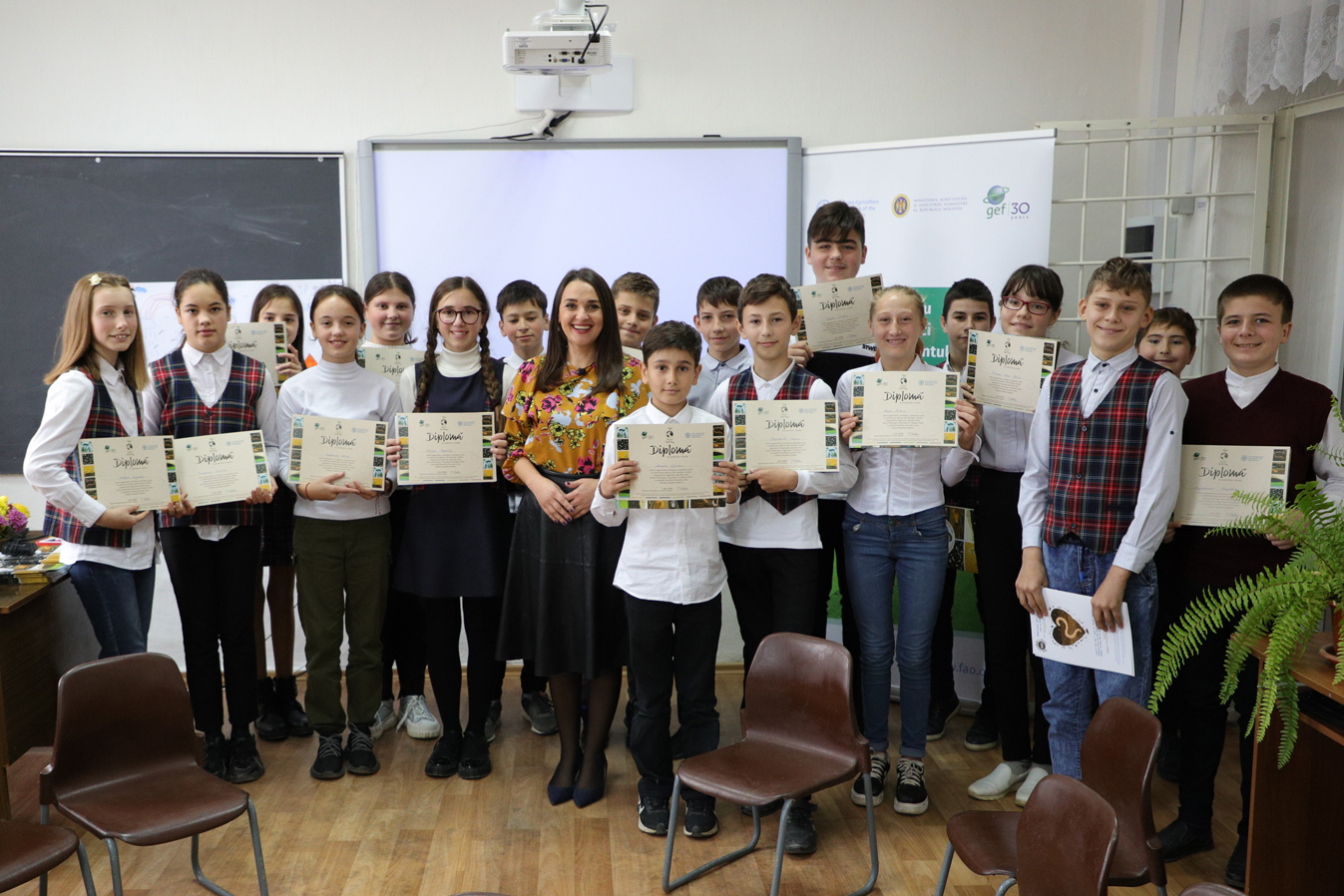
Like many families in her village, Gabriela’s parents have a garden. Through lessons from an FAO-GEF project in the Republic of Moldova, she and her classmates are learning to take care of the soils in their gardens and beyond. The initiative is part of the project’s endeavor to introduce innovative climate-smart agricultural practices and sustainable forest and land management in the Republic of Moldova.
“We discussed how some people harm the soil a lot through their practices and then expect the soil to work for them and give them food,” said Sorin, Gabriela’s classmate.
“If we don’t take care of the soil, one day we will be left with no food,” comments Gabriela.
Over 600 children learned how to protect soils and the productivity of the land. “Plant trees, as many as we can,” said Adelina, another classmate. “Bury leaves into the ground instead of burning them. Stop using so many poisonous chemicals.”
By empowering youth, farmers and herders with the knowhow to protect and restore soil, FAO and the GEF are giving “Generation Restoration” the tools to extend the legacy of land.
** **
This story was originally published by the Food and Agriculture Organization of the United Nations (FAO) and is published here as part of an editorial collaboration with the FAO.
Editor’s Note: The opinions expressed here by the authors are their own, not those of Impakter.com — In the Cover Photo: Through the Restoration Initiative, local communities near Mount Kenya dug semi-circles to capture rainwater, halt soil erosion and prevent desertification. With methods like these, over 152 000 hectares of land will be improved and communities will become more climate resilient. Cover Photo Credit: ©FAO/Edwin Mwai.