
Nature-based solutions (NBS) may present our best chance to prepare effectively and purposefully for the risks and impacts of climate change and provide much-needed benefits for our communities.
Since 2012, the city of Vancouver has had an evolving Climate Change Adaptation Strategy and, within this, a Rain Strategy that aims to protect residents as incidents of extreme rainfall and flooding become more common. A key component of this strategy is green infrastructure, which slows down and holds on to rainwater, allowing it to soak into the ground and thereby reducing the volume of water entering the city’s sewer system.
Other cities in Canada are finding that by conserving natural wetlands, they can effectively manage high and low water levels associated with a changing climate while simultaneously cleaning up pollutants—all at a lower cost than traditional built infrastructure.
IISD and Environment and Climate Change Canada hosted an international round table to unpack Canada’s experiences with NBS for adaptation, with the aim of discussing recent successes, challenges, lessons learned, and opportunities to shape the nation’s leadership in this area going forward.
The event brought together a wide range of speakers to discuss specific benefits NBS offer when it comes to tackling climate change, biodiversity loss, and global recovery from COVID-19. Five key insights emerged from this dialogue that are critical to scaling up NBS for adaptation:
Related Articles: The Role of Water Resources in Climate Resilience ¦ Can Nature-Based Solutions Offer Climate Resilience?
Indigenous Protected and Conserved Areas (IPCA) have enormous potential to bring together biodiversity solutions and climate action. Steven Nitah, Northwest Territories Advisor for the Indigenous Leadership Initiative, said we need “two-eyed seeing—taking the best of both conventional science and Indigenous worldviews and understandings.”
Canada’s Indigenous Peoples have extensive knowledge of the environment and, through IPCAs, have taken the lead in protection and conservation initiatives. Meaningful investments in Indigenous-led NBS would bring about important socio-economic opportunities, innovation, and mark a step forward on the path toward reconciliation.
Large-scale solutions require diverse partnerships. Adapting to climate change and the transition to sustainability depends on the strength of collective leadership across all sectors, levels of government, and Indigenous Peoples in Canada. For example, strong partnerships with the federal government, coordinated by organizations such as the Federation of Canadian Municipalities (FCM), have led to important capacity-building and effective funding approaches in this field.
We must take advantage of this positive momentum to continue growing, learning, and deepening our understanding of NBS. In 2018, FCM’s Municipalities for Climate Innovation Program approved grant capital for projects to address the impacts of the heat island effect (urbanized areas that experience higher temperatures than outlying areas). These types of projects lend themselves well to quantifying the value of nature. Partnerships such as these provide targeted support and enable municipalities to contribute to national climate and biodiversity goals.

We must continue to build the evidence base around performance and effectiveness. While we’re finally starting to bridge the conversations between NBS and climate change, we need a stronger evidence base. Researchers at St. Mary’s University’s Centre for Nature-Based Solutions have been studying and quantifying co-benefits of restoring tidal wetland habitats, and their results are being documented to develop case studies.
This innovative work demonstrates the success of NBS and contributes toward the need to capture metrics around performance and effectiveness. Another important opportunity will be for public funding to account for co-benefits: mandating the inclusion and valuation of co-benefits could raise the profile of NBS in comparison to grey infrastructure. Agreed-upon guidelines will ensure that a standardized approach for NBS projects enables comparison and assessment.
Return on investment matters—let’s get better at telling these stories. The World Economic Forum reports that NBS can unlock an estimated USD 10 trillion in business opportunities and create up to 395 million jobs in 2030. In Canada, we see growing evidence among local governments that recognize these opportunities by valuing and managing their natural assets as core infrastructure, allowing them to deliver vital services and socio-economic benefits that would otherwise be delivered via engineered structures.
However, significant uncertainty remains among policy planners, decision-makers, investors, and engineers about the performance and predictability of NBS leading to a lack of investment. We need more stories, champions, credible analyses, and proof of NBS projects working—across different landscapes, in different climates, and for different purposes—to build confidence and attract investment.
If you don’t understand the services that nature provides, and you don’t value those services, you are still putting a value on nature—it just happens to be zero.
There is increasing evidence that NBS such as wetlands provide a significant internal return on investment while providing important adaptation benefits. Recognizing the potential role of NBS projects in reducing risks and costs associated with future climate events, Craig Stewart, Vice-President, Federal Affairs at IBC, highlighted the potential of nature-based insurance, protecting ecosystems that generate protection against natural disasters. These ecosystem-focused insurance programs, championed by the insurance sector, demonstrate that the protection of specific natural systems is good for mitigating risk as well as improving our collective finances.
This event reinforced the fact that, when it comes to climate adaptation in Canada, NBS are almost always a win for both people and the planet. Especially now, in the midst of a pandemic, we’re reminded like never before about the value of natural spaces and NBS. These insights, if scaled up and broadly adopted, can help us withstand many of the challenges a changing climate has in store.
About the author: Anika Terton is a Policy Advisor with IISD’s Resilience program.
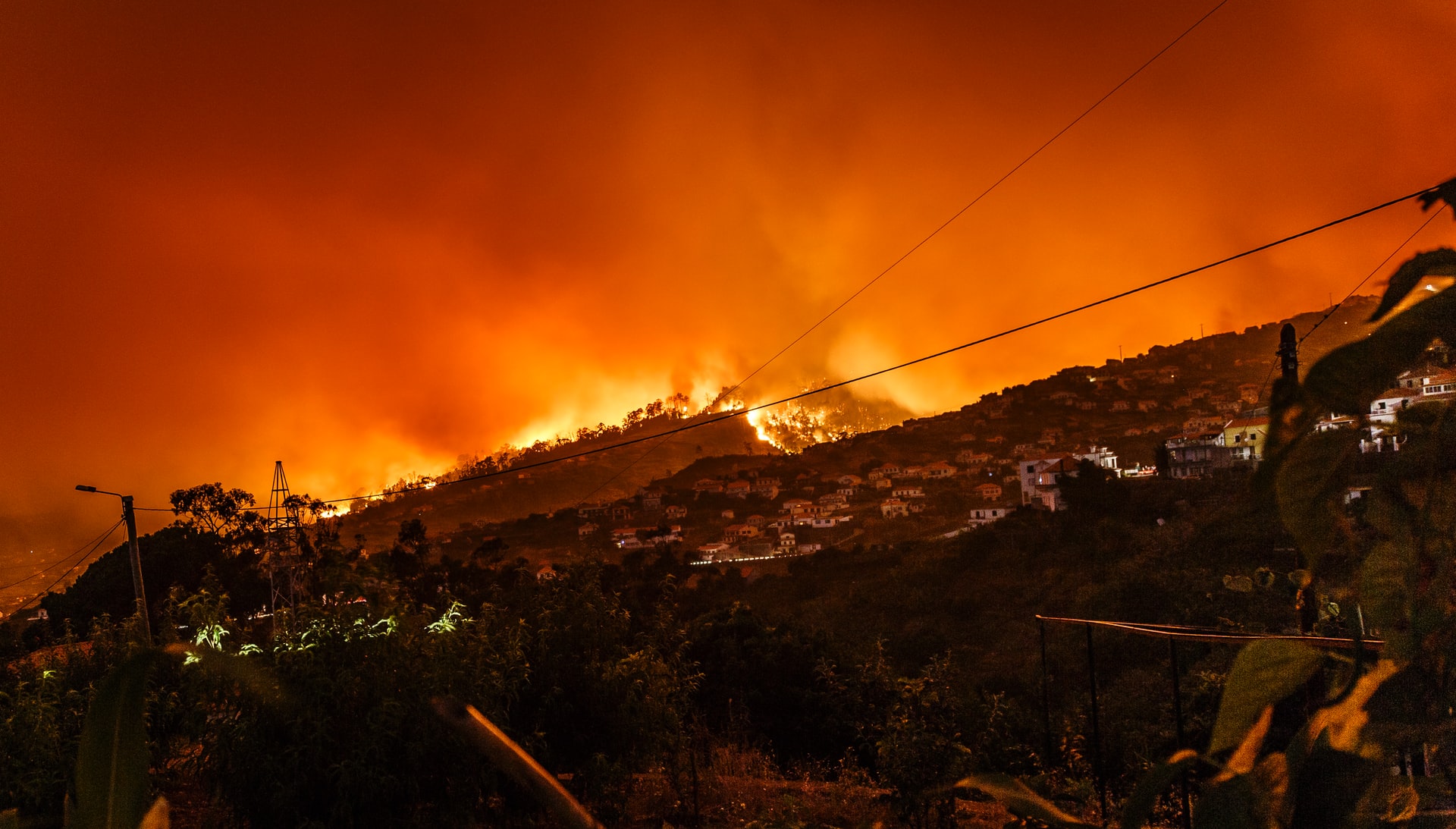
EDITOR’S NOTE: The opinions expressed here by Impakter.com columnists are their own, not those of Impakter.com. — In the Featured Photo: Wildfires in Estreito da Calheta, Portugal. Featured Photo Credit: Michael Held / Unsplash