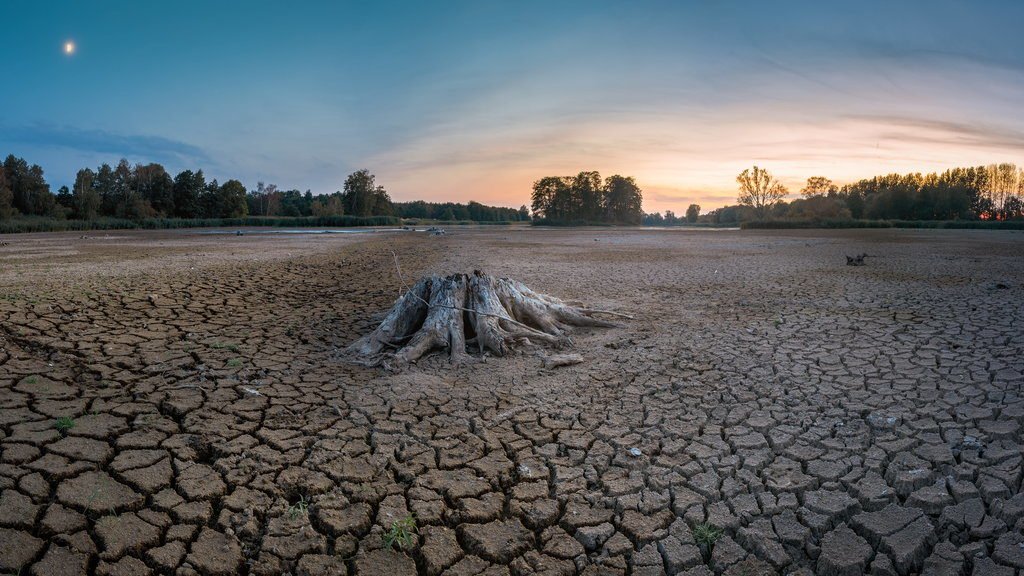
The climate crisis will hit the water cycle and resources the hardest. Many of the negative and most severe impacts of climate change are manifested through changes to the water cycle. Climate change will severely alter the quantity, quality and spatial distribution of global water resources. Consequent increases in the frequency and intensity of extreme events like droughts and floods will have significant implications for water scarcity and human well-being. However, the conception of water is often local in scale (for example, local irrigation) and the policy response to water-related challenges are often based on standalone strategies and short-term repair and remediation (for example, repairing flood levees). Water needs to be collaboratively managed on a global level to ensure that the best responses to these challenges to climate resilience are implemented.

Climate is Water
Measures to adapt to climate change and past international climate summits have so far failed to adequately consider the link between water and climate change. In fact, water is intimately embedded in all processes of the global climate system and is often a common element in strategies for climate change adaptation. Appropriate water management is not only important to ensure adequate water supply; water permeates across other sectors and adequate management can help tackle a wide variety of resilience-relevant challenges such as disease transmission, health and sanitation, environmental refugees and migration and transboundary resource conflict.
Water-Centric Climate Adaptation
Despite its important role in connecting some of our most pressing challenges, water resources are far too often considered a separate and standalone issue. As an example, in the 4 pages dedicated to water in the Global Commission on Adaptation report, water resources were considered as separate to infrastructure resilience and early warning systems, despite the fact that appropriate water management is critical to the success of both.
A new, more holistic paradigm is emerging at this year’s COP25, the latest Conference of Parties where policy-makers around the world convened to discuss and enact global climate targets. At a jointly organised side event, the Alliance for Global Water Adaptation (AGWA) and the International Water Management Institute (IWMI) launched a new background paper titled “Adaptation’s Thirst: Accelerating the Convergence of Water and Climate Action” which argued for the need to reframe the story of water and climate change beyond the traditional lens of devastation and menace.
RELATED ARTICLES: ‘Green’ Investing: The Future of Business? | The Innovation Springboard | How Honest is Green Finance? | Greenwashing in Finance
The background paper attempts to usher a paradigm shift in the adaptation community by presenting the first coherent vision on how water is able to connect the various components required to ensure climate resilience. Adopting a water-centric adaptation approach can simultaneously align climate adaptation with water management and mainstream the practice of integrative water management in the broader climate adaptation agenda. Introducing the new background paper, Dr John Matthews, executive director of AGWA, injected some hope for the future by suggesting that water is a ‘menace with hope’ and is the best tool to coherently organise our national and global climate solutions. Flexible, co-management regimes in collaborative water governance, the inclusion of water resources in bottom-up multi-sectoral risk assessments and the need to fully consider water resources in the finance, investment and insurance industry were among the recommendations given in the background paper for effective climate change adaptation.
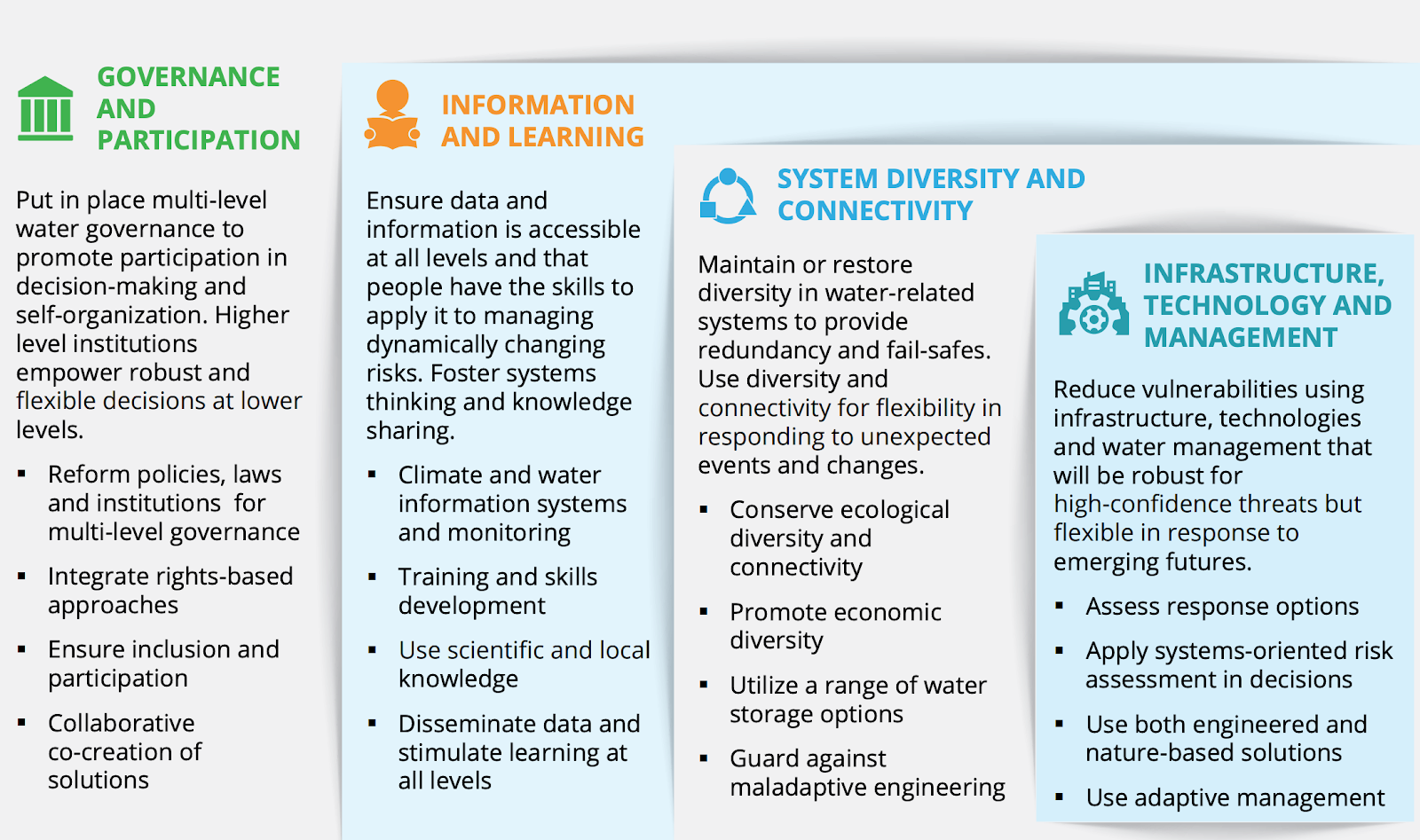
In the Photo: Figure 1 – Climate adaptation solutions framed around adequate water management and fully considers the role of water in climate resilience. Source: Smith et al. 2019.
Crisis into Opportunities
The Netherlands, widely regarded as having the best protected deltaic region in the world, is a worthy case to consult in the mission of fostering a culture that thrives by living with water rather than acting against it. At a separate side event at COP25, Henk Ovink, Netherlands’ inaugural National Envoy for International Water Affairs, spoke about the novelty of his role and the idea of using water to accelerate action against the climate crisis. Ovink cited The Netherlands’ groundbreaking Room for the River Programme, an example of successful water-centric resilience and capacity building. The major nationwide programme, completed in 2019, is aimed at increasing flood resilience by enhancing floodplain capacity through interventions such as deepening river channels, reclaiming floodplains, creating artificial hills and constructing dykes. The programme adopted a multi-sectoral systemic approach where alongside improving flood protection, project interventions also build community resilience and address social and economic concerns of local residents. Outcomes of the programme included urban river parks for recreational use, foot- and cycle-paths along newly created river dykes and areas reclaimed for the development of sustainable housing. Water-centric projects such as this emphasise the potential to leverage human ingenuity and use design, innovation and creativity to strengthen both institutional capacity and climate resilience.
Climate change will lead to significant shifts in the water cycle and the frequency of extreme floods and droughts will increase. However, as the background paper and all the panelists at the COP25 launch event suggested, the story of water in the future under climate change need not be one of devastation and destruction. For climate adaptation to make economic sense in the long run, it has to be done effectively. For climate adaptation to be effective, it must consider water management in all future strategies and appreciate water resources as the integrative resource that it is.
This article has been posted on Earth.org as well. Click here to see it.