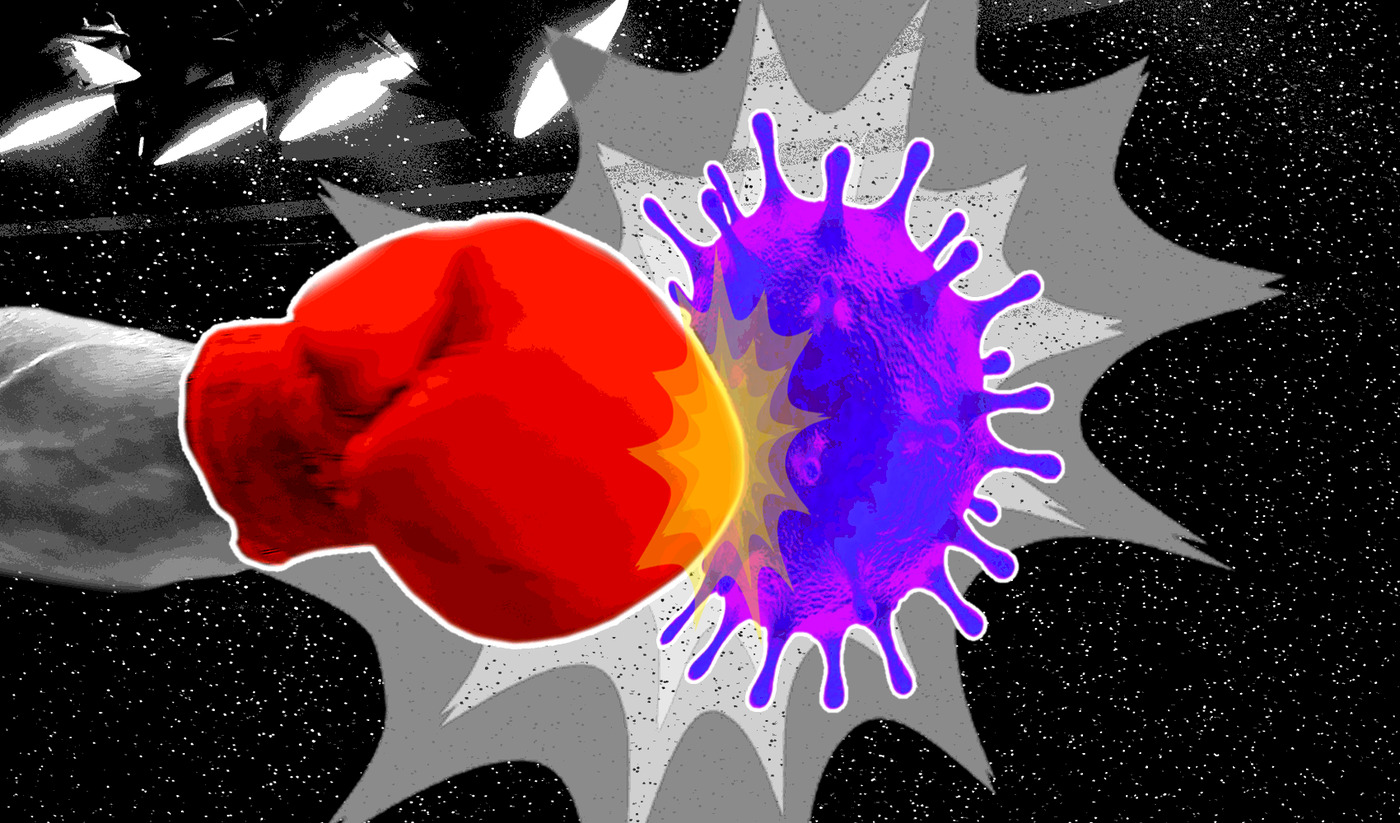
The COVID-19 pandemic gave the world a crash course in epidemiology and showed in real time how an infectious disease can spread — or, with the right strategies, be contained.
Control can have enormous challenges, as the COVID pandemic made clear. But in many cases, public health experts want to go beyond controlling a disease and look at how it can be either eliminated or, in some cases when the biological, economic and environmental conditions suit, eradicated completely.
As these goals get progressively more ambitious, so too does the need for resources, global cooperation and effort required to achieve them.
Only one disease has ever been completely eradicated in humans, which shows just how difficult it is. That was smallpox in 1980.
Here is what these different concepts mean, and why they are so difficult to achieve.
Control
All infectious diseases can potentially be controlled with the right interventions.
Control is all about managing the spread of the disease — akin to taming a wildfire rather than extinguishing it.
For example, the COVID response included measures like vaccination, mask wearing and early detection to slow the virus transmission.
Those measures differed from place to place and changed over time as understanding of the virus developed and vaccines became available. There is no one-size-fits-all approach.
Elimination
Eliminating a disease goes beyond control.
It aims to reduce the number of local cases to zero in a specific area or even an entire country by interrupting the transmission of the infection.
It is like weeding a garden — you might eliminate weeds in your garden, but they may still persist in your neighbours’ gardens.
For example, initially Australia and New Zealand pursued a COVID-zero approach (zero locally acquired cases) during the pandemic, through strict measures like community quarantines (aka ‘lockdowns’) and state and federal border controls.
It was later recognised that COVID-19 is not suitable for elimination, mostly because the virus is highly transmissible, regularly mutating, and neither infection nor vaccine confer full immunity. In addition there were high socio-economic costs associated with lockdowns and border control.
There are various other reasons why not all infections can be eliminated in a particular local area.
These include a lack of effective interventions against certain infections, such as vaccines (for example, there is no vaccine for HIV), curative treatments (for example, there are no curative treatments for hepatitis B) or sensitive testing and diagnostic tools.
People could be asymptomatic carriers, which risks causing undetected transmission of the disease to others.
Global travel could hinder local control measures by facilitating the spread of an infection across borders, like what was seen with COVID-19 variants Delta and Omicron.
Related Articles: Why One Health is Key To Address Future Pandemics | The Climate Is Changing: What This Means for Our Fight Against Infectious Diseases | Our Emissions Are Aggravating Almost 60% of All Infectious Diseases | What Is ‘Disease X’ and Should We Be Worried? | Vaccinating Wild Animals: Key Conservation Tool or Step Too Far?
There could also be social and cultural factors (such as stigma, discrimination, vaccine hesitancy or alternative treatments) and economic barriers (such as inadequate housing or insufficient public health funding) — which may impede elimination efforts in certain regions.
There might also be tragic consequences when a disease is falsely declared eliminated but has merely been controlled to a low level.
Take the case of leprosy: all but one country met the goal of less than 1 case per 10,000 people in 2000.
After resource-limited countries shifted their focus to other emerging problems, unnoticed spread led to only half the real number of cases being currently reported in some countries.
Eradication
The pinnacle of disease control is eradication.
It involves eliminating an infectious agent worldwide, so there are zero cases globally — although it may still be kept in secure medical laboratories.
Not all infectious diseases are eradicable. There are critical elements necessary for it to occur.
Effective interventions to interrupt the transmission should be available. The smallpox success was only achieved after concerted vaccination efforts globally.
Practical and sensitive testing tools are crucial. For example, isolating the poliovirus requires testing stool samples.
The disease needs to not exist in any animal reservoirs, thus eliminating the risk of it being reintroduced to humans.
A reservoir refers to a natural habitat or host in which an infectious agent lives and multiplies — it could be humans, animals, or in the environment, such as in soil or water.
Polio relies solely on human hosts whereas avian influenza virus has a large animal reservoir (aquatic birds) making it impossible to eradicate.
The infectious agent needs to not be able to persist in the environment for long. Smallpox virus could not survive for long outside a human host.
And there needs to be a concerted and sustained global commitment to the eradication of a disease.
Polio, for example, has experienced significant public health investment, and had a 99 percent drop in cases since 1988, but is not yet eradicated.
Currently, polio is still endemic in two countries, Pakistan and Afghanistan. Until all countries have eliminated polio locally, there will always be a risk of global resurgence.
Effective public health policies and campaigns to address immunization hesitancy, poor healthcare and sanitation infrastructure and other political and socioeconomic factors are required to address this pressing issue.
The World Health Organization defines control, elimination and eradication goals in collaboration with its 194 member states, establishing strategies to reach disease targets.
These strategies serve as roadmaps and guide interventions at a community or country level.
While numerous infectious diseases are targeted for disease control, such as dengue fever and scabies, 27 are currently being targeted for some advanced level of control (such as HIV, hepatitis B & C and TB), elimination (for instance, measles, malaria and leprosy) and/or eradication (polio, Guinea worm disease and yaws).
As the COVID pandemic showed, there’s always the risk of the world encountering a new infectious disease threat or the re-emergence of an otherwise controlled infection.
But the case of smallpox demonstrated that success is possible when the whole world works together.
** **
This article was originally published by 360info™.
Editor’s Note: The opinions expressed here by the authors are their own, not those of Impakter.com — Featured Photo Credit: Michael Joiner/360info.