


Today’s ESG Updates
- Climate Plans Bring Lower Borrowing Costs: Research from the International Transition Plan Network found that transition plans including, for example, net-zero targets and CO2 emission measurement decreased company borrowing costs by 0.8 percentage points on average.
- First Russian Diesel Sets Sail to America: After a surprise agreement between Putin and Trump, waiving both Russian export restrictions and US sanctions, the first Russian Diesel since 2022 is expected to arrive November 7th in the United States.
- Chevron Warned by UN Over Methane Plumes: In the second instance since July last year, the UN warned Chevron over “super emitter” detections of liquefied natural gas at a plant in Western Australia.
- Zuckerberg and Board Fight Over Voting Shares: CEO Mark Zuckerberg and his board at Meta have reached an agreement after clashes over voting rights, amid funding worries caused by increasing AI spending.
Lower borrowing costs for companies that publish climate plans
Companies with detailed plans for climate transition had borrowing costs 0.8 percentage points lower on average, according to research by the International Transition Plan Network. Transition plans, for example, might include net zero targets, explanations of risks and opportunities from green transmission, evidence of policy engagement, and CO2 emission measurement. The research looked at almost 8,000 companies worldwide, controlling for size, sector, and region. But it did not see any significant impact on profits or stock performance.
A drawback of the research was that it did not separate borrowing costs by type of debt, according to some analysts. Previously, academics had found that the cheaper capital through bond markets was a small premium that could fluctuate according to political appetite for fighting climate change.
The link was strongest among companies in financial services and real estate in developed economies and healthcare in developing economies.
Nicola Ranger, a professor at the London School of Economics focused on sustainable finance, called the link “uncertain.” The findings may reflect reporting capacity and transparency, she said.
Ulf Erlandsson, senior credit portfolio manager at Swedish national pension fund AP4, said the findings were in line with his own research on investor preference. He said, “The study’s results corroborate what we are finding empirically in trading strategies.” Erlandsson is also the founder of Anthropocene Fixed Income Institute, a non-profit focused on climate impacts of fixed-income investing.
Klimado – Navigating climate complexity just got easier. Klimado offers a user-friendly platform for tracking local and global environmental shifts, making it an essential tool for climate-aware individuals and organizations.
First Putin-Trump deal diesel sets sail to America
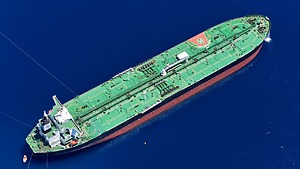
Today, the first Russian diesel since 2022 sets off after a surprise agreement between Russia’s Vladimir Putin and American President Donald Trump. Trump announced the deal this month, ahead of the November 3rd US mid-term elections, having waved US sanctions against Russia. The medium-sized tanker Agoioi Fanendes is loaded with 40,000 metric tons of ultra-low sulphur diesel, and is expected to arrive November 7th.
Trump previously announced on October 9th that Russia would immediately export 300,000 metric tons to the US and global markets, followed by 500,000 tons in November and 1 million tons “immediately thereafter.”
A Kremlin spokesperson on Friday confirmed the first ship under the deal had departed, but declined to specify whether it was heading to the US or somewhere else. The deal also required Russia to lift its own ban on diesel exports. Shipping data showed Russian diesel resuming exports along traditional routes after the ban was lifted, with at least two tankers going to Turkey and Brazil.
Russian Deputy Prime Minister Alexander Novak said more US shipments would follow.
Related Articles
Here is a list of articles selected by our Editorial Board that have gained significant interest from the public:
UN sends a warning to Chevron over methane plumes
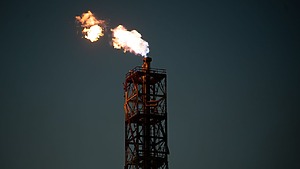
Methane plumes have been detected above Chevron’s Gorgon liquefied natural gas (LNG) plant in Western Australia. Satellite monitoring showed repeated detections, the latest exceeding a “super emitter” event under US EPA guidelines. Chevron was previously notified about methane emissions at the same site in July last year.
Chevron said it is now working with the UN Environmental Programme (UNEP) to address it. However, a UNEP spokesperson told ABC that it has not received formal feedback from either Chevron or the Australian government.
Chevron clarified in a statement that satellite monitoring came with “a wide range of uncertainty,” and a spokesperson said the company was “engaging with the UNEP, and we are seeking further clarification on their data.”

Zuckerberg in battle with Meta’s board over voting rights

Triggered by immense spending required for Meta to compete in artificial intelligence, Meta’s board and management planned to create a new type of company stock to sell to investors. Zuckerberg and other company executives were in agreement. However, Zuckerberg decided he didn’t want the new stock, or any future stock sales of his, to water down his power to overrule any other shareholders on important decisions.
Zuckerberg cited the possibility of paying a proposed one-time tax on billionaires in California as a reason for selling stock. The CEO also raised the possibility of moving away from California. But board members thought it might hurt the company if Zuckerberg were to move away from the company’s California headquarters.
For many public companies, creating a new class of stock would require a vote by shareholders, but for Meta, Zuckerberg has the power to decide. Fearing potential resignations, Zuckerberg and his board decided that Zuckerberg could sell only a fraction of his stock without diluting his voting power, but he could sell more the longer he stays at Meta.
Editor’s Note: The opinions expressed here by the authors are their own, not those of impakter.com — Cover Photo Credit: Abir Banik