Impakter
  • Environment
    • Biodiversity
    • Climate Change
    • Circular Economy
    • Energy
  • FINANCE
    • ESG News
    • Sustainable Finance
    • Business
  • TECH
    • Start-up
    • AI & Machine Learning
    • Green Tech
  • Industry News
    • Entertainment
    • Food and Agriculture
    • Health
    • Politics & Foreign Affairs
    • Philanthropy
    • Science
    • Sport
  • Editorial Series
    • SDGs Series
    • Shape Your Future
    • Sustainable Cities
      • Copenhagen
      • San Francisco
      • Seattle
      • Sydney
  • About us
    • Company
    • Team
    • Global Leaders
    • Partners
    • Write for Impakter
    • Contact Us
    • Privacy Policy
No Result
View All Result
Impakter logo
No Result
View All Result
How can young African agripreneurs survive COVID-19 and the climate crisis?

How can young African agripreneurs survive COVID-19 and the climate crisis?

CGIARbyCGIAR
August 17, 2020
in Impact, Society
0

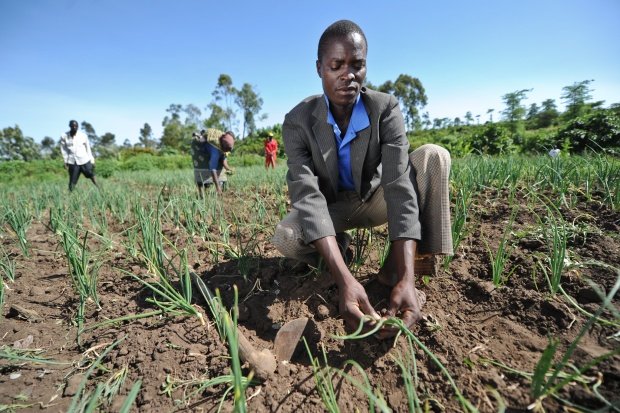
Climate breakdown and COVID-19 are pushing food systems to the brink. Find out how young African agripreneurs are adapting.

The COVID-19 pandemic is disrupting agricultural value chains in Africa by threatening food, nutrition and security, as well as the livelihoods of farming communities. In addition, climate-related catastrophes, such as floods and the desert locusts, have contributed to the challenges faced by the most vulnerable populations, especially the rural youth.

The CGIAR Research Program on Climate Change, Agriculture and Food Security (CCAFS), 2SCALE, the Food and Agriculture Organization of the United Nations (FAO), AgriProFocus, the Climate Smart Agriculture Youth Network (CSAYN), SIANI and Practical Action held an online discussion followed by a webinar to explore and discuss how young people working in agribusiness are coping with the effects of the pandemic in the context of a changing climate. The insights from this collaboration highlight struggles, coping innovations and policy response options.

Webinar: Youth in Agribusiness – Coping with COVID-19 in the context of a Changing Climate from SIANI on Vimeo.

Whilst development partners and governments have been encouraging the youth to embrace agriculture as a source of income, it is worth noting that young rural people, especially young women, are among the most vulnerable groups and are at high risk of disproportionately suffering the pandemic and its aftermath. The youth already face higher rates of unemployment and underemployment, and are overrepresented in the informal economy where they are 40% more likely to be in casual work arrangements than those above 35 years old. Most earn their income on a daily or weekly basis and have little or no access to health insurance or social security.


Related topics: How Africa’s Resilience Depends on Its Women – Locusts in East Africa – Scaling climate-resilient agribusinesses in East Africa

At the same time, it is increasingly observed that some of the policy responses and measures put in place by governments to halt the spread of the virus are exacerbating the existing challenges that rural youth face in engaging in agriculture and agribusiness. For example, several formal and informal businesses, which employ many young people have been forced to close or downscale significantly as a result of lockdowns and movement restrictions at national and local levels.

Innovative youth rising

However, all is not lost: Many young people are implementing innovative ideas to address the current food availability crisis using various digital platforms, as highlighted in an online discussion hosted on the Climate and Agriculture Network for Africa (CANA) platform from May 20, 2020. Some of the interesting insights that came out from these discussions include:

“I have seen some interesting innovations with an example of youth activities in the suburb where I stay, who told me his story of how he has lost his job and to survive he has acquired an old bicycle and loads it with fruits and vegetables. He uses a loudspeaker to call out to whoever needs the items he has as he rides through the neighborhood,” commented Stella Naggujja, (CANA) in the online discussion.

During the webinar held on June 18, 2020,  Ian Mutwiri of Homerange Poultry shared how his team has developed online manuals on poultry farming, which are freely available online, and how his team is using social media platforms, such as Youtube and Facebook, to conduct training sessions targeting the youth. Antony Malovi (CSAYN) has developed a solar drier using locally available materials given that he could not import any as a result of COVID-19 lockdown.

Marzia Pafumi, Youth Engagement Specialist (FAO), argued that youth agripreneurs responded to COVID-19 very fast, trying to adapt their business models and thinking outside the box to find new opportunities. She mentioned that as a result of the pandemic, there has been an accelerated move to online marketing and sales, such as orders on social media, home delivery and an increase in mobile payments. Agripreneurs also started to work more with adding value to primary products. Many of them started to use locally sourced agricultural inputs.

Mr Jacob Ochieng (Practical Action) highlighted the unprecedented impact COVID-19 is having on the economy worldwide. Practical Action is supporting agribusinesses and youth so they can remain safe by providing access and distributing information on the best practices about stopping the spread of the virus. Ochieng also underscored the importance of keeping essential agricultural services running. He mentioned that marketing and networking for agripreneurs is not possible during a lock-down, but digital platforms and social media that will help to coordinate are key when people can not physically meet to negotiate, transact or receive training. In conclusion, he mentioned that innovations and the combined learnings about climate change and COVID-19 should be utilized in activities related to resilience for youth in agribusiness.

This blog was originally published on the Swedish International Agriculture Network Initiative website. SIANI supports and promotes multisector dialogue and action on sustainable agriculture for food security, improving nutrition and hunger eradication.


About the author: Catherine Mungai is a Partnerships and Policy Specialist at CGIAR, Matthew Fielding is the Deputy Director & Senior Communications Manager at SIANI, Mary Thiong’o (FAO), Alphaxard Gitau (2SCALE), Sharon Anyango (AgriProFocus) and Victor Mugo is the Regional Coordinator for East Africa at CSYAN.


EDITOR’S NOTE: The opinions expressed here by Impakter.com columnists are their own, not those of Impakter.com.  Photo Credit: K. Trautmann

Tags: africaagri-businessfood systems
Previous Post

Suffering an Ecological and Humanitarian Crisis, Mauritius Needs International Support 

Next Post

Justice Systems in Central Asia Struggle with and Adapt to Living with COVID-19

Related Posts

US President Donald Trump
Politics & Foreign Affairs

Trumps ‘America First’ Policy in Africa: The Consequences

The Trump Administration’s “America First” doctrine prioritizes transactional relationships and reduced engagement abroad (theoretically), which has resulted in consequential shifts...

byRichard Seifman - Former World Bank Senior Health Advisor and U.S. Senior Foreign Service Officer
December 29, 2025
ESG News regarding the UK’s Updated Environmental Improvement Plan, modernizing Mauritania’s railway system, the EU carbon border tax, and the EU’s cross-border energy projects
Business

UK Unveils Updated Environmental Improvement Plan

Today’s ESG Updates UK Accelerates Nature Recovery: The government commits £500m to Landscape Recovery and targets 250,000 hectares of restored...

bySarah Perras
December 1, 2025
Animal Health
Biodiversity

Better Animal Health Is the Low-Risk, High-Reward Climate Investment We Need

Imagine if there was a way to reduce emissions from the meat, egg and dairy sector by nearly a quarter,...

byCarel du Marchie Sarvaas
November 26, 2025
ESG News regarding: EU proposes to re-examine SFDR; Insurers struggle with mapping and managing climate risk in Africa; Fire at the climate summit in Brazil; UN demands Iran to disclose nuclear material stockpile.
Business

SFDR Re-examination Proposed by EU

Today’s ESG Updates Simplify ESG Reporting: The EU proposes simplifying ESG reporting for the financial sector.  Climate Risk in Africa:...

byPuja Doshi
November 21, 2025
The Amazon rainforest is often called “the lungs of the world.” It produces oxygen and stores billions of tons of carbon every year. The Amazon rainforest covers more than 60% of the landmass of Peru. Photo Credit: USDA Forest Service / Diego Perez.
Biodiversity

Inside COP30

The 30th United Nations Climate Change Conference (COP30) is taking place in Belém, Brazil, from November 10 to 21, 2025....

byInternational Institute for Sustainable Development (IISD)
November 10, 2025
climate change and food
Biodiversity

COP30: Climate Extremes Are Already Impacting Food Yields Today

The 30th United Nations Climate Change Conference (COP30), taking place in Belém, Brazil, brings together world leaders, scientists, non-governmental organizations, and...

byThe Food and Agriculture Organization of the United Nations (FAO)
November 7, 2025
ESG news regarding Microsoft and OpenAI deal, Germany and EU engine ban, Canada and oil emissions limit, India’s coal sector
Business

OpenAI Can Restructure Itself Following Non-Binding Deal with Microsoft

Today’s ESG Updates Microsoft, OpenAI Agree on For-Profit Restructure: A new non-binding deal lets OpenAI restructure as a for-profit company....

byYuxi Lim
September 12, 2025
ESG news regarding China leading the world in renewable energy, Ethiopia beginning operations on Africa’s largest hydroelectric dam, development banks making $137 billion in climate investments, and the EU’s high energy costs hindering competitiveness
Business

‘China is the Engine’ Driving the Clean Energy Shift

Today’s ESG Updates China Drives Global Renewable Shift: China is leading the global clean energy push with affordable solar, wind,...

bySarah Perras
September 9, 2025
Next Post
Justice Systems in Central Asia Struggle with and Adapt to Living with COVID-19

Justice Systems in Central Asia Struggle with and Adapt to Living with COVID-19

Recent News

Diamond Painting Designs

7 Beautiful Diamond Painting Designs You’ll Love Working On 

January 13, 2026
ESG News regarding the DOJ’s investigation into Federal Reserve Chair Jerome Powell, Orsted’s U.S. offshore wind lawsuits, Stegra’s Non-Prime Steel Deal With thyssenkrupp, and Ghana repaid $1.47 of energy debt

US Federal Reserve Chair Under Investigation

January 12, 2026
Steakhouse in Tucson

7 Factors That Define a Premium Steakhouse Experience

January 12, 2026
  • ESG News
  • Sustainable Finance
  • Business

© 2025 Impakter.com owned by Klimado GmbH

No Result
View All Result
  • Environment
    • Biodiversity
    • Climate Change
    • Circular Economy
    • Energy
  • FINANCE
    • ESG News
    • Sustainable Finance
    • Business
  • TECH
    • Start-up
    • AI & Machine Learning
    • Green Tech
  • Industry News
    • Entertainment
    • Food and Agriculture
    • Health
    • Politics & Foreign Affairs
    • Philanthropy
    • Science
    • Sport
  • Editorial Series
    • SDGs Series
    • Shape Your Future
    • Sustainable Cities
      • Copenhagen
      • San Francisco
      • Seattle
      • Sydney
  • About us
    • Company
    • Team
    • Global Leaders
    • Partners
    • Write for Impakter
    • Contact Us
    • Privacy Policy

© 2025 Impakter.com owned by Klimado GmbH