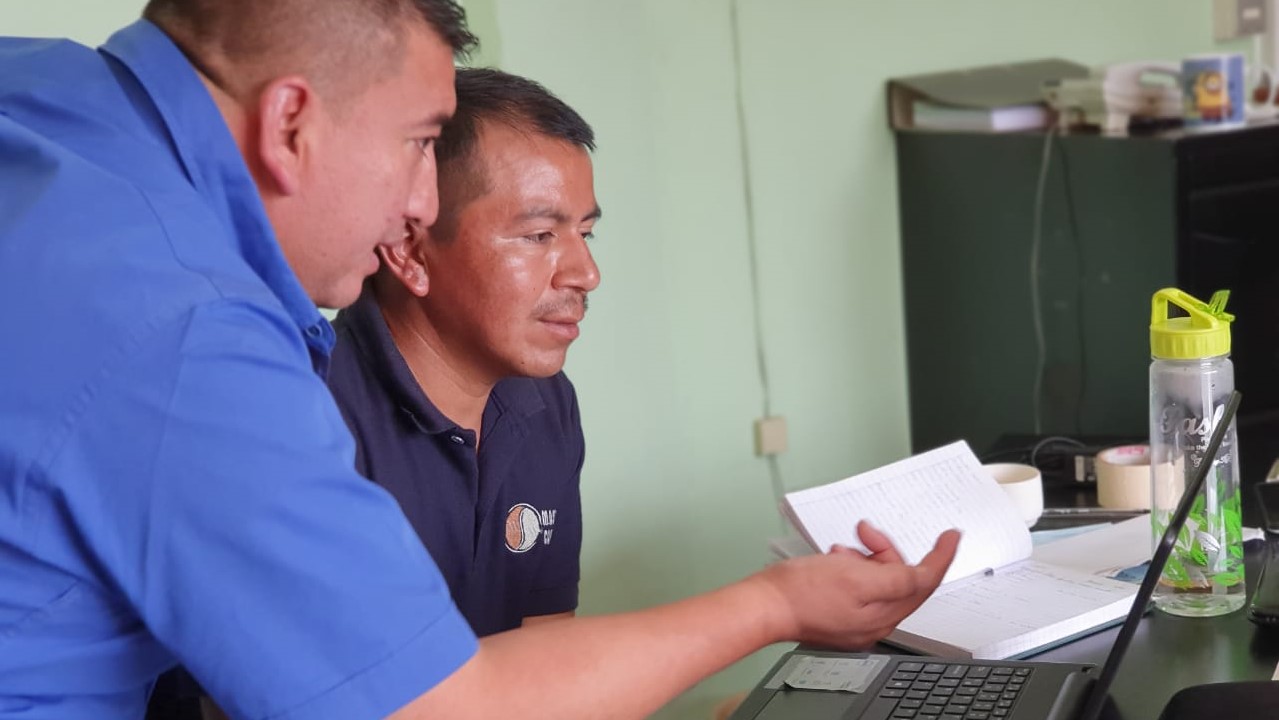
When coffee farmers can take advantage of cloud-enabled, mobile technology, they simplify their data collection process and use this data to benchmark their performance within their industry, inform business decision making, and increase transparency for their farmers.

Since the advent of the internet, digital technology has revolutionized the coffee industry. Buyers price their contracts with algorithmic software. Roasters optimize the flavor of their beans by controlling heat to a fraction of a degree. Even baristas use high-tech kits to test the chemical makeup of their brews. But while the world has changed around them, many coffee farmers have been left out.
Related topics: Democratizing Data for Rural Businesses – Coffee Farmers Need Bold Allies – Better Coffee, Better Livelihoods
Long workdays, lack of market access, and inconsistent payment have always been steep challenges for farmers. But in recent years, climate change has exacerbated crop diseases and weather disasters. This has imperilled yields and livelihoods for farmers on a previously unimaginable scale. This is a modern crisis that requires modern solutions.
Unfortunately, most coffee cooperatives continue to rely on manual information to make business decisions, only going digital when they’re required to load data into a certifier’s spreadsheet. It’s not that they aren’t interested in digital technology. But, just as remote enterprises lack access to critical financing, they also lack the tools and training to harness technology for decision making. That’s why Root Capital launched our Digital Business Intelligence (DBI) services—to democratize data for those who need it most.
When agricultural businesses can take advantage of cloud-enabled, mobile technology, they simplify their data collection process. This enables more efficient and transparent sharing with upstream buyers and consumers. Just as importantly, enterprises can use the data to benchmark their performance within their industry, inform business decision making, and increase transparency for their farmers.

Before launching DBI services on a large scale, we needed to validate it could work. So starting in 2015, we began to work with a number of our long-term clients who could help pilot this new service. In 2018, we turned to Quezaltenango, Guatemala and the Manos Campesinas coffee cooperative. A longtime lending and advisory client of Root Capital, Manos Campesinas had the internal controls necessary to take on this ambitious project, as well as a marked determination to innovate on behalf of its 1,200 farmer members who fight climate change on a daily basis.
Manos Campesinas had instituted a prototype data platform with a third-party software provider to simplify their certification process. The tool was useful in some ways, but didn’t factor in the specific limitations facing agricultural enterprises. It didn’t work without a reliable internet connection, making it impossible for agronomists to use on remote farms. What’s more, every time the cooperative wanted to access its own data, it needed to request a bespoke report from the software provider. This slow process meant the cooperative’s leaders couldn’t use their real-time data to make real-time decisions.
In 2018, we conducted an overhaul of the cooperative’s existing systems. Advisors from Root Capital worked alongside employees of the cooperative to redesign the forms used by the agronomic team to gather information. Together, we ensured the data collected weren’t just in line with certification requirements, but also with the goals and needs of the cooperative. Before launching, we ensured that staff of Manos Campesinas were prepared to troubleshoot their technical hiccups and understood effective survey taking and data validation skills. We offered much of this training over video conference, another technological solution that enables us to reach our clients quicker and on their own schedules.
For Marco Tzunun, Production Coordinator at Manos Campesinas, this new data allows him greater visibility into the movement of coffee within the organization. “Now we can control our own information,” he says, “we have been able to provide data to our certifier on time and in the right format.” With greater insight into farm-level data, Marco’s team can work with the sales department to secure larger contracts and earn higher incomes for their members.
Elsewhere on the supply chain, buyers are equally impressed. Ed Canty, General Manager of Cooperative Coffees, recently met with the team of Manos Campesinas and remarked on the power of Root Capital’s DBI services: “For me, this was the first producer meeting where we were analyzing data live. You could see genuine excitement in the information they were able to generate and the skills they had in manipulating their data. Truly exciting stuff.”
Manos Campesinas can now leverage data to improve its relationships with buyers and earn higher incomes for its farmer-members. But the potential that DBI holds for the cooperative goes well beyond even that.

In November of 2018, we gathered board members, managers, and the agronomic extension team of Manos Campesinas for a climate resilience advisory workshop. We paired leading climate analysis from the International Center for Tropical Agriculture (CIAT) with the cooperative’s own digital maps of farmer locations. In real time, we were able to show tailored risk assessments of the predicted impact of climate change on cooperative members. With limited time and resources, the cooperative can now direct climate adaptation services to the farmers who need it most. Most recently, we trained cooperative employees on how to use farm-level data to create tailored fertilization plans for farmers. These plans will help members maintain coffee quality and yields in the face of volatile temperatures and extreme weather.
Farming is an ancient profession, but it faces thoroughly modern challenges. By harnessing the power of digital technology, we are helping businesses like Manos Campesinas—and the farmers they sustain—move boldly into the future.
About the author: Rob Hefferon is a Communications Associate at Root Capital
EDITOR’S NOTE: The opinions expressed here by Impakter.com columnists are their own, not those of Impakter.com. Photo Credit: Sean Hawkey and Root Capital