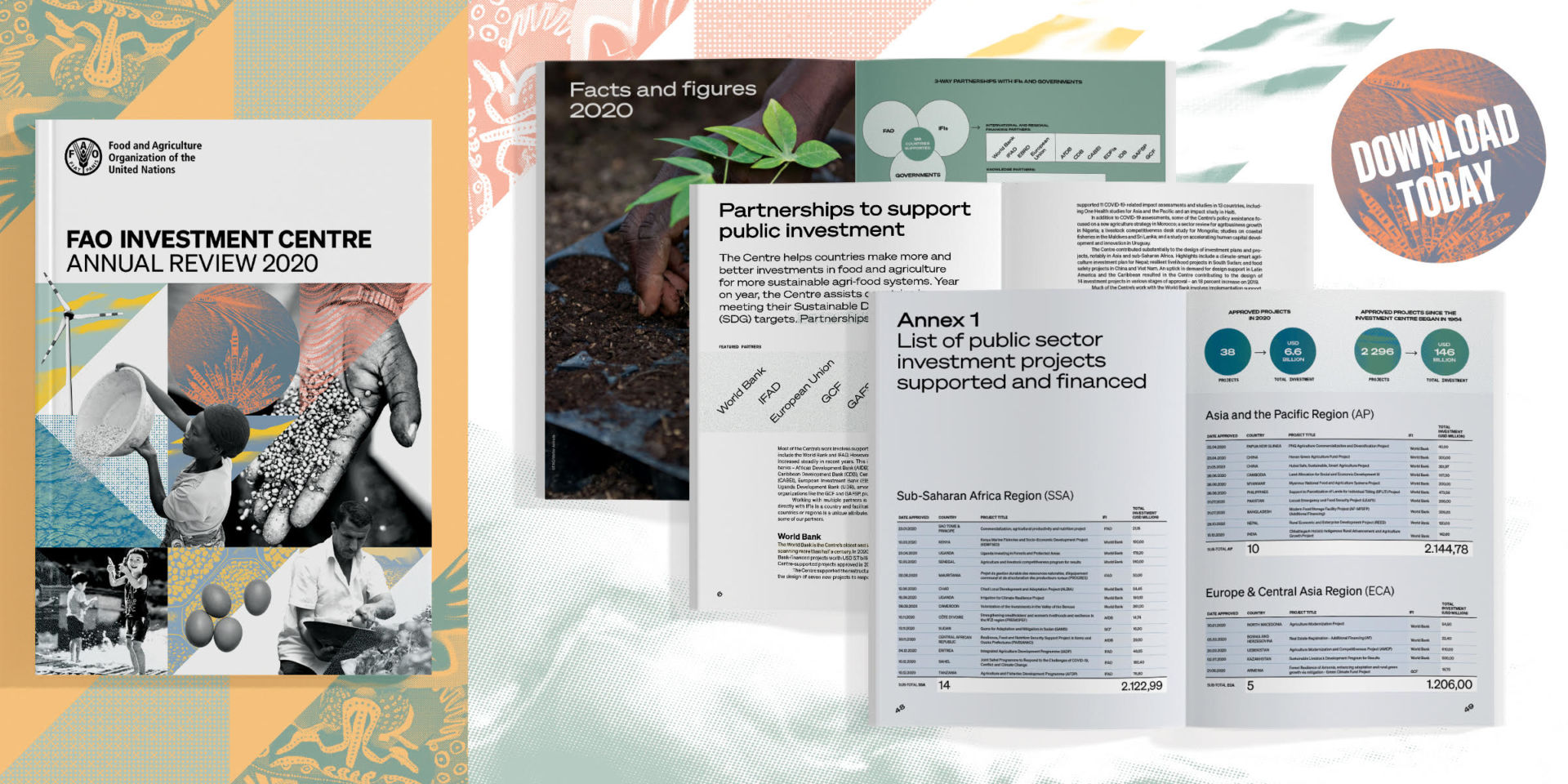

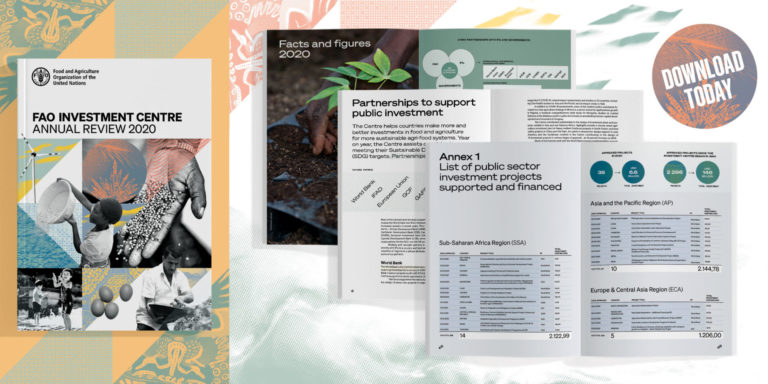
Despite an unprecedented and challenging year marked by the global impacts of the COVID-19 pandemic, the FAO Investment Centre’s work to support sustainable investment in food and agriculture continued apace in 2020 — and is already in full swing in 2021, according to the latest edition of the Investment Centre’s Annual Review.
The report highlights the major activities and results in terms of support to public and private investments and promotion of conducive policies. It also shows the priority areas for the coming years, including innovation, digital technologies and increasing the support to green investments.
“…quality and quantity of investments made today shape the impact and outcomes of tomorrow,”
— FAO Investment Centre Director Mohamed Manssouri.
“This Annual Review showcases some of the Centre’s noteworthy achievements in 2020 and the range of its investment support – from the development of public and private investment strategies and programmes to policy guidance, analytical studies and training, and from the scaling up of innovative technologies and digital platforms for food and agriculture, to blended finance mechanisms,” said the Director-General of the Food and Agriculture Organization of the United Nations (FAO) QU Dongyu in his foreword.
“The COVID-19 pandemic has revealed big weaknesses in our global agri-food systems,” he continued. “Investment is key to transforming [them]. That is why our Members allocated more regular programme resources to the Investment Centre in 2020. As the pandemic evolved during 2020, the FAO Investment Centre worked alongside Members and financial partners with FAO technical units and offices around the world to help prevent the global health crisis from becoming a food crisis.”
Major achievements
The FAO Investment Centre helped design 38 public investment projects approved by financing partners for over $6.6 billion over the course of the year, up 16 percent from 2019.
The Centre also contributed to 31 agricultural strategies, 18 policy and analytical studies and 46 sector studies. It facilitated 24 public-private policy dialogue processes and participated in FAO Hand-in-Hand teams in 34 countries.
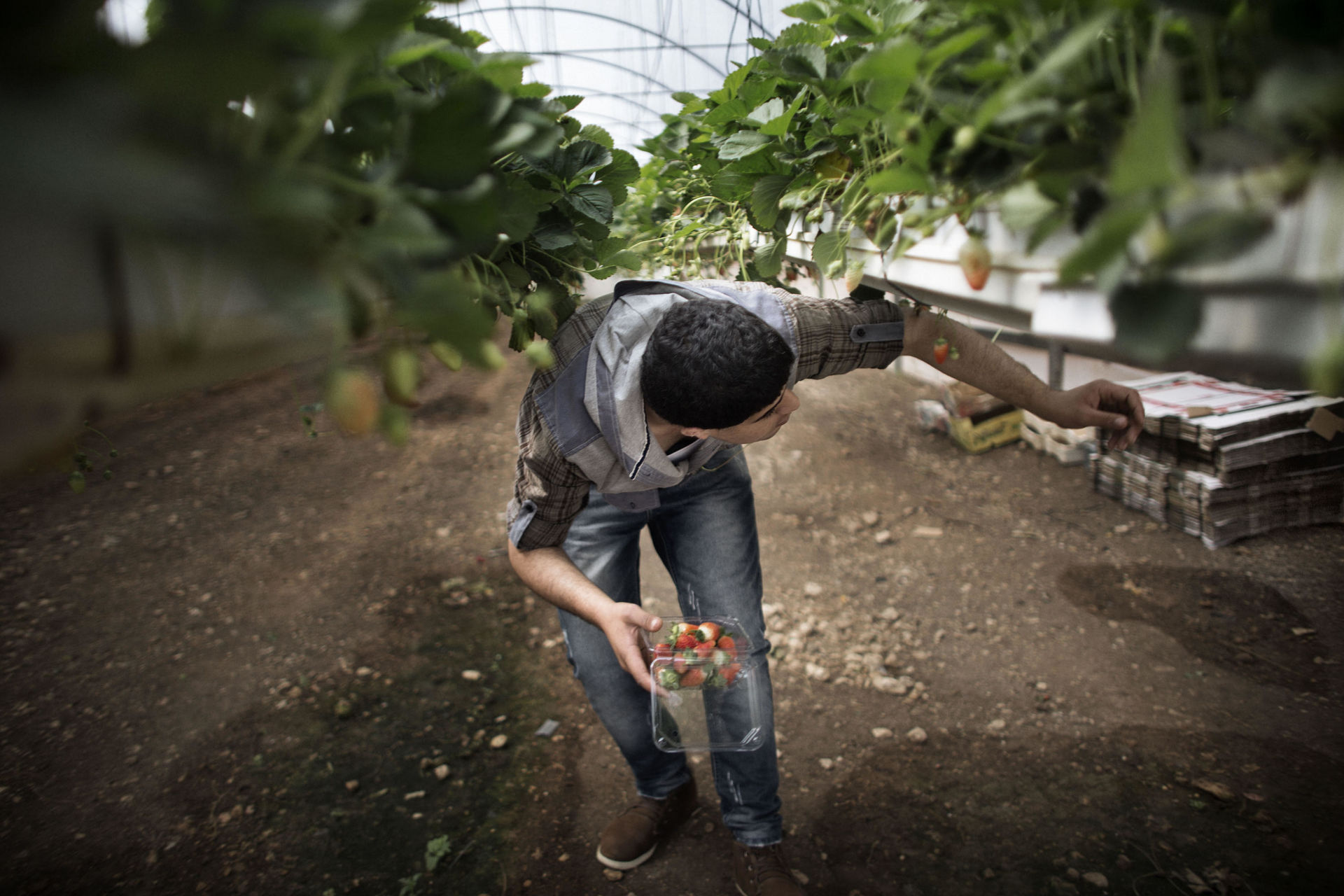
COVID-19
During the COVID-19 pandemic, FAO moved quickly to help countries navigate the new reality. Thanks to digital technology and collaboration with FAO’s teams and partners around the world, the Centre was able to innovate and adapt quickly, relying on virtual missions and local capacity to provide policy, capacity development, knowledge-sharing and investment support tailored to the specific realities and needs in a country.
Related Articles: The Importance of Investment and Farmer Innovation | How Blended Finance Can Help Farmers and Agribusinesses in the COVID-19 Era
The Centre collaborated with the World Bank and other longstanding partners to restructure ongoing investment projects and design new ones to tackle COVID-19 challenges in agri-food systems head on. With the European Bank for Reconstruction and Development (EBRD), the Centre prepared a joint COVID-19 package to finance technical assistance to limit short-term disruptions to agri-food value chains and build resilience. In Serbia and Ukraine for instance, two big exporters of wheat, maize and other grains, FAO and the EBRD worked with the Ukrainian Grain Association and Association Serbian Grains to develop guidelines on COVID-19 safety adjustment measures.
The Centre also led the preparation of corporate policy briefs and contributed to FAO’s online policy tools, including the use of big data for real-time information on the impact of COVID-19 on agri-food value chains, food prices and global food security.
Full steam ahead
Looking ahead, the Centre will continue working with its partners to leverage greater and more effective public and private investment in food and agriculture, including through blended finance instruments and green financing.
Together with the European Union and CIRAD, the Centre is supporting countries with national food systems assessments and dialogue, aiming to complete more than 50 assessments by the end of 2021. These findings will provide rich inputs for stronger policy and investment decisions around agri-food systems and feed into the 2021 United Nations Food Systems Summit.
The Centre will continue sharing the latest investment knowledge and innovations for a healthier, more sustainable and inclusive future, including boosting its Knowledge for Investment (K4I) programme to fill knowledge gaps, raise the visibility of investment matters and engage with new audiences.
According to FAO Investment Centre Director Mohamed Manssouri, the decision by FAO’s executive Council’s in 2020 to inject significantly more resources into the Centre means it can “expand, provide more in-depth investment support to countries and strengthen and diversify partnerships and collaboration.”
He added that the “quality and quantity of investments made today shape the impact and outcomes of tomorrow.”
Editor’s Note: The opinions expressed here by Impakter.com columnists are their own, not those of Impakter.com. — Featured Photo Credit: ©FAO.