
The oldest United Nations technical agency, and at one point in its chaotic history, the largest, has a bizarre name that expresses its dual personality and lack of focus from the start: Food and Agriculture Organization of the United Nations, FAO for short.

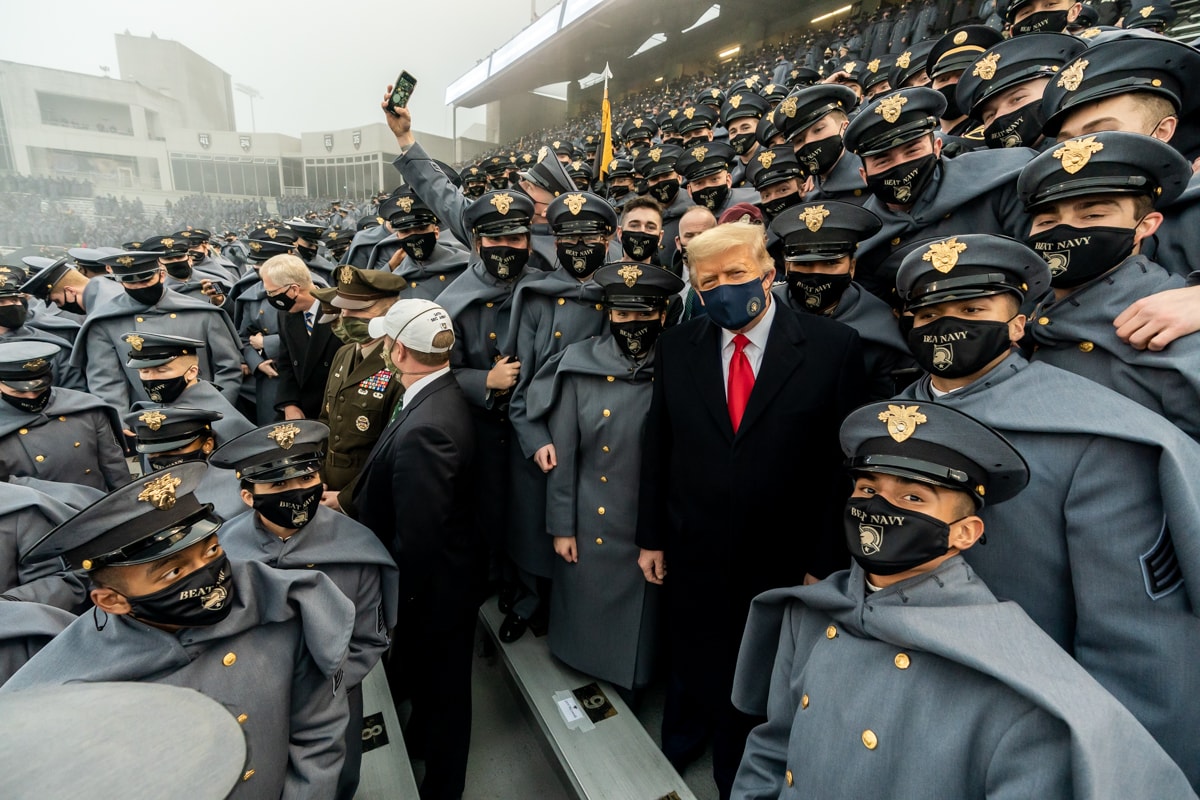
In the photo: Assembly Launches International Year of Quinoa – José Graziano da Silva, Director-General of the Food and Agricultural Organization (FAO)
A name that encapsulates its dual destiny and perhaps explains why it has never been able to come out strongly in one or the other direction. The FAO logo simply says “Fiat Panis” – “it makes bread”:

That is truly reductive for a range of activities that is so broad and diverse that few people understand exactly what FAO does. And it focuses unduly on one aspect: food, at the expense of the other, agriculture. Also it features an ear of corn, the cereal characteristic of the West, leaving aside rice, sorghum and other crops common in the rest of the world where FAO operates.No surprise there.
FAO was to a large extent the brainchild of a Scottish nutritionist, John Boyd Orr, who became FAO’s first Director General and recipient of the Nobel Prize for Peace in 1949. Born in 1880, the son of a quarry owner, he was a brilliant student and an entrepreneurial young man – half-way through his studies, when he ran out of money, he took out a mortgage and bought a block of tenanted flats. With the income, he paid for his studies and once he had graduated, sold the flats, turning a small profit.
John Boy Orr made his reputation in nutrition research and in the 1930s became an active propagandist for improving people’s diets. At the FAO founding meeting in Quebec, Canada, held in October 1945, the year before the United Nations itself was created, two diverse concepts clashed over what the new institution should do: focus on food, John Boyd Orr’s concern, or on agriculture, an idea spearheaded by the Italians whose agriculture research center had achieved prominence in Europe. Eventually, the logo reflected John Boyd Orr’s ideas while the new location of FAO’s headquarter, moved from Canada to Rome was a victory of sorts for the tenants of agriculture.
Consider: the term used is “food” and not nutrition, i.e. describing a product (food) rather than a science (nutrition), which is certainly misleading for a technical agency; and “agriculture” is added almost as an afterthought, without reference to what is intended: agricultural development, and if so where, in developing countries only or worldwide? Monitoring production and taking a census of agricultural production worldwide? Keeping tab on agricultural trade issues? Establishing phyto-sanitary criteria and rules for production of healthy food? Identifying areas/environments subject to climatic stress and other factors of soil and inputs degradation that threaten agriculture? Supporting and stimulating agricultural research and innovation?

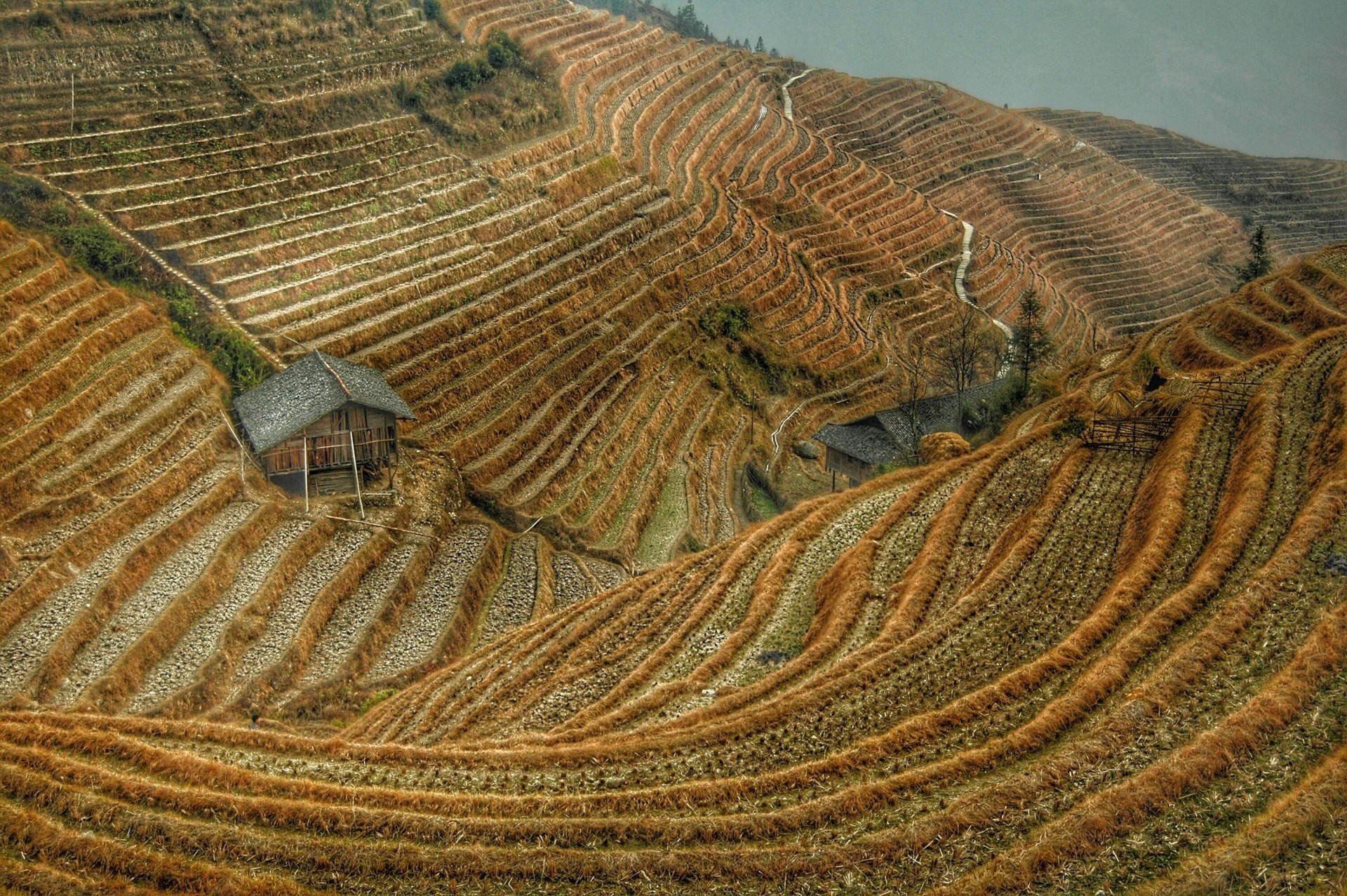
In the photo (above): Increasing Agricultural Production. The Government of the Republic of Korea has been attempting to increase agricultural production through more rational use of fertilizers and by bringing wasteland into cultivation. Towards the attainment of this goal, the Government in 1961 with the assistance of the United Nations Special Fund and the Food and Agriculture Organization (FAO) acting as the Executing Agency, launched an agricultural survey and demonstration in two selected watersheds. These studies and demonstrations, which will take five years, will be used by the Government as a guide in selecting the best methods of developing similar cultivable areas.Mr. Robert D. Flannery, left, of the United States, a FAO Expert in soil and water conservation, conversing with Mr. Choung Chul Kim, an engineer with the Project. In the background are workers constructing bench terraces near the village of Sang Tan, one of the demonstration areas.01 April 1964 (source UN / multimedia)
Add to the mix a broadened definition of agriculture and you double the potential list of activities.
Because the term, in FAO parlance, also covers animals, including insects(notably bees, a key input to ensure agricultural production and locusts, a major threat); forestry, including mountainous areas where agriculture is completely different from production on flatlands and in the valleys; and fisheries, including the establishment of zone of exclusive exploitation of sea areas bordering coastal nations (EEZs) often a subject of political contention – most recently in the Artic. For nearly every area in agriculture where FAO is active you find the equivalent in animal husbandry, forestry, fisheries and environmental sciences. And the range of activities in each is astonishingly broad going from the smallest to the largest: from the atom and genetics research to satellite mapping, from gender issues – the role of women, children, and the handicapped – to the preservation of resources, including traditional farming techniques and seed banks.
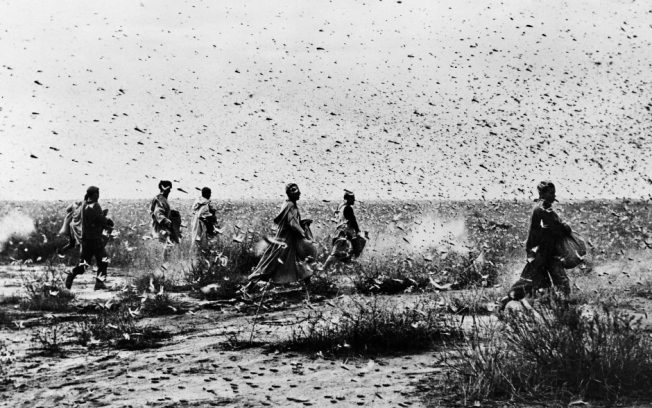
Photo: In Morocco, the FAO uses poison bait to combat locust invasions, 1954
The fact that food is included in the title also means that a number of activities straddling both agricultural production and nutrition are included. Major examples are the Codex Alimentarius (created in 1963 with WHO – The World Health Organization) to develop food standards and food safety criteria, codes and practices; early warning systems to inform about impending agricultural/food emergencies; the International Plant Protection Convention that provides worldwide regulation of pesticides (as of May 2012, 177 governments had adhered); cooperation with the AIEA, started in 1964 and that has led to several breakthroughs, most recently the decoding of the genome of the tsetse fly, the sole cyclical vector of African trypanosomes to humans and animals in sub-Saharan Africa. In the photo: FAO’s Preparatory Commission on World Food Proposals. Australia’s Viscount Bruce of Melbourne, chairman of the Preparatory Commission of World Food Proposals, of FAO (Food and Agriculture Organization of the United Nations), gives a press conference about the meeting of the Economic and Employment Commission of the United Economic and Social Council, at which he gave an exposition of conclusions reached by the Preparatory Commission and of the implications of the Economic and Employment Commission.30 January 1947. (source UN / multimedia)
The above paragraphs pretty much describe the areas that FAO is actually active in, from broad policy issues to science to strictly technical issues.
This dual activism in both food and agriculture, has brought FAO both great advantages and serious disadvantages – more in next article about FAO: “From a Technical to a Highly Politicized Agency “