

In the UK, just under one million young people aged between 16 and 24 are not in education, employment or training — equating to approximately one in eight of all young people. Known as NEETs, this proportion of young people who are neither learning nor earning, without serious intervention, is likely to rise to one in six by 2030.
Many are held back by ill health, caring responsibilities, low confidence or a lack of workplace experience. This is what Alan Milburn, a former Cabinet Minister, has been focused on uncovering over the last year or so on behalf of today’s Labour government. The government puts the cost of these barriers to the economy at up to £125 billion a year, as Milburn’s interim report on young people and work estimated.
At the same time, employers across land-based and environmental careers, such as agriculture, horticulture, forestry, environmental land management, biodiversity and nature recovery, are facing a shortage of workers.
This shortage is a key contributor to the UK being ill equipped to mitigate the effects of climate change, support the green transition, meet the government’s nature recovery objectives and secure the essential supply chains that are vital to delivering food security in this country.
Over 80% of UK land is managed by the land-based sector, directly employing more than 450,000 people and underpinning an agri-food supply chain that supports 4.2 million jobs.
The UK produces only around 65% of the food it consumes. Strengthening domestic skills is central to reducing reliance on volatile international supply chains. Precision agriculture, robotics, and data-driven farming only work if trained people are available to operate them. Net zero and nature recovery likewise depend on people who can put policy into practice on the ground.
There is a natural opportunity for young people to contribute to and benefit from our response to these concerns. Both in the sheer number of young people who are NEETs, who can help address workforce shortages, and in the fresh perspectives that younger workers can bring on how businesses connected to land-based functions evolve, respond to new challenges and contribute to our national resilience.
Farms, forestry businesses, conservation organisations, and horticultural employers all need people with practical, technical, and digital skills. Last year, Skills England, the UK’s official body for addressing skills needs nationally, identified around six in ten land-based occupations as high-demand roles — echoing the calls I hear from many land-based organisations that we partner with.
Alan Milburn’s review of young people and work is an opportunity for us to look beyond traditional policy responses and understand how each sector can offer young people a meaningful career.
Training is the starting point, but not the end
Training has a key role to play here. It helps to equip workers with the skills needed to meet the rapidly changing challenges in many of our industries, ensuring relevance and competitiveness as well as building confidence and resilience in the workplace.
For example, drones, sensors, robotics and data analytics are already shifting how land is managed. Employers are increasingly seeking employees with digital and data skills, including automation and AI literacy, as well as knowledge of environmental compliance and practical problem-solving.
However, at present, there is a disconnect between young people seeking opportunities and employers with vacancies they cannot fill. We need more workers, and young people need more accessible routes. The sector has more interest than many people may assume. Harper Adams University School of Sustainable Food and Farming’s report found that although 42% are open to working in agriculture or could be persuaded to consider it, only 4% of young people are already employed or actively pursuing a career in agriculture.
Our own research, based on evidence from colleges, trainers, recruiters and land-based initiatives, finds that the same barriers recur. Funding is hard to navigate, training is not always accessible or connected with subsequent vacancies and apprenticeship places can be hard to find — especially in rural areas. Transport, equipment and certification costs can exclude young people from low-income households. Small and micro businesses, which make up much of our sector and the national economy, often lack the time and capacity to recruit and support new entrants.
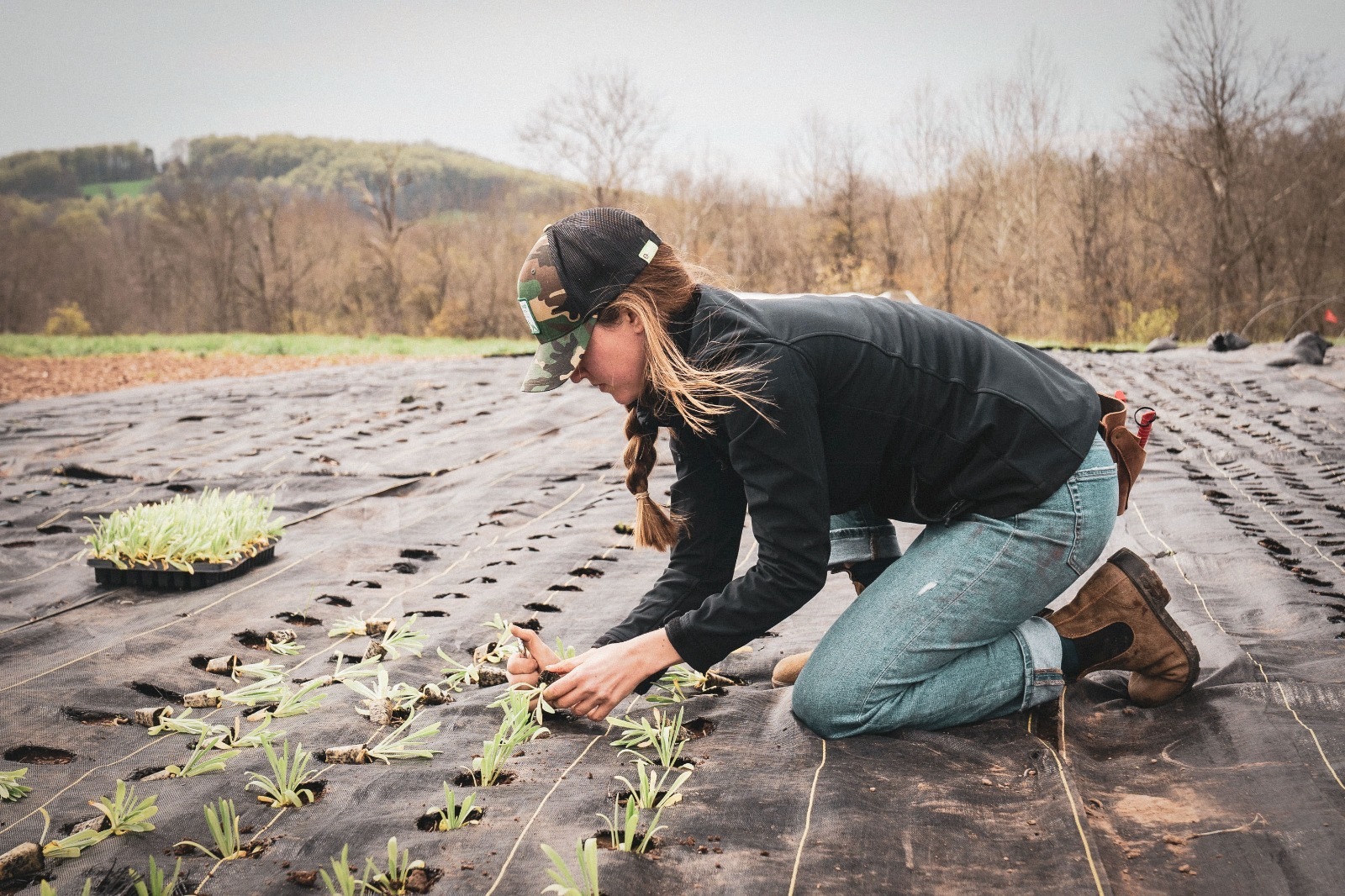
But opportunities are there. Horticulture, for example, offers an accessible entry point in both peri-urban and rural settings, and can lead into wider careers in food production, environmental work and land management.
Additionally, Groundwork’s New to Nature programme received around 2,000 applications for 95 places, a sign of growing interest. The programme, targeting young people from ethnically diverse backgrounds, disabled and/or economically disadvantaged, provided them with year-long paid work experience in the environmental sector.
In my 18 months at Lantra, I have started to see the challenge of youth inactivity and unemployment as an opportunity for our amazing farmers and growers to attract a new wave of young people into meaningful, fulfilling careers in the rural economy.
At the same time, landing a job is only the first challenge. Clear progression routes are missing, leaving young people unable to see where an entry-level role might lead.
We have been calling for a more joined-up approach to Continuous Professional Development (CPD) pathways, creating a more coherent framework across the land-based sector. Getting young people into jobs is only one side of the coin — keeping them there matters just as much. CPD pathways help ensure that personal development and career progression align with the sector’s future needs, while helping retain people in roles critical to meeting the country’s needs.
A place-based response
We also need to get better at joining up what already exists. Too often, youth employment support, skills provision and employers operate in parallel, when the real opportunity lies in connecting them around actual routes to work.
At Lantra, our research into youth disengagement and our recent regional land-based skills work have reinforced this. Across four regional roundtables, we heard many of the same barriers: poor awareness of the available opportunities, difficulties with transport and access, too few chances to experience the work first-hand and training that does not always clearly connect to a job. But we also heard how differently those barriers play out in different places.
That is why we think the starting point should be local and practical: begin with employers that have genuine workforce needs and work backwards. What would a young person need to know, what experience would they need, and what would they need to learn to have a realistic chance of getting, and staying in, that work?
Also, what support already exists that could help them get there? Rather than trying to build a new system, Lantra can bring the land-based knowledge, help make those connections and share what works so that others can learn from it.
Our research suggests this depends on three interventions:
- Removing practical and financial barriers: Young people should not be excluded because they cannot afford travel, workwear, or certification. Targeted funding can make a difference. In Scotland, more than £820,000 was awarded through training funds to address these challenges in our sector between 2024 and 2026.
- Connecting training and apprenticeships directly to tangible employment: Training should be designed around genuine employer vacancies, with taster work experience, built-in mentoring and paid work, so that completing a course leads to permanent progression.
- Making it easier for smaller employers to participate: Existing youth employment partners or intermediaries could help with recruitment and support, giving smaller businesses the capacity for administration and supervision, allowing more businesses to employ and mentor young people.
Lantra has experience developing skills around the characteristics of a place: its industries, people, geography, employers and economic opportunities. In Wales, Lantra’s AgriStart programme worked with Powys County Council to deliver a free accredited training programme for 16- to 40-year-olds from non-farming backgrounds in agriculture, forestry, and horticulture. The training was fully funded and delivered through our network. Training was both face-to-face and online, making it accessible to many people.
Delivered across 13 Scottish council areas, Lantra Scotland’s Land-Based Pre-Apprenticeship programme is a strong example of place-based skills investment. The programme uses training funding to give 16- to 24-year-olds a 26-week paid placement with local land-based and rural employers, combining practical workplace experience with structured learning.
In 2025–2026, the programme engaged more than 16,600 young people, with 67% of pre-apprentices coming from non-farming backgrounds.
If the UK Government wants more young people in meaningful and rewarding employment, whilst honing the skills to address food security and meet its environmental targets, these can be solved together, rather than in silos. Cross-sector collaboration remains key, and we are already exploring work with the Department for Work and Pensions (DWP), Jobcentres and education and training providers to connect unemployed people with genuine vacancies, training, work experience and a guaranteed interview.
Our Shaping a Resilient Future report calls for a national skills taskforce to coordinate land-based skills policy, training provision and careers activity across the UK. It should be supported by regular workforce data and clearer progression pathways. It also requires better alignment between existing skills and employment funding, including devolved budgets and a modest, flexible fund for practical costs and coordination.
In turn, policymakers should back joined-up, place-based action that gives young people a future and the country the workforce it needs. We represent only one sector that can help reduce NEET rates, but we offer a pathway for the UK Government to address rising rates of youth inactivity.
Addressing the NEETs crisis means more than helping young people find and stay in work. Investing in training, personal development and skills prepares our workforce for the future and helps it adapt to changing needs. Investing in young people is an investment in our future and, ultimately, in our national priorities. The land-based sector must be part of both the conversation and the solution.
Editor’s Note: The opinions expressed here by the authors are their own, not those of impakter.com — Cover Photo Credit: Lantra.