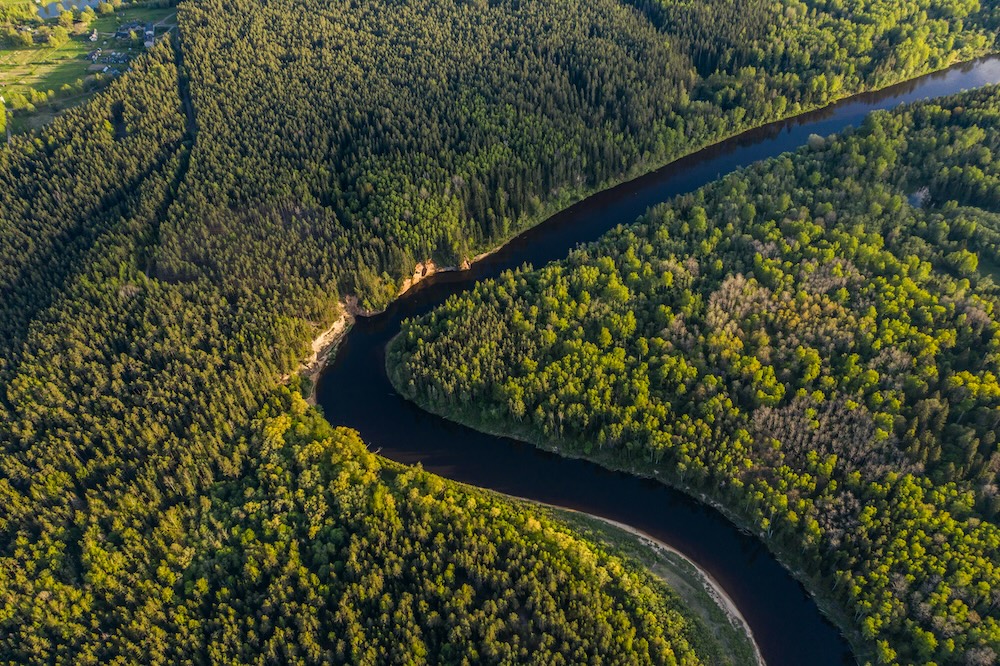
Today’s ESG Updates
- Google Commits to 200k Tons of Amazon Offsets: Google quadruples its offtake with Brazilian Reforestation Startup.
- Boards Are Failing to Treat Nature as a Core Business Risk: New research reveals that most firms haven’t integrated nature risk into board-level governance or capital decisions.
- EU Considers More Flexibility on ESG: Europe may add review clauses to ESG rules to win buy-in from the U.S. and Qatar ahead of COP30.
- Australia Hits a Clean Power Milestone: Utility-scale renewables generated more electricity than fossil fuels for the first time in October.
Google makes Brazilian reforestation startup its main carbon credit supplier
Google agreed to buy 200,000 metric tons of carbon offsets from Brazilian reforestation startup Mombak, a fourfold expansion on a 2024 pilot and the largest nature-based purchase the company has disclosed. Mombak restores degraded pastureland to native forest, producing credits that the Symbiosis Coalition (founded by major tech buyers) has endorsed for accounting, biodiversity, and community benefits. The deal reflects Big Tech’s shift away from low-cost REDD credits (often under $10/ton) toward higher-integrity removals, which now fetch $50–$100/ton or more. Buyers say the supply of top-tier nature credits is scarce, pushing prices up as data-center energy demand and corporate net-zero commitments drive competition for vetted offsets. Offsetting purchases, no matter how credible, cannot replace direct emissions cuts and risks delaying the systemic decarbonization needed to meet global climate goals. The evolving narrative surrounding carbon credits and offsets, particularly among major tech companies, will be an important one to follow during COP30.
***
Further reading: Exclusive: Google deal for Amazon reforestation makes Brazilian startup its top carbon credit supplier
New report finds few companies are embedding nature in capital allocation

New research reveals a growing awareness of the connection between climate and nature among major companies, as 94% acknowledge that climate and nature are linked. However, many fall short of implementing meaningful governance, with only about half having board-level oversight for nature risks. The Cambridge Institute and related analyses estimate that private finance harms nature at roughly $5 trillion annually, compared to only $35 billion directed toward nature-positive activities, highlighting a 140:1 imbalance. While frameworks like the Taskforce on Nature-related Financial Disclosures (TNFD) and Corporate Sustainability Reporting Directive (CSRD) are helping map dependencies, most firms still treat nature as an ESG add-on rather than a driver of strategic decisions, leaving investors and insurers exposed to unpriced physical and transition risks. Companies that integrate nature into their capital allocation strategies may now capture the next wave of resilience and returns.
***
Further reading: The Boardroom Illusion Hiding Climate And Nature Risks
EU considers flexibility clause to secure 2040 climate target deal

EU negotiators are exploring ways to make a proposed 90% net-emissions cut by 2040 more politically palatable, according to draft texts. Compromise language would keep the 2040 ambition on the books while building in review clauses, two-year checks, and provisions to prevent shortfalls in one sector from forcing disproportionate cuts in others. The EU is considering these changes to win backing from skeptical capitals worried about costs, competitiveness, and energy security. The EU is attempting to balance industry concerns and the need to present a united front at COP30 with pressure from the U.S. and Qatar. Added flexibility to ESG rules could erode investor confidence in Europe’s long-term regulatory trajectory if not tightly defined.
***
Further reading: EU Signals Flexibility on ESG Rules After Threats From Qatar, US
Energy transition milestone: Australian utilities generated more clean power than fossil fuels

Australia recorded a milestone in October when utility-supplied clean electricity (9.88 TWh) surpassed fossil-fuel generation (9.82 TWh), driven by a nearly doubling of renewable capacity since 2019. Massive utility solar deployments and rapid growth in battery energy storage have enabled the grid to absorb and dispatch renewables more reliably, while coal and gas generation have declined. The shift cut power-sector CO2 emissions by approximately 13.5 million metric tons year-over-year and pushed coal’s share to a record low. The trend is likely to accelerate through the southern summer, positioning 2025 as a turning point in Australia’s long-running energy transition.
***
Further reading: Australia’s clean power push hits pivotal energy transition milestone
Editor’s Note: The opinions expressed here by the authors are their own, not those of impakter.com — Cover Photo Credit: Ivars Utināns