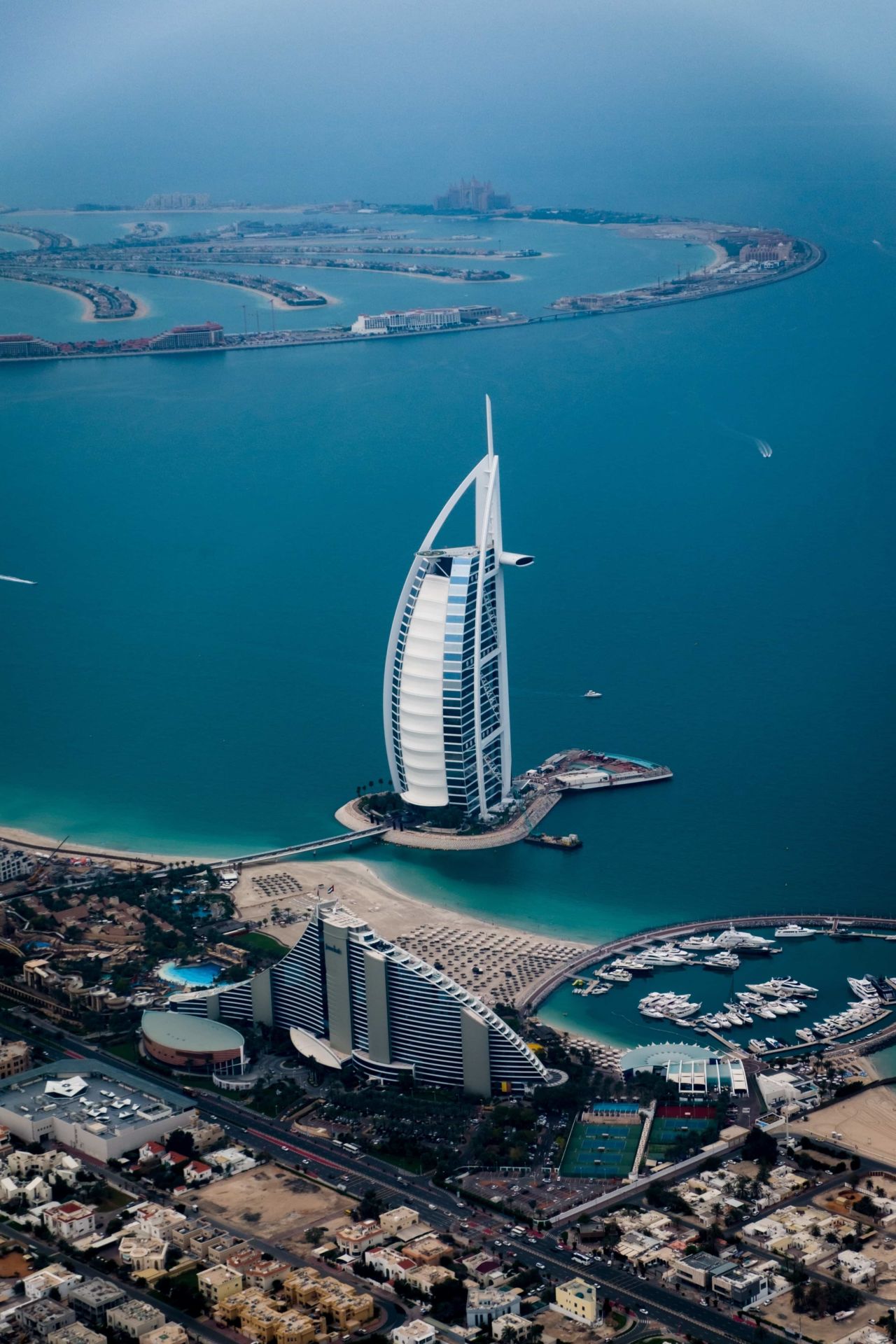
Land reclamation is nothing new. In some parts of the world, it has been practiced since the 19th century. However, recently, land reclamation has reached epidemic proportions particularly in Asia and the Middle East. In Asia, countries like Hong Kong, Singapore, Macau, China and Malaysia frequently appear in the mainstream news for controversies involving land reclamation. In the Middle East, The Palms is synonymous with land reclamation and many view it as one of the greatest engineering feats of its time.
Most of these countries have extremely high population densities. Reclaiming land to create space for humans is often seen as the only way out. Other times, boosting income through tourism and investments drives land reclamation. Indeed, the most cited justifications for land reclamation on small and large scales is population rise, urbanization, industrialization, and improvement of transportation systems. Many of these places have reclaimed along coastlines. Some have even gone to the extent of building islands in the sea.
Most of these projects claim to have little to no effect and some even claim to improve the affected environment. However, green groups and civil societies think otherwise. Land reclamation and the building of artificial islands link to several environmental and ecological impacts. These include natural habitat loss (e.g. mangroves, wetlands, rocky and sand beaches, seagrass meadows, coral reefs), loss of biodiversity (through the loss of site- or habitat-specific species and increase in hardy and opportunistic species), and deterioration of related industries (e.g. fisheries, cottage industries, tourism).
The effects range from local to regional scales. The loss of natural habitats, for example, would mean that migratory species would have to travel further in search of suitable habitats. More often than not, these species die of starvation or exhaustion along the way. This leads to the decrease in the species’ abundance and possibly the obliteration of the species in places along the path of migration. Then, there is the “loss of the immeasurable”. These include aesthetic, cultural and religious aspects or some functions and services provided by the natural environment. No man-made structure can replace these.
Land Reclamation Under a Magnifying Glass
With coastal development comes the increase of coastal erosion control structures such as seawalls, breakwaters, groynes, and rock revetments. Almost every seaward development project, regardless of whether it involves land reclamation and building artificial islands, involves one or more of these structures to protect people and property. Today’s circumstances of climate crisis, extreme weather, and sea-level rise especially need these structures. Coastal erosion protection structures are often vertical in form with the exception of rock revetments. This makes the structures very different from natural habitats like sandy and rocky beaches which have gradual sloping gradients that provide a wide area for species colonization. Placing the vertical structures on the coastlines means that there will be less space available for organisms to colonize or utilize.
When land reclamation takes place in virgin areas, new development processes clear the natural environments to make space. The simple, unnatural materials replace and destroy the intricate complexities of natural environments. Structures made of concrete, metal or plastic replace tidal pools, crevices, grooves, and pits on rocky beaches or mangroves. These replacement materials can serve as a habitat for organisms. However, the organisms are not analogous to those in natural habitats. Often only the hardy, opportunistic and/or alien species which can thrive on these introduced environments survive making man-made structures at the coast or at sea, corridors for aliens but not for native species. For this reason, man-made structures reduce species richness and diversity compared to adjacent natural habitats.
The chemical properties of construction material can also affect species diversity and abundance. Concrete has high surface alkalinity and leaches metals which can impair settlement of marine organisms. This results in communities dominated by a few alkotolerant taxa such as barnacles. Additionally, the production of concrete has a tremendously high carbon footprint. It has recently been reported that cement production is the source of approximately 2.2 billion tonnes or 8% of the world’s carbon dioxide (CO2) contributing more CO2 than aviation fuel (2.5%) and just below the global agriculture business (12%). Therefore, there is an urgent need to pursue CO2 reduction strategies and plough efforts into producing “novel cements” with a low carbon footprint.
Sedimentation is also an issue in land reclamation. It is also a hard issue to mitigate. The transportation of extracted sand from source to destination frequently leaves a trail behind. This increases the suspended solids within the water column and turns the water turbid. Consequently, this minimizes the amount of sunlight absorbed by phytoplankton and other photosynthetic marine flora. Sedimentation affects the food chain. This is because fauna that depend on these floras receive less or completely lose their source of food.
Dumping sand kills the underlying habitat such as sandy seabeds, coral reefs or seagrass meadows. This leaves a huge ecological footprint. The transportation of sand from the source to the reclamation site also leaves behind a carbon footprint. In some cases, this can be more than 100 km. Moreover, sand is a non-renewable resource and therefore, transportation of sand compromises habitats at the source.
Editor’s Pick – Related Articles
“Our Ocean, Our Future: global action to achieve SDG 14”
“Healthy Oceans: The Cornerstone for a Sustainable Future”
Eco-Engineering – the Last Resort
No amount of green technology can replace the intricate biodiversity, aesthetics, cultural and religious values of lost natural systems if we develop on it. Therefore, we need to do everything in our power to avoid building in the untapped green (land) and blue (sea) spaces. If development must proceed, we must actively encourage that it happens in the grey (urban landscapes) and brown spaces (built but abandoned landscapes) – spaces that already have been degraded by human beings.
Unfortunately, many worldwide seaward land reclamation projects are constantly on-going or being planned. New projects are continually approved and forging ahead despite protests and opposition. To mitigate the impacts of built infrastructure in the environment, there is an increasing interest in ecological engineering. This combines ecological processes with engineering principles to develop infrastructure that benefits both humans and nature. A range of different eco-engineering techniques have now been trialled in coastal regions globally. The vast majority are implemented in a few key hotspots, such as Europe, USA and Australia. As a result, there is now an increasing number of methods for different types of coastal infrastructure.
State-of-the-Art Models
1. The Living Seawalls
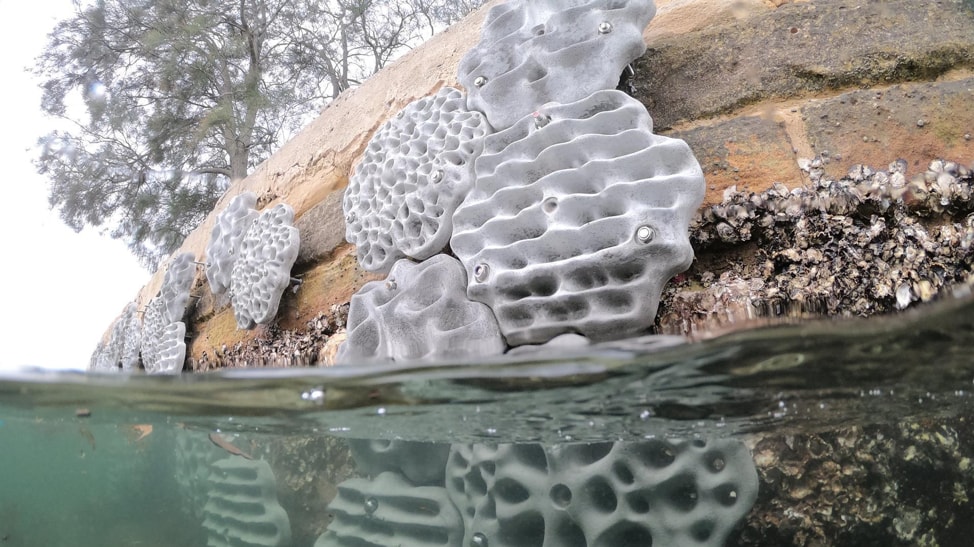
This project is a collaboration between Volvo, Sydney Institute of Marine Science, and Reef Design Lab. It is one of the most extensive seawall retrofits worldwide. 50 hexagonal tiles were made out of ecologically sensitive marine-grade concrete and reinforced with recycled plastic fibres. These were installed to the surface of an existing seawall in Sawmillers Reserve, Sydney, Australia. The surfaces of these tiles were designed to imitate the root structure of native mangrove trees. Their intention is to attract filter-feeding organisms such as oysters and molluscs. These organisms absorb and filter out pollutants – such as particulate matter and heavy metals – keeping the water clean. This ecologically enhanced seawall offers an alternative to traditional, linear seawalls, which are often linked to the loss of surrounding ecosystems.
2. The Seattle Seawall
Completed in 2017, many consider this new seawall the foundation of Seattle’s future waterfront. The original waterfront development had damaged Elliott Bay’s intertidal habitat in several ways. For instance, it harmed the salmon migration corridor. The new seawall aims to restore the ecosystem for aquatic life with respect to Seattle’s history and environment. The seawall project has addressed this goal in a few ways. By adding steps ― which are shelf-like structures protruding from the vertical underwater wall ― helped recruit greater diversity of organisms such as algae and small invertebrates. As a result, juvenile salmon feed upon them as they migrate along the shore through Puget Sound and out to the ocean.
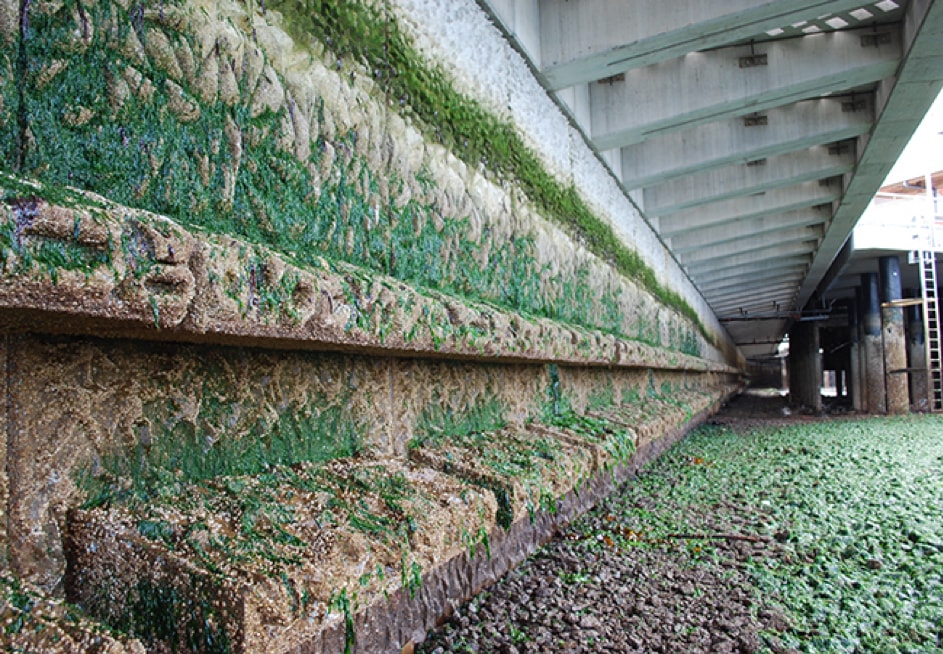
Installing “marine mattresses” created a shelf-like surface and made the nearshore shallower for fish. Mesh bags filled with rocks comprise the “marine mattresses” along the seawall. Uneven, cobbled surfaces constructed along the vertical wall encouraged more organisms to congregate by the shoreline. Clear glass squares designed in the seawall’s pedestrian sidewalk allowed more natural light to penetrate to the water below. These design modifications help young Chinook, pink and chum salmon navigate, grow and avoid predators along the engineered shoreline. As a result, the new seawall attracts more algae and invertebrates, which are important sources of food for salmon.
3. The BIOBLOCKs
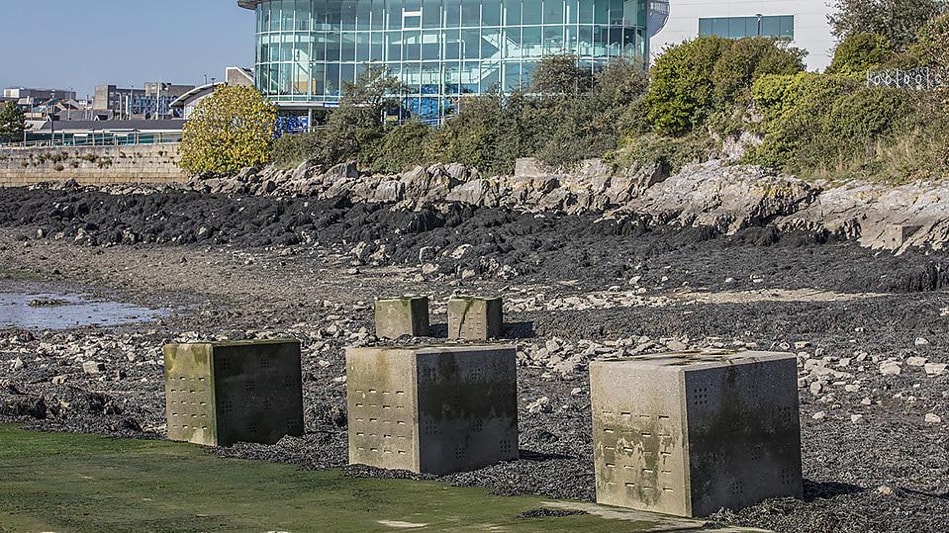
These concrete blocks measure one cubic metre, weighing around 2.4 tonnes each, and are deployed on the coastline at Teats Hill, Plymouth. Dr. Louise Firth from the University of Plymouth developed these BIOBLOCKs. They feature a range of holes and depressions designed to replicate a rocky intertidal area complete with rock pools and other topographical niches. The rockpools on the top surface of these blocks support many species and protect them from drying out. Different sized pits on the side are important for snails to seek refuge from predation. Subsequently, the BIOBLOCKs will support different communities of species through ecological succession. BIOBLOCKs would typically replace boulders in groynes, breakwaters and other rock armour structures to enable these coastal erosion control structures to carry out its primary function of protecting the coast and an additional function of providing habitat for coastal organisms.
4. ECOncrete
ECOncrete is a comprehensive solution that goes well beyond concrete composition. Its CEO, Dr. Shimrit Perkol-Finkel, and colleague, Ido Sella, established ECONcrete in 2012. Their science-based concrete mixtures, textures, and designs enhance the biological performance of the coastal structures. This also increases the lifespan, effectively decreasing costs over the long term and reducing the negative impact on the marine environment. The unique ECOncrete admixture and design stimulate biodiversity. Not only that, it also decreases the harmful effects of concrete composition and production on the environment. Marine life like coral and oysters naturally form calcitic skeletons on the concrete. This contributes to the strength of the structures in a process called “bio-protection.”
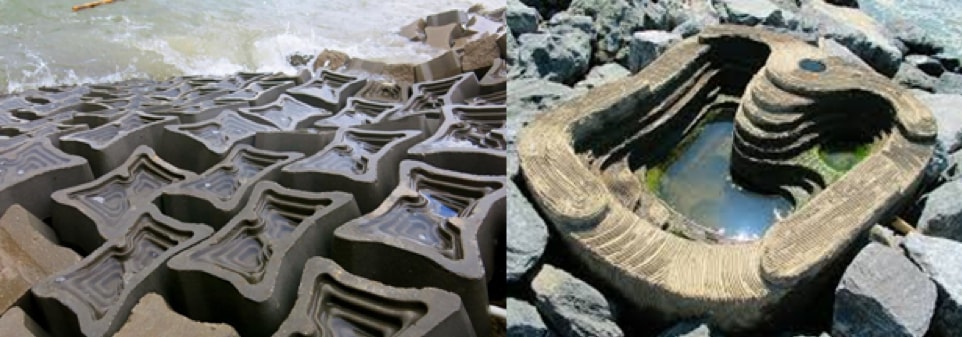
One of the products from ECOncrete include tide pools. These provide beach stabilization and encourage the growth of marine life in Brooklyn Bride Park. Another product includes jackets on pier piles. These jackets restore natural habitats and bring life to these structures, armouring units that provide defence against sea waves as well as create protection for fish larvae and encourages the growth of local invertebrates. The bio-enhanced marine mattresses provide strength to the battered shoreline. This ultimately encourages the growth of local marine organisms in ports. Multiple awards including Green Awards, UN Sustainability Business Award, UN WE Empower Award, and EU Innovators Award, have validated ECOncrete.