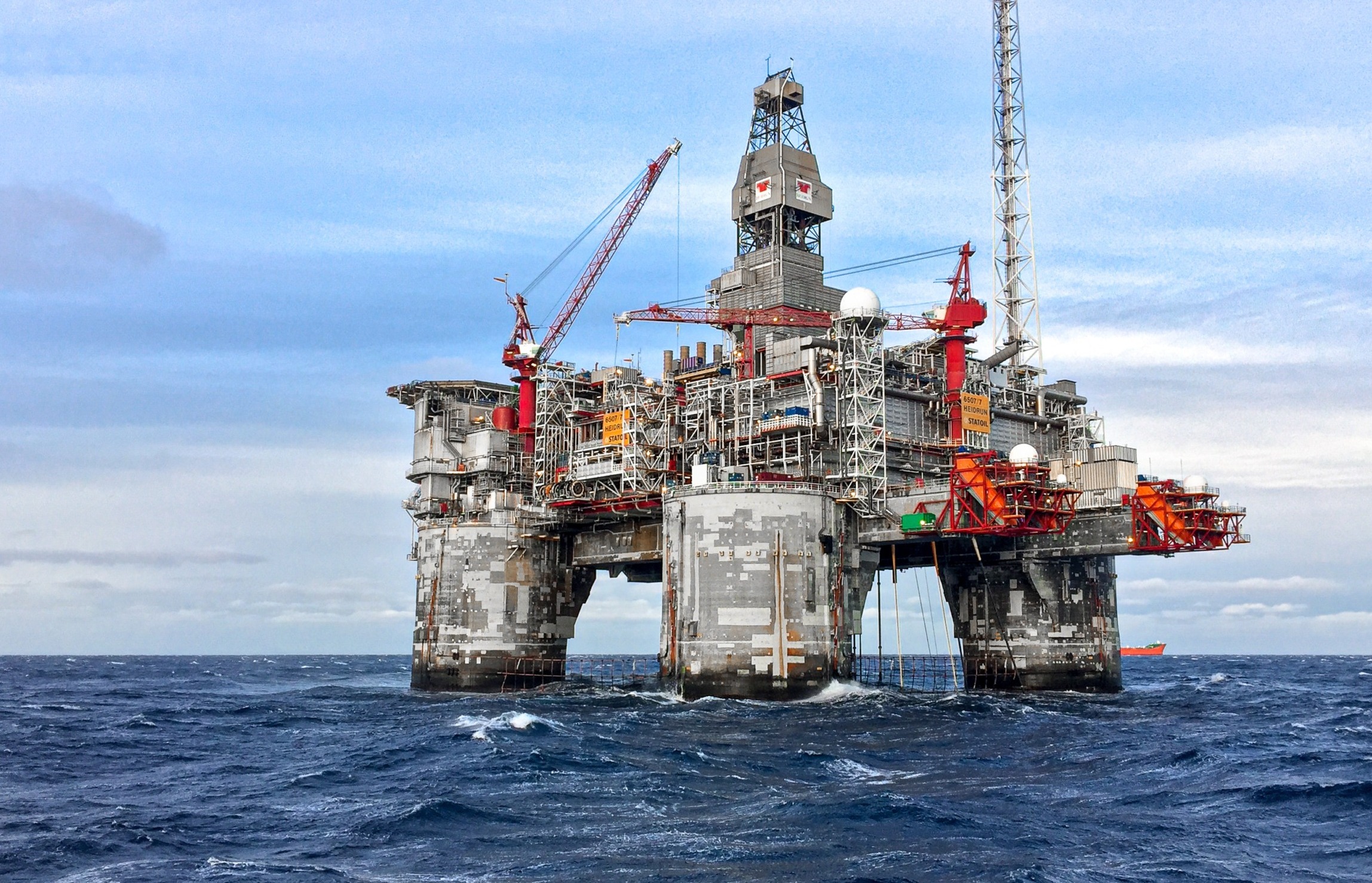
The amount of legal scrutiny placed on big oil companies has been steadily increasing. Among the lawsuits, companies are now facing allegations of misleading the public about climate change. However, in a radical approach, a new paper argues that we must do more to hold big oil accountable: By charging them with homicide.
The paper, titled “Climate Homicide,” is due to be published in Harvard Environmental Law Review. It says that big oil companies “have not simply been lying to the public, they have been killing members of the public at an accelerating rate, and prosecutors should bring that crime to the public’s attention.”
“What’s on their ledger in terms of harm, there’s nothing like it in human history,” says David Arkush, co-author of the paper and director of the Climate Program at non-profit consumer advocacy group, Public Citizen.
The paper is part of an anthology of evidence showing that fossil fuel companies have been aware of the damage they’ve been causing to people and the planet.
The mounting evidence has so far been used in court to sue companies for financial damage caused by rising seas, wildfires, and other climate-enhanced natural disasters. But now, this new paper claims, big oil’s profit-driven resistance to climate consciousness is amounting to a “culpable mental state” that causes significant harm and even death to members of the public.
“Once you start using those terms,” says Donald Braman, co-author and Professor of law at George Washington University, “you come to realise that’s criminal law.” He explains that a “culpable mental state causing harm is criminal conduct, and if they kill anybody, that’s homicide.”
In Braman’s opinion, charging big oil companies with homicide would have a much greater effect on the public mind than the cases already working through the courts. The penalties would be much steeper and so instead of paying a fine, a homicide charge would make a variety of outcomes available, potentially changing the way big oil companies function.
The definition of homicide is broad — it encapsulates anything from murder to manslaughter. Manslaughter is the lesser charge wherein a person’s death is caused without intent and murder is used in cases where the person in question knew and intended for their actions to lead to someone’s death.
According to Arkush, the fact that companies were aware of the damages they were causing yet continued to extract large amounts of fossil fuels “comes extremely close” to being considered as murder.
The dangerous effects of the over-exploitation of fossil fuels make themselves apparent again and again. An oil tanker carrying 800,000 litres of industrial fuel oil that sank in Filipino waters last month and has been leaking oil into the ocean ever since, has only just been found this week.
The case for climate homicide is bolstered by attribution science that assesses the extent to which the climate crisis enhanced extreme weather events. Some studies have even been able to ascertain a specific number of deaths caused by climate-intensified extreme weather. Arkush and Braman argue that this area of science is among the most powerful when it comes to proving that it is reasonable to prosecute big oil companies in homicide cases.
Related articles: The Village That Stood up to Big Oil – and Won | Big Oil Sees Record Profits: “Exxon Made More Money Than God This Year” | Big Oil Testifies in Court for Decades-Long Climate Denialism | Groundbreaking Lawsuit: Shell’s Board of Directors Sued for Climate Inaction
Corporations have been tried for homicide before, but never in direct relation to the climate crisis. California courts tried utility company PG&E with manslaughter for its role in the 2018 Camp Fire which destroyed the town of Paradise and took the lives of 84 people.
Before that, in 2010, federal prosecutors took BP to court for manslaughter following the Deepwater Horizon tragedy. In both cases, the companies pleaded guilty and paid fines totalling billions.
Difficulties in charging big oil with climate homicide
In theory, Arkush and Braman make a strong case for climate homicide, but there are daunting prospects that come along with the reality. A district attorney or attorney general that has jurisdiction in a place where climate change has led to death, would have to be willing to press charges and would also need significant funding and resources to confront billion-dollar corporations.
“The morality of what fossil fuel companies have been doing over a few decades has become clearer and clearer,” Christopher Kutz, Professor of Law and Director of the Kadish Center for Morality, Law and Public Affairs at the University of California, told the Guardian.
Oil and gas companies – whose conduct is putting significant portions of the world population at risk – face little criminal accountability
But a new paper says that could change – Big Oil companies could be held accountable for climate homicide https://t.co/ENFazs53EL
— Julia Levin (@lev_jf) March 20, 2023
Another issue in any potential prosecutions, Kutz notes, is the way fossil fuels have shaped the modern world. The paper speaks from a purely legal perspective: Big oil has been an integral part of the economy for 150 years, so the use of fossil fuels in domestic and industrial settings is a universal human behaviour, creating a lot of liability in a homicide case.
It will also be difficult to clearly see which event contributed to which death and even with the removal of big oil companies, climate-related deaths will still occur.
There is the possibility for collective conviction, but this would require evidence that big oil companies colluded to mislead consumers about their environmental impact.
Speaking with E&E News, Arkush said: “The real potential barriers are political, cultural. Does this strike people as just too out there?” There seems to have been a cultural shift, considering the lawsuits levelled against oil companies, towards the idea that massive corporations are not untouchable.
Editor’s Note: The opinions expressed here by the authors are their own, not those of Impakter.com — In the Featured Photo: An oil platform. Featured Photo Credit: Jan-Rune Smenes Reite.