In another important announcement at COP28 in Dubai, the World Bank Global Director for Agriculture and Food Global Practice, Martien van Nieuwkoop, confirmed a financial commitment to boosting ‘climate-smart’ agriculture in Africa:
The World Bank’s International Development Association (IDA) is set to inject $100 million into the Accelerating Impacts of CGIAR Climate Research for Africa (AICCRA) project between 2024 and 2025.
The Bank’s Vice President for Sustainable Development, Juergen Voegele, announced earlier at COP28 that $100 million would be made available to CGIAR in 2024-2025. Today’s announcement confirms that the funds would support the CGIAR’s AICCRA initiative.
“I am thrilled that the World Bank wishes to continue supporting AICCRA’s mission,” Director of AICCRA Ana Maria Loboguerrero, who spoke after Martien van Nieuwkoop, said at COP28. “The unique approach of our partnerships solves what many argue is the ‘missing middle’ between research and development to strengthen the resilience of the agricultural sector to the threat posed by climate change.”
The project, facilitated by CGIAR — the world’s largest publicly funded agricultural research network — brings together CGIAR scientists and researchers to collaborate with African national and regional partners.
Their focus is on scientific and technical capacity development, with the goal of “enhancing climate information services and validating packages of technologies, services or practices for agriculture that are validated to be ‘climate-smart’,” the CGIAR explains in a statement.
Geographically, the initiative focuses on six countries in Africa: Senegal, Mali, Ghana, Ethiopia, Kenya, and Zambia; it also supports regional organizations in West Africa and East and Southern Africa.
The total pledges for CGIAR’s AICCRA project have reached an impressive $890 million so far at COP28, “placing the future of agriculture at the heart of climate discussions for the first time,” as the CGIAR notes.
“With this funding, CGIAR will expand its work supporting smallholder farmers in low- and middle-income countries to shape more resilient, sustainable, and equitable food systems, reduce emissions from farming, and boost access to nutritious, healthy diets,” CGIAR explains, adding that the rate of return on investment has “recently been calculated to have an overall benefit-cost ratio of 10 to 1 across all CGIAR research.”
Related Articles: The Value of Water-Smart Agriculture | The Future of Agriculture? Integrating Agroecology and Climate-Smart Agriculture | Investment in Climate-smart Agriculture: Why Do it Now | Building Resilient Climate Smart Agricultural Systems For Smallholder Farmers
By the end of 2023, the project aims to support nearly five million smallholder farmers and other stakeholders across Africa, helping them with decision-making regarding crop cultivation and livestock management in the face of a rapidly changing climate.
The project, according to the CGIAR, is “on track to reach or surpass all the objectives and performance indicators agreed with the World Bank Group at its inception.”
The project’s positive impact is evident. In Mali, 150,000 farmers increased yields and incomes thanks to the digital app RiceAdvice for sustainable rice cultivation, which they had previously adopted.
“Malian farmers increased their income by USD 364 per hectare when using drought-tolerant varieties and following RiceAdvice recommendations,” the CGIAR writes.
In Zambia and Senegal, AICCRA and partners are implementing accelerator programs for SMEs to “de-risk” investments into climate-smart agriculture businesses. In Zambia, the accelerator program has “reached nearly 390,000 farmers so far and even secured a 200% return on the original project funding from private investors at a Zambia investor forum,” the CGIAR says.
Moreover, AICCRA, in partnership with universities and agriculture extension colleges in Ethiopia, is spearheading the mainstreaming of climate services and climate-smart agriculture in higher education institutions across Africa.
“AICCRA has made important progress in forging relationships of trust and collaboration between public and private sectors — and crucially farming communities too — enabling CGIAR scientific resources to be used in policy and practice,” Ana Maria Loboguerrero said at COP, adding:
“With additional finance, AICCRA will not only focus on broadening access to innovation, but also ensuring millions of farmers actually use such innovation in a meaningful and sustainable way.”
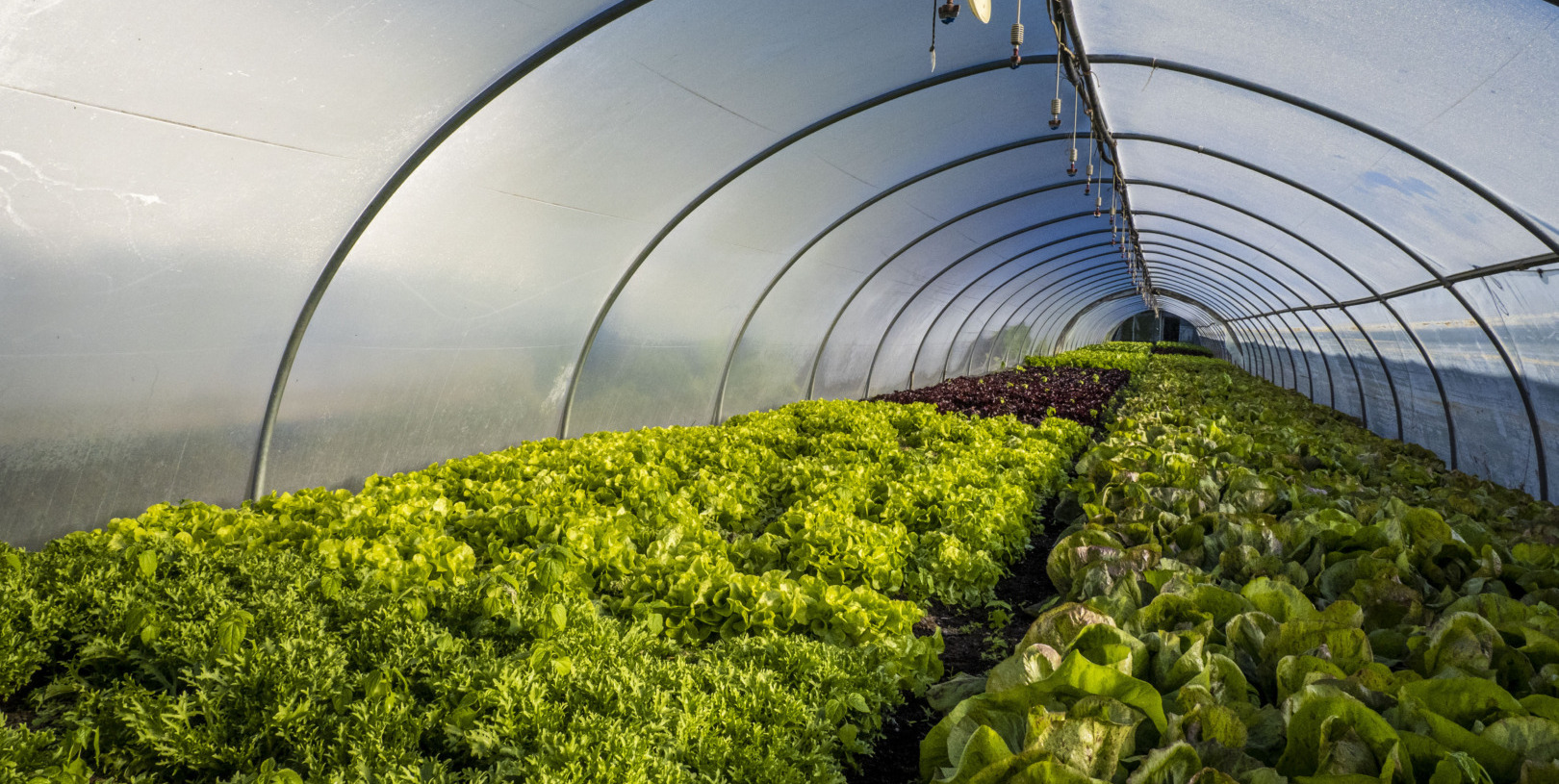
Editor’s Note: The opinions expressed here by the authors are their own, not those of Impakter.com — In the Featured Photo: Sang Lee Farms, in Peconic, New York, transitioning to third generation, grows more than 100 varieties of specialty vegetables, heirloom tomatoes, baby greens, herbs. They continue to feature Asian produce, growing many varieties of Chinese cabbages, greens, and radishes. Featured Photo Credit: Preston Keres/U.S. Department of Agriculture.