
Today’s ESG Updates
- Chinese Wind Maker Pushes Into Europe Despite Resistance: The Chinese wind turbine maker is expanding aggressively across the continent even as security concerns keep it locked out of the UK’s offshore market.
- EU Risks Falling Behind US in the Race for Critical Minerals: Washington has committed roughly $40 billion to secure rare earth supply chains since 2022, while Brussels’ slower-moving efforts draw criticism from industry.
- Trump Bars ESG Funds from New Children’s Savings Accounts: The White House says the ban on ESG investments in “Trump Accounts” protects children’s savings from “political activism.”
- ESG Metrics in Executive Pay Are Shrinking, Not Disappearing: New research shows non-financial measures make up a smaller, more selective share of incentive pay as boards shift toward metrics tied to strategy and risk.
Chinese wind maker pushes into Europe despite resistance
Chinese wind turbine manufacturer Ming Yang says it’s committed to a long-term push into Europe, despite being blocked from the UK’s offshore market on national security grounds. European chief executive Horatio Evers, hired from German chemical producer BASF last September, has poached senior executives from Vestas, Siemens Gamesa and Vattenfall, moved R&D functions to Europe, and pursued local manufacturing as part of the expansion effort. Chinese manufacturers still supplied less than 3% of Europe’s added wind capacity last year, according to the Global Wind Energy Council, facing resistance from politicians wary of a repeat of China’s dominance in solar, alongside cybersecurity and state-influence concerns.
The UK blocked Ming Yang’s planned £1.5bn Scottish factory in May, reportedly following pressure from the Trump administration, while the EU has launched subsidy probes and is weighing rules restricting Chinese turbines from subsidised projects. Still, Ming Yang has found a foothold through a UK tie-up with Octopus Energy on onshore turbines, with data and firmware kept under British control, and Evers said a new UK prime minister could reopen the offshore question.
Klimado – Navigating climate complexity just got easier. Klimado offers a user-friendly platform for tracking local and global environmental shifts, making it an essential tool for climate-aware individuals and organizations.
EU risks falling behind US in the race for critical minerals
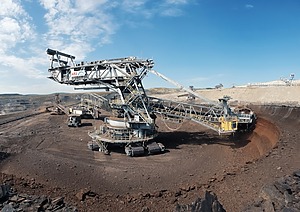
The EU risks falling further behind the U.S. in securing critical minerals needed for defence and green technology, European officials and industry figures have warned. Washington has committed roughly $40 billion in provisional funding for mineral projects since 2022, taken equity stakes in domestic miners, and lobbied for American firms to win mining tenders in countries including the DRC and Kenya. Meanwhile, Brussels has fast-tracked dozens of strategic projects but committed only about €6 billion this year, which industry says is moving too slowly.
The Pentagon’s $400 million stake in rare earths producer MP Materials, alongside a 10-year minimum price agreement for a key rare earth alloy, illustrates the scale of U.S. intervention. EIT RawMaterials chief Bernd Schäfer warned that Europe risks the U.S. “becoming a second China” in terms of dependency, also flagging concern over American stakes in European rare earth firms, including US-backed acquisitions of British and French companies. The European Court of Auditors has warned many of the EU’s 75 strategic projects are unlikely to deliver in time for its 2030 targets, with one mining executive calling the bloc’s support “overall quite disappointing.”
Related Articles
Here is a list of articles selected by our Editorial Board that have gained significant interest from the public:
Trump bars ESG funds from new children’s savings accounts

The Trump administration will bar “Trump Accounts,” which are new government-backed savings accounts for children under 18, from investing in ESG funds. The White House framed the move as protection from “political activism.” Launched last month, the accounts let American children invest up to $5,000 a year in U.S. stock indexes, including the S&P 500, with children born between 2025 and 2028 also eligible for a one-off $1,000 government contribution.
Treasury Secretary Scott Bessent said “corporate America has rejected ESG ideology” and that the accounts exist to build financial security, “not to advance political activism.” The move fits a broader pattern of Trump administration hostility toward ESG investing, alongside its push to expand U.S. oil production. The Treasury has picked a State Street S&P 500 ETF as the default investment option, and is considering adding other U.S.-focused index funds from Vanguard and BlackRock. IRS chief Frank Bisignano said the rules aim to keep costs low so children retain more of their investment returns over time.

ESG metrics in executive pay are shrinking, not disappearing

Non-financial metrics now make up around 25% of short-term incentive pay at a typical Russell 3000 company, versus 30% at S&P 500 firms, according to a new report from The Conference Board, ESGAUGE, FW Cook and Ropes & Gray. Analysis of 2023-2025 proxy filings shows boards aren’t abandoning non-financial measures altogether but using them more selectively. ESG, environmental and human capital metrics have declined, while governance, social, cash flow and expense measures have gained ground.
Company size and sector drive big differences: 62% of companies with under $100 million in revenue relied exclusively on non-financial short-term metrics in 2025, against just 7% using only financial ones, while non-financial measures account for over a third of assessment in energy and utilities and 30% in healthcare, reflecting priorities like safety and regulatory exposure. Long-term incentive plans remain far more financially weighted, with S&P 500 companies split 80% financial to 20% non-financial in 2025. The report frames the key question for compensation committees as less about whether to use non-financial metrics, and more about whether each one is objective, measurable, and tied to strategy and long-term value.
Editor’s Note: The opinions expressed here by the authors are their own, not those of impakter.com — Cover Photo Credit: Thomas Réaubourg.