

Recycling centres exist to help us reduce waste and improve sustainability. Households all over the country sigh in unison every week as they have to separate their waste into different sections so it can be sent to the local waste management centre for recycling. It’s all done for the good of the planet – but are recycling centres as sustainable as we think?
It’s a fair assumption that a facility that’s built to handle waste and recycle as much of it as possible is made to be sustainable. However, that’s not always the case. While each facility may be different, there are some common issues that arise across the board, and this impacts how environmentally friendly waste management centres truly are.
Contaminated Recycling
Did you know that 84% of households are accidentally contaminating their recycling bins? In the world of waste management, contamination refers to placing things in the wrong place while recycling. This may include:
- Attempting to recycle a non-recyclable item
- Putting recyclable items in the wrong recycling bins
For example, someone places a non-recyclable crisp packet in with their plastic recycling, which has now contaminated the entire load. Or, you accidentally put some recyclable plastic in with your cardboard waste.
The problem with this is that recycling and waste management centres feel the effects of contamination. The way these facilities are designed means that one wrong item can prevent the entire load from being recycled. Some facilities simply don’t have the technology to be able to pick out the contaminated items and separate them with ease. So, perfectly recyclable things end up going in general waste, which creates more carbon emissions.
Now, is this the fault of the recycling centre? Not necessarily, though it depends on the processes they use. Investing in more modern sorting equipment could prevent contamination from being a big issue, though the fault is largely placed on us instead. It highlights the absolute importance of knowing what can be recycled and which bin it should go in. Recycle Now is a great resource that can help people learn how to recycle more effectively to cut down on contamination.
Replacement Equipment
The financial cost of replacing faulty or aged waste management equipment is relatively obvious, but what about the environmental cost? It takes a lot of energy and resources to build and manufacture industrial equipment, not to mention shipping these huge items to waste management centres. While all equipment will have a shelf life, it’s believed that some facilities are replacing their older items way ahead of schedule.
What typically happens is there’s a fault with a piece of equipment or a large waste shipping container looks a bit too rusty, so a replacement is ordered. This increases the facility’s carbon footprint dramatically, particularly if multiple things are being replaced every year. In a way, it could undo a lot of the good that these centres are designed for.
As a result, there’s a big push in the industry to aim for refurbishing waste handling equipment instead of immediately replacing it. A deep clean, small repair, and respray can bring aged equipment back to life, making it look and function as good as new. The environmental impact of this equipment is much less because it will last longer and there will be a decreased demand for replacement products.
There’s also a lot to be said about the importance of maintaining the industrial machinery and equipment in waste management centres. Better and consistent maintenance can make things last a lot longer before they need to be refurbished or replaced. Over time, this contributes to reducing the carbon footprint of each piece of equipment.
Energy Consumption
Naturally, recycling centres will require a great deal of energy to sort through the recycling, break it down, and send it to other facilities. There’s not a lot that can be done to prevent this, and it should be said that recycling uses less energy than it saves. Reports show that you can use up to 95% less energy to make products using recycled materials, so even though facilities generate a fairly high carbon footprint, the impact offsets this.
That being said, some activists remark that recycling facilities aren’t doing enough to reuse items or materials before recycling them. Indeed, it costs no energy to take an old sofa and donate it to a local charity shop or allow residents to pick it up from the recycling centre. There are loads of electrical waste goods that people may find useful for stripping down to get certain parts, but many waste management centres simply recycle them.
The whole idea of recycling is that it is the last resort; you should reduce first of all, and then reuse before you consider recycling. If more facilities allowed people to take away perfectly good items or materials, this could reduce how much waste they need to recycle, which then lowers the overall energy output.
Waste Collection Pollution
There is something ironic about putting out your recycling every week, only for it to be picked up by a heavy truck that pumps carbon emissions into the air through an exhaust. This has long been a concern, and it contributes to whether or not a waste management centre is truly as sustainable as it could be.
Thankfully, there is an obvious long-term solution: making electric vehicles work for waste collection. It’s not as easy as making an electric car or van, but the technology is advancing to the point where you may start seeing electric waste collection trucks on the streets. These have the advantage of generating no airborne pollution while in use, making the entire waste management operation more sustainable.
So, yes, waste management and recycling centres are sustainable in the sense that they absolutely do help us burn less waste. However, they could definitely be more sustainable, and there are things that need to be improved. Whether it’s better equipment maintenance to prevent the need for replacement machinery, or simply an investment in stopping contaminated recycling from being a major issue, there’s still a long way to go before waste management facilities reach their true sustainability potential.
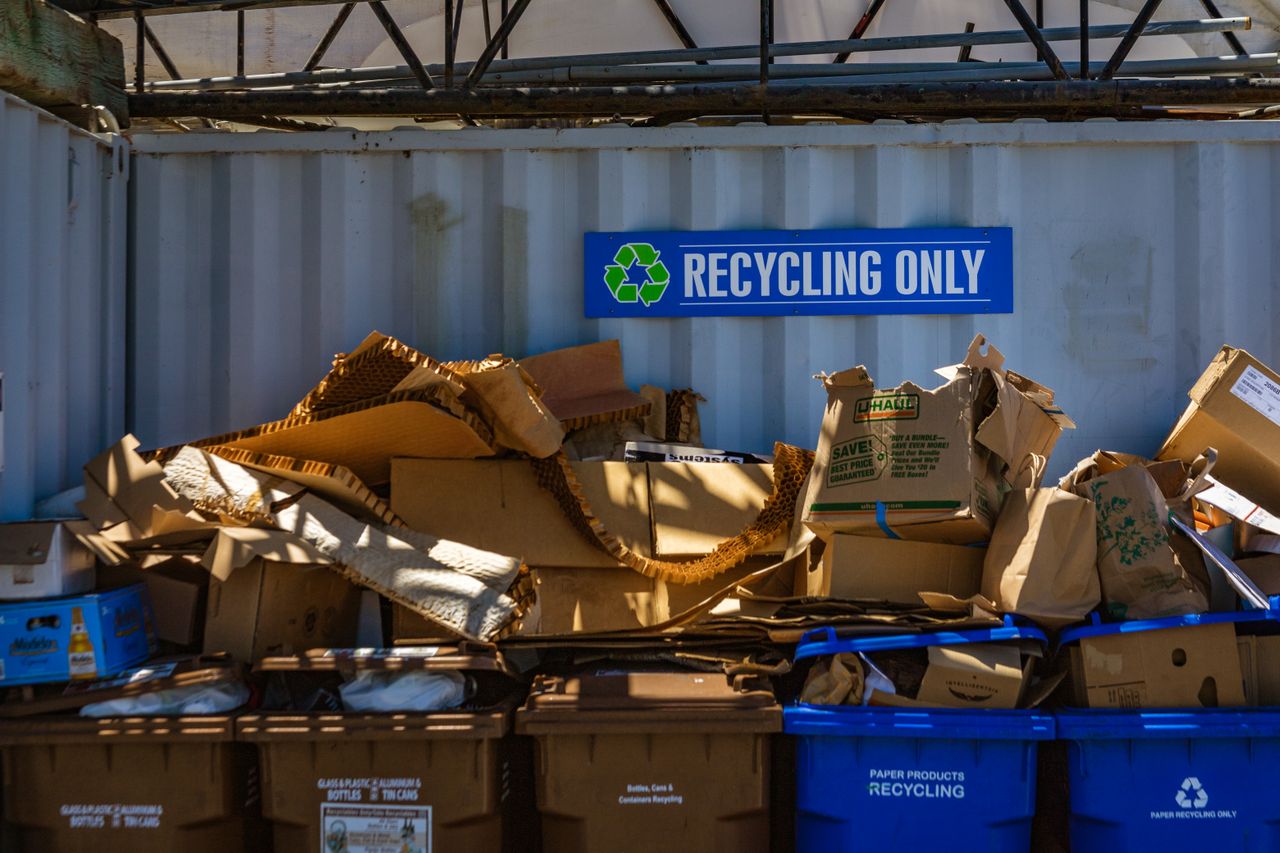
Editor’s Note: The opinions expressed here by the authors are their own, not those of Impakter.com — In the cover photo: Recycling containers help separate recoverable materials, but contamination can reduce the efficiency and sustainability of waste processing. — Photo by: Roberto So