Today’s ESG Updates
- Google Felled a Finnish Forest Without the Permits to Do It: Around 250,000 trees were cleared at Muhos, topsoil and all, before the required environmental assessments were completed. The regulator has halted work at two datacentre sites belonging to a €13 billion AI project.
- AI Gets the Credit as Barclays Sheds 5,000 Jobs: The bank is cutting close to 5% of its global staff as part of savings worth more than £1.1 billion, with its finance chief pointing to productivity gains and the union calling the technology a pretext for redundancies.
- Europe’s Spreading Livestock Virus Claims a Human Case in France: A patient near Lyon has died after contracting Shamonda, though officials say the wider population is not at risk. Infected dairy herds have seen milk yields drop by as much as 75%.
- Wage Deal at Volkswagen’s Mexican Plant Goes to a Worker Vote: A package worth 8.24% called off a strike at the Puebla assembly plant, one of the company’s largest. Unionised workers decide on 29 October.
Google felled a Finnish forest without the permits to do it
Roughly 250,000 trees stood on 330 hectares near Muhos in northern Finland before Google began work on a datacentre there. The site is now bare ground, stripped of its topsoil, 400 metres from the Oulujoki River. Residents say brown water is running off it into a feeder stream.
Finland’s Licensing and Supervision Authority ordered the company to halt work at Muhos and at Otanmäki, about 100km away, after it emerged that the required environmental impact assessments had not been completed before the land was cleared. An ecologist with the Finnish Association for Nature Conservation puts the Otanmäki felling at a further 150,000 trees. Because the work was unlawful, the timber cannot be sold on.
Both sites belong to a €13 billion AI infrastructure project, the largest of its kind in the country. Finland has 145 datacentres at various planning stages, drawn by stable ground, cheap land and a cool climate.
Google’s country manager apologised, saying the company had gone on its best reading of the law at the time. It stopped work after the regulator’s letters on 6 October and has promised to plant trees across 130 hectares, a figure conservationists call far too small to matter.
Klimado – Navigating climate complexity just got easier. Klimado offers a user-friendly platform for tracking local and global environmental shifts, making it an essential tool for climate-aware individuals and organizations.
AI gets the credit as Barclays sheds 5,000 jobs
Barclays is removing around 5,000 roles, close to 5% of its 93,000 staff worldwide, as part of savings it expects to reach more than £1.1 billion in 2027. A thousand posts have already gone since January.
Chief financial officer Anna Cross said roughly 60% of the measures concern support functions, developers among them, on the basis that AI is lifting productivity. Chief executive CS Venkatakrishnan was more measured when pressed on how much of the reduction stems from the technology, describing sustained investment in systems and simpler processes as the main driver, with AI the finishing touch rather than the engine.
Unite’s general secretary, Sharon Graham, said the bank was using the technology as cover for discarding staff who have served it for years, and that the proper response to changing tools is retraining rather than redundancy.
Standard Chartered set out a comparable plan months ago, cutting more than 7,000 roles over four years and about 15% of back-office posts by 2030.
The announcement came alongside quarterly pre-tax profits of £2.3 billion, up 12% on the same period last year.
Related Articles
Here is a list of articles selected by our Editorial Board that have gained significant interest from the public:
Europe’s spreading livestock virus claims a human case in France
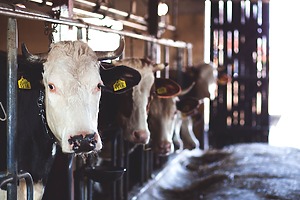
France has recorded the first human case of Shamonda, a virus normally confined to animals, in a hospital patient near Lyon who has since died. The man, in his sixties, was already being treated for an unrelated illness, and officials believe a midge bit him in eastern France.
Authorities say the wider population faces no risk. Gregory Emery, head of the national health directorate, tied the case to the patient’s severely weakened immune system and said it amounts to neither an alert nor a crisis. The World Health Organization considers it isolated. No transmission between people, or from cattle to people, has been reported.
The agricultural picture is the larger one. Midges carry the virus, found mostly in cattle but also in horses, sheep and goats. Infected animals suffer diarrhoea and loss of appetite, and a study of nine French dairy farms found milk yields falling by as much as 75%.
Identified in Nigeria in the mid-1960s, Shamonda reached Europe in late July and has since turned up in more than a dozen countries. EU animal health law does not classify it as a disease, so no official surveillance applies.

Wage deal at Volkswagen’s Mexican plant goes to a worker vote

Volkswagen has reached an agreement with the union at its plant in Puebla, central-eastern Mexico, calling off a strike that was due to start on Thursday. The twelve-month revision to the collective labour contract still needs approval: unionised workers vote on 29 October.
The package comes to 8.24% in total, made up of a 4.4% rise in wages, a one-off payment and a contribution to a savings fund. Union members had earlier turned down a different offer, a flat 13.16% spread over two years.
The talks were settled through conciliation, with support from the labour ministry and the Federal Center for Conciliation and Labor Registration. Volkswagen described the agreement as the end of the process and said it expects no further round of negotiations.
Puebla is among the company’s largest assembly plants and a significant export base for the North American market.
Editor’s Note: The opinions expressed here by the authors are their own, not those of impakter.com — Cover Photo Credit: Alban