The migration story unfolding across Alberta represents one of North America’s most pronounced urban expansion pressures in recent years.
In the twelve months to July 2024 Calgary grew 6 percent. Statistics Canada has never recorded a faster year for any census metropolitan area in the country.
That growth does not stop at the city limits. Towns an hour out are now absorbing people who wanted to live in Calgary and could not afford to.
The first wave of migration into Alberta was concentrated in Calgary, but economists predict the growth will spill across Alberta and into small towns as prices in Calgary creep up. This represents a profound shift in how Canadians are distributing themselves spatially, echoing patterns of periurbanization observed in high-income countries during the second half of the 20th century that redistributed population from congested city centers into sparsely populated outskirts.
Housing Affordability Drives Peripheral Settlement
The reason is money. A house in Calgary costs what it costs. Once the price passes what a buyer can carry, the search moves outward. Land is cheaper an hour from the city, and so are the levies attached to it.
The 2016 to 2021 census put the province’s fastest growth in the municipalities surrounding Calgary and Edmonton. That has not slowed. Around half of the province’s twenty fastest growing areas now sit in the orbit of those two cities. Four of the top five are in the Calgary region.
The towns taking that growth get the problems along with it. Prices climb. Roads fill up.
Strathmore Emerges as Regional Absorption Point
Strathmore shows the pattern clearly. Fifty kilometres east of Calgary on the Trans-Canada. That distance buys a commute people will tolerate and prices they can meet. The commute is manageable and the housing is not Calgary priced.
It held 16,416 people in 2025. That is up 1.74 percent on the year and 9.73 percent over five. Go back to 2000 and the population has more than doubled.
Most of the newer subdivisions were built for one kind of household. Someone works in Calgary, drives in, and lives where the mortgage is smaller. That shapes what gets built and where.
The town has spent on both sides of that equation. Keep the road link to Calgary working. Add enough locally that people are not driving in for groceries and a swim as well as work.
Regional Economic Implications
This redistribution carries significant economic consequences that extend beyond simple population counts.
Alberta’s recent population boom is remarkable both in terms of its size as well as where people are locating, with population growth previously concentrated in Calgary and Edmonton but now attracting more people to almost every region of the province.
The decentralization creates new labor market dynamics as workers maintain urban employment while residing in peripheral municipalities. This commuting pattern generates transportation infrastructure demands while simultaneously straining local service provision in receiving communities.
Alberta’s population continues to become more concentrated in and around major cities, with 68 percent of residents living in Calgary, Edmonton, or surrounding communities, up from 66.7 percent in 2016.
Tax base implications remain complex. Peripheral municipalities gain residential assessment growth but must simultaneously invest in expanded infrastructure, creating fiscal pressures that require careful management. Service delivery models designed for stable small-town populations prove inadequate when confronting sustained demographic expansion.
Infrastructure and Environmental Consequences
The physical footprint of this redistribution raises questions about sustainable land use patterns.
Research provides quantitative data about levels and temporal changes in urban sprawl in Canada’s 33 metropolitan areas to assess the sustainability of land-use trends. Alberta’s current expansion trajectory suggests intensifying pressure on agricultural lands surrounding metropolitan regions.
Transportation networks face particular strain. The roads fill up first. Highway 1 into Calgary carries more cars every year, and the people in them spend longer sitting still.
That has costs on both ends. More fuel burned means more emissions. Long daily drives are also bad for the person doing them, in ways that show up in blood pressure and sleep rather than in the traffic data.
Then there is the buried infrastructure. Water, sewage and power all need capacity before the houses go up, and that is expensive. A town of sixteen thousand does not have the tax base of a city, and often does not have the engineering staff either. Growth arrives faster than the ability to service it. The distributed settlement pattern characteristic of this growth phase proves more costly to service than compact urban development.
Social Fabric Transformation
The town also stops being the same town. People who have been there thirty years are now living beside people who arrived last spring and want different things from the place. That takes some working out.
The pressure lands on specific services first. Schools run out of classrooms and need more teachers. Getting a family doctor takes longer, because doctors do not arrive at the same rate as residents. The arena and the pool were built for a smaller town, and people start showing up at council meetings about it.
None of that is only a loss. The people moving in are younger, which is not what most small towns are dealing with. They bring wages, spending and skills. A town that has leaned on one industry for decades gets a chance to stop doing that.
Planning for Continued Pressure
Looking forward, demographic projections suggest sustained growth pressure across Alberta’s peripheral municipalities.
Alberta’s Treasury Board and Finance Ministry predicts steady population growth of between one and two percent in the QEII corridor and areas around Lethbridge. Which means planning ahead of the growth rather than behind it. That is harder than it sounds. Servicing land and updating a land use bylaw both take years, and the houses tend to arrive first.
There is a second problem. A town can zone whatever it likes inside its own boundary, but the highway, the water and the commuters cross municipal lines. Strathmore cannot fix the Calgary commute on its own. Neither can Airdrie. That is what makes regional coordination the awkward part, since it asks councils to give up some control.
The trade-off underneath all of it is the obvious one. Take the new residents and the tax base, without losing whatever made people want to move there.
None of this is specific to Alberta. When a city gets expensive enough, the towns around it fill up. What varies is whether anyone saw it coming.
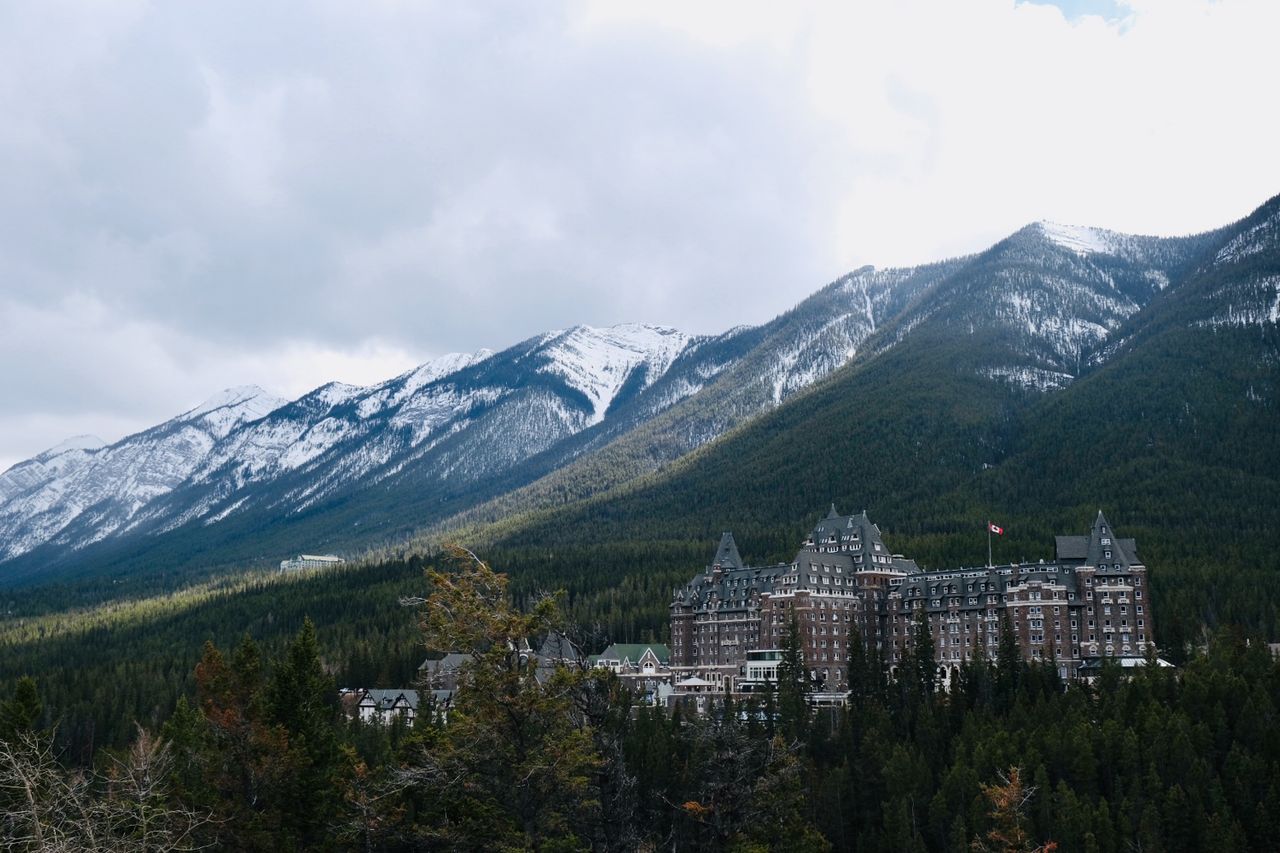
Editor’s Note: The opinions expressed here by the authors are their own, not those of impakter.com — In the Cover: Population growth beyond Calgary is placing greater attention on housing affordability, transport infrastructure and planning across Alberta’s smaller communities..Cover Photo Credit: Nik Cvetkovic