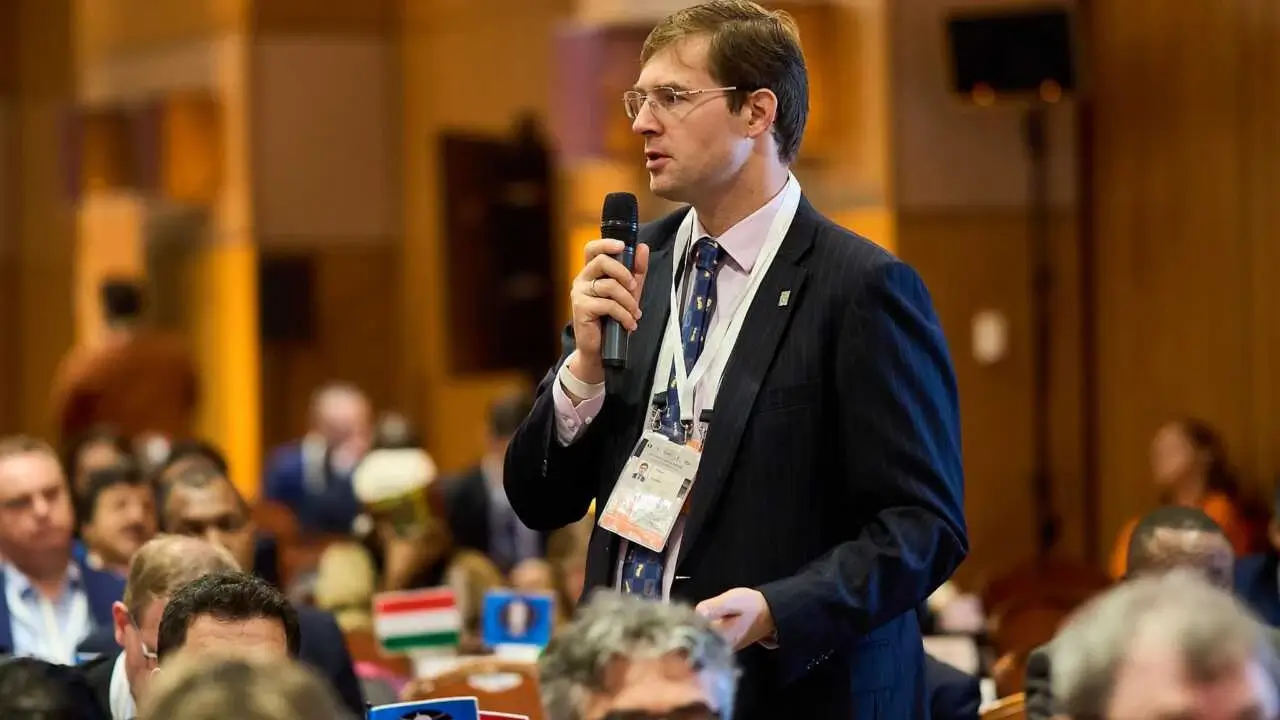
FIDE Election 2026: Timur Turlov Puts Digital Growth and Education at the Center of His Campaign
At the end of September, Samarkand – a city that for centuries stood at the crossroads of the Silk Road – will host an important event for the world of chess. On September 26, representatives of FIDE’s member federations will gather there to elect the next president of the International Chess Federation.
Three tickets are competing for the organization’s top post. German entrepreneur Jan Henric Buettner is running alongside British International Master Malcolm Pein. Wadim Rosenstein, founder of WR Chess, is running with businessman Gordon Tang. Kazakh entrepreneur and financier Timur Turlov has teamed up with five-time world champion Viswanathan Anand.
For Timur Turlov , founder and CEO of Nasdaq-listed Freedom Holding Corp., the campaign represents a step from national and international chess administration toward leadership of the global federation. He is President of the Kazakhstan Chess Federation and also leads the International School Chess Federation.
Turlov is best known for his work in finance and technology. Freedom grew from a brokerage business into an international group whose activities now include brokerage, banking, insurance, payments, telecommunications and other digital services.
That background helps explain one of the main themes of his FIDE platform: digital transformation. His campaign proposes a unified digital platform for FIDE and broader access to modern digital tools for national federations.
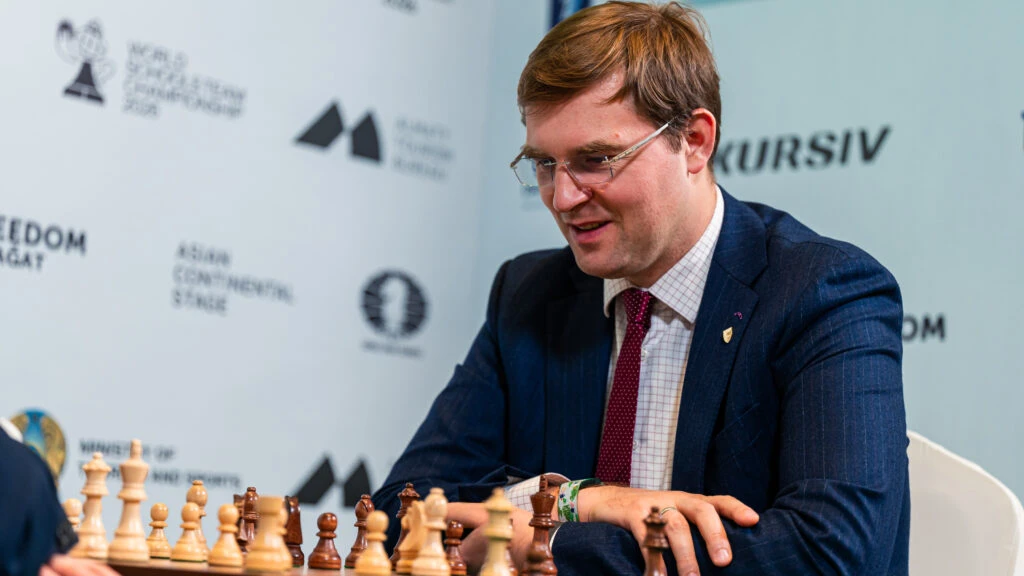
Kazakhstan as a Development Model
Timur Turlov became President of the Kazakhstan Chess Federation in early 2023. Since then, the country has expanded its chess programs across several areas, including schools, youth development and international competition.
The Chess in Education program now reaches more than 1,500 schools and around 60,000 students, while approximately 2,800 primary-school teachers have been trained.
Competitive results have also improved. Kazakhstani players won 126 medals at international competitions in 2023, 160 in 2024 and 162 in 2025, according to figures published by the federation. The women’s national team also won Kazakhstan’s first Chess Olympiad silver medal in Budapest in 2024.
These results are not the work of any one person or organization. Government institutions, the federation, coaches, schools, players and private-sector partners have all contributed to the development of chess in Kazakhstan.
Timur Turlov nevertheless points to the country’s recent experience as evidence that elements of his approach, investment in infrastructure, education, player development and institutional capacity, can be applied on a larger scale. His campaign presents Kazakhstan as a practical reference point for some of the ideas he is now proposing for FIDE.
A Unified Digital Platform for Chess
One of the central ideas in Turlov’s platform is the creation of a unified digital platform for FIDE.
The aim, as described by his campaign, is to give national federations equal access to modern digital tools and create a more connected technological infrastructure around the international chess organization.
The idea reflects a broader challenge facing chess. Players, federations and organizers currently interact with a range of separate systems for ratings, tournaments, administration, education and online play. A more connected digital infrastructure could make some of those interactions simpler and give federations greater access to services and tools.
Technology also featured in Turlov’s September 9 presidential debate. He called for investment in anti-cheating technology that could be made available to national federations and proposed biometric identification, including facial recognition, to verify players taking part in competitive online chess.
His broader position is that FIDE should set standards and provide infrastructure while continuing to work with existing commercial chess platforms rather than trying to replace them. During the debate, he described FIDE primarily as a regulator and nonprofit organization, while also arguing that it needs sufficient revenue to remain financially sustainable.

Why Schools Are a Priority
Despite the emphasis on technology, chess in education is another major part of Turlov’s program.
The International School Chess Federation was launched in 2024 as a FIDE-affiliated organization focused on promoting chess in education. In 2025, FIDE and the ISCF jointly organized the World Schools Team Championship in the United States, alongside the Smart Moves education summit. FIDE and the ISCF later declared 2026 the Year of Chess in Education.
The idea behind the initiative is straightforward: the future of chess depends not only on elite players and major tournaments, but also on creating opportunities for children to discover and learn the game.
Most children who encounter chess at school will not become professional players. But school programs can introduce the game to a much wider audience and help create future players, coaches, organizers and enthusiasts.
Chess also requires relatively little physical infrastructure compared with many sports. That can make school-based programs one way of expanding access in communities where opportunities to participate in organized sport may otherwise be limited.
More Support for National Federations
Another major part of Turlov’s platform concerns the resources available to national federations.
His program calls for stronger support for federations with limited resources, broader access to digital tools and help in developing more reliable long-term sources of funding.
At the September 9 presidential debate, Timur Turlov proposed increasing FIDE’s development fund to more than $6 million. He said the funding could support tournaments, the training of arbiters and coaches, international travel for players, federation staff, and marketing and communications programs.
The proposal is part of a broader debate about how FIDE should finance development. Turlov has argued that long-term commercial growth is important but that federations also need resources that are available now. At the same time, he has said that his longer-term objective is to make FIDE financially sustainable.
Different Emphases in a Three-Way Race
The election in Samarkand brings together three campaigns with overlapping priorities but different areas of emphasis.
Buettner’s campaign identifies three main priorities: growing the chess economy, strengthening support for member federations and modernizing FIDE’s structure and governance. His commitments include attracting new commercial revenue, sharing a portion of FIDE revenue with federations, investing in digital services and expanding chess in schools.
Rosenstein’s program is organized around five areas: member federations, governance, sport, development and commercial activity. His campaign emphasizes practical tools for federations, clearer governance structures, development pathways for players and a more sustainable commercial model.
Turlov’s campaign highlights digital transformation, chess in education, financial sustainability and institutional development, while also calling for greater support for federations with limited resources.
His ticket also brings together two different types of experience. Turlov comes from business and investment and has led the Kazakhstan Chess Federation since 2023, while Anand is a five-time world champion who has served as FIDE Deputy President since 2022.
The differences between the campaigns come at a time when chess itself is changing rapidly. Online platforms have brought millions of people into the game, while traditional over-the-board tournaments remain at the center of professional chess.
At the same time, chess is competing for attention in a digital environment dominated by video games, esports, social media and other forms of entertainment.
That leaves FIDE with questions that go beyond organizing world championships: how much support should go directly to national federations, how should the organization generate revenue, what role should technology play, and how can chess connect elite competition with schools and grassroots participation?
The three campaigns offer different answers to those questions, and it will be FIDE’s member federations that decide which leadership team takes the organization forward.
The Next Move
For Timur Turlov, the campaign brings together several themes that have shaped both his business career and his work in Kazakhstan chess: digitalization, education, institutional development and long-term investment.
He is now proposing to apply elements of that experience at the international level, with a focus on strengthening FIDE’s digital infrastructure, expanding chess in education and providing greater support to national federations.
The final decision, however, rests with FIDE’s member federations. The presidential ticket will be elected by secret ballot at the General Assembly in Samarkand.
On September 26, those federations will decide which leadership team will guide FIDE through the next stage of its development.
Editor’s Note: The opinions expressed here by the authors are their own, not those of Impakter.com