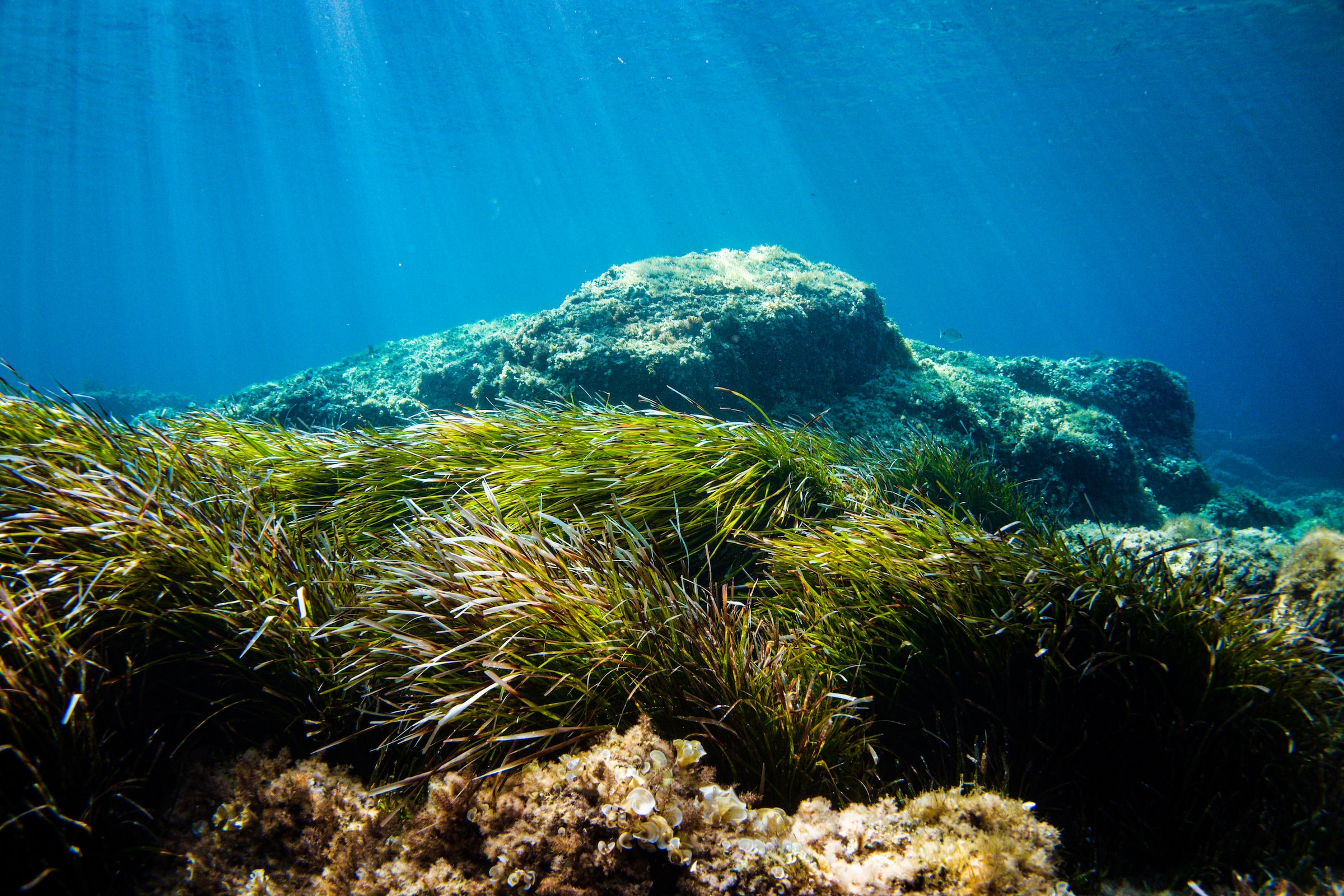
Seagrass is far more important than is generally thought: covering coastal areas, it acts as a climate moderator and barrier to floods. What is less well known is that it is extremely efficient at capturing carbon emissions, much more so than rainforests like the Amazon. These benefits to coastal wetland coverage are key to our battle against climate change, and so with the areas rapidly diminishing, preservation projects are more crucial than ever.
Seagrass is one of the most rapidly declining ecosystems on Earth. As a consequence of human activity such as coastal development and coral farming, we are losing around 7% of our known seagrass coverage every year.
This is a problem in part due to the central role that seagrass meadows play within the marine ecosystem; they provide food, habitats, and nursery areas to many vertebrate and invertebrate species.
However, the reduction in seagrass coverage carries dire consequences for the world’s climate.
These coastal wetland areas are not only able to act as a barrier to the rising ocean levels and increasingly harsh weather, but they also capture carbon at a rate 35 times faster than rainforests, and are able to store this carbon – known as “blue carbon” – for thousands of years.
Seagrass is therefore a highly effective nature-based solution to climate change and, as affirmed by Zac Goldmith, a British minister of state, at COP27, “there’s no pathway to net-zero, no credible solution to climate change, that does not involve nature.”
In light of such value, it is vital that a greater emphasis is placed on the protection of coastal wetlands, including seagrass meadows.
Video Credits: The Marine Diaries
There are numerous projects underway across the globe to both preserve and increase seagrass coverage, however many are restricted in their efficacy by the lack of knowledge of how much seagrass the world currently has, and where these meadows are located.
SeyCCAT, an independent trust, has worked to address this issue in the Seychelles which, thanks to the trust’s work, is now one of the first countries to accurately map all of its seagrass ecosystems nationwide.
As opposed to using satellite imagery as a mapping tool as most countries do, SeyCCAT used remote sensing technology and took sediment samples to understand the meadows’ coverage.
This method proved far more reliable than the former, more common, strategy, which has been known to confuse seagrass with algae and therefore produce inaccurate results.
Related Articles: The Potential of Blue Carbon for Mitigating Climate Change | The Key to the SDGs: Conserving and Restoring Wetlands
The key aim of this project was, according to John Harlay, one of the lead environmental scientists involved, to “understand how much carbon was stored in the seagrass over the last few years, in order to inform the government.”
On account of the success of this mapping, the Seychelles could soon be the first nation to detail its blue carbon stocks to the UN as part of its greenhouse gas emissions report.
As well as bringing the country closer to meeting its Paris Agreement contributions, this understanding will also allow the Seychelles to trade the blue carbon stocks with other countries wanting to offset their emissions.
https://twitter.com/IslandsInnovate/status/1601240431647334401
In an attempt to bring this valuable understanding of seagrass coverage worldwide, the environmental charity Project Seagrass has produced an app that crowdsources images and locations of seagrass in a centralised database.
This relies on the contributions of divers, surfers, fishermen, and holidaymakers uploading photos into the app “Seagrass Spotter” along with a geotagged location of where the photo was taken.
Project Seagrass is then able to collate all photos submitted and produce an increasingly detailed and accurate map of seagrass meadows across the globe.
The initiative seeks to “expand the number of people conserving seagrass from a few hundred scientists to thousands of citizen scientists,” whilst also raising awareness of the importance of coastal wetland conservation.
Today kicks off #COP15, the UN Biodiversity Conference. This conference brings together world leaders to agree on new nature targets for protecting biodiversity.
To be marine nature positive by 2030, we MUST halt and reverse the global loss of seagrass 🌱#fornature pic.twitter.com/dvkfBkmvAs
— Project Seagrass (@ProjectSeagrass) December 7, 2022
Such mapping projects are joined in their efforts by seagrass planting programmes, the largest one of which is currently underway in Plymouth Sound National Park in the UK.
Throughout this project, which began in spring 2021 and is predicted to last around four years, 16,000 seagrass seed bags and 2,200 seeding bags will be planted by the Ocean Conservation Trust as part of Natural England’s overarching plan to support and improve the resilience of the country’s marine environment.
Should all continue as planned, around eight hectares of seagrass meadows will be planted by the project’s conclusion.
Such new growth will play a huge role in restoring the UK’s marine meadows, around 92% of which has been lost as a consequence of human activity.
"Really, really rare" long-snouted seahorse photographed off the coast of Plymouth, UK in seagrass meadowshttps://t.co/BF2uCMrV3c pic.twitter.com/CtIgdirS1w
— BBC News (UK) (@BBCNews) June 14, 2021
These initiatives working to regrow and better understand the world’s seagrass could prove fundamental in our effort to address climate change.
Indeed, the mapping and restoration projects work hand in hand to this end since, as Richard Unwen, a marine biologist at Swansea University and co-founder of Project Seagrass, says, “if people don’t know where seagrass is and why it’s of value, then they won’t take action to preserve it.”
Raising awareness of where these meadows are and how much of our carbon production they are able to mitigate is consequently the first step to securing legal protection for these spaces, as SeyCCAT is now working towards in the Seychelles. And developing a replicable model for regrowing seagrass as the Ocean Conservation Trust is doing will provide us with the means of ensuring it is restored and resilient to climate change.
This will guarantee that both the meadows we have now, and those that are being planted, are able to prosper in the future and play in full their indispensable role in mitigating climate change.
Editor’s Note: The opinions expressed here by the authors are their own, not those of Impakter.com — In the Featured Photo: Seagrass. Featured Photo Credit: Geoff Trodd.