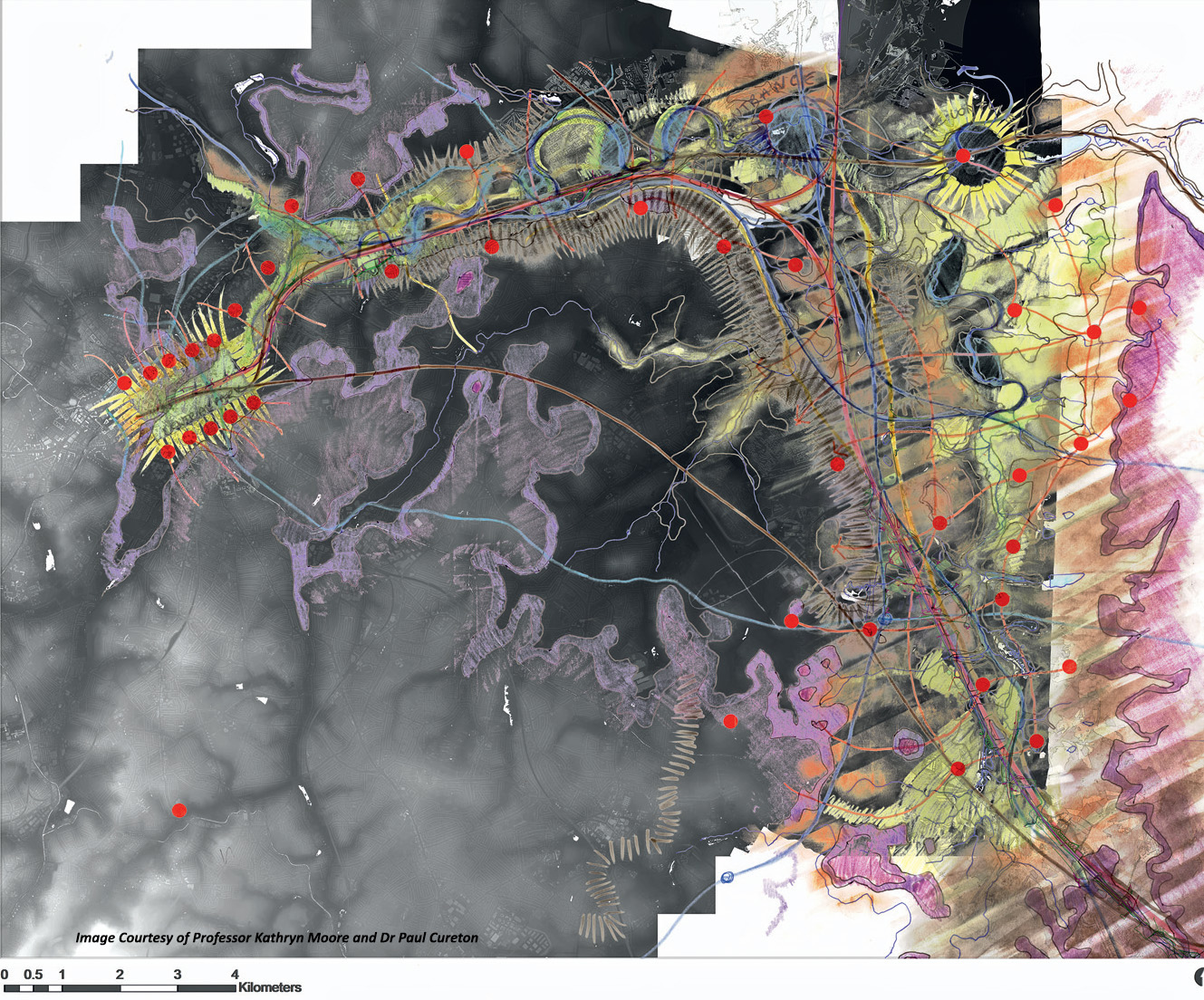
With the youngest, fastest-growing, most diverse population in the UK, the imminent arrival of HS2 and the hosting of City of Culture 2021 and the Commonwealth Games, the West Midlands has a unique opportunity to re-discover a vast, hidden landscape that has been largely overlooked and undervalued for decades.
The West Midlands plateau, a watershed between two of the largest river systems in the United Kingdom, is one of the most geologically diverse regions in the world. Previously an area of dense woodland, its matrix of valleys stretches from the Black Country, the crucible of the industrial revolution, to Birmingham, once the city of a thousand trades and now one of the most rapidly developing business hubs in Europe, from Medieval Coventry to the Saxon town of Tamworth. This immense rolling landscape, the nexus of the UK’s major agricultural regions, with its complex infrastructure of canals, highways and byways is married to some of the most beautiful, forgotten areas in Britain and awaits a re-imagining for millions of people with the creation of a West Midland National Park (WMNP).
Proposing a new concept for the West Midlands National Park will not only enable social, cultural, economic and environmental change in the region, but it is also a step towards many of the UN Sustainable Development Goals (SDGs) for the area. The WMNP proposal takes the climate emergency under consideration and identifies ways in which a low carbon design can be successful on a regional scale. This is a vision of what the West Midlands could become when the significance of its landscape is properly realized and celebrated. It will profoundly change the identity of the region.
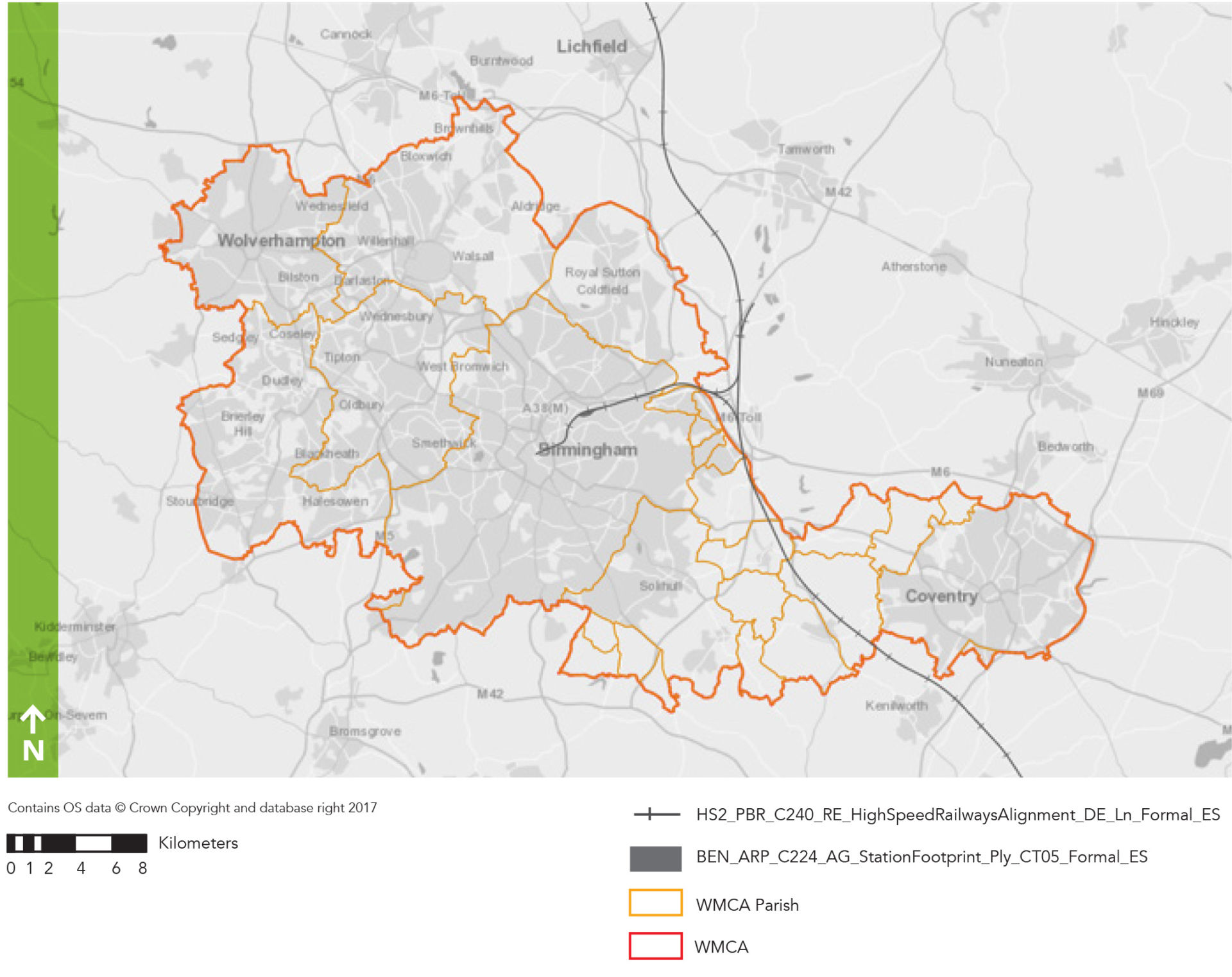
The West Midlands Combined Authority (WMCA) offers a perfect platform for people to create and develop the capacity to introduce new skills to the wider world and to profoundly change the identity of the region through this ambitious vision. Our proposal for a National Park for the West Midlands (WMNP) aims to utilize major strategic initiatives throughout the region to create a new type of a National Park which champions the relationship between people and place: A relationship that shapes our cultural identity, pride and self-confidence, and which rightly acknowledges the landscape as being the matrix within which all development occurs. It aims to create improved collaborative and citizen-engaged solutions which focus on the relationship communities have with a landscape, as well as support the positioning of UK agriculture, which is on the verge of a second agricultural revolution, and a gathering world focus on high-tech agronomy, reforesting, organic growing, water storage and cleansing.
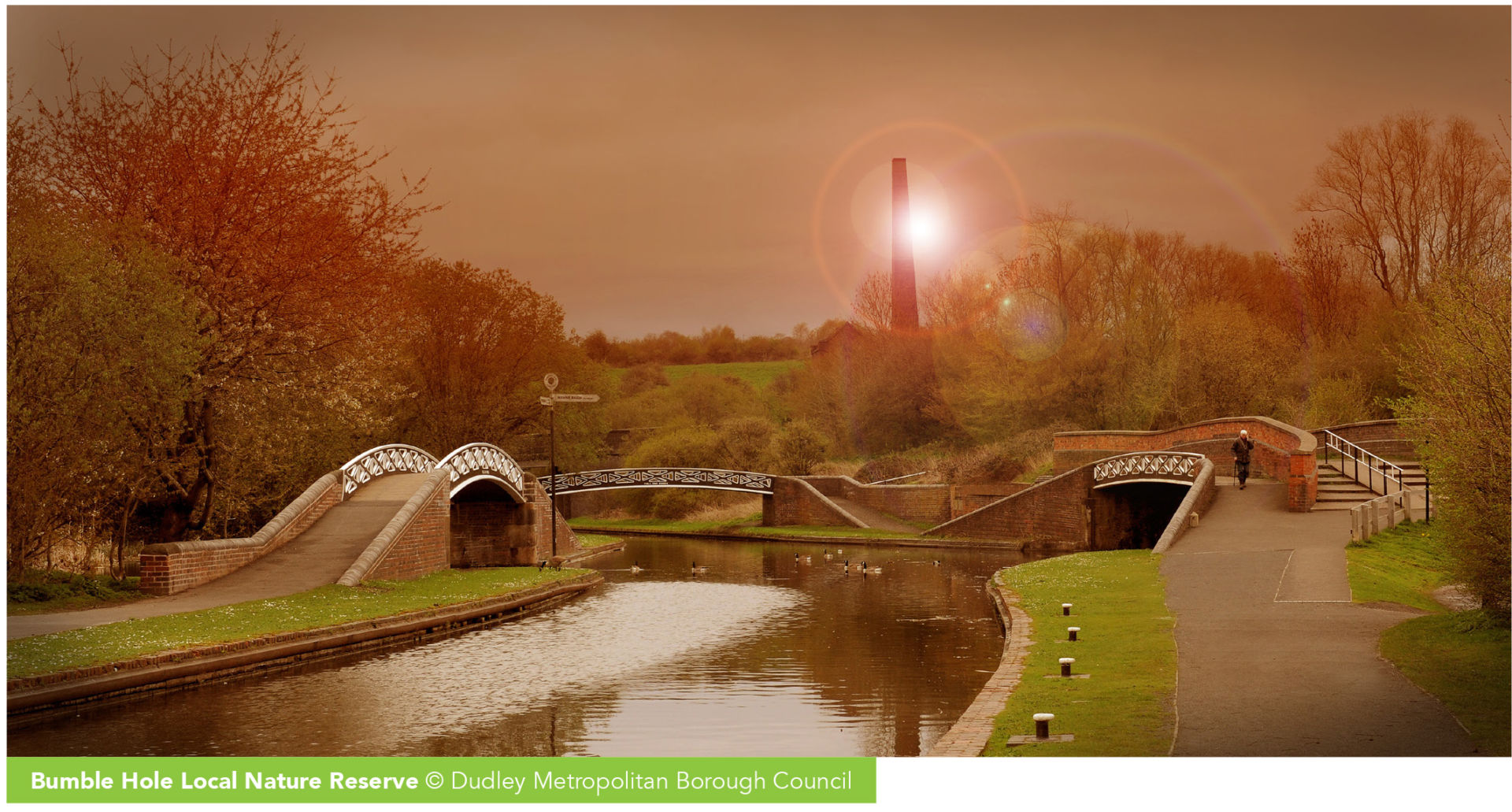
The West Midlands with its muscular, working landscape is inextricably linked to the extraordinary imaginations of its foremost industrialists, scientists and thinkers such as James Brindley, Thomas Telford, James Watt, and Matthew Boulton, members of the Lunar Society and founders of the Midlands Enlightenment, the park would be a living and lasting testimony to their vision and ambition. Rekindling and re-inventing the connection between communities and the space they inhabit, recognizing the pride people take in that space, its cultural identity be it urban, suburban or rural is very much a modern, contemporary view of how our landscapes work. This is what the West Midlands National Park is all about. With 1,000 miles of tracks and trails, 1,000 lakes and 1,000 miles of rivers and streams and more canals than Venice. A mighty, rolling landscape with an abundance of woodland, heathland, hills, and valleys with open country, working farms, small villages, and larger towns. Great walking country for serious hikers or gentle strollers out looking for a place to picnic, for runners, riders, bikers, and anglers, there is a huge diversity here that quite literally goes with the territory.
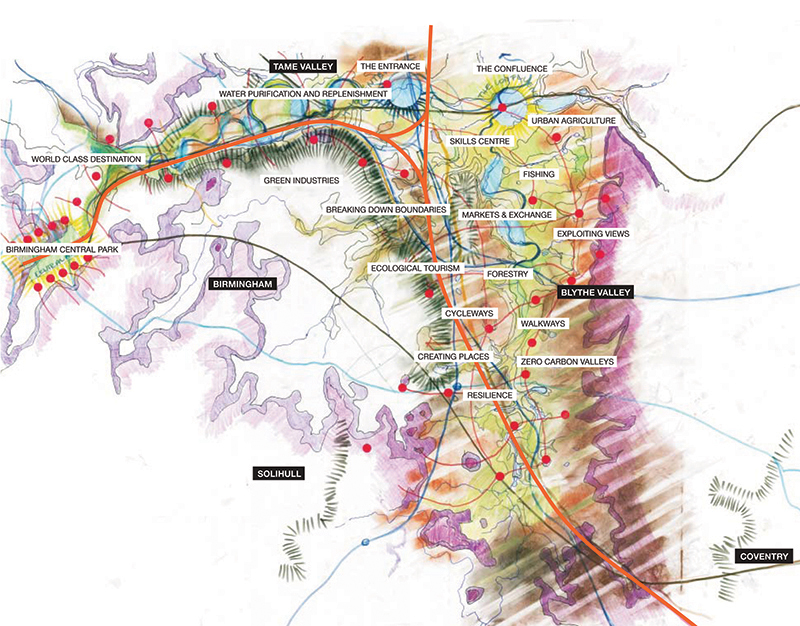
Looking into the future, this proposal supports the West Midlands, but it can also become a pioneer example for other cities and regions. The vision aligns with many of the UN 2030 SDGs and demonstrates how these could be interpreted in as part of strategic development. The concept of regenerating the whole area and visioning a sustainable and environmentally resilient region fits with the ‘Sustainable Cities and Communities’ goal (No11), projects on water management, the Tame and Blythe valleys and other locations are strongly related with goals number 14 (Life below water), 6 (Clean water and Sanitation) and 15 (Life on land) while ‘Industry, Innovation and Infrastructure (No 9), Partnerships for the goals (No 17) and Good health and well-being (No 3) are addressed by an economic and entrepreneurial vision that will significantly impact on health and living of all communities.
The National Park for the West Midlands proposal will give us a perfect storm of opportunity to re-imagine a long-forgotten landscape, creating a living, working national park, for jobs, education, good health and well-being, leisure and above all, for a high-grade, sustainable environment. Because the quality of our environment is equal to the quality of our lives, it is an equation as simple as it is compelling.
Authors:
Dr. Anastasia Nikologianni
Dr. Anastasia Nikologianni is qualified as a Landscape Architect MA and Agriculturist/Horticulturist MSc., and holds an EIT Climate-KIC labelled PhD in Landscape Architecture from Birmingham City University with regards to the role of low carbon, spatial quality and the contribution design can make to the development of regional landscape-based spatial strategies. Most of her recent research has focused on the extent to which spatial quality and low carbon can be delivered in regional landscape design as well as the way visual representations contribute to the design process. Anastasia is a research fellow and consultant in Birmingham City University and joins the CATiD BCU team, an international, multidisciplinary research, design and consultancy hub. CATiD’s design-led and conceptual approach aims to place quality of life and sustainability-oriented transformation at the top of the political agenda. Anastasia’s current and ongoing role in her family business together with her devotion to represent the landscape profession has given her extensive knowledge in business practices. She is the Chair of the Emerging Professionals Advocate of IFLA World aiming to support landscape architects and designers. Acknowledging that policy plays a significant role in the way large-scale design is implemented, Anastasia is a member of the Policy and Communications committee for the Landscape Institute (UK) and has an active role in various initiatives such as the recent ‘Climate Change Guide for Local Authorities’ in the UK. Holding committee positions at professional organisations such as the Climate-KIC Alumni Association and the Landscape Institute Midlands have allowed her to work in areas related to climate change and the landscape, fulfilling her passion for the creation of a global network promoting the landscape profession. Anastasia is also a Certified Professional in Accelerating Transitions by EIT Climate-KIC and a member of their Network of Coaches.
Prof. Kathryn Moore – Immediate Past President of the International Federation of LandscapeArchitects (IFLA)
Kathryn is the Immediate Past President of the International Federation of LandscapeArchitects (IFLA) and Professor of Landscape Architecture at Birmingham City University hastaken a lead role in redefining the relationship between landscape, culture and governance,finance, health and community engagement within the context of a radical proposal for a WestMidlands National Park, launched in a major conference held in BCU in June 2018. She is amember of the Independent National Design Review Panel for HS2 as well as the recentlyformed Enfield Borough Council Place and Design Quality Panel.