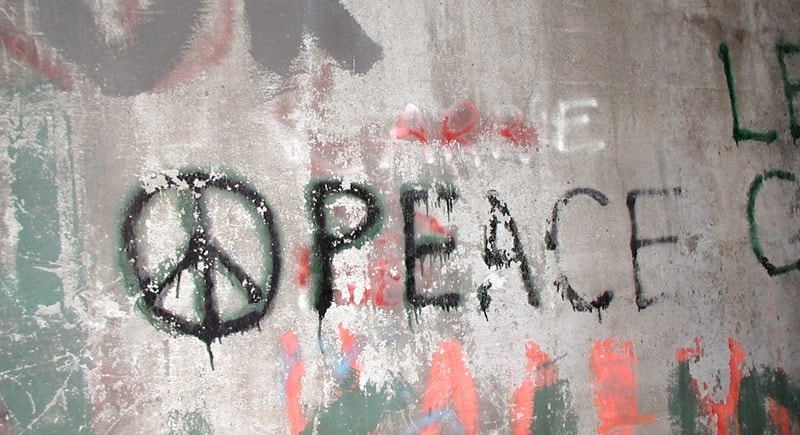

In March 2017, the Inter-Agency and Expert Group on Sustainable Development Goal Indicators (IAEG-SDGs) published a list of 232 indicators for which there was a general agreement from representatives of the member states for use in monitoring the SDGs. With some minor changes over the next few years, these 232 indicators are likely to be the monitoring framework for the SDGs over the next 13 years to 2030. One target of SDG 16 is peace – a very complex concept, meaning different things to different people. It is specifically invoked in the first clause of Goal 16 which reads, “Promote peaceful and inclusive societies for sustainable development…”, though it has been central to the UN mission since its inception – the preamble to the Charter of the United Nations reads, “We the peoples of the United Nations determined to save succeeding generations from the scourge of war….” With these indicators now in hand, this essay asks, are the indicators we’ve assembled sufficient for the measurement of peace?
Within the 232 indicators identified by the IAEG-SDGs, there are eight that are explicitly attached to the measurement of violence and peace. These are:
16.1.1 Number of victims of intentional homicide per 100,000 population, by sex and age.
16.1.2 Conflict-related deaths per 100,000 population, by sex, age and cause.
16.1.3 Proportion of population subjected to physical, psychological or sexual violence in the previous 12 months.
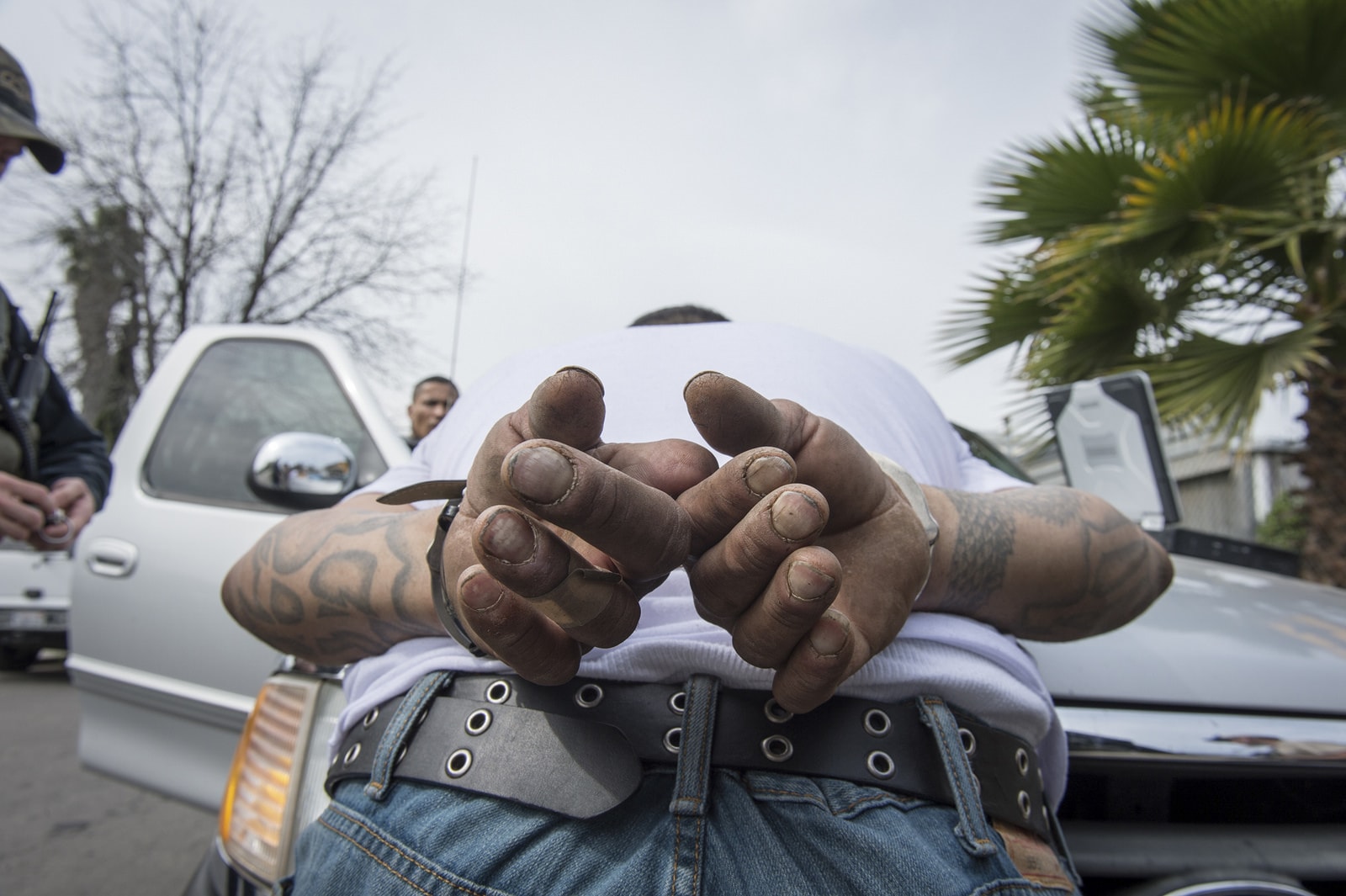
Photo Credit: OFFICE OF PUBLIC AFFAIRS/FLICKR
16.1.4 Proportion of population that feel safe walking alone around the area they live.
16.2.1 Proportion of children aged 1-17 years who experienced any physical punishment and/or psychological aggression by caregivers in the past month.
16.2.2 Number of victims of human trafficking per 100,000 population, by sex, age and form of exploitation.
16.2.3 Proportion of young women and men aged 18-29 years who experienced sexual violence by age 18.
16.3.1 Proportion of victims of violence in the previous 12 months who reported their victimization to competent authorities or other officially recognized conflict resolution mechanisms.
Of course, these are not the only indicators in the SDGs that pertain to peace or violence. Recently, a suite of indicators referred to as SDG16+ has been identified across the SDGs which could be used for a more comprehensive monitoring of these concepts. For example, indicators 5.2.1 and 5.2.2, if monitored properly, will provide better global statistics on female experience of physical, sexual and psychological violence (hereafter referred to as Gender-Based Violence, GBV, though technically this data would need to be collected for all genders to monitor GBV).
Related Article: “LET’S TALK ABOUT WAR AND PEACE! WITH STEVE KILLELEA“
Similarly, data collected for indicator 16.10.1 on the safety of journalists and human rights workers will give some information on the quality of peace (see discussion below). Commitments in targets related to safe public spaces, safe education, safe housing and safe transport are found in SDG 11 (Sustainable Cities and Communities). On child marriage, child labor and child soldiers, there are relevant targets in SDGs 5 (Gender Equality and SDG 8 (Decent Work and Economic Growth). On safe migration, forced labor, modern slavery and human trafficking, there are relevant targets SDGs 8 and 10 (Reduced Inequalities). Though, note, that on these latter points on child marriage, children, migration and labor, the indicators that have been selected may be insufficient to monitor the incidence of these events.
 Before assessing the scope of these indicators and the coverage of the concept of peace, it should be noted that countries are also encouraged to identify country-specific indicators. It is possible for individual countries to use other indicators to monitor and measure peace, so the list above is not complete, but it should be considered a minimum framework agreed for measuring peace. In the UNDP publication The Indicators We Want we argued that because of the complexity of concepts like peace, multiple indicators are necessary for targets. Including complementary indicators (those necessary in combination to minimally measure a complex concept) and supplementary indicators (those unique indicators necessary to measure peace in specific country cases) is crucial. As a result, some of the indicators described below (and others) may still be adopted by countries seeking to better measure the complex concept of peace.
Peace can mean different things to different people, so it is important to reflect on the complex concept of peace as a target. Violence is often considered to be the opposite of peace, but it is also possible for peace to be absent where there is no violence – if there is a threat of violence, a legacy of violence and grievance, or structural violence (violent-like outcomes produced by government or cultural systems) – all of these qualify as a “negative peace”. To properly consider how peace is measured, we must keep in mind how violence, including not just violent deaths but also the threat of violence and structural violence, is being measured by the indicators.
Violence is often considered to be the opposite of peace, but it is also possible for peace to be absent where there is no violence…
Having peace as a target is, in itself, an achievement – there were questions throughout the SDG process whether peace would be officially recognized as the important component of development that it is. To measure the complexities surrounding peace, a number of indicators have been agreed upon, some listed and described above. The question remains whether the complex concept of peace is adequately measured by the indicators we have. To address this, the graphic below locates agreed indicators (in black) and other possible indicators (in white with bullets) on a number of dimensions of peace (violent deaths, non-lethal violence, the threat of violence and structural violence). This is a heuristic device, by no means complete, but intended to convey how much of what people typically regard as “peace” is being measured by indicators we have. Note that the indicators listed in figure 1 are not “to scale” – the font sizes are notional and reflect both the impact/significance of the issue, as well as the relevance to the concept of peace.

Figure 1: Types of Violence, Agreed Indicators (black) and Other Indicators (white) Source: Dr. Gary Milante
Indicators in black italics in the above graphic are already, in some capacity, included in the IAEG-SDG list. For example, intentional homicides (16.1.1) and conflict deaths (16.1.2) have been formalized to measure violent deaths. However, target 16.1 of the SDGs is not just about reducing violent deaths, it is “Significantly reduce all forms of violence and related deaths everywhere”. To that end, these two indicators on violent deaths are complemented by survey indicators on experience of violence (16.1.3) and perceptions of safety (16.1.4). Likewise, as described earlier, some aspect of GBV are covered in indicators 5.2.1, 16.1.3, 5.2.2 and 16.2.3. Safety of journalists and human rights workers (16.10.1) also measures some aspects related to the threat of violence and structural violence.
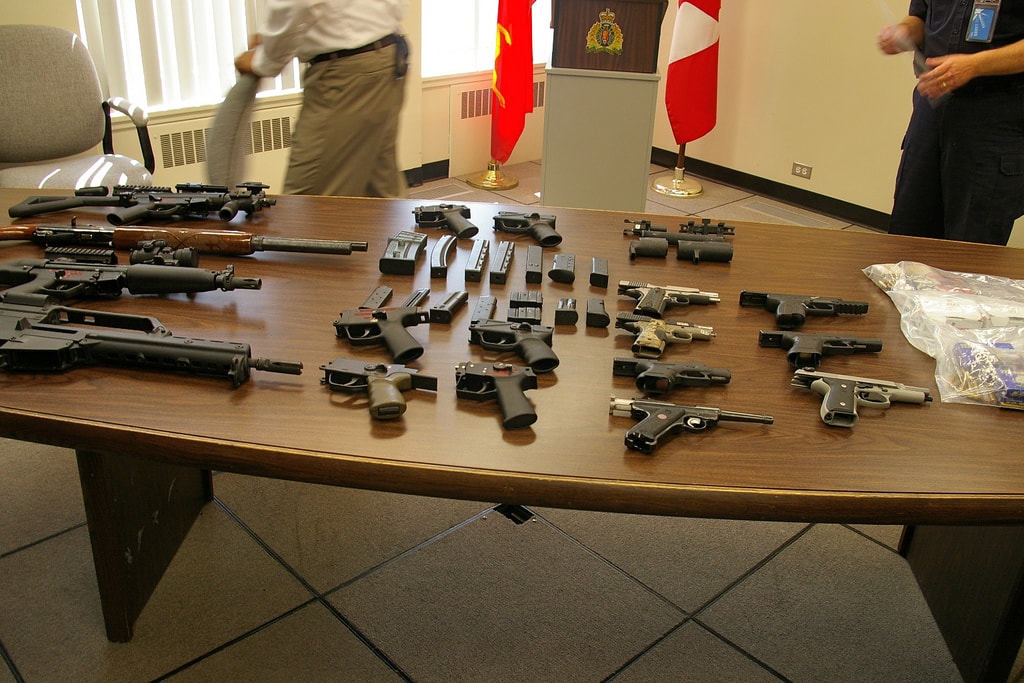
IN THE PHOTO: WEAPONS SEIZURE PHOTO CREDIT: KIM SIEVER/FLICKR
Still, there are some areas where the indicator identified will not fully cover the concept as it pertains to peace. For example, arms flows, specifically illicit arms flows, are meant to be covered by indicator 16.4.2 which only looks at seized (surrendered or found) arms which have illicit origin or trade. Due to the nature of illicit weapons trade, it is difficult to measure the actual scale of the problem. The indicator and target do not address legal flows of arms which contribute to violence and thereby reduce peace. Similarly, indicators on child abuse and human trafficking will only be as good as the monitoring mechanisms built to honestly track these events. Likewise, indicators on sexual, physical and psychological violence are an important first step to monitoring GBV, but cannot fully reflect such a complex concept, or the systems which perpetuate GBV.
Of those elements of violence and peace which are not currently indicators for SDGs (those with bullets in white in the figure above), a number of indicators or monitoring mechanisms exist already, though they have not been formalized or adopted by the IAEG-SDGs:
- Marginalization and Exclusion: where vulnerable groups do not have access to voice and opportunity, there is negative peace and there can be violence. Projects like the minorities at risk database and the ethnic power relations database monitor such exclusion and change in relations between ethnic, linguistic and identity groups within societies.
- Political oppression, extra-judicial killings and disappearances: Many oppressive authoritarian regimes needn’t use violent deaths to control populations, and indeed, will avoid deaths, particularly if they are being measured. Disappearances and extra-judicial killings are one indicator of political oppression, but other qualitative assessments of oppression can be used – of course, such indicators directly threaten exactly the regimes which are represented as member states in the UN, so it is unlikely these will be adopted as indicators by countries which engage in these activities.

IN THE PHOTO: REFUGEE CAMP IN TURKEY PHOTO CREDIT: © European Union 2016 – European Parliament
- Refugees, Forced Displacement, Internal Displacement and Vulnerability during Migration: Migration has always been a part of human existence. Because so many people move for so many different reasons, it is difficult to tell how much of it is due to violence or persecution (the threat of violence). Still, the only indicator to address migration is a meta-indicator: 7.2: Number of countries that have implemented well-managed migration policies.
While it reflects global commitment to accommodate migration and displacement, it cannot tell us about the underlying drivers of migration and whether they represent the absence of peace.
- Interpersonal Violence (non-lethal): While indicator 16.1.3 – experience of violence captures some important elements of interpersonal violence, it is important to remember that it is a survey indicator. There are no administrative state statistics on non-lethal interpersonal violence (arguably a very large component of peace). For the most part, this is because indicators like aggravated assault and property crime have quite different definitions across cultures and contexts, making it difficult to identify universal indicators for this concept. In this sense, intentional homicides is often cited as a proxy for the larger issue of interpersonal violence, though it should be remembered that it is only a proxy.
- Forced Labor and Child Labor: While there is an indicator on child labor, (8.7.1 Proportion and number of children aged 5-17 years engaged in child labour, by sex and age), there is no indicator currently identified on forced labor, a phenomenon clearly related to the threat of violence and structural violence.

In the Photo: Landmine from Cambodia being held by a former Khmer Rouge Soldier. Photo Credit: Rodney Evans/Flickr
- Casualties and Contamination related to landmines and explosive remnants of war: many populations in the world continue to live in the presence of contamination by explosive remnants of war (ERW) one of the legacy effects of violent conflict. Very few people who live at risk of exposure to landmines would consider themselves living in peace.
- Terrorism: Not all countries agree on the definition of terrorism, nor do all conflict monitoring mechanisms. What may be a criminal act in one country might be terrorism in another and this is further complicated by the “global war on terror” which creates incentives for countries to label insurrections, anti-state violence and even protests as terrorism. If indicators on conflict deaths and intentional homicides are to be comparable between countries, global definitions of terrorism, incidences and casualties, will need to be agreed.
- The threat of nuclear, chemical and biological weapons looms over all countries and people. Likewise, while military expenditure might be necessary by one society/state to feel more secure, the threat of violence embodied by armaments and arming, particularly weapons of mass destruction, represents a decrease in peace. Additionally, military expenditure by states does not always contribute to peace for citizens of those states, indeed, arms can be used for oppression. Beyond the flow of illicit arms loosely measured as described above, there are no indicators included in the SDGs on global or national armament and the commensurate quality of peace.

In the Photo: US nuclear weapons test in Nevada in 1951 Photo Credit: US Government / Flickr
- Similarly, as the capacity for reporting on intentional homicides increases over the next 15 years to report on indicator 16.1.1, peace researchers will need to monitor country reporting on unintentional homicides to ensure that states are not “gaming the stats” by shifting violent events into other categories.
Looking forward – will this framework get us to 2030?
People affected by violence know when there is violence. Of course, there will always be a disconnect between the metrics that can be produced and the actual experience, no indicator can perfectly measure a target or goal, particularly one as complex as peace. But there is a cognitive dissonance that develops within a society if the disconnect between what is being experienced and what is being monitored and reported – is too large. When governments report peace but people know there to be violence, they begin to distrust the governments that perpetuate the systems that produce the violence.
Notwithstanding the shortcomings identified above, the 8+ indicators that we have in the IAEG-SDG indicators list are a very good start to monitoring peace. We must be mindful, though, that citizens are likely to start building their own mechanisms for monitoring and reporting on violence, see for example every casualty counts, and projects about disappearances in Mexico. As new tools using machine learning, big data, and analysis of social media, develop, we may be able to build better monitoring mechanisms than the state statistics described above.
Governments that are committed to building peace by 2030 will continue to build systems for monitoring and reporting on violence. There will, of course, be some who are not truly committed, for those, current efforts like the SDG 16 Data Initiative will be required to monitor statistics that are known but not reported by states. We should also remember that lack of monitoring is itself a metric – countries that do not report even the IAEG-SDG statistics are signaling their lack of commitment to peace. The drawing together of many sources, the adaptation to new technologies and the monitoring of states that are not committed to monitoring themselves will be necessary to report on peace to 2030 and beyond.
Further Reading: For a careful assessment of various measures of violent events and violent deaths and how they relate to each other, see the Small Arms Survey Global Burden of Armed Violence 2015. Efforts to reconcile global definitions of crimes are being undertaken by UNODC, see the International Classification of Crime for Statistical Purposes.