Over the past decades, global population growth has been a significant concern, with diverging predictions about the future trajectory. Predictions regarding the percentage of world population growth over the next 50 years have different implications for regions, particularly Africa, where expanding youth populations will face challenges in obtaining jobs, education, and adequate health services.
Predictions of Population Growth
Several institutions and experts have made varying predictions regarding future population growth.
The United Nations projects that the world population, which currently stands at over 8 billion, will reach 9.7 billion by 2050. Similarly, the Pew Research Center estimates that the global population will grow to 9.9 billion by mid-century. These projections indicate a considerable increase in the number of individuals inhabiting the planet, with implications for various aspects of human life.
There are also new projections that are significantly lower.
Of special interest are the new projections by researchers from the Earth4All initiative for the Global Challenges Foundation is published as a working paper People and Planet, 21st Century Sustainable Population Scenarios and Possible Living Standards Within Planetary Boundaries.
If the world takes a “Giant Leap” in investment in economic development, education and health, then they estimate that the global population could peak at 8.5 billion people by the middle of the century.
On the optimistic side, if the world continues to develop economically in a similar way to how it has over the last 50 years, the global population could actually decline to 7 billion in 2100, the reasons being that there are positive factors, discussed below, which flow from economic improvement,
But this lower population and shared benefits will happen only if there are unprecedented investments in the right stuff.
High priority should be in financing poverty alleviation – particularly investment in education and health – along with policy turnarounds in food and energy security, effective environmental responses, addressing the inter-reliance of humans, animals, and plant health, One Health: as well as in inequality and gender equity.
Population explosion: Implications for Africa
The Population Reference Bureau predicts that Sub-Saharan Africa’s population will double by 2050, reaching nearly 2.2 billion – and, in one projection, almost 4 billion by the end of the century. But even the lower projection still places the population just below three billion:
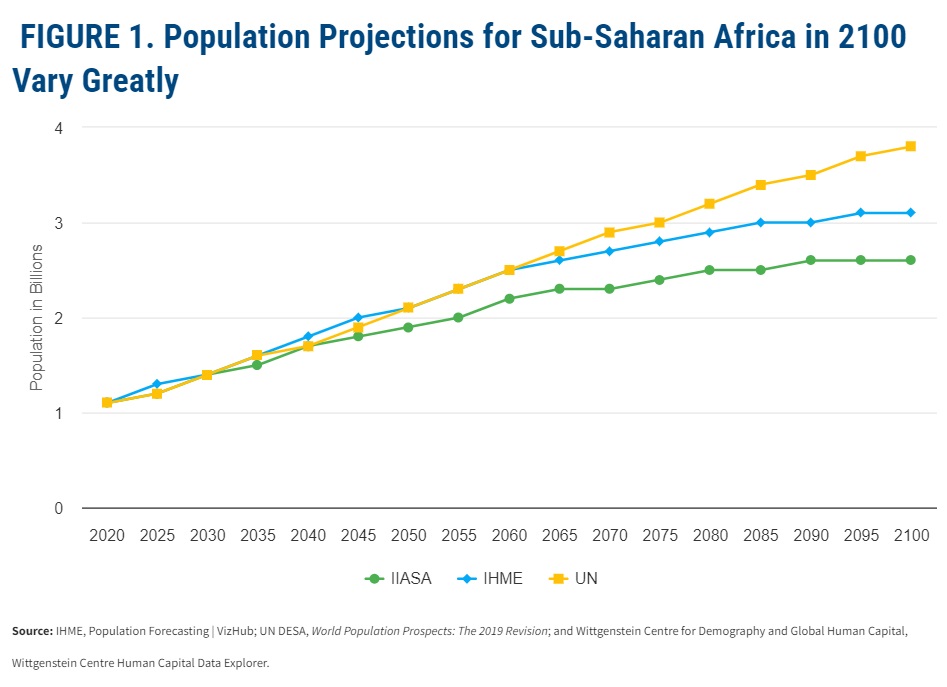
That, by any measure, is exponential growth. If the continent is going to navigate this challenge successfully, it will require special attention from policymakers and political leaders.
According to the African Development Bank, “the continent’s share of the world’s youth population will grow from one-fifth…to as high as one-third by the year 2050”:
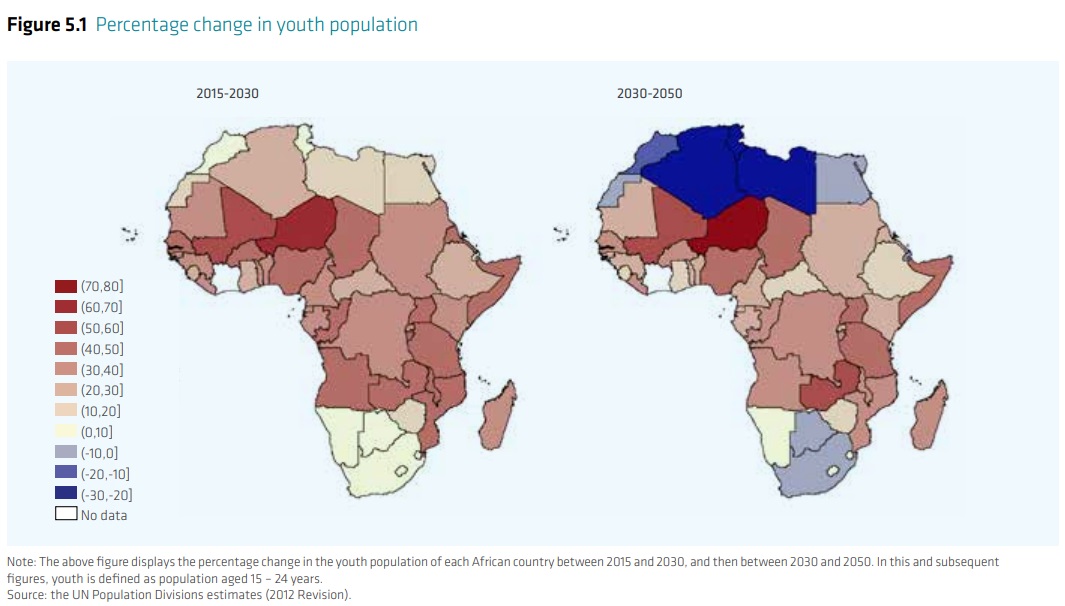
The African Development Bank considers the continent needs to create around 12 million jobs each year to absorb new labor market entrants.
For perspective, three important African countries, namely Ethiopia, Nigeria, and South Africa in terms of it young population and employment situation provide additional perspective:
Ethiopia: The rate of youth unemployment, is officially estimated at more than 50%. With 90 million people, the country is the second most populous in Africa, producing over 150,000 graduates each year.
Nigeria: About 53.40% of youths are unemployed in Nigeria according to youth unemployment rates released by the National Bureau of Statistics in 2022.
South Africa: The most industrialized African country in Africa, South Africa was once considered an economic success story. Currently, it has one of the highest youth unemployment rates in the world — 61 percent of people ages 15 to 24 are unemployed, according to Statistics South Africa, a government agency..
Failure of countries to concentrate on the young may lead to widespread unemployment and underemployment among the youth population, undermining the region’s overall economic prospects and stability. There are ripple effects with regard to access to and benefit from adequate education and healthcare services.
Addressing the Challenges: In Africa (and elsewhere)
Given the projected population growth and the associated implications for Africa and no doubt other regions, there is no single prescription but there are general lines of effort to consider:
- Efforts to promote economic growth and job creation are vital. This involves fostering an environment conducive to entrepreneurship, investment, and innovation, to generate employment opportunities for the burgeoning youth population. Governments, in collaboration with the private sector, should prioritize initiatives that support skill development, vocational training, and workforce participation to equip young people with the tools they need to succeed in the rapidly evolving global economy.
- Investment in education is crucial for equipping the youth with the knowledge and skills necessary to thrive, preparing young people to meet the evolving demands of the labor market. Likewise, vocational training and workforce participation to equip young people with the tools they need to succeed in the rapidly evolving global economy will be required. Governments and international organizations should prioritize educational reforms and infrastructural investments to ensure that young Africans have the educational foundation to pursue diverse career paths and contribute to the region’s development.
- Healthcare requires sustained investments in infrastructure, and training of healthcare professionals, to ensure the provision of essential medical services. Strengthening healthcare systems will not only improve the overall well-being of the population but also contribute to increased productivity and economic stability. Here too, collaborative efforts among governments, international organizations, and local communities are essential to address the healthcare needs of a growing population effectively.
- Family planning and reproductive health services are important in managing population growth. Empowering individuals with the information and resources to make informed decisions about family size can contribute to more sustainable population growth, reduce strain on resources, and improve overall quality of life. Promoting gender equality, enhancing access to reproductive healthcare, and supporting women’s rights are central to achieving these objectives.
What to do with the rest of the twenty-first century? Prioritize healthcare and sustainable development
Predictions regarding the percentage of world population growth over the next 50 years are all over the map. Still, they all agree on some overall substantial increase, with regional disparities shaping the demographic landscape.
Africa stands out as one of the only regions with youth populations growing significantly. Possibly by implementing comprehensive strategies designed to prioritize equitable economic growth, education, healthcare, and sustainable development, it is possible to mitigate the potential negative impacts and create opportunities for the burgeoning youth population.
What can be successfully done in Africa holds lessons for other regions too.
Getting there will require far greater collaboration among governments, international organizations, and local communities to navigate the complex dynamics of population growth. It should be on our wish list for 2024.
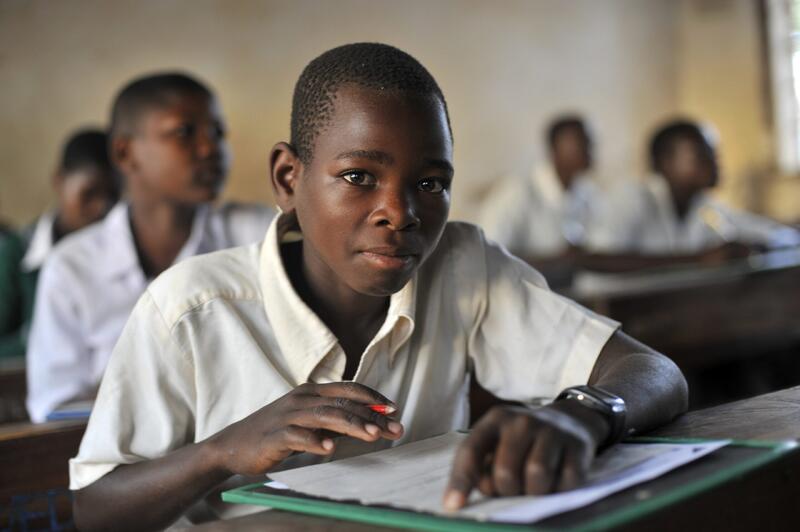
Editor’s Note: The opinions expressed here by the authors are their own, not those of Impakter.com — In the Featured Photo: Student in the Omdena program as Omdena partners with the UK FCDO in Tanzania and Tanzania National Carbon Monitoring Centre to “Educate, Build and Deploy AI Solutions in Tanzania”– Omdena