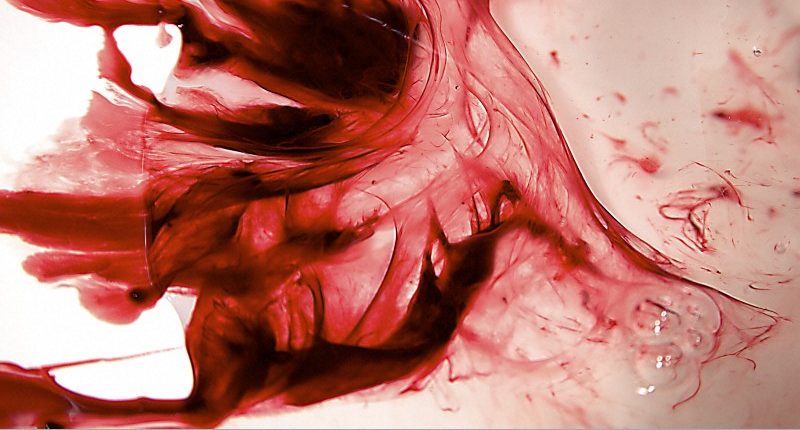

The word taboo, throughout history, has had a broad spectrum of meanings: forbidden, magic, frightening and untouchable are just a few examples of how the word has been translated and understood. It was Judy Grahn, however, who most notably brought to light, in her 1993 publication: Blood, Bread and Roses: How Menstruation Created the World, that while the word evolved from the Polynesian word tapua, it originally meant both sacred and menstrual blood. Menstruation, it seems, was the original taboo.
Yet, as Grahn argued, female menstruation and its connection with the moon ‘was the most likely earliest source of the sciences of geometry, mathematics, and formal measurement, and, after studying further stories of origin, ‘menstruation was a possible source, not only for science, but for everything that makes us human.’
Post millennium, menstruation is still a complicated subject to discuss. The average woman menstruates around 450 times in a lifetime and a recent poll in the UK revealed that, on average, women spend around £18 000 to manage their monthly cycle. Considering women make up around half of the population, it’s hard to perceive that periods are still entrenched in secrecy and shame from both society and the media.
If the taboo isn’t acknowledged and broken, women will continue to suffer and feel ashamed by one of the most natural processes in the world.
Innovations such as THINX: the ‘anti-microbial, moisture-wicking, absorbent, and leak-resistant’ underwear; the growth in popularity of the menstrual cup and it’s environmental and social missions; the tax debate and the representation of menstruation in both art and photography have all help push boundaries, spark discussion and minimize the taboo.
Yet shame and secrecy is still a major factor in how women deal with their monthly bleeding. Sex education and the menstrual cycle are now taught earlier in schools in the UK for example, but after that time, as a woman, we are constantly told that periods should be hidden, whether that’s through social pressure or how we are sold our pads and tampons.
 Photo Credit: JESSICA BRASSINGTON

A HUMAN RIGHTS ISSUE
Although it was patented in 1932, the menstrual cup, sold under varying names including Ruby, Diva and Moon, is still relatively unknown. Menstrual cups, overall, are a lot more sustainable, healthier and often attached to social missions. Rubycup have a ‘Buy One, Give One’ policy on all purchases, which means every time someone buys a Rubycup online, one is donated to a girl in East Africa. Rubycup realises the problem in menstrual hygiene around the world, highlighting on their website that ‘menstruation is a hugely overlooked barrier to development and it has a significant impact on education, gender dynamics, equality and basic human dignity’.
The social stigma around menstruating in various developing countries has been especially documented in India where menstruation is rarely talked about. Women and girls suffer in silence because it is still a ‘deep-rooted taboo’, something impure and dirty. Although a human issue, the social shame means women are forced to deal with their periods alone leading to poor hygiene and complicated infection.
 Photo Credit: JESSICA BRASSINGTON

An article featured in The Guardian a few years ago highlighted that ‘70% of all reproductive diseases in India are caused by poor menstrual hygiene’ and ‘in urban India, 43%-88% of girls use reusable cloth during menstruation, yet they are often washed without soap or clean water.’
The same article further highlights how this social stigma is the core problem and reveals that NGOs find it very difficult to secure ‘good menstrual hygiene for girls’ because there ‘is a culture of silence around periods.’ A big part of their work is, therefore, convincing ‘women and girls in developing countries to take up support.’
Innovative, sustainable products help the environment and make women’s lives easier, but if the taboo isn’t acknowledged and broken, women will continue to suffer and feel ashamed by one of the most natural processes in the world.
Artists have come to embrace periods in their work to help detach the feeling of shame and push discussion.
Related article: “SEX WORK AND THE LAW: A SOCIAL TABOO”
ADVERTISING
Chella Quint in her 2012 TED talk entitled: Adventures in Menstruating highlighted that despite companies such as Always, Kotex and Bodyform producing better period protection campaigns, there is still a clear element of secrecy and fear that helps sell their products. Quint uses examples from 1926, 1945 and the present day to compare the words used throughout history.
It is unsettling to realise that not much has changed in advertising. Words such as, ‘terror’, ‘fear’, ‘panic’, ‘accident’ and actors whispering is, in some way, always present. Even the more recent adverts appear heroic: a women in a small place, wearing white yet still able to have a good time because her protection prevents any period embarrassment.
The long established control advertisers have on how women see their periods is accepted. Some adverts and packaging have gone through alterations to stay clear of these types of implications but the intention and feeling women experience continues to exist.
From normalised secrecy in advertising to the misinformation or negative representation in film; periods, and therefore, women always end up being the butt of the joke. From Carrie to Superbad, movies that feature periods, mostly written by men, seem to either create disgust, embarrass women or show bewilderment of male characters.
ART
In order to help remove the stigma accentuated my society and advertising, artists have come to embrace periods in their work to help detach the feeling of shame and push discussion.
The word MENSTRALA was coined and created by Vanessa Tiegs to represent her ‘collection of 88 paintings affirming the hidden and forbidden bright red cycle of renewal’. Photographer, Jackie Davies, also produced a collection of images revealing an honest depiction of women and periods.
However, it was artist and author, Rupi Kaur, who faced a battle with social media when expressing her own, personal depiction of menstruating.
In 2015, Kaur took a collection of photographs of herself whilst on her period to represent normal situations a woman may go through every month, such as cramps, changing a sanitary towel or leaking blood whilst sleeping. When she posted one of her photographs on Instagram it was removed twice because it didn’t follow “community guidelines”. Instagram eventually apologised for taking the image down but it ultimately revealed the hypocrisy of society when it comes to the female body. Naked and pornographic images appear on Instagram daily yet the sight of woman’s period is instantly removed which, therefore, suggests menstruation is more offensive than the objectification of women.
 In the Photo: period. Photo Credit: RUPI KAUR

Hiding periods is yet another way in which society controls the female body; instead of being respected, women are made to feel inferior for revealing their bodies in their natural state.
TAX
The petition against tax on sanitary protection has also recently brought period discussion to the surface. In January 2016, following a major campaign and 300,000 signatures, the UK Treasury promised to eradicate the tax on tampons, menstrual cups and sanitary pads, which was later composed into a ‘tampon-tax-ending amendment’. Despite success, the Brexit result has postponed the implementation of this amendment until 2018 but to keep the issue at a state of momentum, the leaders of the campaign have created a project called Period Watch to not only allow the public to track government changes, but help break the taboo in keeping the discussion present.
Similar campaigns exist around the world which also aim to eventually remove the EU law that prevents sanitary products from being completely tax free because of European standardisation.
PERIOD POSITIVE
Admittedly, periods are not a subject of conversation for everyone but there is a difference between choosing not to talk and feeling too ashamed to talk. Discretion shouldn’t be the number one priority when it comes to menstruation especially when periods can cause negative impact on a women’s body and mental health.
Similar to the way breastfeeding is deemed as inappropriate in public places, hiding periods is yet another way in which society controls the female body; instead of being respected, women are made to feel inferior for revealing their bodies in their natural states. Chella Quint coined the phrase #Periodpositve in her quest to break taboo and negativity surrounding menstruation and it is because of these movements that perceptions are starting to change, but as Quint exposed; ‘not everyone and not all the time’.
Both women and men are becoming more aware of the deep rooted, social problem and change is starting to happen both in advertising and menstrual products. What remains essential, however, are conversations; the cycle of shame can only be broken if social stigma is eradicated.
Recommended reading: “#ICAN’TKEEPQUIET“
EDITOR’S NOTE: THE OPINIONS EXPRESSED HERE BY IMPAKTER.COM COLUMNISTS ARE THEIR OWN, NOT THOSE OF IMPAKTER.COM. FEATURED PHOTO CREDIT: BEAUTY IN BLOOD. WELLCOME IMAGES, FLICKR