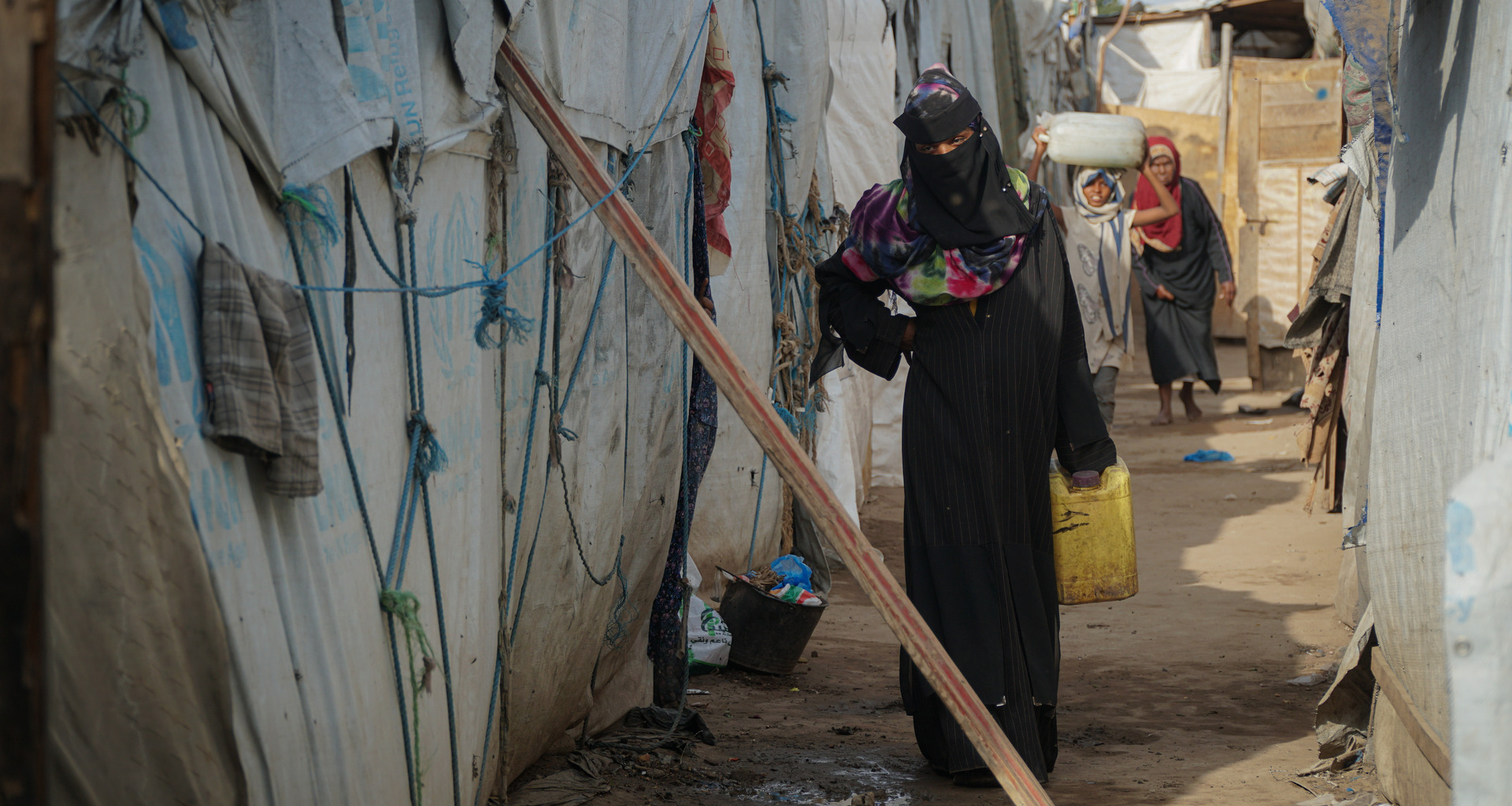
Yemen is often described through the vocabulary of war: conflict, displacement, hunger, poverty, collapsed institutions and humanitarian need. Increasingly, however, another reality must be placed at the center of the country’s future. Yemen is a climate-vulnerability crisis as much as it is a conflict crisis.
The distinction matters because climate change is not an abstract environmental issue in Yemen. It is already interacting with water scarcity, food insecurity, displacement, public-health risks, damaged infrastructure, ecosystem degradation and economic fragility. Floods can destroy homes and roads already weakened by years of conflict. Drought can reduce agricultural production and deepen food insecurity. Extreme heat can increase health risks in communities with limited access to electricity and health care. Coastal hazards threaten cities, ports, fisheries and infrastructure along Yemen’s approximately 2,200-kilometer coastline.
Yemen occupies an uncomfortable position in the global climate system. It is highly vulnerable to climate impacts while contributing only 0.06% of global greenhouse-gas emissions. The principle of climate justice is therefore unavoidable: Who should bear the cost of adaptation and recovery when the countries suffering the greatest consequences are often those least responsible for the accumulation of global emissions? Yemen offers the international community a particularly difficult test. So far, the response remains far below what the scale and nature of the challenge require.
The climate crisis in Yemen is not a future scenario. The World Bank’s Yemen Country Climate and Development Report estimates that approximately half of Yemen’s population is exposed to at least one major climate hazard, including extreme heat, drought or flooding. Under a pessimistic climate scenario, Yemen’s annual gross domestic product could decline by an average of 3.9% by 2040, largely because of impacts on agriculture and infrastructure.
These numbers, however, do not fully capture the human dimension. Climate hazards occur on top of an extraordinarily fragile socioeconomic system. When a flood hits Yemen, it does not produce only physical damage. A destroyed home can become displacement. Displacement can become food insecurity. Food insecurity can become illness, protection risks and the loss of a child’s education. What begins as a meteorological event can therefore become a development crisis.
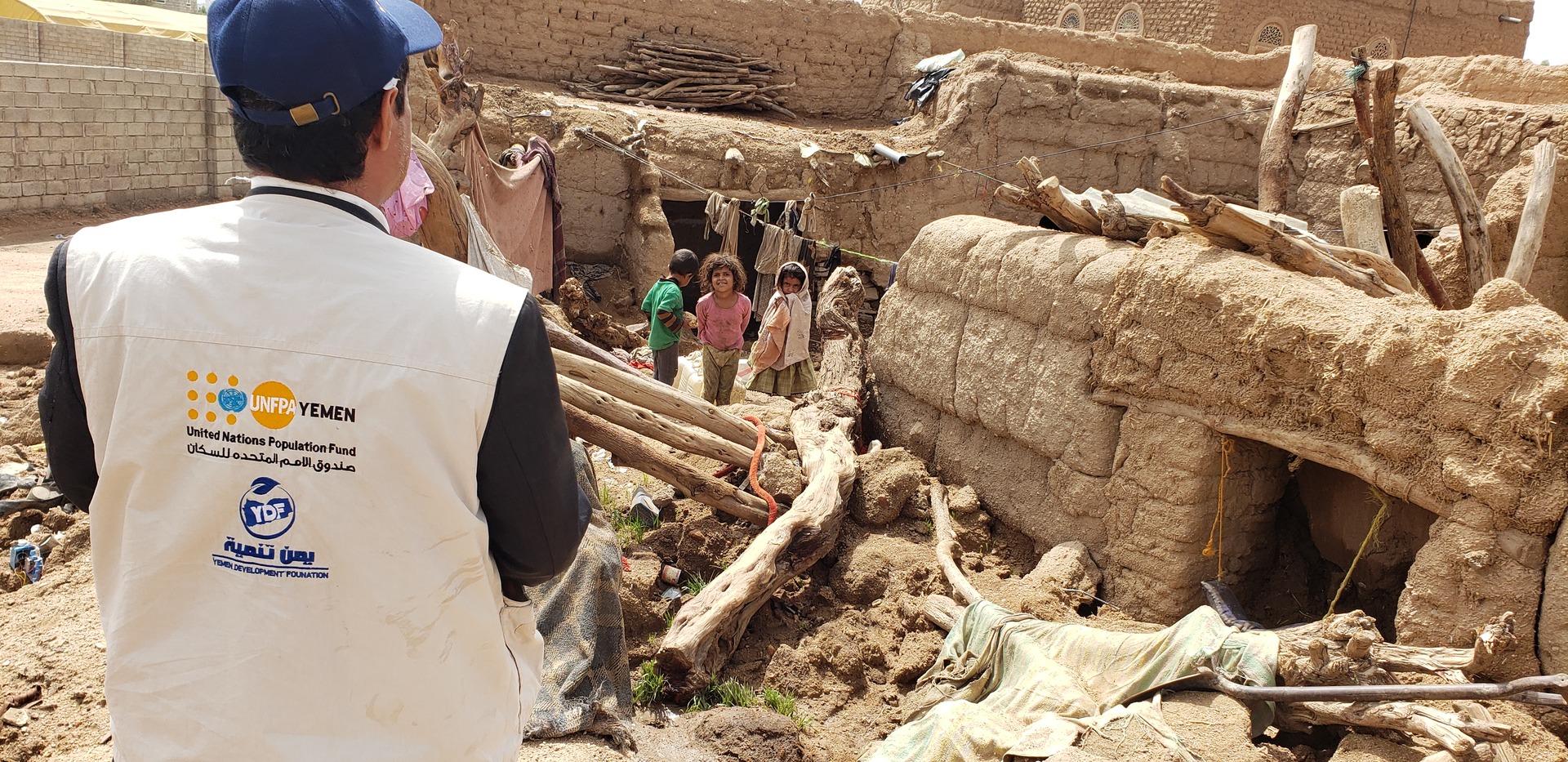
This is the defining characteristic of climate vulnerability in fragile states. A climate shock does not arrive on a blank canvas. It lands on institutions, infrastructure, livelihoods and communities already operating at the limits of their capacity. The World Meteorological Organization reported that repeated heavy rains in Yemen in August and early September 2025 caused widespread flooding, with 82 deaths reported and more than 450,000 people affected. Parts of the country received more than 300 millimeters of rain during August — several times the monthly average. In a country with resilient infrastructure, such an event would still be serious. In Yemen, damaged roads, inadequate drainage, overstretched health facilities, fragile water systems and exposed displacement sites magnify the consequences.
Risk is not exposure alone. Risk is the interaction between hazard, exposure and vulnerability. Yemen’s vulnerability has been produced not only by climate change, but also by poverty, conflict, institutional fragmentation, economic collapse and years of underinvestment. This is why a discussion of Yemen’s climate future must begin with the systems that determine whether people can withstand a shock, recover from it and protect themselves from the next one.
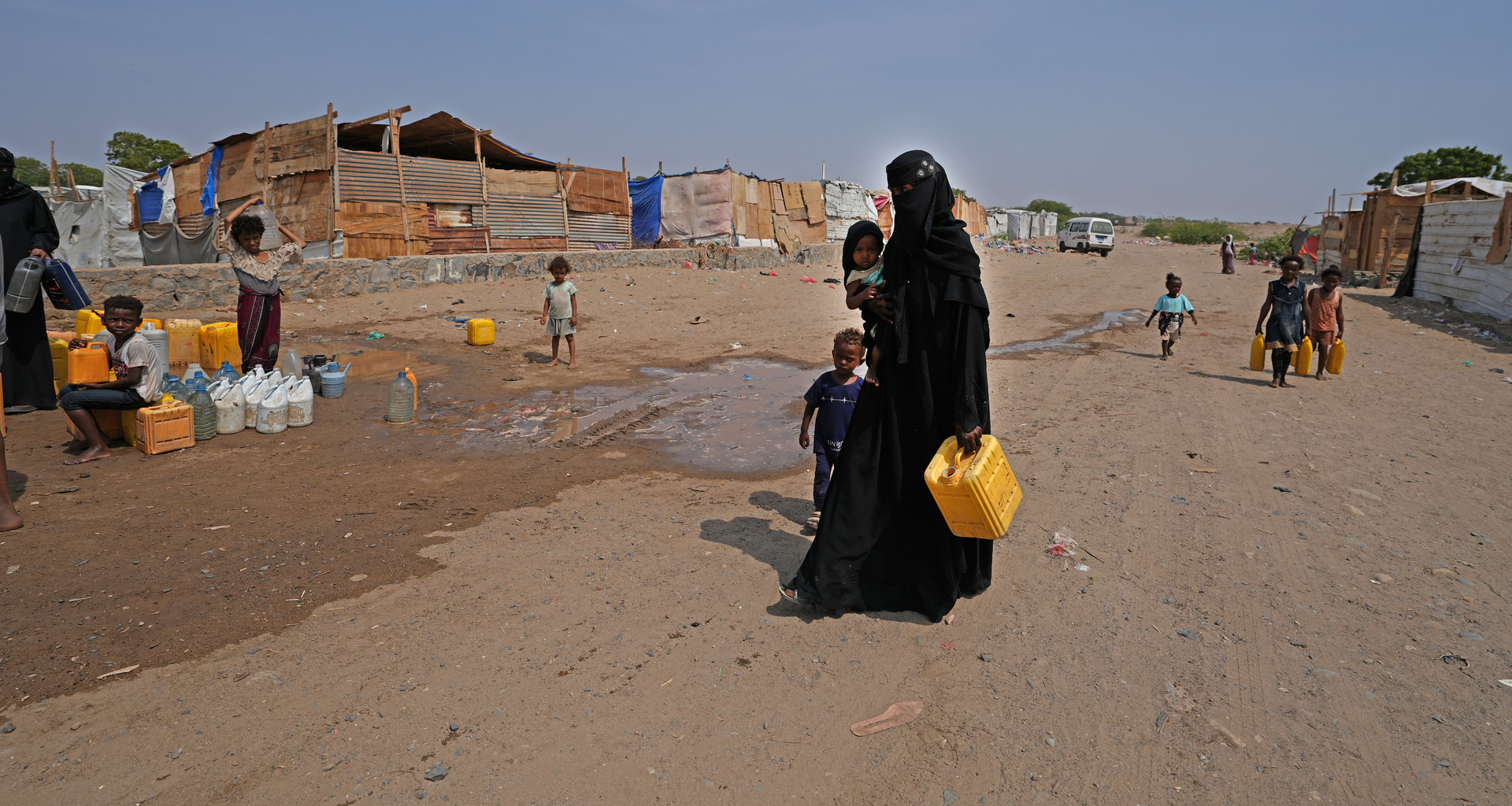
Few issues demonstrate the climate-development-conflict nexus more clearly than water. Yemen has some of the lowest levels of water availability per person in the world. Rainfall is becoming more difficult to predict, groundwater is being depleted, and water quality is threatened by contamination and salinity. Agriculture, households, health services and local economies all depend on water systems under severe stress. Water scarcity affects agricultural production, household income, food prices, public health, migration, rural livelihoods, women’s workloads and social stability.
It also reduces the capacity of communities to recover from the next climate shock. When water points fail, women and girls often spend more time collecting water. That time comes at the expense of education, paid work, rest and participation in community decisions. The burden is especially severe for households already affected by displacement or poverty. Climate vulnerability is therefore not experienced equally. It follows existing lines of inequality and often places the greatest pressure on those with the least influence over public decisions.
A wealthy country can respond to water scarcity through desalination, advanced irrigation, wastewater treatment, large-scale infrastructure and sophisticated monitoring systems. A fragile country cannot simply purchase resilience. It needs international solidarity, technology transfer, concessional finance, institutional support and long-term investment. That investment must be designed around Yemen’s actual conditions. Small-scale water harvesting, watershed rehabilitation, terracing, groundwater recharge, sustainable irrigation and ecosystem restoration can reduce both drought and flood risks. Infrastructure alone, however, will not solve the problem. Yemen also needs transparent water governance, reliable data and arrangements that prevent climate projects from intensifying competition among communities.
Agriculture provides another powerful example of climate injustice. Yemen’s agricultural sector has been severely affected by conflict, water scarcity, land degradation and increasingly erratic climatic conditions. Only a small proportion of the country’s land is arable, while desertification affects most agricultural areas. Climate change compounds these pressures through less predictable rainfall, longer dry periods, destructive flash floods, soil erosion and higher temperatures that stress crops and livestock.
The consequence is a dangerous paradox: the people who depend most directly on climate-sensitive livelihoods often have the fewest resources to adapt to climate change. Adaptation should not be understood simply as a technical exercise involving infrastructure. It is fundamentally about protecting people’s capacity to maintain a dignified livelihood under changing environmental conditions. For Yemen, that means investing in climate-resilient agriculture, watershed management, sustainable groundwater governance, drought-tolerant crops, agricultural extension services, rural finance, ecosystem restoration and climate-information systems.
It also means ensuring that adaptation finance reaches local communities rather than becoming trapped in international project-management structures. Farmers, fishers, women’s groups, local authorities and displaced communities should not be treated merely as beneficiaries. They are sources of knowledge and potential partners in designing solutions. Their involvement is not only a question of representation. It can determine whether an irrigation project is maintained, whether a water agreement is trusted and whether a climate intervention reduces or intensifies local tensions.
The international community does not lack information about Yemen’s climate risks. The World Bank has documented the interaction between climate change, conflict and development. Its recommendations include water and food security, disaster-risk management, renewable energy, climate-resilient health systems, targeted resilience-building and innovative climate finance. The United Nations Framework Convention on Climate Change has also recognized the particular difficulties faced by countries experiencing conflict and severe humanitarian needs. Yemen is one of five countries participating in a UNFCCC needs-based finance initiative intended to help countries facing conflict and severe humanitarian challenges develop strategies to access climate finance.
That recognition is important. But recognition is not transformation.
Perhaps nowhere is the climate-justice problem more visible than in climate finance. Yemen needs climate finance precisely because it lacks the fiscal and institutional capacity to finance adaptation domestically. Yet those same characteristics make Yemen difficult for international climate funds to finance. This creates a vicious circle in which high vulnerability produces weak institutions, weak institutions produce high perceived risk, high perceived risk limits access to finance, and limited finance leaves communities even more vulnerable.
The international system can unintentionally punish the countries that need climate finance most. Climate funds commonly require national coordination, fiduciary standards, detailed feasibility studies, accredited entities, measurable results and stable implementation arrangements. These requirements can protect public money. But in a conflict-affected country, they can also become barriers that exclude the very communities the funds are meant to serve.
Related Articles
Here is a list of articles selected by our Editorial Board that have gained significant interest from the public:
The answer is not to abandon accountability. It is to develop accountability that fits the context. International funds can use staged grants, independent fiduciary agents, third-party monitoring, conflict-sensitive risk assessments, transparent grievance mechanisms and simplified applications. They can work through institutions that understand Yemen’s local realities and release funding in phases so projects can adapt to changing security conditions without forcing communities to restart the approval process.
The global finance gap makes the problem even more urgent. UNEP’s 2025 Adaptation Gap Report estimated that developing countries could require between $310 billion and $365 billion per year for adaptation by 2035, while international public adaptation finance flows were about $26 billion in 2023. For Yemen, the issue is not only the volume of finance. It is also the terms, accessibility and delivery mechanisms.
Adaptation does not always generate conventional financial returns. A flood-protection system may save thousands of lives but produce little direct revenue. A watershed-restoration program may protect agricultural production for decades without creating a commercial cash flow. A climate-resilient health facility may prevent disease and mortality without producing an investment return attractive to private capital. Relying excessively on loans therefore risks creating a profound contradiction: countries are borrowing money to protect themselves from a crisis they contributed relatively little to creating.
For Yemen, grants, highly concessional finance, guarantees and carefully structured risk-sharing instruments are particularly important. Adaptation grants should be prioritized for water, food security, health, ecosystems, disaster-risk reduction and resilient infrastructure. This is not charity. Grant-based finance is a rational response to high vulnerability, negligible emissions contribution, limited repayment capacity and the public-good nature of adaptation.
The international community should also distinguish between the cost of building resilience and the cost of responding after failure. Early-warning systems, watershed management, flood-safe settlements, solar-powered water infrastructure, drought-resistant agriculture and climate-resilient health services can reduce future humanitarian expenditure. Their value should be measured over years, not only against the short-term output targets of a single project cycle.
It would be a mistake to portray Yemen solely as a passive victim. Yemen’s NDC 3.0 sets out priorities that include renewable energy, integrated water-resources management, climate-smart agriculture, coastal and marine ecosystem protection, climate-resilient infrastructure, health systems, early-warning systems, disaster-risk reduction, sustainable land management and mechanisms to address loss and damage. The NDC identifies an ambition to increase the renewable-energy share to 35% by 2035 and places adaptation across water, agriculture, fisheries, coastal management, health, ecosystems and disaster-risk reduction.
This is significant. The problem is not simply the absence of policy ambition. The central challenge is implementation capacity and finance. A national climate strategy without predictable implementation finance risks becoming another document on a shelf. Yemen therefore needs international partners to move from policy recognition to implementation partnership.
Capacity building should be treated as a core climate investment, strengthening climate data, meteorological services, spatial planning, environmental governance, water management, disaster-risk reduction, project preparation, monitoring and evaluation. Yemen’s National Adaptation Plan can help coordinate action across water, agriculture, health and coastal zones, but its success will depend on whether it becomes a living instrument shaped by local institutions and communities rather than a document produced primarily for donors. International partners should provide technical and financial support without permanently substituting for Yemeni institutions. Capacity transfer must be the goal.
Global commitments are negotiated internationally, but climate vulnerability is experienced in villages, farms, coastal communities, informal settlements, schools and health facilities. A serious climate-justice program for Yemen must therefore begin with local resilience. In rural areas, this means supporting community-based watershed management, water harvesting, terracing, groundwater recharge, ecosystem restoration and sustainable irrigation. Farmers need access to drought-resistant varieties, climate information, extension services, efficient irrigation, market access and rural finance. Forecasts must be translated into practical information that farmers, fishers, communities and local authorities can use before disasters occur.
Yemen’s coastal cities, including Aden, Hodeidah and Mukalla, need integrated approaches to drainage, coastal protection, land-use planning, water systems, waste management, energy and resilient infrastructure. Distributed solar power can support health centers, water systems, schools, communications and local businesses while reducing dependence on vulnerable centralized electricity systems. Mangroves, wetlands, watersheds, rangelands and coastal ecosystems should be treated as critical infrastructure rather than as environmental assets of secondary importance.
Women and young people should not be viewed solely as vulnerable groups. They are innovators, community organizers, entrepreneurs, researchers and decision-makers. The transition from beneficiaries to partners is fundamental. As Impakter has argued in its work on intersectional climate vulnerability, effective adaptation must account for the interaction of environmental risk with gender, poverty, displacement and unequal access to power.
IOM reports that a solar-powered water system in Hadramout is already providing safe drinking water to 115,000 people while reducing dependence on fossil fuels, demonstrating how locally relevant adaptation can connect water security, energy resilience and livelihoods. Adaptation has limits. Homes can be rebuilt, but cultural heritage can be permanently lost. Agricultural production can be restored, but years of livelihood losses cannot always be recovered. Coastal ecosystems can be rehabilitated, but some climate-driven transformations may become irreversible.
For Yemen, loss and damage should include not only catastrophic events, but also slow-onset and compound impacts such as declining water availability, land degradation, ecosystem loss, coastal erosion, livelihood disruption, displacement, food-system losses and repeated damage to infrastructure.
A functioning climate-justice framework must ensure that fragile and conflict-affected countries are not invisible within global loss-and-damage mechanisms. Access should not depend on Yemen first becoming institutionally perfect. The international community should recognize that institutional weakness is part of the context in which climate loss occurs, not a reason to withhold support. Humanitarian assistance remains essential, but humanitarian funding was never designed to finance 20-year climate resilience. If every flood becomes a humanitarian emergency, every drought becomes a food-aid operation and every infrastructure failure becomes an emergency-repair project, the international community will continue financing symptoms rather than reducing underlying vulnerability.
The solution is not to reduce humanitarian assistance. It is to connect humanitarian response with adaptation, development, disaster-risk reduction, peacebuilding and climate finance. Yemen requires a Humanitarian–Development–Peace–Climate Nexus. Every recovery investment should answer one additional question: Will this investment reduce Yemen’s vulnerability to the next climate shock?
Repairing a water system after flooding should improve its resilience. Rehabilitating a health center should include heat and flood protection. Reconstructing a road should incorporate future climate risks. Supporting displaced communities should include climate-risk mapping and resilient settlement planning. If Yemen is genuinely to become a climate-justice priority, international actors need to move beyond declarations. Climate funds should create or expand financing windows for fragile and conflict-affected countries, using fit-for-purpose safeguards rather than assuming the institutional conditions of stable states. Donors should increase grant-based adaptation finance and reduce unnecessary transaction costs that prevent countries under severe pressure from accessing support.
International partners should invest in national and local institutions as a central climate priority. They should support climate data, meteorological services, environmental governance, project preparation and monitoring instead of relying indefinitely on international consultants. A coordinated Yemen Climate Investment Platform could bring together Yemeni institutions, local authorities, international financial institutions, U.N. agencies, donors, climate funds, universities, civil society, youth organizations and community representatives to create a transparent, grant-ready pipeline of projects. Such a platform would not replace humanitarian assistance or peace negotiations. It would connect them to a longer-term strategy for resilience.
It would also allow Yemen to appear in global climate diplomacy not only as a humanitarian emergency, but as a country with climate priorities, local expertise, youth innovators, community organizations and investment opportunities. Climate investments should be designed to reduce competition over scarce resources and strengthen cooperation. Water, land, fisheries and coastal resources can become sources of tension, but they can also become platforms for peacebuilding when decisions are transparent and communities have a meaningful role.
The international community often measures climate ambition in tonnes of carbon avoided, billions of dollars pledged or targets announced. Those metrics matter, but they are incomplete. A deeper test is whether the international climate system can protect people who have contributed little to global warming but face some of its harshest consequences.
Yemen provides that test. If climate finance reaches only countries with strong institutions, stable economies and low investment risks, then the countries most vulnerable to climate change will remain systematically underserved. If adaptation finance is predominantly delivered as debt, vulnerable countries may become financially weaker while trying to become climate-resilient. If humanitarian funding remains disconnected from long-term adaptation, Yemen will continue moving from one emergency to another.
Yemen is not asking for charity. It should be treated as a partner in solving a shared global problem. The country possesses significant potential in renewable energy, ecosystem restoration, climate-smart agriculture, coastal resilience, blue-economy development, nature-based solutions and community-based adaptation. The challenge is converting that potential into scalable action. That requires capital, technology, knowledge, institutions and a financing architecture that recognizes the realities of fragile and conflict-affected countries.
Yemen’s climate crisis should no longer be treated as a secondary issue behind conflict. Climate change is interacting with conflict, poverty, water scarcity, food insecurity, displacement, public-health weaknesses and institutional fragility to create a compound-risk environment. The central gap is the distance between recognition and implementation. Yemen should not have to wait for another flood, another drought, another displaced community or another humanitarian appeal before climate resilience becomes a development priority. The international community can treat Yemen as a humanitarian problem — or recognize Yemen as a climate-justice test and build a model of international cooperation capable of passing it.
Climate justice will ultimately be judged not by the promises made in conference halls, but by whether people living on the front lines of climate vulnerability can build safer, more resilient and more dignified futures. Yemen is one of those front lines.
Editor’s Note: The opinions expressed here by the authors are their own, not those of impakter.com