New York Climate Week this year was ripe with abundant roadmaps, pledges, and sustainability commitments. These are important milestones, yet as the dust settles, a simple truth remains: the infrastructure needed to turn this climate ambition into implementation remains chronically underfunded — from grid and power infrastructure to thermal heat technologies. This funding gap is especially true in emerging economies, and has devastating consequences not just for the future of our planet, but also for the people at the heart of our global supply chains.
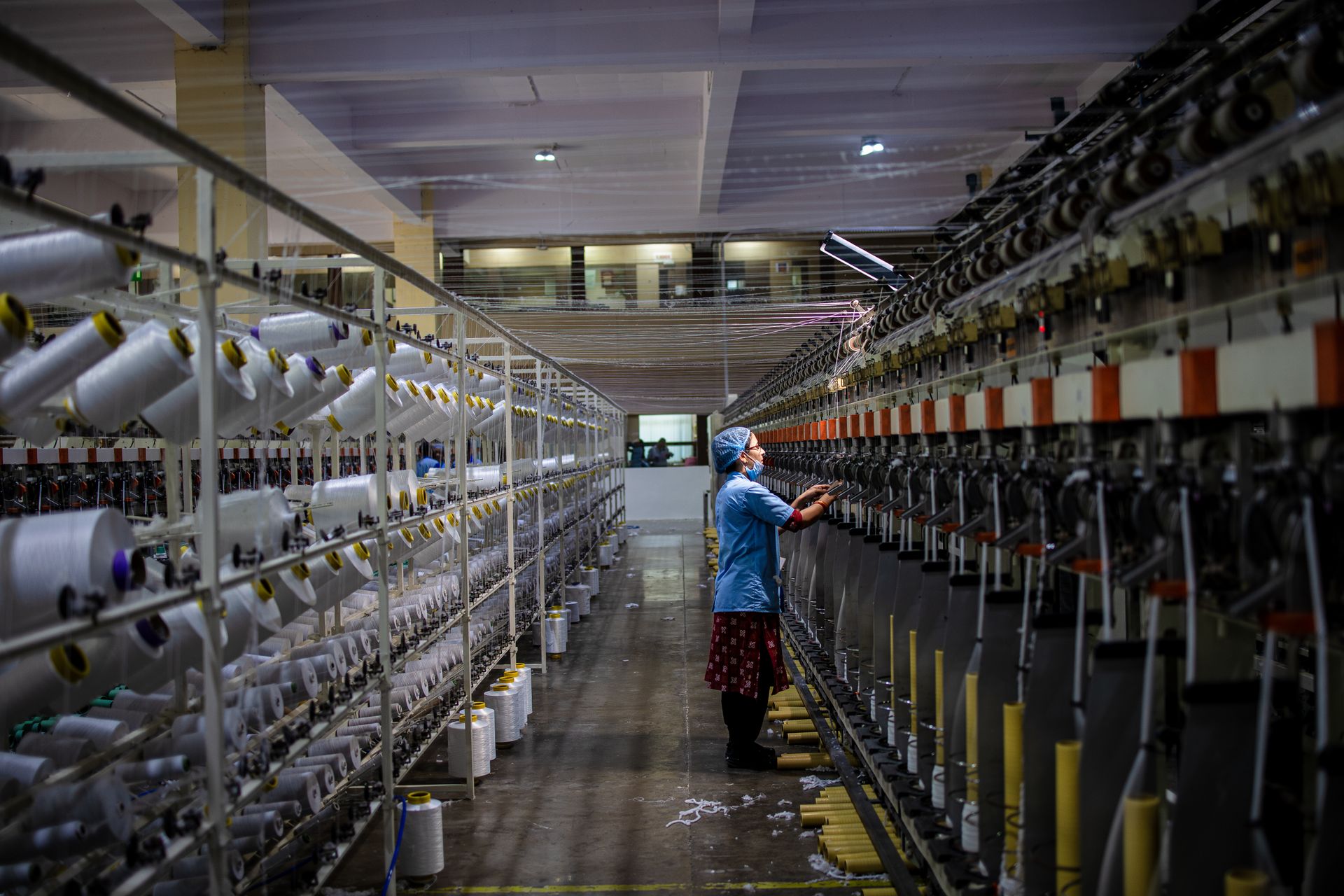
Consider a textile manufacturer in Asia that is weighing a multi-million-dollar investment to replace coal-fired boilers with electric heat pumps. The switch could substantially reduce emissions and eliminate coal combustion on site, improving air quality and delivering health benefits for workers and nearby communities. Depending on how the system is designed, it might also provide cooling that makes parts of the factory more comfortable. The manufacturer can see the potential benefits, but still needs to establish whether the project will work technically and financially at its facility.
Industrial heat, the hidden engine of the global economy, accounts for more than 20% of global energy demand. In apparel, energy-intensive processes like dyeing and finishing fabrics drive roughly 55% of emissions. We know that electrification — particularly industrial heat pumps paired with renewable electricity — is an economically and environmentally efficient path forward.
And still, projects remain stalled. Why?
The missing middle
Getting from technical potential to an approved investment still requires feasibility studies, renewable energy procurement, electrical upgrades, financing, and buyer confidence.
This is not early-stage innovation, nor is it a large-scale rollout. Brands assume financiers will fund this project preparation, financiers assume corporate actors will, and suppliers tend to lack the balance sheet to absorb the risk. Each actor waits for the other to move first.
This structural hesitation creates a missing middle where strong projects quietly disappear. Any manufacturer considering an industrial heat pump upgrade needs reasonable confidence that the brands sourcing from them will still be there, and still value lower-carbon production, when the investment pays back. It is a classic catch-22; capital waits for certainty, but certainty requires upfront investment.
The scale of the broader challenge is enormous: Apparel Impact Institute (Aii) and Fashion for Good estimate that the industry needs $1 trillion in investment by 2050 to decarbonize. The missing middle is the funding needed to turn promising supplier projects into investments that can attract commercial finance.
While this issue — capital waiting for certainty — is not unique to this moment of ESG skepticism, where companies reframe net-zero commitments as aspirations, suppliers are losing the fundamental demand signal they needed to justify capital investment to conventional financiers.
I have observed the retreat from ESG framed as a correction, a return to commercial realism. But in industrial decarbonization, that retreat compounds an existing failure. It adds political uncertainty to a system already stalled by structural constraints.
At Climate Week, I heard genuine interest from brands and financial institutions in advancing supplier projects. Those conversations also underscored how much still has to happen between agreeing on a solution and giving a manufacturer the confidence to invest. The current political environment did not create the missing middle, but it is making it harder to close.
Foundations and philanthropies can play a distinctive role here. They can understand suppliers’ practical constraints while remaining independent enough to fund work that is not tied to a single buyer. A grant can pay for the feasibility studies, engineering, and electrical assessments needed to determine whether a project is viable. These are often the first dollars a supplier needs, yet they are among the hardest to secure.
This kind of catalytic capital helps prepare projects for commercial finance. It gives suppliers a clearer picture of the costs, expected emissions reductions, and financing needs, so lenders have something concrete to assess. As a practical example, Aii’s Fashion Climate Fund provides grants and subsidies for promising solutions as part of a broader effort to unlock the capital needed for supplier decarbonization.
Related Articles
Here is a list of articles selected by our Editorial Board that have gained significant interest from the public:
Returning to the earlier example of the textile manufacturer considering a switch from coal-fired boilers, that support could answer practical questions before it commits to a major equipment purchase. Can the electrical system support the heat pumps? What upgrades would be needed? What would the project cost, and how long would it take to pay back?
Once those answers are clear, other commitments need to follow. Brands can give the manufacturer greater confidence through longer-term sourcing relationships and a willingness to value lower-carbon production. Lenders can then finance the equipment and installation. Philanthropy helps get a viable project to that point; it cannot carry the transition on its own.
On the flip side, if catalytic capital is not scaled across the climate ecosystem, the stakeholders who often face the most burden to reduce their environmental impact — facilities, suppliers, and manufacturers — will continue to wait for financing held up by competing business interests in the boardroom.
That is why the missing middle goes beyond emissions reductions. It will determine whether we finance cleaner air for communities, cooler and safer workplaces for factory workers, and more resilient energy infrastructure across emerging economies — or whether we leave those benefits stranded alongside the climate projects that could deliver them.
As we look toward COP31, the test should be whether more suppliers can move from plans to completed projects. Philanthropy can fund the early work that establishes whether a project is viable, brands can give suppliers greater confidence to invest, and financial institutions can provide capital for deployment. We already know many of the solutions. The task now is to get them financed and built.
The next billion dollars in climate impact may not come from funding new technologies. It may come from funding the missing middle that allows proven solutions to scale.
Editor’s Note: The opinions expressed here by the authors are their own, not those of impakter.com — Cover Photo Credit: EqualStock IN.