Impakter
  • Environment
    • Biodiversity
    • Climate Change
    • Circular Economy
    • Energy
  • FINANCE
    • ESG News
    • Sustainable Finance
    • Business
  • TECH
    • Start-up
    • AI & Machine Learning
    • Green Tech
  • Industry News
    • Entertainment
    • Food and Agriculture
    • Health
    • Politics & Foreign Affairs
    • Philanthropy
    • Science
    • Sport
  • Editorial Series
    • SDGs Series
    • Shape Your Future
    • Sustainable Cities
      • Copenhagen
      • San Francisco
      • Seattle
      • Sydney
  • About us
    • Company
    • Team
    • Global Leaders
    • Partners
    • Write for Impakter
    • Contact Us
    • Privacy Policy
No Result
View All Result
Impakter logo
No Result
View All Result
women and extreme heat

Women and Extreme Heat: Simple Adaptations Make a Big Difference

CEO of World Neighbours Dr. Kate Schecter explains how extreme heat undermines women’s livelihoods and what can be done to adapt

Kate Schecter - CEO of World NeighborsbyKate Schecter - CEO of World Neighbors
December 17, 2025
in Climate Change, Health, Society
0

One of the more damaging impacts of climate change is extreme heat. From Spain to Bolivia to Burkina Faso, unusual and often unpredictable heat is disrupting life. Perhaps most significant, extreme heat is making it increasingly difficult for households and communities to lift themselves from poverty.

High temperatures prevent regular operation of businesses and can lead to loss of income. Drought undermines farmers’ ability to feed their families and sell their surplus output, also reducing incomes. The construction of roads and bridges is delayed, slowing the development of larger markets that enable producers to scale their operations and sales.

Nowhere are these disruptions and negative impacts on economic development more apparent than in India. Over the decades, summers have gotten longer and hotter. Average temperatures can hover around 105 degrees Fahrenheit, or 40 Celsius, between March and June. Last summer, temperatures reached 120 degrees. More than a billion Indians now face annual heat waves. Hundreds of millions of them work in the informal and agricultural sectors, working outdoors or in factories without air conditioning.

Every year, thousands of Indian farmers and workers suffer from dehydration, stroke or even death. The long-term effects of ever-increasing extreme heat can be even more threatening. The physiological stress of long term heat exposure can lead to chronic illnesses and increase morbidity and mortality.

As challenging as this is for Indian society as a whole, it is especially problematic for women.

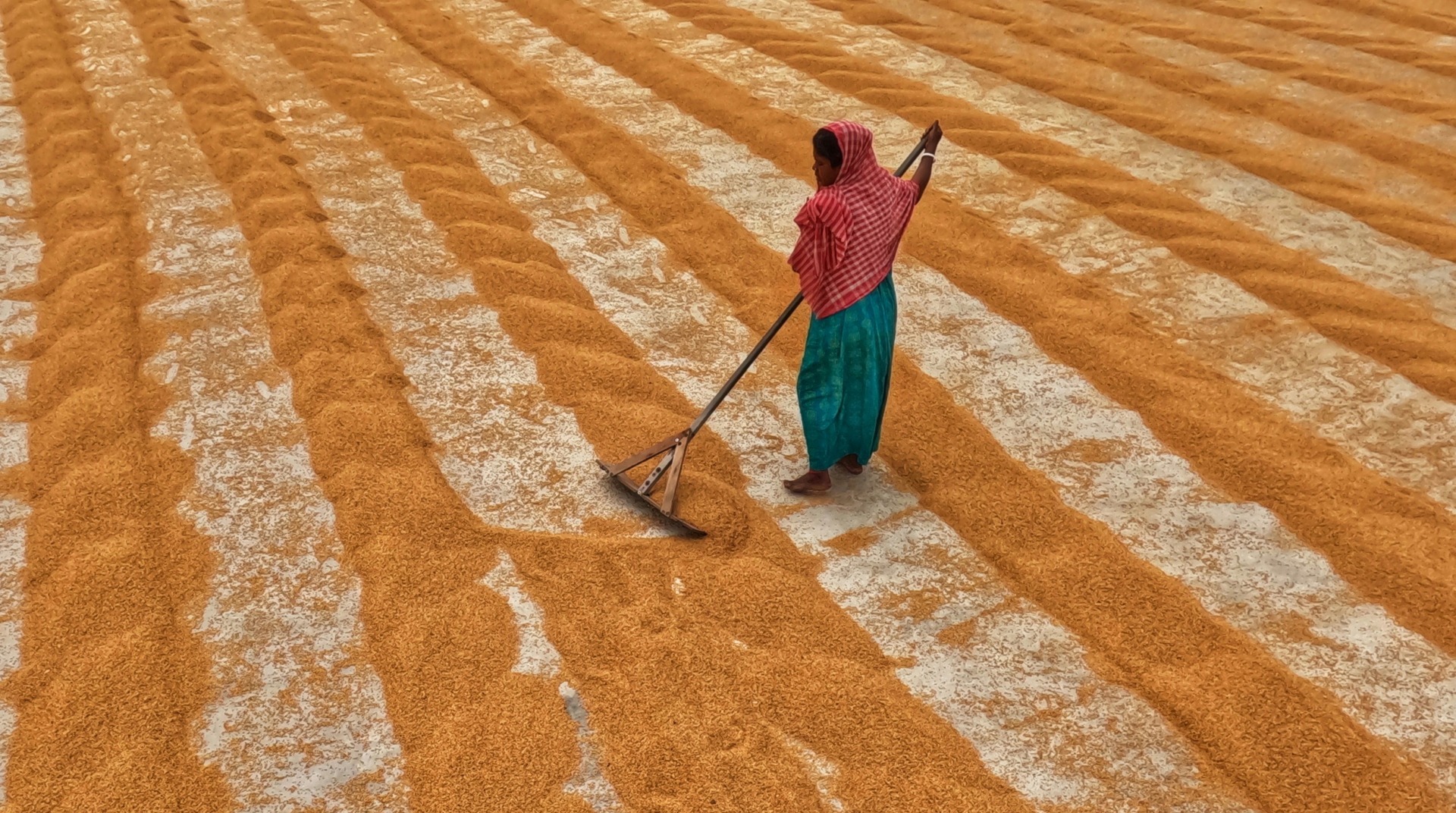
More than 90% of working women in India are in the informal sector. Some can lose as much as 60% of their income during the hot summer months because their working hours are reduced by almost half. Many women have to abandon their work in a factory or farm when it gets too hot.

A day’s lost wages or sale of produce in a local market can be a day’s lost meal. A prolonged spell of no work can force women to turn to local lenders and borrow at high interest rates to pay for food, rent, electricity and other basics. This creates a debt trap that often makes it impossible for a family to escape poverty. While this type of debt trap is common in low-income countries — extreme heat as a driver is a relatively new phenomenon.

These conditions are having particularly harsh effects in Bihar, India’s poorest state. There, most people, including women, work in the agricultural sector. That means working outside most of the time. Given the region’s poverty, many men travel to other states or even out of the country for work. This leaves many women alone to tend farms, sell any surplus produce, raise children and do all the other tasks involved in running households. Any lost work days and income lost to excessive temperatures can quickly put an entire family at risk of hunger and keep the dream of escaping poverty beyond reach.

The good news is, there are effective heat-related measures being implemented as part of holistic economic development projects in Bihar and neighboring Uttar Pradesh. The Rural Development Trust (RDT) is one of our partners in Bihar. This community-based group works with 5,000 households on comprehensive efforts to catalyze economic development.

Women join savings and credit groups, in which they invest small amounts each month. When a group amasses enough capital, members borrow at very low interest rates. Loans are invested in simple innovations to increase agricultural output and productivity, start small businesses, pay childrens’ school fees and meet other needs. In addition, members receive training on how to produce organic fertilizers and pesticides, how to conserve water and other measures to increase climate resilience.

Related Articles

Here is a list of articles selected by our Editorial Board that have gained significant interest from the public:

  • Heatwaves and Floods Affect Rural Women and Men Differently
  • Connections That Matter: Climate Change and Gender Equality
  • Water Is the Way: Empowering Women Through Access to Safe Water
  • For Women’s Health, Climate Change and Inequality Are a Dangerous Combination
  • Extreme Heat Makes Pregnancy More Dangerous

As part of hygiene and health trainings, the RDT also teaches members about extreme heat and its impact on the human body. Many women have never learned about dehydration and its connection to dizzy spells, fatigue and heat stroke. After these trainings, women farmers are aware of the need to drink water at regular intervals. They now carry with them while they work. Women have learned to make electrolytes using a mixture of water, sugar, salt, lemon and “muri,” or puffed rice, a cheap source of carbohydrates.

These measures are simple and easy to learn. For millions of women and others around the world, especially those in low-income countries, adapting to extreme heat and other extreme weather begins with simple and inexpensive changes. That’s not to suggest adaptation ends there. Far from it. But helping women in rural communities learn how to protect and improve health; adopt agricultural practices that reduce chemical inputs, protect soil and conserve water; access and make use of climate-related public resources; and related initiatives can be the difference between entrenched poverty and a better future.

Investing in basic climate resilience in Bihar and similar low-income areas is an especially effective and cost-efficient way to limit climate change’s ill effects on women and their efforts to escape poverty. Governments, foundations and others need to place such community-led initiatives front and center as the world learns to adapt to climate-induced changes that appear here to stay.

Editor’s Note: The opinions expressed here by the authors are their own, not those of Impakter.com — Cover Photo Credit: Dibakar Roy.

Tags: climate adaptationClimate Changeclimate resilienceDroughtEconomic DevelopmentExtreme HeatGlobal warmingHeatIndiapovertyRural Development TrustwomenWomen and Extreme HeatWorld Neighbours
Previous Post

UK Unemployment Rate Hits Four-Year High

Related Posts

ESG News regarding Microsoft signs long-term deal for 3.6 million tons of CO₂ removals from C2X’s Louisiana BECCS project., New York finalizes mandatory GHG reporting rules for major emitters beginning in 2027.
Business

Microsoft Signs 3.6 Million Ton CO₂ Removal Deal

Today’s ESG Updates Microsoft Signs 3.6M-ton CO₂ Removal Deal: Long-term CRUs secured from C2X’s Louisiana BECCS project. New York Mandates...

byAda Omar
December 16, 2025
How Climate Change Could Help Foster Peace in Yemen
Climate Change

How Climate Change Could Help Foster Peace in Yemen

Yemen's tragedy is traditionally depicted through the limited perspective of humanitarian need and political divisiveness, but there is a greater...

byTareq Hassan - Executive Director of the Sustainable Development Network Canada (SDNC)
December 15, 2025
ESG News regarding 2025 as second hottest year on record, EU weakening climate laws, Tesco’s nature partnerships, and the Commission’s cleantech investment in Italy
Business

2025 Expected to Be Second Hottest Year on Record

Today’s ESG Updates 2025 Approaches 1.5°C Climate Threshold: Global temperatures are on track for the second-hottest year on record. EU...

bySarah Perras
December 10, 2025
ESG news regarding Deforestation Mandate Being Pushed; EUs Acceleration on Hydrogen and Net Zero Revolution; AT&T Will End All DEI; UK Watchdog Blocks Nike and Lacoste Ads Over Green Claims.
Business

U-Turn in Europe: Deforestation Mandate Pushed Back Again

Today’s ESG Updates EU Lawmakers Agree to Delay Deforestation Rules: The EU has delayed and simplified its Deforestation Regulation until...

byEge Can Alparslan
December 5, 2025
ESG News regarding Flooding in Indonesia; Glencore promises copper production boost; Trump proposes slashing fuel efficiency standards, and Vulcan Energy receives $2.57bn of funding for lithium project
Business

Indonesians Blame Deforestation for Recent Floodings

Today’s ESG Updates: More than 700 Lives Lost in Recent Indonesian Floods: A combination of mass deforestation and heavy rainfall...

byAriq Haidar
December 4, 2025
How a Framework Convention Could Address Climate and Socio-Economic Displacement
Editors' Picks

How a Framework Convention Could Address Climate and Socio-Economic Displacement

The unprecedented shift in human (im)mobility has seen over 120 million forced to flee their homes due to war, violence,...

byDr. Shepherd Mutsvara - Research Fellow at the University of Münster, Germany
December 3, 2025
ESG News regarding EC’s public consultation for climate resilience, e.on ceo deprioritizing solar and wind, EIB funding Polish offshore wind farm, and Taiwan restarting nuclear program
Business

European Commission Opens Climate Resilience Consultation

Today’s ESG Updates EU Invites Public to Shape Climate Policy: The European Commission launched a consultation to gather public input...

bySarah Perras
December 2, 2025
fossil fuel subsidies
Business

How G20 Nations Can Make Progress After the Group Stalls on Fossil Fuel Subsidy Reform

The 2025 G20 Leaders’ Summit in South Africa sent mixed signals on climate action. In this year’s Leaders’ Declaration, climate change...

byInternational Institute for Sustainable Development (IISD)
November 28, 2025

Recent News

women and extreme heat

Women and Extreme Heat: Simple Adaptations Make a Big Difference

December 17, 2025
Cyprus permanent residency

Why Families Choose Cyprus: Safety, Schools, and Permanent Residency Benefits

December 17, 2025
ESG News regarding the UK unemployment rate rising to a four-year high, oil prices drop below $60 amid Russia-Ukraine peace talks, water and wheat supplies crisis in Iraq, and Neste pushes back its climate targets

UK Unemployment Rate Hits Four-Year High

December 16, 2025
  • ESG News
  • Sustainable Finance
  • Business

© 2025 Impakter.com owned by Klimado GmbH

No Result
View All Result
  • Environment
    • Biodiversity
    • Climate Change
    • Circular Economy
    • Energy
  • FINANCE
    • ESG News
    • Sustainable Finance
    • Business
  • TECH
    • Start-up
    • AI & Machine Learning
    • Green Tech
  • Industry News
    • Entertainment
    • Food and Agriculture
    • Health
    • Politics & Foreign Affairs
    • Philanthropy
    • Science
    • Sport
  • Editorial Series
    • SDGs Series
    • Shape Your Future
    • Sustainable Cities
      • Copenhagen
      • San Francisco
      • Seattle
      • Sydney
  • About us
    • Company
    • Team
    • Global Leaders
    • Partners
    • Write for Impakter
    • Contact Us
    • Privacy Policy

© 2025 Impakter.com owned by Klimado GmbH