Every generation of sovereign debt crises produces its own fix. Every fix eventually runs into the same wall: someone must absorb a loss. The institutions best positioned to absorb it usually refuse to do so.
That was true of the Baker Plan in the 1980s. It held for the Brady Plan (1989-1999) that followed it. It was true for the successful Highly-Indebted Poor Countries (HIPC) initiative/Multilateral Debt Relief Initiative (MDRI) from 1996-2010. It holds today for the Debt Service Suspension Initiative (DSSI) and its successor, the G20’s Common Framework for Debt Treatments, which has spent nearly six years failing to resolve the debt distress of the world’s poorest borrowers.
The gap between objectives and results in these initiatives is not one of skill or method. It is a gap of will — specifically, the unwillingness of official creditors, then and now, to take a discount on their claims.
Two Eras, One Missing Ingredient
In 1985, the United States sponsored a rescue effort known as the Baker Plan, named for then-Treasury Secretary James A. Baker III. Washington was worried about a Latin American debt crisis triggered by Mexico’s 1982 default and the sharp rise in the dollar during Ronald Reagan’s first term. The Baker Plan asked commercial banks to extend “new money” to distressed borrowers, indirectly backed by fresh lending from the International Monetary Fund (IMF) and World Bank.
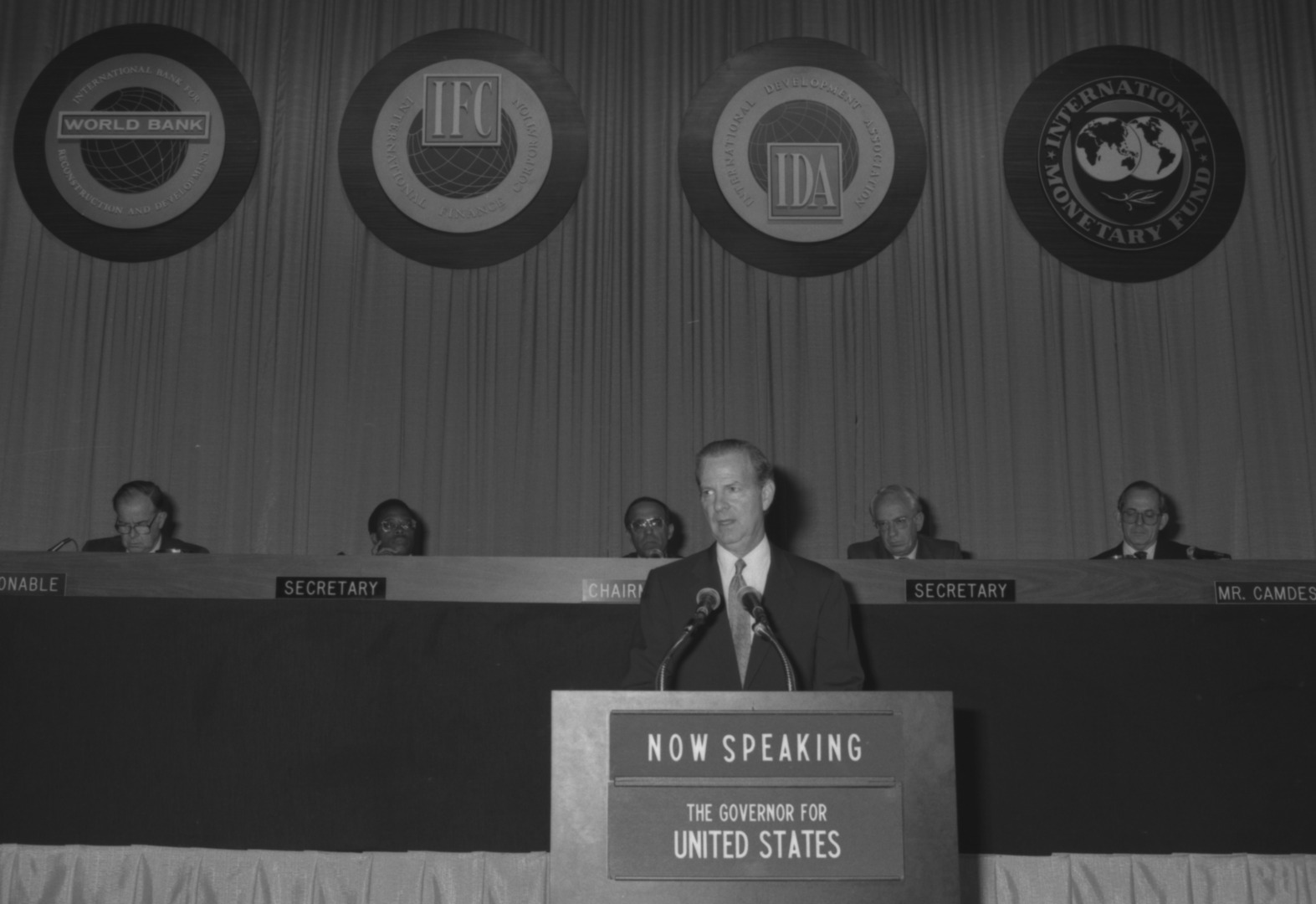
Baker imposed no “haircut,” meaning no reduction in the face value of the debt, because it had been designed by lenders who believed the crisis was temporary. Economists Carmen Reinhart and Christoph Trebesch later concluded from a century of restructuring episodes that the economic landscape of debtor countries improves significantly after debt relief operations — but only if those operations involve actual debt write-offs, according to their Harvard Kennedy School working paper. The Baker Plan involved no write-offs and failed.
Nicholas Brady, who succeeded Baker at the Treasury in 1988 after three decades in investment banking, grasped the problem Baker missed. A country that is illiquid can be helped with a temporary bridge. A country that is insolvent — one where the net present value of what it owes exceeds the net present value of what it can plausibly generate in future budget surpluses — gains nothing from a bridge. The debt itself must shrink.
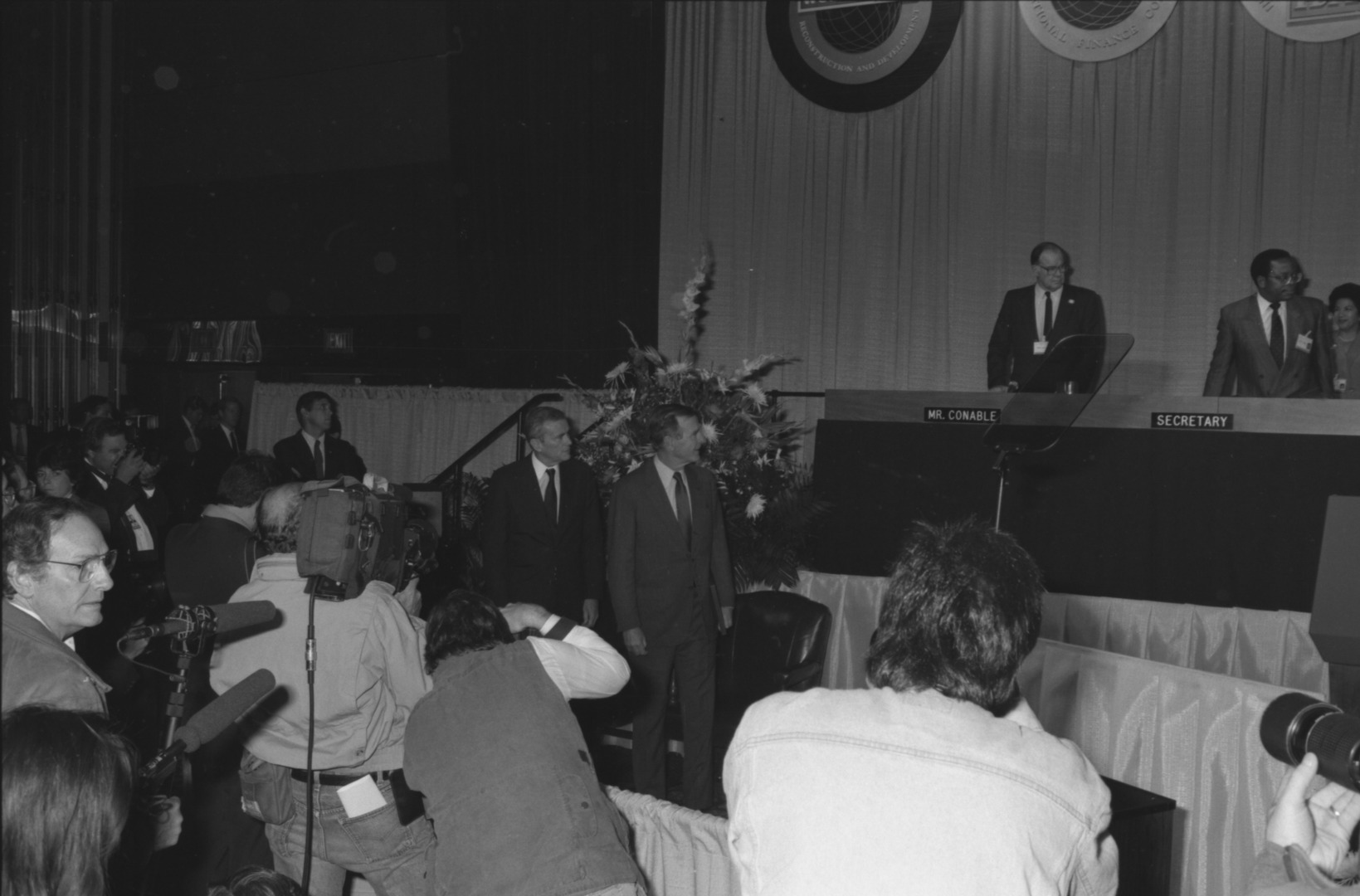
The Brady Plan, launched in 1989, converted defaulted bank loans into new, tradable bonds issued at a discount to face value, with multilateral collateral from the IMF and World Bank sweetening the deal for creditors. It worked, modestly, because it did the one thing Baker would not: it made lenders eat some of the loss.
What the Brady Plan Actually Achieved
A 2026 book by Neil Shenai and Marijn Bolhuis, “How the Brady Plan Delivered on Debt Relief: Lessons and Implications” (an earlier version circulated as IMF Working Paper 23/258), quantifies how Brady mattered. Comparing Brady restructurers against a control group of countries that did not restructure under the plan, the authors estimate average 10-year effects of roughly an 18.5% reduction in public debt, a 20% reduction in external debt, a 20.2% gain in cumulative real GDP, and a 7.1% increase in the stock of foreign direct investment.
Those results, drawn from the Cambridge Elements excerpt, look weaker once adjusted for population growth and once the fiscal costs of the incentives used to attract that investment are considered. But they stand in sharp contrast to Baker’s failure. A separate review of the Shenai-Bolhuis findings published by Phenomenal World similarly describes a “Brady multiplier,” in which long-term declines in debt among Brady countries ran several times larger than the initial face-value haircuts.
Brady succeeded, per Shenai and Bolhuis, by combining four elements: an actual discount to the borrower; liquid, tradable exchange instruments in place of illiquid bank loans; upfront cash from multilateral lenders to make the deal attractive to private creditors; and a diversification of the creditor base itself.
That last feature cut both ways. It broadened interest in what is now called emerging-market debt, but it also planted the seeds of later conflicts between old and new creditors — a problem that resurfaced decades later in Argentina’s protracted litigation with holdout funds, and one that echoes in today’s fragmented creditor landscape of Chinese state lenders, private bondholders, and traditional multilaterals.
The Blind Spots in the New Brady Scholarship
The limits of the Shenai-Bolhuis study explain why nostalgia for Brady is a poor guide to today’s crisis. The authors define insolvency correctly — debt service exceeding the present value of primary surpluses — but never apply that definition to the country in obvious insolvency today. Argentina has run a primary fiscal surplus only once this century.
The “treatment” sample is also not remotely random, and the selection pattern tells its own story about how Brady deals got made. Several beneficiaries, including Mexico, Costa Rica, the Philippines, Jordan, and Panama, were close strategic partners of Washington. Nigeria’s and Venezuela’s are oil producers. Côte d’Ivoire’s 1998 workout followed sustained French pressure on the World Bank; France also maneuvered to get Côte d’Ivoire onto the Heavily Indebted Poor Countries (HIPC) list on terms effectively built for that country, letting HIPC relief cross-subsidize the earlier bond exchange. None of this discredits the countries involved. It is a reminder that whoever gets debt relief is a function of geopolitics.
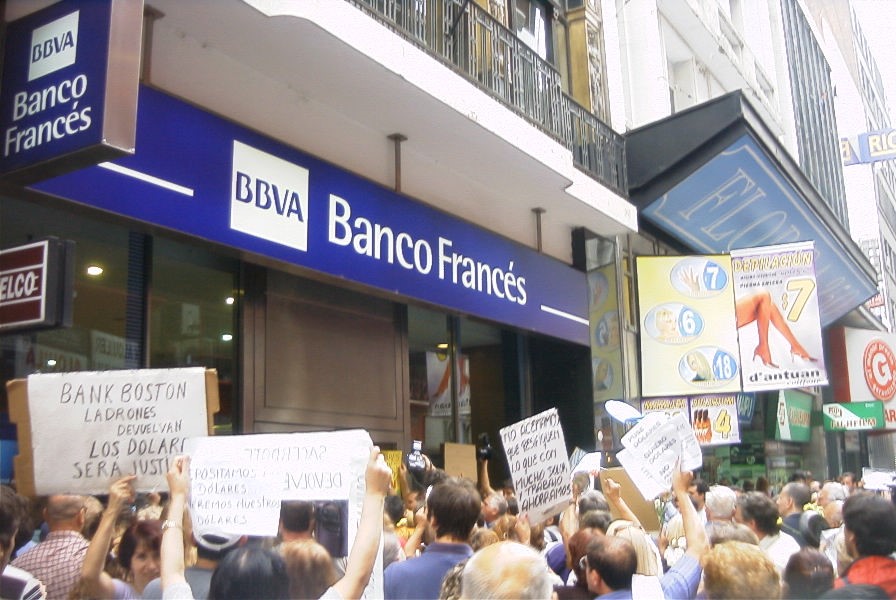
The sample also omits some of the messiest and most consequential cases: Mexico’s larger 1995 “tequila crisis,” Argentina’s brutal 2000s-era restructuring and its still-litigated aftermath (recounted in detail in Gregory Makoff’s 2024 book, “Default: The Landmark Court Battle over Argentina’s $100 Billion Debt Restructuring”), and Argentina’s most recent 2020 workout.
A study of Brady’s legacy that leaves out two decades of Argentine litigation is missing the part of the story that matters most for understanding creditor behavior today. Corruption goes essentially unmentioned as well — a curious omission for anyone thinking seriously about why today’s distressed borrowers, several of them badly governed by any honest accounting, struggle to secure durable relief.
Why Brady’s Lessons Don’t Transfer
Even when Shenai and Bolhuis get the diagnosis right, the prescription runs into a harder problem: the conditions that made Brady possible no longer exist. Brady (and HIPC/MDRI) operated during a multi-decade decline in long-term interest rates, which stimulated economic activity after restructuring. That tailwind is gone. Brady dealt with a relatively small, relatively homogeneous set of middle-income defaulters and commercial bank creditors.
Today’s distressed borrowers are overwhelmingly low-income countries with a far more fragmented creditor base spanning Chinese state entities, private bondholders governed by different legal regimes, and traditional multilaterals that insist on preferred-creditor status.
Collective action clauses, largely absent in the Brady era, exist now and demonstrably help — the contrast between Argentina’s grinding early-2000s workout and its comparatively more orderly 2020 restructuring under modern clauses is instructive. But such clauses alone cannot substitute for a genuine willingness among official creditors to write down claims.
This is the deeper point the Brady literature keeps missing: HIPC and its successor, the Multilateral Debt Relief Initiative, succeeded where they did in the 1990s and 2000s not because of clever coordination mechanisms, but because donor governments funded a trust fund that let the World Bank and IMF absorb losses without pretending the losses weren’t real. Take away the willing, well-funded sponsor, and the mechanism stops.
Related Articles
Here is a list of articles selected by our Editorial Board that have gained significant interest from the public:
Repeating the Mistake: From DSSI to the Common Framework
The G20’s Debt Service Suspension Initiative, endorsed in April 2020 as part of the global COVID-19 response, suspended — but did not reduce — debt service for eligible low-income countries. According to the World Bank’s own accounting, 48 of 73 eligible countries participated, deferring an estimated $12.9 billion in debt-service payments between May 2020 and December 2021. It was designed to be net-present-value neutral: postponement, not relief. When it produced no meaningful improvement in debt sustainability, the G20 folded it into the Common Framework for Debt Treatments, aimed at low-income countries and still running today.
| Initiative | Period | Core mechanism | Cut in value of official debt? | Outcome |
| Baker Plan | 1985–1988 | New bank lending backed by IMF/World Bank financing; no haircut | No | Failed to resolve the Latin American debt crisis |
| Brady Plan | 1989–1994 | Defaulted bank loans exchanged for discounted, tradable bonds with multilateral collateral | Yes, on private commercial claims | Restored market access for roughly 17 middle-income borrowers; ~20% average 10-year debt reduction |
| HIPC/MDRI | 1996–~2006 | Coordinated multilateral and bilateral debt cancellation, funded by a donor trust fund | Yes, including on multilateral claims | Delivered substantial relief to 32 low-income countries by 2010 with 5 more by 2023 |
| DSSI | 2020–2021 | Temporary suspension of official bilateral debt service | No — NPV-neutral deferral only | Suspended $12.9 billion, about 11% of expected service; no lasting relief |
| Common Framework | 2020–present | Case-by-case restructuring for eligible low-income countries | No — multilaterals reject discounts on their own claims | Slow, contested outcomes in Chad, Ethiopia, Ghana and Zambia; Sri Lanka, Pakistan and Kenya pursued side deals instead |
Sources: World Bank DSSI brief; Center for Global Development; IMF Working Paper 23/258.
Why the Common Framework Has Failed
The Common Framework exists to address genuine market failures. Borrowers and lenders each have incentives to misstate their true positions. Collective action among a fragmented creditor base is costly without a lead lender able to impose terms — something former U.S. Treasury Secretary Robert Rubin managed informally during Mexico’s mid-1990s crisis, and something advisory firms have since tried to replicate for Venezuela. Secondary markets that price and trade risk exist for commercial bonds, but not for most official bilateral and multilateral debt. And the multilateral development banks jealously guard the preferred-creditor status that lets them treat their own claims as senior to everyone else’s.
In principle, the Common Framework was built to address all of this. In practice, it has resolved almost none of it. Only four countries — Chad, Ethiopia, Ghana and Zambia — have gone through the Framework as of mid-2026, and none can be described as a fast or clean success, according to the World Bank’s Africa Economic Update. Sri Lanka and Suriname bypassed the Framework entirely.
The reasons are structural, not incidental. The World Bank and IMF spent the two decades after HIPC’s success failing to monitor the borrowing binge that followed it, as post-HIPC countries reloaded on debt from booming Chinese lenders and from private capital markets newly willing to take on frontier-market risk. Chinese official creditors are widely reported to resist disclosing their lending terms, undermining the unified-data ambition at the heart of the Framework, and Ethiopia’s case remains stuck in a dispute between bondholders and official creditors, as Reuters reported in June 2026.
The World Bank, IMF and other multilaterals continue to reject any discount on their own claims, leaving the entire burden of adjustment to fall on bilateral and private creditors — an arrangement those creditors understandably resist matching. And with no equivalent of HIPC’s binding participation requirements, distressed countries such as Pakistan and Kenya have simply cut side deals outside the Framework altogether.
A “template” memorandum of understanding for restructurings, released in May 2026 under the U.S. G20 presidency and announced by the Treasury Department, does not fix this. The Atlantic Council’s review of the US G20 template warns that it risks doing more harm than good for debtors and creditors, because it still fails to resolve the underlying conflict between multilateral shareholders — who do not want to subsidize losses on bilateral lending — and newer bilateral creditors, who in turn demand parity of treatment with the multilaterals.
It is, at best, a half-measure. And as the Baker and Brady-era records show, half-measures in sovereign generally fail.
The Only Way Forward
The line from Baker to Brady to HIPC/MDRI to the Common Framework is unambiguous. Initiatives that ask official creditors to accept a real loss on their own claims work, however imperfectly. Initiatives built around deferral, coordination rhetoric and slow-moving templates do not.
The World Bank and IMF will object, as they always have, that taking a discount would damage their capacity to make new commitments. But both institutions have spent decades making commitments that went bad and then failing to monitor the resulting buildup of unsustainable debt in the very countries the Common Framework is meant to help.
There is a precedent for a different approach. When Côte d’Ivoire sought World Bank assistance restructuring commercial debt on which it had defaulted for roughly a decade, then-Bank President James Wolfensohn told creditors and the IMF in 1995 that there would be no Bank support for any deal priced above $0.25 on the dollar. That is what happened.
Multilateral institutions accepting a haircut on their own claims is not a radical idea. It is the same idea that made HIPC/MDRI work a generation ago, before the Bank and Fund quietly abandoned it. Until the World Bank and IMF are willing to bear some of the cost of the debt crisis they helped incubate through two decades of inadequate monitoring, no amount of template-drafting, coordination summits or DSSI-style deferrals will deliver what the poorest borrowers actually need: debt stocks that shrink to a level their economies can plausibly service.
That, in the end, is the one lesson of the Brady era that still holds — and the one the Common Framework has yet to learn.
** **
This article draws on and synthesizes the author’s two Substack essays, “A New Brady Debt Plan Has Already Failed” and “Facing Reality on the Debts of Poor Countries”, together with the sources linked throughout.
Editor’s Note: The opinions expressed here by the authors are their own, not those of impakter.com