Today’s ESG Updates
- Panama Canal Prices Hit Record on El Niño, Iran War: Falling water levels and surging demand from the Strait of Hormuz closure have pushed transit auction prices to record highs.
- AI’s Push Into Oil and Gas Could Outweigh Its Climate Gains Elsewhere: A peer-reviewed Nature report finds AI-driven productivity gains in fossil fuel extraction would outweigh emissions savings from renewable use.
- Impact Investing Holds Steady Despite Political Backlash: Preqin data shows funds targeting measurable environmental or social outcomes raised $31 billion last year.
- Europe’s Farmers Turn to Night Shifts as Heat Reshapes Harvests: From Berkshire to Puglia, farmers are harvesting after dark to protect crop quality as heatwaves cut yields and drive up costs across the continent.
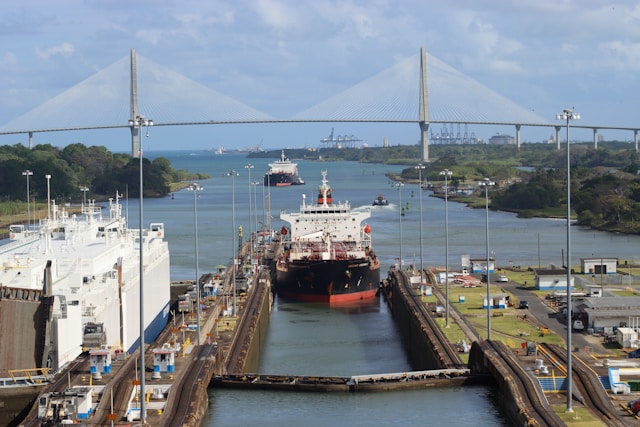
Panama Canal prices hit record on El Niño, Iran War
Prices for the Panama Canal’s busiest lanes have hit a record, as falling water levels from a strengthening El Niño collide with surging demand tied to the Iran war. August auction prices have averaged about $1.1 million — over 16 times last year’s rate — climbing since the Strait of Hormuz closure that followed the U.S.-Israel bombardment of Iran in late February.
The El Niño is expected to worsen through the year and has already limited cargo loads, while Hormuz’s closure has pushed Asian buyers toward U.S. Gulf Coast crude, adding further demand. Prices for the canal’s larger locks hit $2.5 million on average, a record, with some auctions reaching $3.78 million. New draft restrictions are cutting cargo capacity and lengthening queues — 113 ships were waiting to transit on August 3, up from 40 in January — and water levels in Gatun Lake are projected to fall further, possibly worse than the dry conditions of 2023.
Klimado – Navigating climate complexity just got easier. Klimado offers a user-friendly platform for tracking local and global environmental shifts, making it an essential tool for climate-aware individuals and organizations.
AI’s push into oil and gas could outweigh its climate gains elsewhere
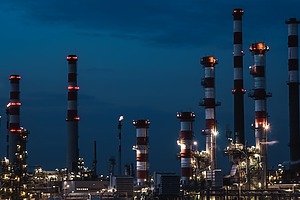
AI-driven productivity gains in oil and gas could substantially increase global emissions, outweighing any savings from AI use in renewables, according to a peer-reviewed Nature report. AI is making fossil fuel extraction cheaper and more abundant; potentially unlocking 470 billion to 1 trillion extra barrels of oil, while its use in renewables could avoid only up to 500 million tonnes of CO2 annually versus 0.5-1.8 billion tonnes added if AI spreads across fossil fuel sectors.
Most debate around AI’s climate impact focuses on data centres, but researchers found emissions from AI use by fossil fuel companies are 2.8 to 10 times higher than the IEA’s estimate for data centre emissions. Meanwhile, AI’s potential to boost solar and wind output by up to 30% remains largely theoretical, since it can’t fix renewables’ core bottlenecks: interconnection queues, permitting delays and curtailment. The report calls for climate policy to account for these “enabled emissions,” not just AI’s direct energy use.
Impact investing holds steady despite political backlash
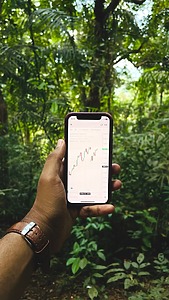
Investor demand for private capital funds targeting environmental or social outcomes has held steady despite the political backlash against climate and diversity agendas, according to Preqin data. Such funds raised $31 billion last year, in line with the prior year, with impact-focused infrastructure funds — many renewables-related — accounting for $24 billion. Brookfield raised a $20 billion clean energy fund, and Copenhagen Infrastructure Partners closed a €12 billion renewables vehicle, both despite the Trump administration curbing U.S. onshore and offshore wind.
Still, the picture is nuanced. Some U.S. investors have dropped anything labelled “impact” or “ESG,” per Impax’s Ian Simm, while PitchBook’s Hilary Wiek said 2025 was a transition year as investors now demand strong returns rather than accepting trade-offs. Demand has also softened for funds bundling multiple impact themes together, though narrower renewables-focused vehicles remain popular, said Campbell Lutyens’ Ali Floyd. 2026 fundraising stands at $13 billion so far, suggesting a possible slight decline. EQT’s Andreas Aschenbrenner said underlying fundamentals remain solid: “Sustainability is the new digital.”

Europe’s farmers turn to night shifts as heat reshapes harvests

Nighttime harvesting is spreading across Europe as heatwaves force farmers to rethink when they work; from Berkshire’s Eleanor Gilbert, who now harvests rapeseed at 2 am to catch enough overnight dew for buyers to accept it, to Puglia’s Pietro Cifarelli, who works after dark because his chickpea pods turn brittle in daytime heat. France’s grain maize harvest is expected to drop 35% to its lowest level since at least 1980.
The disruption goes beyond timing: dairy yields are down up to 20% on some Italian farms, French pig and poultry farms saw mass deaths despite added ventilation, and rising diesel costs for irrigation are squeezing margins further. Howden estimates climate-related events cost the EU about €28 billion in agricultural losses annually, mostly uninsured, potentially rising to €40 billion by 2050, with heat also degrading crop quality and forcing lower-protein grain into cheaper markets.
Editor’s Note: The opinions expressed here by the authors are their own, not those of impakter.com — Cover Photo Credit: Alex Pagliuca