The sustainability conversation often starts with materials. Can we use renewable resources? Can we recycle more? Can we reduce waste? Can we replace more harmful materials with better ones?
But there is another question that is just as important: Will people actually want to use them?
A material can be renewable, recyclable or responsibly sourced and still struggle to make a meaningful impact if there is no viable market for it. Through my work in Japan’s wood industry, I have found myself coming back to this question again and again.
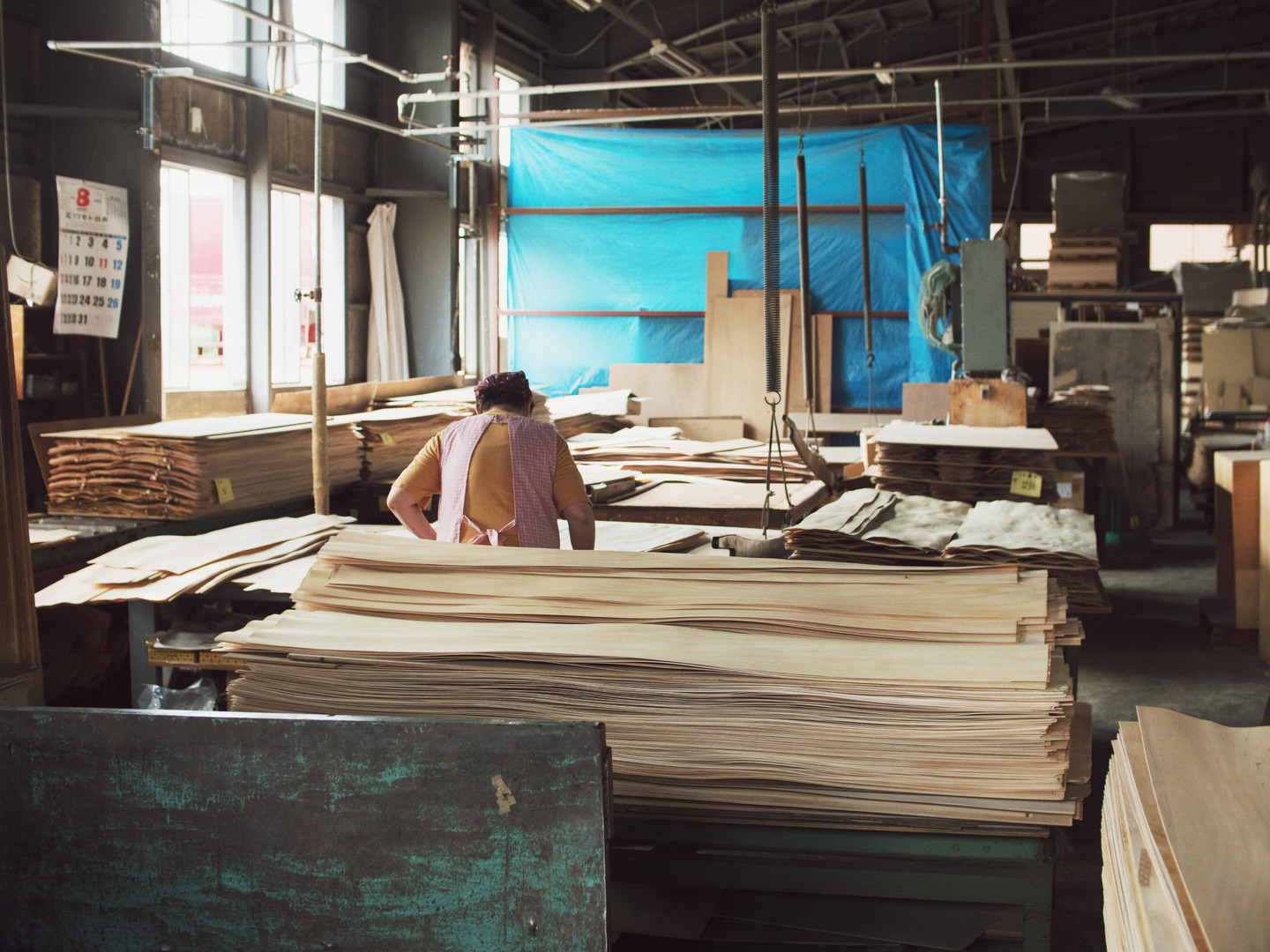
I am the Founder of UpLift+, and CMO & CSO of Takizawa Veneer, a Japanese manufacturer of hardwood veneer and plywood with nearly 90 years of experience. Our factory is located in Ashibetsu, a small, manufacturing-oriented city in central Hokkaido where approximately 88% of the municipal area is covered by forest. For me, the forests around our factory are not an abstract example of “sustainability.” They are part of the landscape I see from the factory.
That proximity has made one question particularly real to me: How can we create more value from the natural resources that are right in front of us?
Japan is a forest-rich country. Forests cover roughly two-thirds of its land, and the country’s total forest growing stock has increased over the past several decades. Yet Japan remains dependent on imported timber: its wood self-sufficiency rate was 42.5% in 2024.
Japan’s native hardwoods present a different kind of challenge. Forestry Agency data shows that Japan’s hardwood forest resources have continued to increase, while domestic hardwood roundwood production has declined over the long term. In 2020, hardwood accounted for approximately 9% of domestic roundwood production, at about 1.85 million cubic meters.
The contrast is striking. A resource can exist without having a strong economic system around it.
The circular economy needs demand
Much of the circular economy conversation focuses on technical solutions. We need better recycling systems. Better materials. Better manufacturing processes. Better product design. All of these matter. But circular systems also depend on something less technical: demand.
If a material is difficult to sell, manufacturers have limited incentives to invest in processing capacity. If designers rarely specify it, consumers rarely encounter it. And if consumers do not want it, even technically excellent materials can remain niche. This is particularly relevant to natural materials.
Forests do not produce standardized industrial inputs. Every tree varies in species, grain, color, diameter, moisture and quality. Industrial systems often favor uniformity. Creating value from diverse local resources therefore requires more than extraction technology. It requires people who understand the material — and designers who can turn its differences into advantages.
Design can change the economics of a material
This is where I believe design has a role that goes far beyond aesthetics.
Consider two pieces of wood. One is treated as an anonymous commodity and competes largely on price. The other becomes part of a carefully designed object whose material character, provenance, craftsmanship and longevity are central to why someone wants it.
The underlying resource may be similar, but its economic value can be very different. Design can create demand for materials that have previously struggled to find a market. That does not mean convincing people to buy something simply because it is sustainable.
People rarely purchase products because sustainability is their only desirable feature. They buy because something is beautiful, useful, well made, meaningful — or simply because they want it.
This is something I have come to appreciate more clearly through my own work. The opportunity is not to add sustainability as another selling point, but to create products that people genuinely want, while making more responsible material choices part of how those products are designed and made.
In other words, sustainability does not necessarily have to sit beside the value of a product. It can become part of the value itself.
A practical experiment in Japan
This thinking led me to establish UpLift+ and, more recently, to launch “bosje.” UpLift+ was created to explore how Japanese materials, manufacturing capabilities and sustainability could be connected to new business opportunities and international markets.
At the same time, my work at Takizawa Veneer has allowed me to look at the same question from the manufacturing side. We have materials, manufacturing knowledge, and people who have spent decades working with wood. How can we turn those assets into new value?
One practical expression of this approach is bosje, a lifestyle brand whose name comes from the Dutch word for “little forest.” One of our approaches combines thin domestic hardwood veneers with colored recycled Japanese paper to create a distinctive composite material. The layered structure is not hidden; it becomes part of the visual character of the product.
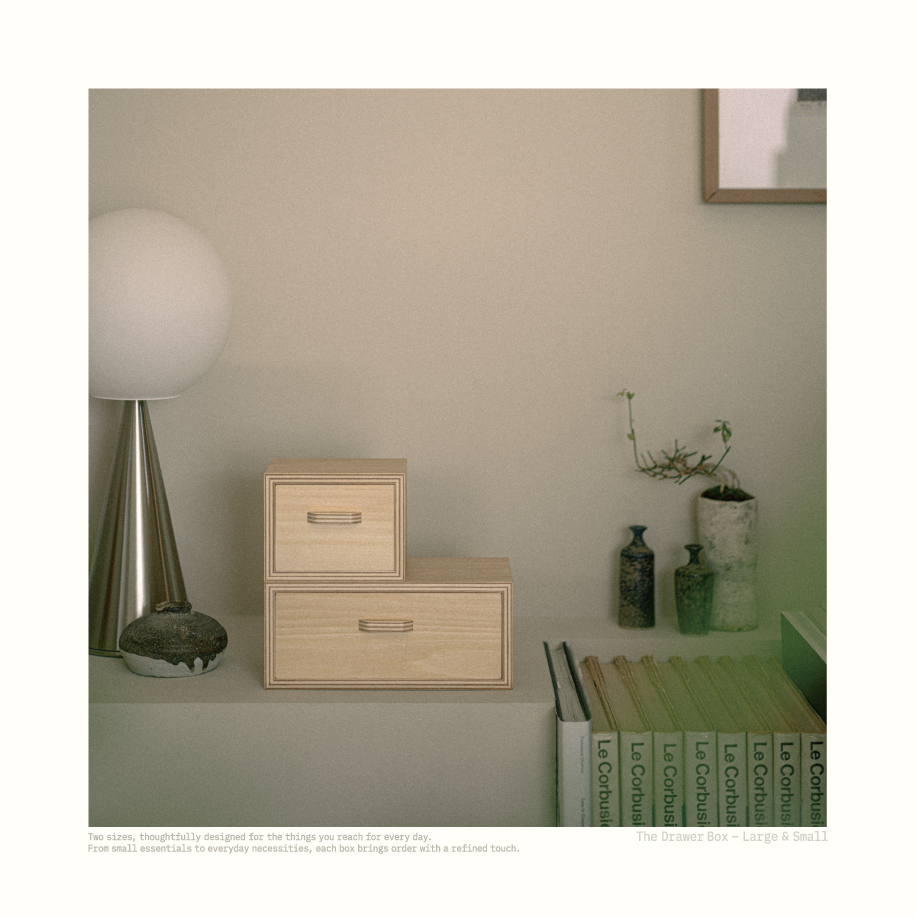
The objective is not to make something look “sustainable,” but to make it desirable — an important distinction. If sustainability exists only as a claim attached to a product, it can remain an additional feature. If better material choices are embedded in a product’s beauty, function and identity, they can become part of the reason people choose it.
The experiment is still ongoing. I do not see bosje as a finished answer to the question. Rather, it is one way of testing a hypothesis: If we want better materials to circulate through the economy, we need to create reasons for people to choose them.
Sustainability must work in the real economy
There is a temptation to think of sustainability primarily as a matter of environmental intention. But forests need management. Factories need workers. Manufacturers need customers. Designers need markets. Economic viability is therefore part of the sustainability equation.
I would not argue that creating demand for timber automatically leads to better forests. Nor should every forest be treated as a commercial resource.
Conservation, biodiversity, water protection, carbon storage and other ecological functions must remain central considerations.
The point is more modest — and, I believe, more useful: Where responsible use of a resource is ecologically appropriate, creating viable demand can help sustain the human systems needed to work with that resource.
That means asking not only how responsibly a material is produced, but whether there is a business model capable of keeping the knowledge, infrastructure, craftsmanship and manufacturing capabilities around it alive.
A circular economy cannot depend entirely on environmental intention. It also needs economic incentives that make responsible practices viable over time.
From local forests to global markets
This is also why local resources should not necessarily be limited to local markets. Our forests are in Japan. Our potential customers do not have to be. Through bosje, we have begun introducing Japanese wood-based design to international markets, including San Francisco and Paris.
For me, this is not simply about exporting more products. It is another experiment. Can people thousands of miles away from Japan find value in the material itself — in its character, provenance, craftsmanship and design? Can a material rooted in a small forest town in Hokkaido find a place in homes, stores and creative spaces on the other side of the world?
I do not have a definitive answer yet. That is precisely why I find the question interesting. Global demand is not automatically sustainable. It depends on what the market rewards. If markets reward low-cost, disposable products, resources will tend to be valued primarily for volume. If markets reward durability, provenance, craftsmanship, responsible sourcing and thoughtful design, the relationship can be different.
Related Articles
Here is a list of articles selected by our Editorial Board that have gained significant interest from the public:
The objective should therefore not simply be more consumption. It should be better demand. This is an important distinction for the circular economy.
A circular economy is not simply about keeping more materials in circulation. It is also about creating economic systems in which products and materials retain value for longer. And that requires people to value them.
Make sustainability wanted
This is the lesson I take from working with Japanese wood. A sustainable material is only part of the solution. We also need designers who want to use it, manufacturers willing to develop it, retailers willing to introduce it, and consumers who want to live with it. That is why I believe the next stage of the circular economy needs to be more design-led.
Technology can make a material recyclable. Engineering can make it technically viable. Certification can help verify its environmental attributes. But design can make people want it. And that may be one of the most important — and overlooked — steps toward a circular economy.
Sustainability is not only about changing what materials we use. It is also about changing what we value. The future of sustainable materials may therefore depend on a deceptively simple question: Can we make better materials desirable enough that people choose them — not because they are sustainable, but because they are worth wanting?
I do not think I have the answer yet. But from a small factory surrounded by forests in Hokkaido, I believe this is a question worth continuing to explore.
Editor’s Note: The opinions expressed here by the authors are their own, not those of Impakter.com