
The effects of the COVID-19 pandemic have been severe and far-reaching. Governments worldwide have enforced strict measures to curb the spread of the virus, upending businesses and livelihoods. Global agricultural supply chains continue to face unprecedented disruptions. What has this meant for small-scale farmers in developing countries?
According to the UN, more than 2 billion smallholder producers, workers, and their families have been affected by the economic shock caused by COVID-19. Smallholder farmers are a key part of global production systems, but they are less likely to have access to the financial, environmental, and social resources needed to cope with economic crashes or declines in demand.
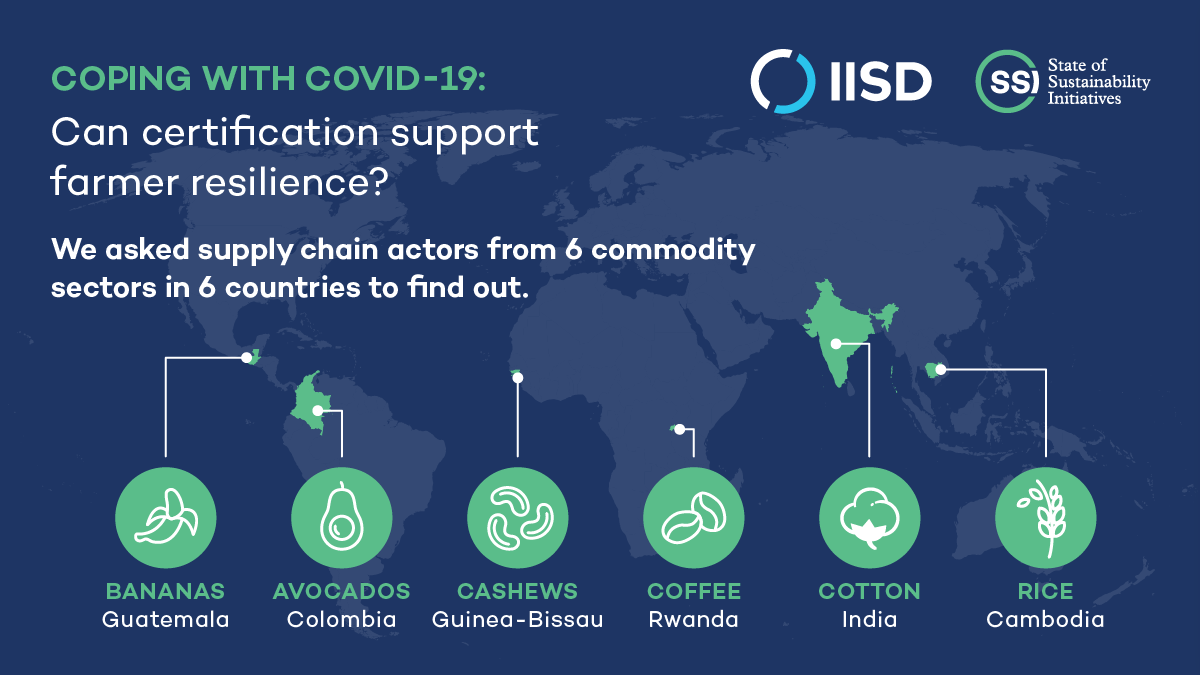
In recent decades, a growing number of voluntary sustainability standards (VSS) have been established to improve the livelihoods of smallholder farmers. But to what extent do certification schemes help build their resilience? To answer this question, IISD and UNCTAD surveyed key supply chain actors in six countries. These respondents—ranging from producers and buyers to investors and government officials—described four ways that VSS’s have helped smallholder farmers cope with supply chain disruptions amid the pandemic.
Standards-Compliant Products Can Offer Producers Higher Incomes
“Farmers selling to VSS-compliant markets are more able to cope because [they] obtained better prices in comparison to other farmers,”
Contracts for coffee farmers in Rwanda have remained mostly stable during the pandemic. However, conventional coffee farms have seen their prices drop from levels that were already below those of certified producers. This growing price disparity leaves conventional producers acutely under-resourced and especially vulnerable to any disruption.
“Farmers selling to VSS-compliant markets are more able to adapt and cope with the effect of COVID-19 because they get more income/revenues compared to others,” a Rwandan government official told us. With higher revenues comes a greater ability to invest in the resources, assets, and safety nets required to cope with unexpected events.
In five out of the six case countries, the people we interviewed told a similar story. Organic cashew farmers in Guinea-Bissau and certified banana farmers in Guatemala were better placed financially to adapt to new health and safety protocols. Organic rice markets in Cambodia and niche markets such as organic and extra-long-staple cotton in India still commanded a premium price.
Related Articles: Voluntary Sustainability Standards: From Bananas to Palm Oil | In the Face of COVID-19, Farmers in Ecuador Innovate a New Food System
VSS-Compliant Markets Often Strengthen Supply Chain Relationships
“Farmers who were part of the standards, they had better connectivity, they knew exactly despite all the disruptions, they could still sell,”
When the pandemic first hit global supply chains, Indian cotton farmers saw prices for their products plunge. However, those selling to customers demanding certified cotton tended to have more support from the people and organizations buying their products.
“Our purchase assurances have not changed,” a buyer of organic-certified cotton in India explained to us. “VSS-compliant farmers have been in a better position as they received assured services, timely delivery of seeds, and other inputs despite the lockdown.” The buyer kept their orders intact, respected all contracts, and still paid above market price.
Stronger relationships within VSS-compliant supply chains give smallholder farmers more reliable access to markets. In Guinea-Bissau, organic cashew farmers were able to return to work faster thanks to the advice their buyers provided on adhering to new hygiene standards. In Cambodia, organic rice farmers experienced greater sales stability due to purchase assurances in their contract agreements with buyers.
Adhering to Standards Can Grow Farmers’ Customer Base
“Farmers in the [agricultural cooperative] still produced organic rice and sold it to companies as per contracts, and in addition, they looked for—and found—more buyers,”
Organic farmers in Cambodia had to adapt to an overall decline in orders for organic rice when the pandemic hit. However, farmers in an organic-certified agricultural cooperative proved to be in a better position to cope. They had more secure contracts with buyers and more opportunities to sell their products, which are perceived to be of a higher quality.
“Despite a general decrease in orders, farmers in the [organic agricultural cooperative] have other choices to sell their product for a suitable price,” said a Cambodian rice farmer, “because their production is well known to be for a VSS-compliant market.” Farmers outside the cooperative, on the other hand, experienced more challenges selling their products.
In Cambodia and Guinea-Bissau, VSS-compliant production is still emerging. As a result, certified producers benefit from facing less competition than conventional farmers. However, as VSS-compliant production increases, these benefits may decrease too—unless demand increases at a similar rate.

VSS Certified Producers Have More Access to Education and Training
“[VSS-compliant farmers can adapt more easily] because they are already trained on handling protocols, they already have a different culture,”
Cancelled contracts and price drops are not the only problems for farmers during the pandemic. They have also had to adapt their practices to fit with health and safety requirements designed to prevent the spread of the virus. For avocado farmers in Colombia, this has seemingly been an easier feat for certified producers.
“[VSS-compliant producers] adapt easily,” a Colombian avocado farmer told us, “because they are already used to a culture of standards. Preparation, education, training.” Many other farmers we spoke to agreed. They said that certified farmers can adapt more easily to new health measures because they have already implemented protocols to meet VSS requirements.
We heard similar stories from Guatemala and Rwanda. Certification schemes provide producers with training and education that they can draw upon to cope with shocks. This includes training on specific health protocols that farmers have been able to leverage during the pandemic.
Limitations and Opportunities
While the conversations with smallholder producers and other supply chain actors suggested that VSS’s can help farmers to cope with shocks, they also revealed some limitations. VSS’s alone do not fully protect farmers from international price volatility, which can affect standards-compliant markets as much as conventional ones. They are also dependent on sufficient consumer demand for sustainable products. Furthermore, VSS’s do not provide farmers with very much negotiating power in supply chains that are skewed in favour of buyers.
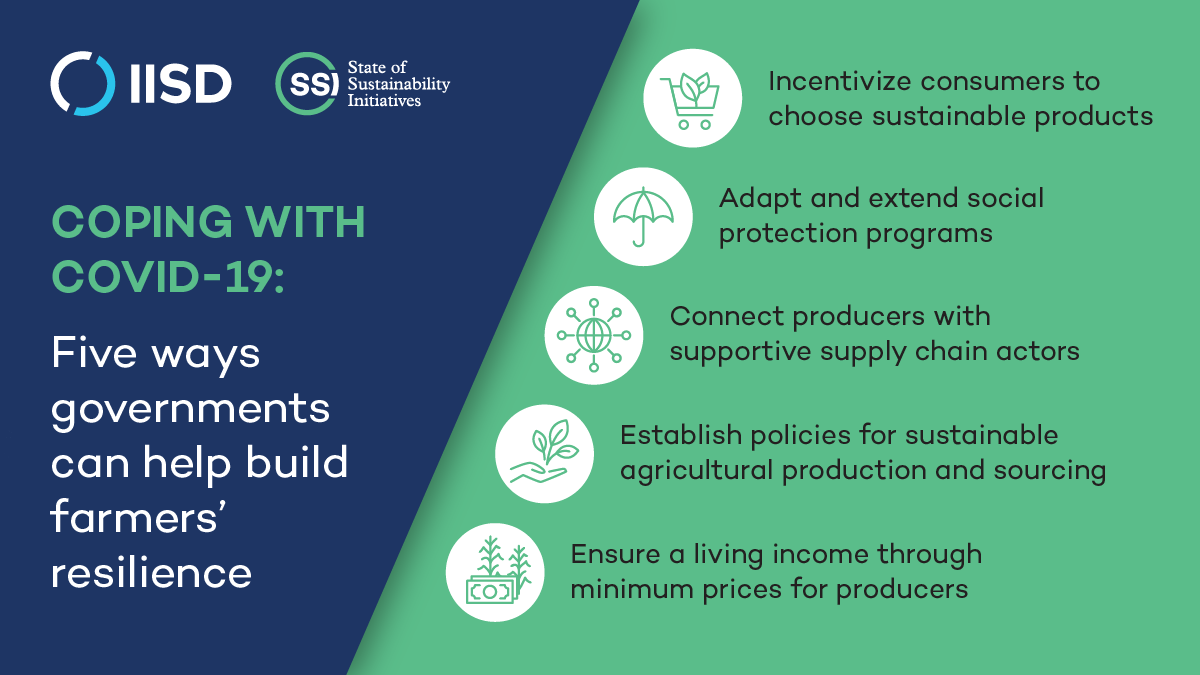
Nonetheless, governments can and should leverage VSS’s alongside other measures to improve the resilience of smallholder farmers. We recommend that governments take the following five actions:
- Encourage consumers to choose sustainable products through tax incentives or charges
- Establish regulatory frameworks to promote sustainable agricultural practices and sourcing
- Connect producers with supportive supply chain actors who can provide training and safety nets
- Adapt and extend social protection programs to support farmers’ recovery aftershocks
- Establish minimum prices to ensure a living income for farmers
This pandemic is far from over and will not be the last crisis to hit supply chains. Climate change, natural disasters, and conflict all have great potential for disruption. Governments must act to ensure farmers have access to the resources they need to cope with crises.
View the full research results in IISD’s policy brief: Coping with COVID-19.
— —
About the author: Sara Elder is a Policy Advisor, Standards Workstream, with IISD’s Economic Law and Policy Program. Sally Millett is a Communications Assistant with the Economic Law and Policy Program.
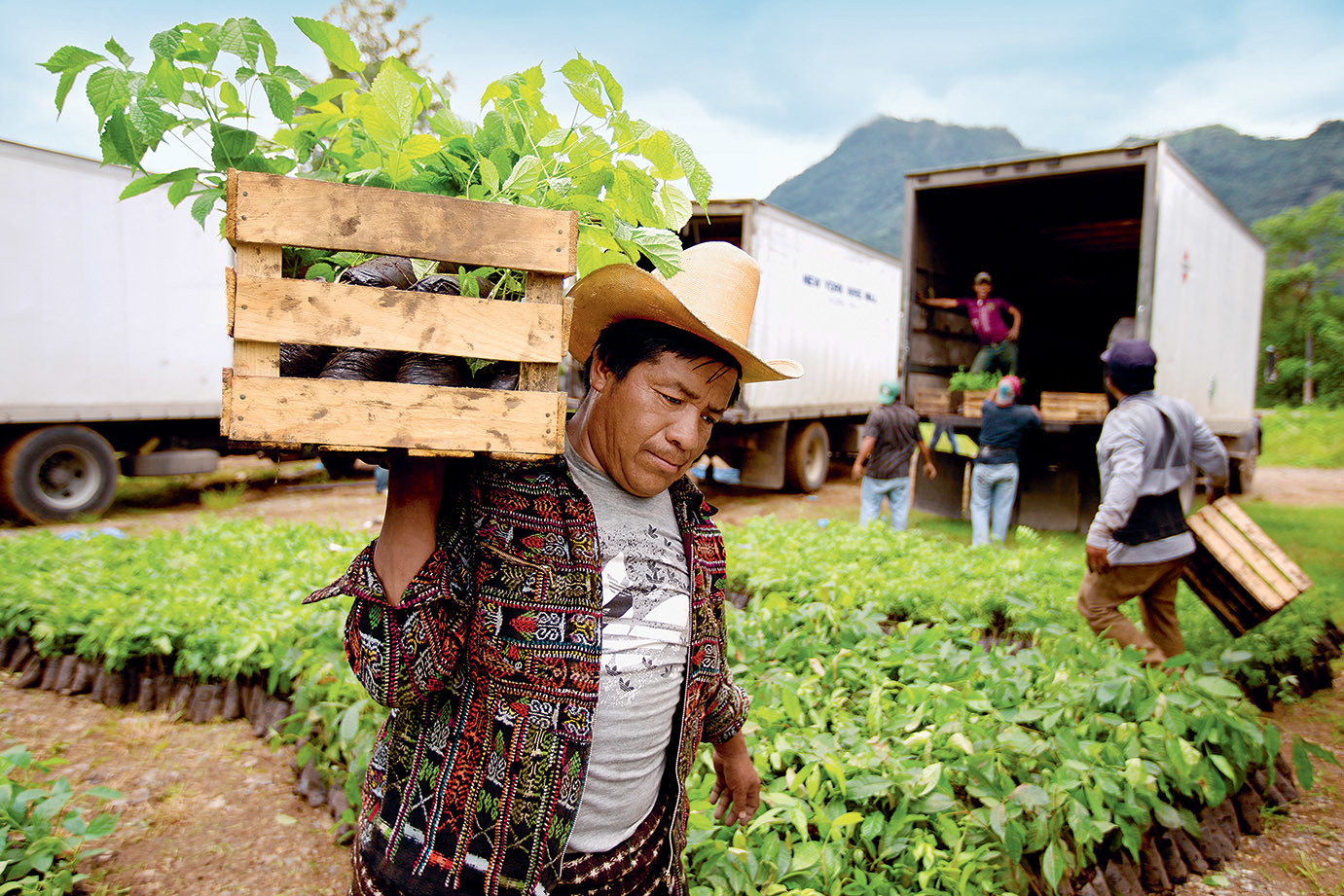
Editor’s Note: The opinions expressed here by Impakter.com columnists are their own, not those of Impakter.com.— In the Featured Photo: Nespresso agro-forestry programme. Featured Photo Credit: Nestle / Flickr