Impakter
  • Environment
    • Biodiversity
    • Climate Change
    • Circular Economy
    • Energy
  • FINANCE
    • ESG News
    • Sustainable Finance
    • Business
  • TECH
    • Start-up
    • AI & Machine Learning
    • Green Tech
  • Industry News
    • Entertainment
    • Food and Agriculture
    • Health
    • Politics & Foreign Affairs
    • Philanthropy
    • Science
    • Sport
  • Editorial Series
    • SDGs Series
    • Shape Your Future
    • Sustainable Cities
      • Copenhagen
      • San Francisco
      • Seattle
      • Sydney
  • About us
    • Company
    • Team
    • Partners
    • Write for Impakter
    • Contact Us
    • Privacy Policy
No Result
View All Result
Impakter logo
No Result
View All Result
Underwater Wall to Protect the ‘Doomsday Glacier’: Necessary Intervention or Costly Distraction?

Underwater Wall to Protect the ‘Doomsday Glacier’: Necessary Intervention or Costly Distraction?

As some scientists question the wisdom and feasibility of polar geoengineering, the Seabed Curtain Project begins research on an ambitious intervention to limit sea-level rise

Benjamin ClabaultbyBenjamin Clabault
February 10, 2026
in Climate Change, Environment, Science
0

Thwaites Glacier in Antarctica earned its dramatic nickname, the “Doomsday Glacier,” because its collapse could trigger a catastrophic rise in sea levels. Now, researchers are exploring a solution that seems pulled from a Hollywood script. 

The Seabed Curtain Project proposes to build an 80-kilometre wall in front of the glacier to prevent warm ocean currents from melting the ice. 

This type of polar geoengineering has long been derided in scientific communities, with many insisting the focus should remain on reducing fossil fuel consumption. But as decarbonisation stalls, the project’s leaders believe it’s time to at least investigate whether this dramatic intervention is possible.

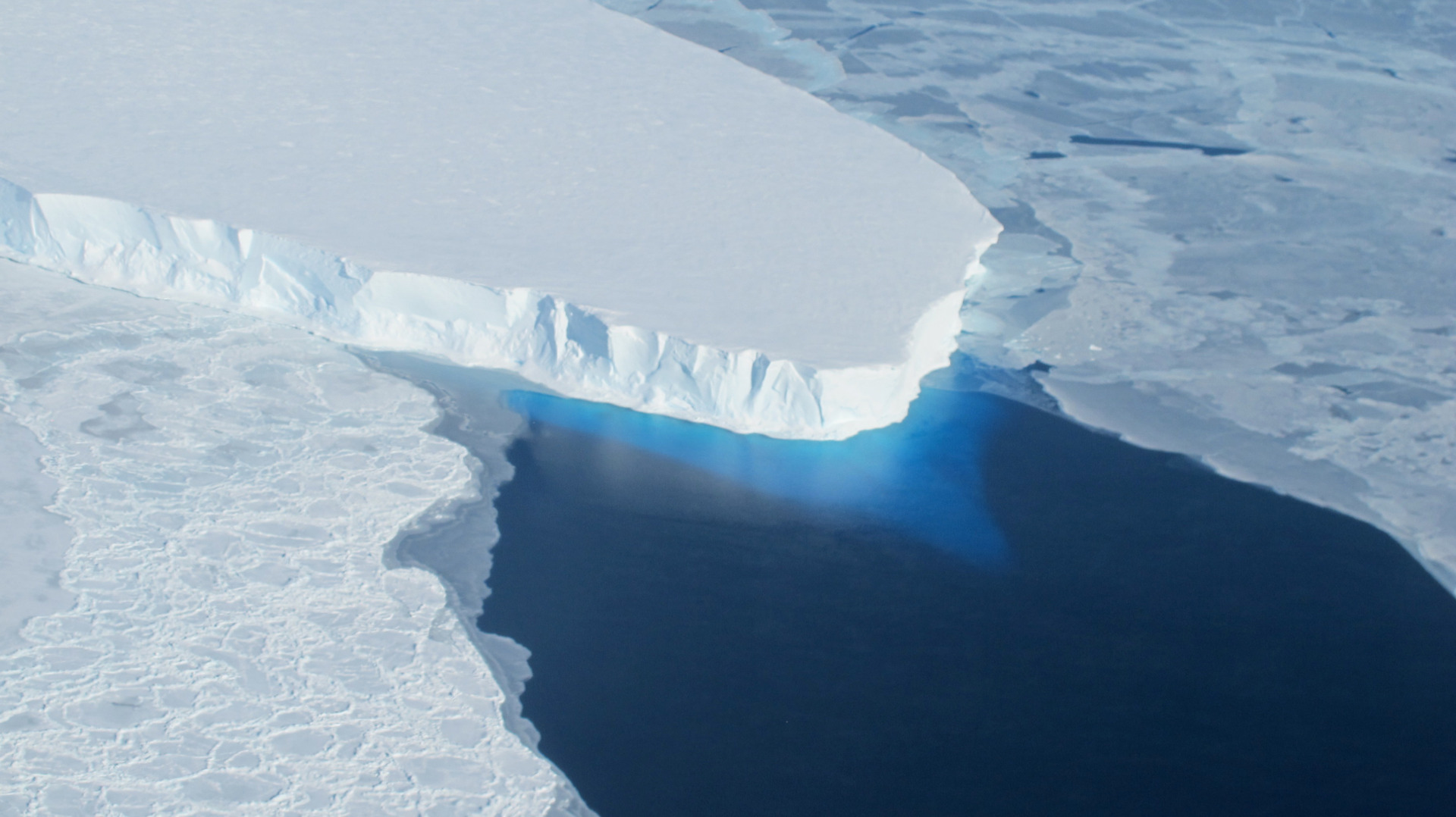
The Thwaites Glacier. Photo Credit: Felton Davis.

The “Doomsday Glacier” Threat

Thanks largely to melting glaciers and ice sheets, global sea levels have risen by 21–24 centimetres since 1880. 

Sea levels are projected to rise even more in the years ahead. According to the World Meteorological Organization, two metres of additional sea-level rise is possible if greenhouse gas emissions aren’t significantly curtailed. This will affect an estimated one billion people, with coastal dwellers around the world facing intense flooding and erosion.  

Thwaites Glacier is particularly vital because of its size and instability. Covering 192,000 square kilometres, it’s approximately the same size as Great Britain, and its ice loss already accounts for 4% of the world’s current sea-level rise. 
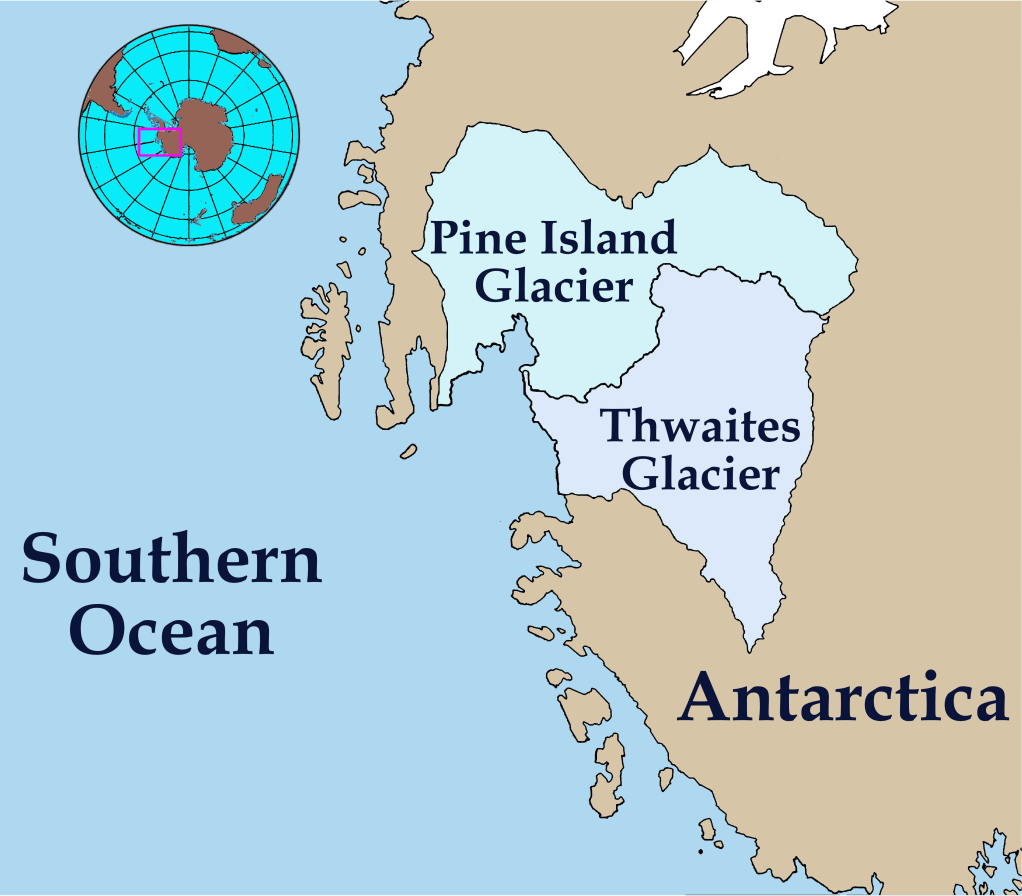
Caption: A map shows Thwaites Glacier’s location in West Antarctica. Image Credit: Nwbeeson

Were Thwaites Glacier to collapse completely — the true “doomsday” scenario — it would single-handedly raise sea levels by 65 centimetres. This is the devastating outcome that researchers and funders are trying to prevent.

The Seabed Curtain: A Bold, Ambitious Proposal

While a seabed curtain would be remarkably complicated to construct, the idea behind it is relatively simple.

Antarctic glaciers like Thwaites melt when their lower portions are hit with flows of warm, saltier water. Researchers hope that by attaching a massive curtain to the sea floor in front of the glacier, they can block that warmer water from reaching the ice. This could keep the water around the glacier cold enough to decrease further melting and prevent the glacier’s collapse. 

According to the project’s website, the Thwaites Glacier sea curtain would be 80 kilometres long and 150 metres high, all drilled into the seabed at a depth of 650 metres.
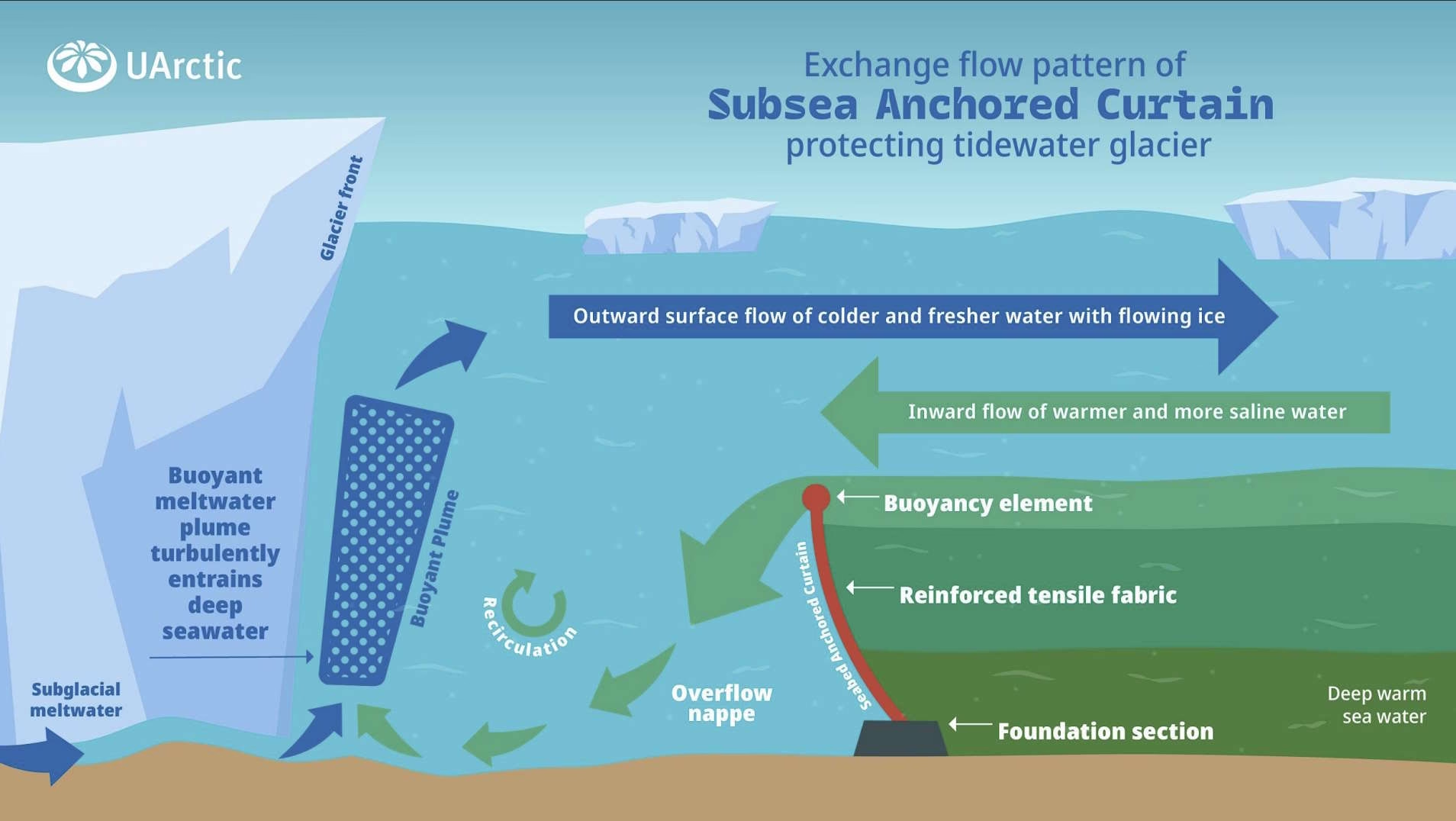
Seabed Curtain Project
Caption: A diagram released by the Seabed Curtain Project shows how its proposed barrier would block warm water flows to protect Thwaites Glacier. Image Credit: The Seabed Curtain Project

The Seabed Curtain Project is an initiative of the University of the Arctic (UArctic), which is actually a network of universities and other research institutions. It’s funded by Outlier Projects and Tom Wilhelmsen’s Foundation, two organizations known for supporting innovative environmental solutions.

“Sea level rise is one of the most serious climate risks facing humanity this century,” says Sasha Post, Director of Outlier Projects. “It is essential to accelerate research, like UArctic’s seabed anchor curtains project, to evaluate how to safely manage this risk.”

Geoengineering: Necessary Intervention, or Costly Distraction?

The Seabed Curtain Project has emerged in the midst of a vigorous debate around the merits of polar geoengineering. 

In Sep. 2025, three climate scientists published an article in Frontiers in Science arguing that humans should consider proactively intervening in polar Earth systems. These interventions, they said, could reduce the harms of climate change. In the same issue, forty-two experts published a forceful rebuttal, insisting that polar geoengineering could be dangerous while needlessly distracting from the urgent need for decarbonisation.

The geoengineering skeptics raised concerns about several proposed interventions, including the construction of sea curtains. It would be a massive challenge, they argued, to place a wall on rugged underwater terrain, especially in “one of the harshest and most remote environments on Earth.” They also wrote that a sea curtain could interfere with oceanic circulation, cause pollution, and disrupt local marine life. 

Related Articles

Here is a list of articles selected by our Editorial Board that have gained significant interest from the public:

  • The Fight to Save Glaciers and Free-Flowing Rivers From False Climate Solutions
  • Why Are Glaciers Important?
  • Could the Rate at Which Glaciers Are Melting Cause the Next Pandemic?

For the researchers and organizers behind the Seabed Curtain Project, none of these drawbacks reduces the urgency of their work. With decarbonisation efforts falling short, geoengineering strikes them as an imperfect, but necessary, measure.

“I could not see a safe pathway forward for future generations,” says Marianne Hagen, one of the project’s leaders, “without doing the necessary research on these Band-Aid, buy-time solutions.”

Years of Research Ahead

The leaders of the Seabed Curtain Project are well aware of the challenges they face, and they’re not rushing into anything. They plan to conduct extensive scientific research on Thwaites Glacier to determine its exact conditions. Meanwhile, they’ll test sea curtain prototypes in the fjords of Norway while developing a governance structure for policymakers. 

Seabed Curtain Project
Caption: A diagram outlines the Seabed Curtain Project’s research agenda. Source: The Seabed Curtain Project

With such an ambitious proposal, progress is bound to move slowly — and researchers have already hit their first snag. 

Professor David Holland, who works with the Seabed Curtain Project, recently joined a team of British and Korean researchers on an expedition to Thwaites Glacier. As part of their mission, they bored into the ice with a hot water drill, intending to deposit instruments that would gather data for years. Unfortunately, they failed to properly place the majority of the instruments, with only a few “pilot” devices deploying successfully.

But even these pilots have relayed useful information, and scientists insist that more research is forthcoming. 

Besides, this was never meant to be a short-term plan. The Seabed Curtain Project intends to help policymakers decide whether a sea curtain is feasible — not now, but in 15 years. 


Editor’s Note: The opinions expressed here by the authors are their own, not those of Impakter.com — In the Cover Photo: An overhead view of Thwaites Glacier. Cover Photo Credit: NASA.

Tags: antarcticaClimate ChangeDoomsday GlacierDoomsday Glacier wallGlobal warmingmelting glaciersRising Sea LevelsSeabed Curtain Project
Previous Post

The Merz-Meloni Non-Paper: How the New Germany-Italy Axis Could Destroy Europe

Next Post

EU Moves to End Textile Waste

Related Posts

The Era of ‘Global Water Bankruptcy’ Has Begun
Climate Change

The Era of ‘Global Water Bankruptcy’ Has Begun

Humanity’s long-term water usage and damage have exceeded nature's renewal and safe limits, a situation scientists and the media have...

byNmesoma Ezetu
February 10, 2026
How Climate Change Is Driving Evolution
Climate Change

How Climate Change Is Driving Evolution

As global temperatures continue to rise at alarming rates, climate change threatens to wipe out entire groups of animal species....

byYuxi Lim
February 10, 2026
biodiversity loss
Biodiversity

The Economics of Biodiversity Loss

In the 1990s, India’s vulture population collapsed due to the unintended knock-on effect of a veterinary drug for cattle, with...

byStefano Giglio - Professor at Yale Universityand2 others
February 9, 2026
A picture with a wind power generator
Society

Emissions and Economic Growth: Is There Still a Link?

In prior decades, economic growth and emissions co-existed. As countries grew richer, they produced more and emitted more. This relationship...

byFedor Sukhoi
February 3, 2026
Three sponsors for the 2026 Winter Olympics in Italy could generate 1.3 million tons of CO2
Climate Change

Winter Olympics Sponsorship Emissions: Who Are the Main Offenders?

The 2026 Winter Olympic Games are set to begin in Italy next month. Scattered across towns in northern Italy, from...

bySarah Perras
February 2, 2026
WEF Report Ranks Environmental Challenges as Greatest Long-Term Threat to Global Stability
Business

WEF Report Ranks Environmental Challenges as Greatest Long-Term Threat to Global Stability

The World Economic Forum’s Global Risks Report 2025 found that environmental risks are deteriorating faster than other threats and challenges.  ...

byBenjamin Clabault
February 2, 2026
Thames Water closes in on rescue deal;
Environment

Thames Water Closes in on £16bn Rescue Deal

Today’s ESG Updates: Thames Water Closes in on £16bn Rescue Deal: Thames Water is edging closer to a multibillion-pound rescue...

byAriq Haidar
February 2, 2026
Food Waste in India
Climate Change

India’s Food Waste Is Turning Into an Environmental Time Bomb

India, a key player in this fight, is currently battling a confluence of climate-driven disasters. Last year’s punishing extreme heatwave,...

byPranjali Chowdhary - Research and Policy Associate at the Institute for Governance and Sustainable Development, Indiaand1 others
January 30, 2026
Next Post
ESG News regarding EU ban on destruction of unsold clothes and shoes, UK securing record solar capacity, EDF’s ‘fish disco’ system potentially saving 90% of fish, and LNG demand in China setting to climb.

EU Moves to End Textile Waste

Recent News

ESG News regarding EU ban on destruction of unsold clothes and shoes, UK securing record solar capacity, EDF’s ‘fish disco’ system potentially saving 90% of fish, and LNG demand in China setting to climb.

EU Moves to End Textile Waste

February 10, 2026
Underwater Wall to Protect the ‘Doomsday Glacier’: Necessary Intervention or Costly Distraction?

Underwater Wall to Protect the ‘Doomsday Glacier’: Necessary Intervention or Costly Distraction?

February 10, 2026
Friedrich Merz Proposing the Architectural blueprint of European institutions illustrating the Merz-Meloni non-paper strategy for EU deregulation

The Merz-Meloni Non-Paper: How the New Germany-Italy Axis Could Destroy Europe

February 10, 2026
  • ESG News
  • Sustainable Finance
  • Business

© 2025 Impakter.com owned by Klimado GmbH

No Result
View All Result
  • Environment
    • Biodiversity
    • Climate Change
    • Circular Economy
    • Energy
  • FINANCE
    • ESG News
    • Sustainable Finance
    • Business
  • TECH
    • Start-up
    • AI & Machine Learning
    • Green Tech
  • Industry News
    • Entertainment
    • Food and Agriculture
    • Health
    • Politics & Foreign Affairs
    • Philanthropy
    • Science
    • Sport
  • Editorial Series
    • SDGs Series
    • Shape Your Future
    • Sustainable Cities
      • Copenhagen
      • San Francisco
      • Seattle
      • Sydney
  • About us
    • Company
    • Team
    • Partners
    • Write for Impakter
    • Contact Us
    • Privacy Policy

© 2025 Impakter.com owned by Klimado GmbH