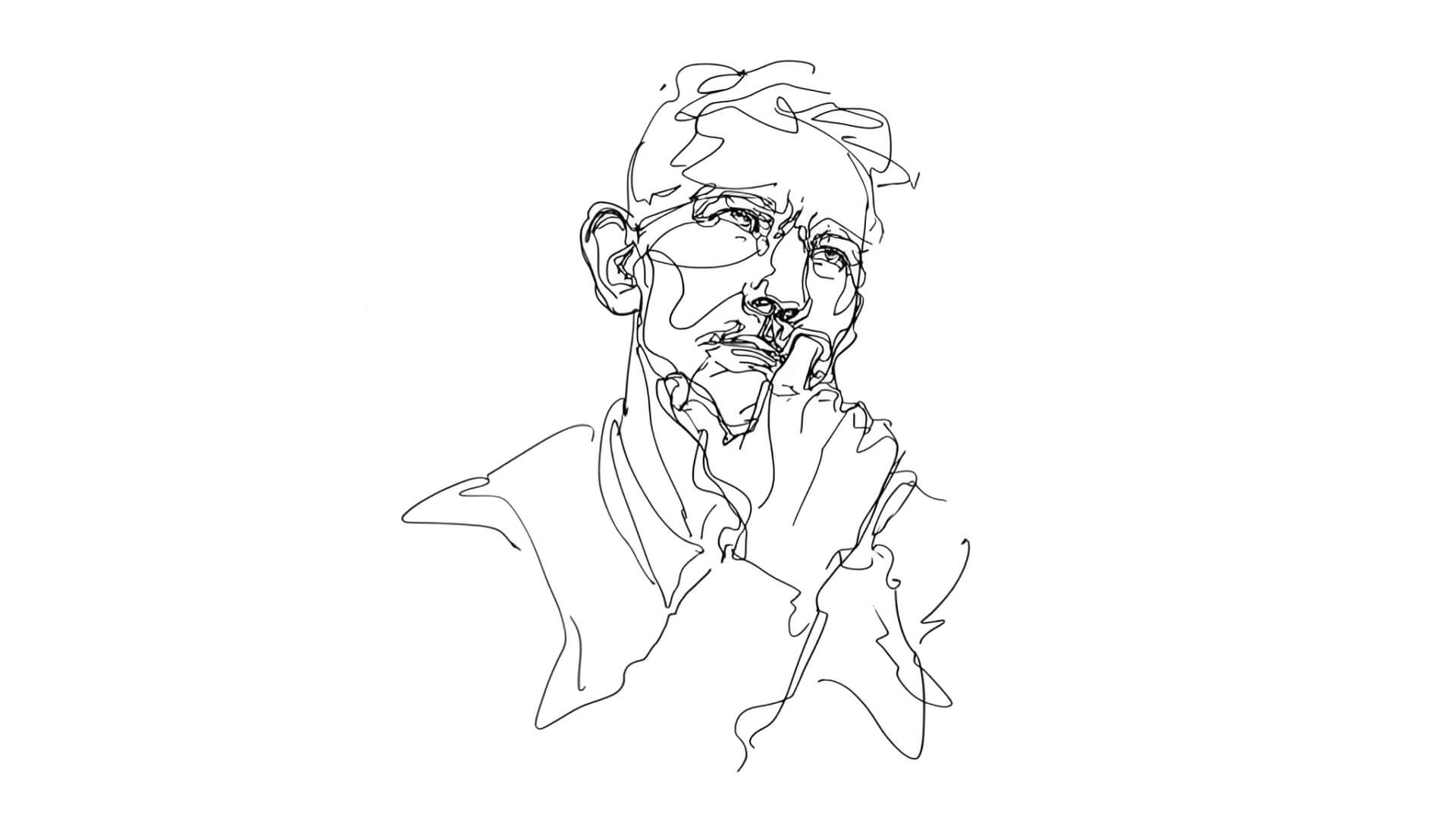
In the hallowed halls of linguistic flap, a silent sophism rages. On one side, we have the verbal tic of validation, “Right?” On the other, the contemplative waver of hesitancy, “Um.” What if these two simple utterances form the foundation of human raison d’être? If they’re all we’ve got, which one is emperor, and is there any room for the written word on the battlefield?
The Case for “Right?”
“Right?” This is the verbal equivalent of a group head nod. It’s the linguistic glue that holds a conversation together, however ludicrous, ensuring everyone is on the same page. It’s a subtle, yet powerful, plea for confirmation: “We’re in agreement here, right? My genius is acknowledged, right? You know, right?” In a video, this tic is often accompanied by an earnest stare or a slightly tilted head, desperate for confirmation from an invisible audience. It’s the sign of a speaker who needs your approval to continue. A needy confabulation.
The Case for “Um”
Then we have the “Um”-ists. “Um” is the sound of pure, unadulterated thought in action. It’s the linguistic equivalent of a brain buffering, the sound of synapses firing as they search for the perfect word. Unlike “Right?”, “Um” is entirely self-sufficient. It doesn’t need your validation. It’s not asking for approval; it’s simply taking a moment. A moment for contemplation, for deep thought, for the glorious struggle of a mind at work. In a video, an “Um” is often an awkward pause that means the creator was too exhausted to edit.
The Sous-Verdict: Written Articles Maintain Their Linguistic Edge
This brings us to the preliminary throwdown: the written article versus the video. Videos are the domain of the wavering speaker. They represent a one-way street of information reception, despite undermining their captivation with nervous pleas for confirmation. To make matters worse, these punctuations force you to consume their stumbles and tics along with information at the speaker’s pace. Then they demand your immediate, unblinking attention as they promise to “dive in” later, only after a frantic “smash that like button!” to validate their existence.
Written articles, however, are the domain of the edited speaker. You, the reader, are in control. You can pause, reread, and ponder without fear of any “Um’s” grabbing the floor out from under your critical mind. There are no nervous stares or desperate pleas for validation. The words stand on their own, confident in their ability to convey black-and-white meaning without a nod.
But what if the roots of this battle run deeper? What if the very etymology of these words proves our case? Let us grab our linguistic shovels and dig into the primordial ooze of language itself.
The Etymology of “Right?”: A Straight Path to Validation
The word “right” traces its lineage back through the millennia, a noble and ancient word. Its Old English ancestor, riht, meant “correct, proper, appropriate.” This, in turn, comes from the Proto-Germanic rehtaz, which is rooted in the even more ancient Proto-Indo-European reg-, a root signifying “to move in a straight line.”
Think about that. “Right” is fundamentally a word about straightness. About what is correct, true, and proceeding along a direct path.
And so, the verbal tic “Right?” is not just a plea for validation; it is a desperate, subconscious plea for linearity. The video creator, speaking into the void, is asking: “Are we still on the straight path? Is my argument proceeding correctly? Am I moving along the line of truth that you, the audience, have agreed upon, right?” It’s a micro-interruption that reveals a deep-seated anxiety about a lack of control, a fear that the audience might deviate from the speaker’s intended trajectory. This is the essence of video — a one-way, linear delivery that demands the audience stay in their assigned lane.
Related Articles: Indigenous Languages and Ecocide: The Legacy of Western Colonialism Re-examined | How Climate Change Is Killing Languages
The Etymology of “Um”: The Primordial Sound of Thought
Now, turn your attention to “Um.” Where does it come from? The answer is… nowhere. Not in the way “right” does. In Sanskrit, “Om” (or “Aum”) is written as ॐ or ओम् and is considered the sacred primordial sound and the origin of all creation. This inclusive vibration functions as a paralinguistic filler. “Um” is the sound of a brain, quite literally, making itself known, as it pulls something from nothing.
Linguists call it a hesitation marker, and you can hear its cousins across the globe: the yogic “Om” (or “Aum”) is a sacred mantra representing the universe, unity, and the sounds of all things, precursor to the German ähm, the French euh, the Russian e…. These sounds are born from the physical act of marrying form with content, thereby setting it in all-meaningful motion. The sound of thought itself — the slight vibration of the vocal cords to hold the floor, as the mind pauses to collect its thoughts, to access a memory, to construct a new idea.
“Um” is the sound of pure, non-linear, internal processing. It doesn’t care about a “straight path.” It’s a sound of glorious, beautiful mental meandering. It’s the sound of a mind that is searching, not for a pre-approved linear route, but for the perfect connection, the most elegant phrase, the freshest idea pulled up from the sea of the collective unconscious.
The Definitive Conclusion, “Right” Vs. “Um,” or Does Writing Still Rule?
Verbal presenters rudder between the two as they navigate the airwaves. Supported by millennia of linguistic history, the “Right?” of video culture, with its etymology rooted in “straightness” and “correctness,” reflects a medium obsessed with linear, validated delivery. It is a straight line from creator to consumer, with no room for error or independent thought. Without getting into the deeper politics of, say, “who” Vs. “that,” suffice it to say that “right?”‘s forefather, “um,” was at least a timeless, universal sound of pure thought, unconcerned with a direct path. The sound of a mind at liberty to explore, to pause, and to wander.
Let the video creators ask their nervous questions and scramble to hold the floor. We’ll be over here, contemplating the magnificent beauty of an un-“Um’d” sentence. That is what reading is all about. Thankfully, written words offer the way out: between the lines.
So the next time you hear a video creator barring the way with an “um” or nervously asking you to agree now, with a “Right?,” remember these humble written lines that you are welcome to read between, where the sound you don’t hear is the glorious, uninterrupted “Om” of your own mind at work.
Editor’s Note: The opinions expressed here by the authors are their own, not those of impakter.com — Cover Photo Credit: J.L. Morin.