Every year, millions of square metres of timber cladding are installed on buildings across the UK and Europe. A significant proportion of that timber has been treated with chemical preservatives — pressure-impregnated with copper compounds, boron-based solutions, or other biocidal formulations designed to extend its service life in exposed conditions.
This approach has been standard practice for decades, and it works. Treated softwood lasts longer than untreated softwood. But the chemical treatment model carries costs that rarely appear in the procurement calculation: restricted handling procedures during installation, controlled disposal routes at end of life, potential leaching in ground contact or wet conditions, and a chemical footprint that increasingly conflicts with the sustainability frameworks applied to new construction projects.
Two alternative approaches have gained significant traction over the past decade, both of which achieve comparable or superior durability without chemical input. Understanding how they work — and why the construction industry is increasingly specifying them — matters for anyone tracking the intersection of material performance and environmental responsibility in the built environment.
Thermal Modification: The Science of Chemical-Free Durability
ThermoWood is produced through a precisely controlled industrial process in which timber is heated to between 180 and 215 degrees Celsius inside a closed kiln, using steam as the processing medium. No oxygen is present. No chemicals are introduced at any stage. The process typically runs for 24 to 48 hours, after which the timber is gradually cooled and re-humidified to a stable moisture content.
The transformation that occurs during this process is structural rather than surface-level. The hemicellulose in the wood’s cell walls — the component most responsible for moisture absorption — is broken down and partially volatilised. What remains is a more stable matrix of cellulose and lignin, with significantly reduced hygroscopic activity. The practical results are measurable and consistent: moisture absorption reduced by up to 50 percent, dimensional movement reduced by 30 to 50 percent depending on species, and biological durability improved from Durability Class 4 or 5 (non-durable to slightly durable) to Durability Class 2 (durable), equivalent to timbers such as oak, teak, and iroko.
These improvements are permanent. They do not wash out over time, do not require reapplication, and do not degrade in wet conditions. The timber can be left untreated on the exterior and will weather evenly to a silver-grey patina, or it can be finished with oil or coating systems to retain its warm honey-brown colour for longer. Either way, the underlying performance — stability, durability, resistance to biological attack — remains consistent throughout the material’s service life.
From an environmental standpoint, thermally modified timber is one of the cleanest high-performance cladding materials available. sustainable ThermoWood cladding chemical free is sourced from FSC and PEFC certified Nordic forests, produced without chemical input, and carries a BRE-accredited 30-year service life for external cladding. At end of life, the material can be composted or recycled without restriction — a significant practical advantage over chemically treated alternatives that require controlled disposal.
Charred Timber: Carbon as a Protective Layer
The second approach is rooted in a technique developed in Japan over several centuries, where cedar and other softwoods were charred to protect them against fire, decay, and insect attack. The method — Shou Sugi Ban in its original form, now more broadly referred to as charred timber cladding — involves passing a controlled flame over the timber surface to create a carbonised layer typically two to five millimetres deep.
The carbon layer formed by this process has properties that are difficult to replicate through synthetic means. It is hydrophobic, repelling water rather than absorbing it. It is biologically inert, providing no nutrition for fungi, bacteria, or insects. It is UV-stable, resisting the surface degradation that causes untreated timber to grey unevenly and check. And it is self-sealing — the char layer does not require a topcoat or maintenance treatment to perform its protective function, though oils and sealants can be applied to extend the aesthetic life of the surface.
Field evidence supports these properties. Charred timber installations documented over 25 to 40-year periods show remarkably consistent performance, with the char layer remaining structurally intact and continuing to protect the underlying timber. Maintenance requirements are minimal — periodic inspection and occasional oiling if colour retention is a priority. The material ages with a consistency and dignity that few cladding systems can match.
For current projects requiring a chemical-free, high-durability cladding with a distinctive architectural character, deep charred larch cladding boards are available from stock in the UK, with options ranging from lightly brushed charred finishes that preserve grain visibility to deep char profiles with a dense matte surface. Siberian Larch and Nordic Spruce bases provide different grain characteristics to suit varying architectural briefs, with factory-stained options also available for projects requiring a specific colour profile.
Why This Matters Beyond the Building Industry
The shift toward chemical-free timber treatment is not simply a construction industry story. It reflects a broader pattern in materials science and environmental policy: the recognition that long-term performance and environmental responsibility are more compatible than the conventional wisdom of the twentieth century suggested.
For decades, the assumption was that achieving durability in natural materials required chemical intervention — preservatives, treatments, coatings. The evidence from thermal modification and charred timber challenges that assumption directly. Both approaches demonstrate that natural processes, precisely applied, can produce materials that outperform their chemically treated equivalents in durability, environmental impact, and whole-life cost.
As regulatory pressure on chemical preservatives increases across the EU and UK, and as the construction industry faces growing scrutiny of its embodied carbon and chemical footprint, thermally modified and charred timber cladding are well positioned to move from niche to mainstream. The performance evidence supports the transition. The sustainability case is compelling. And the architectural possibilities — as demonstrated by projects across the UK and Europe — are considerable.
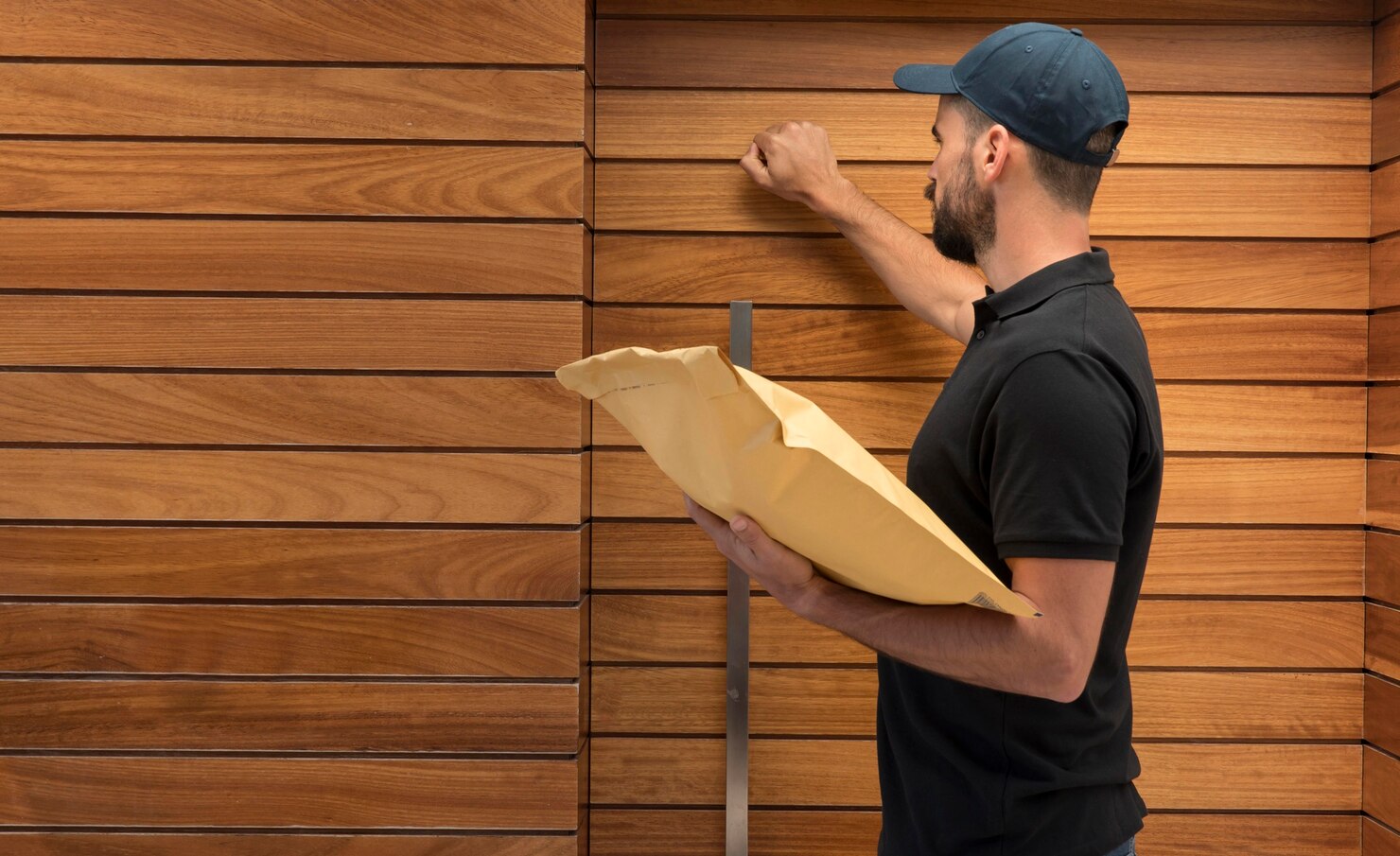
Editor’s Note: The opinions expressed here by the authors are their own, not those of impakter.com — In the Cover Photo: Chemical-Free Timber Cladding. Cover Photo Credit: Freepik