Impakter
  • Environment
    • Biodiversity
    • Climate Change
    • Circular Economy
    • Energy
  • FINANCE
    • ESG News
    • Sustainable Finance
    • Business
  • TECH
    • Start-up
    • AI & Machine Learning
    • Green Tech
  • Industry News
    • Entertainment
    • Food and Agriculture
    • Health
    • Politics & Foreign Affairs
    • Philanthropy
    • Science
    • Sport
  • Editorial Series
    • SDGs Series
    • Shape Your Future
    • Sustainable Cities
      • Copenhagen
      • San Francisco
      • Seattle
      • Sydney
  • About us
    • Company
    • Team
    • Global Leaders
    • Partners
    • Write for Impakter
    • Contact Us
    • Privacy Policy
No Result
View All Result
Impakter logo
No Result
View All Result
The Best-Case Scenario for Greenland Ice Melt Just Got Worse

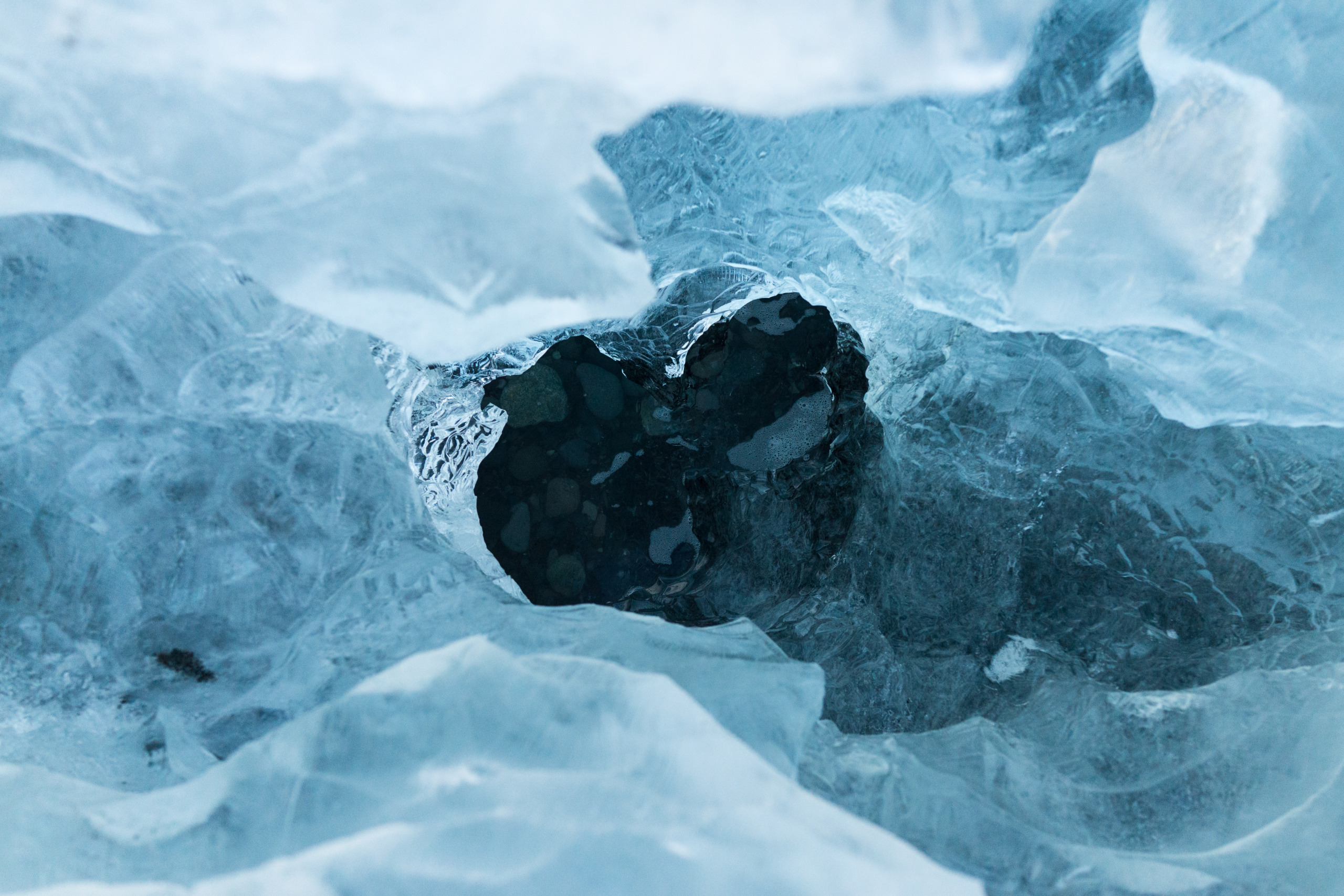
Iceland. Original public domain image from Wikimedia Commons

The Best-Case Scenario for Greenland Ice Melt Just Got Worse

In a warming world, scientists keep needing to revise their projections

Kate YoderbyKate Yoder
September 2, 2022
in Climate Change, Environment, Society
0

This story on Greenland’s ice melting originally appeared in Grist and is part of Covering Climate Now, a global journalism collaboration strengthening coverage of the climate story.


Greenland’s melting ice sheet will raise global sea levels by at least 26.9 cm (10.6 inches), twice as much as previous estimates, according to a new study published in the journal Nature Climate Change. That’s even if everyone stopped burning fossil fuels today.

Zombie ice from Greenland's ice sheet will raise global sea levels by 10 inches, a new study says. The frozen water is doomed to melt but is still solid right now.https://t.co/DjSl5uxAQE pic.twitter.com/Bbojg2WhFz

— The Associated Press (@AP) August 29, 2022

Researchers used a new method to calculate Greenland’s minimum ice melt, looking at so-called “zombie ice” that is doomed to disappear as glaciers receive less snow. The snow line in Greenland has been creeping higher as the world warms, exposing the ice on the island’s edges. Without that snow as a buffer, researchers say, this “dead ice” will inevitably thaw into the ocean, pushing up sea levels around the planet. They calculated that 110 trillion tons of ice are destined to melt, or 3.3% of the Greenland ice sheet.

Though the study didn’t provide an exact timeline, researchers expect that this will take place by the end of the century, or by 2150 at the latest, with consequences for coastal areas around the world.

The new research used real-world data rather than the computer models that are typically used to calculate how much — and how quickly — Greenland’s ice sheet will melt. That might explain why the projections were so much higher than previously forecast. A report last year from the UN Intergovernmental Panel on Climate Change, a panel of the world’s top scientists, projected a two- to five-inch rise by 2100, depending on how much more carbon gets pumped into the atmosphere.

The new research suggests that extreme temperatures could eventually trigger as much as 76 cm (30 inches) of sea-level rise.


Related Articles: The Arctic Is Warming 4 Times Faster Than Rest of the World – and More Quickly Than Previously Thought | Greenland Suspends Oil Explorations

Some glaciologists contend that previous models, though they’re complex, lack the level of detail to reflect the real-world changes that are taking place. The world has already heated up by an average of 1.2 degrees Celsius (2.2 degrees Fahrenheit) above pre-industrial temperatures, and the Arctic is warming four times faster than the global average.

“Every study has bigger numbers than the last,” William Colgan, a study co-author at the Geological Survey of Denmark and Greenland, told the Washington Post. “It’s always faster than forecast.”

This isn’t the first time that researchers have had to revise their projections based on the real-world consequences of climate change. In 2020, wildfires burned 10 million acres in the Western United States, closer to what scientists had projected for 30 years in the future. In June last year, a heat wave that broiled parts of the Pacific Northwest in 120-degree temperatures was more in line with what researchers pictured might happen later this century.

It’s not so much that climate change has been progressing faster than scientists predicted, but that scientists have sometimes underestimated the dire effects of the warming that’s already here, Daniel Swain, a climate scientist at the University of California, Los Angeles, told Grist last year.

Despite accusations of “alarmism,” the projections that come out of the peer review process usually tend to err on the side of caution. One paper from 2012 found that researchers had misjudged the risks of the potential disintegration of the West Antarctic ice sheet. So perhaps it’s not all that surprising that the danger posed by the Greenland ice sheet, too, might have been underestimated until now.


Editor’s Note: The opinions expressed here by the authors are their own, not those of Impakter.com — In the Featured Photo: Greenland ice melting. Featured Photo Credit: Wikimedia Commons. 

Tags: Climate ChangeGlobal warmingGreenlandMelting IceUN Intergovernmental Panel on Climate ChangeZombie Ice
Previous Post

The Threat of Atomic Catastrophe: The Saga of Europe’s Biggest Nuclear Power Plant 

Next Post

Russia’s Energy War on Europe: G7 Agrees on Price Cap for Russian Oil, Gazprom Delays Nord Stream 1 Reopening

Related Posts

Trump’s Foreign Policy - Credit: Gemini prompt
Culture

Trump’s Foreign Policy: The Art Of The Coup

SCENE: 2:05 A.M. The back room of a dive in Brooklyn. The air smells of stale hops and unchecked executive...

byClaude Forthomme - Senior Editor
January 11, 2026
ESG News regarding critical minerals and Greenland
Business

Greenland’s Melting Ice and the Race for Critical Minerals

Today’s ESG Updates Vast Resources Under Greenland's Ice: Untapped critical and rare-earth mineral deposits emerge, along with questions about mining...

byAriq Haidar
January 8, 2026
coal mine
Business

Can the War on Coal Still Be Won?

Ten years ago, I embedded in the war on coal. I spent a month inside the Sierra Club’s Beyond Coal campaign, watching an organization...

byCanary Media
January 6, 2026
Impakter’s Most-Read Stories of 2025
Society

Impakter’s Most-Read Stories of 2025

In 2025, as in previous years, Impakter readers turned in large numbers to stories examining climate change and pollution, environmental...

byImpakter Editorial Board
December 31, 2025
Year in Review: Trump 2.0 and the Environment
Editors' Picks

Year in Review: Trump 2.0 and the Environment

So much has happened this year. It seems that every day there is a new headline that is just as...

bySarah Perras
December 30, 2025
Is It Time to Recognize Climate Refugees?
Climate Change

Is It Time to Recognize Climate Refugees?

Climate displacement has become a defining feature of our present. Climate shocks now shape human (im)mobility, humanitarian crises, and political...

byDr. Shepherd Mutsvara - Research Fellow at the University of Münster, Germany
December 30, 2025
What’s Next for Sustainable Development in 2026
Climate Change

What’s Next for Sustainable Development in 2026

As governments confront rising misinformation, constrained budgets, and intensifying climate risks, the need for evidence-based policy has never been greater....

byInternational Institute for Sustainable Development (IISD)
December 23, 2025
women and extreme heat
Climate Change

Women and Extreme Heat: Simple Adaptations Make a Big Difference

One of the more damaging impacts of climate change is extreme heat. From Spain to Bolivia to Burkina Faso, unusual...

byKate Schecter - CEO of World Neighbors
December 23, 2025
Next Post
Russia’s Energy War on Europe: G7 Agrees on Price Cap for Russian Oil, Gazprom Delays Nord Stream 1 Reopening

Russia's Energy War on Europe: G7 Agrees on Price Cap for Russian Oil, Gazprom Delays Nord Stream 1 Reopening

Recent News

Diamond Painting Designs

7 Beautiful Diamond Painting Designs You’ll Love Working On 

January 13, 2026
ESG News regarding the DOJ’s investigation into Federal Reserve Chair Jerome Powell, Orsted’s U.S. offshore wind lawsuits, Stegra’s Non-Prime Steel Deal With thyssenkrupp, and Ghana repaid $1.47 of energy debt

US Federal Reserve Chair Under Investigation

January 12, 2026
Steakhouse in Tucson

7 Factors That Define a Premium Steakhouse Experience

January 12, 2026
  • ESG News
  • Sustainable Finance
  • Business

© 2025 Impakter.com owned by Klimado GmbH

No Result
View All Result
  • Environment
    • Biodiversity
    • Climate Change
    • Circular Economy
    • Energy
  • FINANCE
    • ESG News
    • Sustainable Finance
    • Business
  • TECH
    • Start-up
    • AI & Machine Learning
    • Green Tech
  • Industry News
    • Entertainment
    • Food and Agriculture
    • Health
    • Politics & Foreign Affairs
    • Philanthropy
    • Science
    • Sport
  • Editorial Series
    • SDGs Series
    • Shape Your Future
    • Sustainable Cities
      • Copenhagen
      • San Francisco
      • Seattle
      • Sydney
  • About us
    • Company
    • Team
    • Global Leaders
    • Partners
    • Write for Impakter
    • Contact Us
    • Privacy Policy

© 2025 Impakter.com owned by Klimado GmbH