That the Arctic has been warming faster than the rest of the world in previous decades is no news; as a group of Finish scientists writes in their new study, this is “considered a robust fact” nowadays and the phenomenon even has a name: Arctic amplification.
Previous studies on Arctic warming, however, proved that it has been warming either twice, more than twice, or three times faster than the world on average.
The new study by Finish researchers, published on Thursday in the Communications Earth & Environment journal, now reveals that the Arctic, since 1979, has been warming four times as quickly as the rest of the globe on average.
“We present evidence that during 1979–2021 the Arctic has been warming nearly four times as fast as the entire globe,” the authors write.
https://twitter.com/mikarantane/status/1557745255251726337?s=20&t=fil_uJEUt-umyv_mC3jpow
The study also found stark differences in the rates of warming between regions in the Arctic.
The sea north of Russia and Norway, for instance, has warmed up to seven times as quickly as the rest of the world.
“[W]e caution that referring to Arctic warming as to being twice as fast as the global warming, as frequently stated in literature, is a clear underestimation of the situation during the last 43 years since the start of the satellite observations,” the researchers write.
So what has changed since previous studies?
Calculating the rate at which the Arctic warms compared to the global average depends — “to some degree” — on how the Arctic is defined and the time period analyzed.
https://twitter.com/mikarantane/status/1557745288525164546?s=20&t=fil_uJEUt-umyv_mC3jpow
As University of Alaska Fairbanks researcher Thomas Ballinger explains, the way the Arctic region is defined is a “very, very relevant conversation for understanding Arctic change.”
An Arctic that is bigger would have more land, which would imply less warming as the temperature increase caused by the melting ice would have less of an impact on the region’s average temperature.
Some previous studies, like the one published in June in Geophysical Research Letters, defined the Arctic region as the area above 65 degrees latitude, which represents a bigger area with more land compared to the Arctic that the Finish researchers defined.
In their study, the Finish scientists “defined the Arctic properly” – as the area above the Arctic Circle, north of 66 degrees latitude.
https://twitter.com/mikarantane/status/1557745271878008832?s=20&t=fil_uJEUt-umyv_mC3jpow
As to the time frame analyzed, the new research considers data since 1979, the year when satellite sensors first made accurate temperature estimates possible.
The study’s lead author, researcher at the Finnish Meteorological Institute in Helsinki Dr. Mika Rantanen, says he believes other studies often used “older, possibly outdated” estimates instead of recent observations.
The June Geophysical Research Letters study, for example, analyzed data starting from 1960 — i.e., before satellite observations began.
“We were frustrated by the fact that there’s this saying that the Arctic is warming twice as fast as the globe,” Dr. Rantanen said. “But when you look at the data, you can easily see that it is close to four.”
His team also found that even the most advanced climate models we have today underestimate the true rate of Arctic heating, predicting warming about a third lower than what the observations showed.
“While the magnitude of Arctic amplification is dependent to some degree on how the Arctic region is defined, and by the period of time used in the calculation, the climate models were found to underestimate Arctic amplification almost independent of the definition,” Dr. Rantanen underlined.
Why is the Arctic warming faster?
Largely because of the Arctic amplification feedback loop: As warmer temperatures caused by human activities on Earth melt more Arctic ice (which reflects the sun’s rays and heat back into space), more of the Arctic Ocean absorbs sunlight, which results in more warming; and this, then, leads to more melting, which again leads to more warming.
Similarly, the melting of Arctic ice, which stores large amounts of methane, results in the release of this greenhouse gas and thus warms the atmosphere further. As the air around the Arctic becomes warmer as a result, more ice is melted and more methane is released, causing the temperature to rise again and melt more ice.
Related Articles: Climate Change in the Arctic for Dummies | The Effects of Arctic Warming on Indigenous Communities | The Next Virus “Hotspot”, the Arctic
The Finish researchers also identified reduced air pollution in Europe as a contributing factor to the Arctic warming over the past decade as well as “enhanced oceanic heating and ice-albedo feedback due diminishing sea ice, planck feedback, lapse-rate feedback, near-surface air temperature inversion, cloud feedback, ocean heat transport and meridional atmospheric moisture transport.”
But as Dr. Rantanen highlights, the most important factor causing faster Arctic warming is the relationship between the ice and water temperatures.
“The warming trends are quite strongly coupled with the decline of sea ice. They’re [the] highest over those areas where the sea ice has been declining the most. That’s the primary reason,” Dr. Rantanen explains.
Consequences: “What happens in the Arctic does not stay in the Arctic”
As WWF puts it, “what happens in the Arctic does not stay in the Arctic.” Indeed, the impacts of Arctic warming extend far beyond the region and don’t stop with humans either, affecting wildlife and biodiversity alongside global temperatures, coastal communities, and food and transportation systems, among other things.
For example, quicker Arctic warming implies faster sea-level rise, which affects biodiversity and marine ecosystems around the world as well as the coastal populations that depend on them for their livelihoods; currently, the Greenland ice sheet contains enough water to cause our ocean levels to rise by six meters.
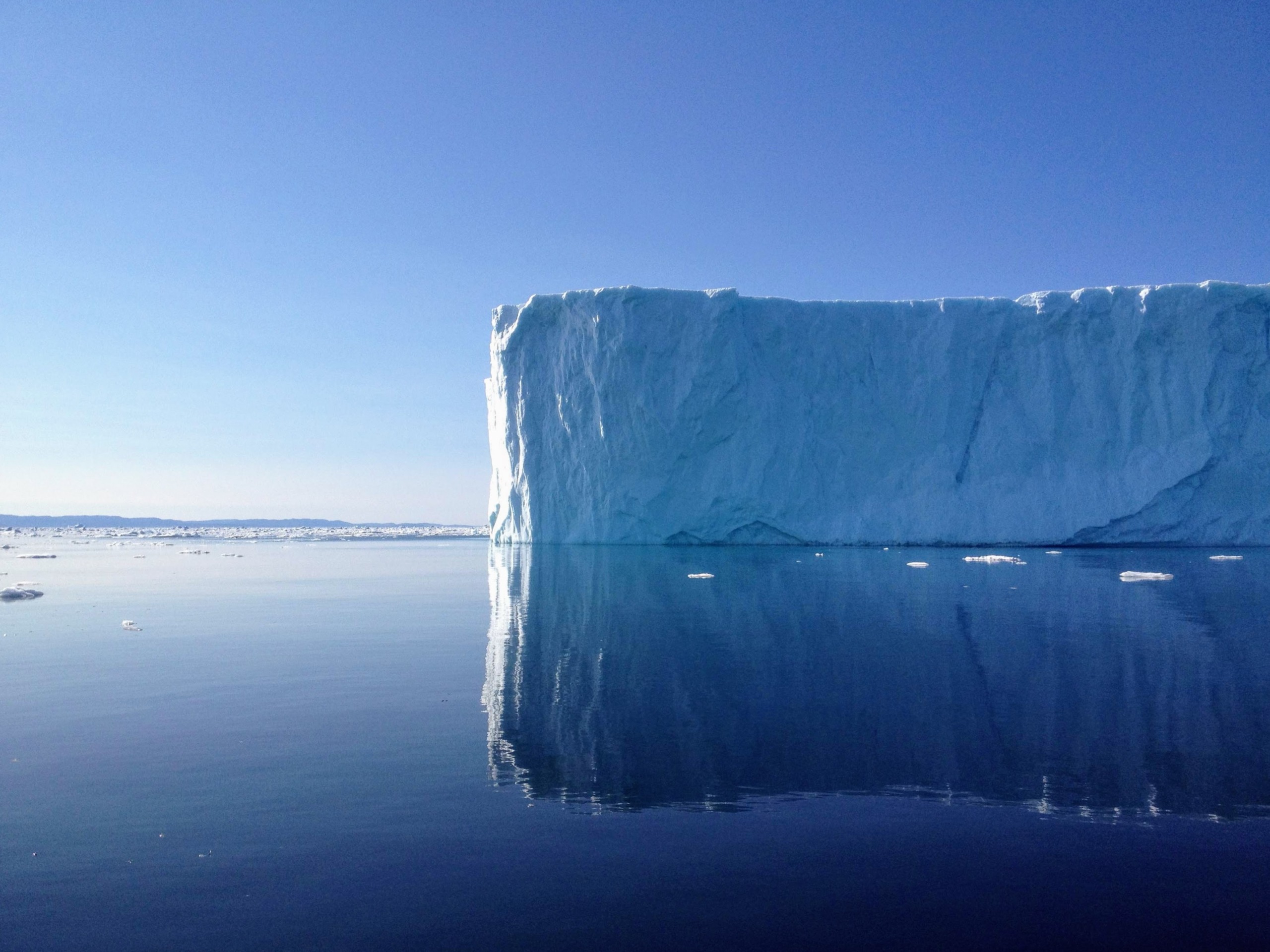
The melting ice is also resulting in increased GHG emissions, contributing to climate change and exacerbating its impacts globally, and is opening up new shipping routes for trade, which can only bring more emissions and more climate change.
As the New York Times reminds us, the warming of the Arctic also influences weather “like extreme rainfall and heat waves in North America and elsewhere.”
“By altering the temperature difference between the North Pole and the Equator, the warming Arctic appears to have affected storm tracks and wind speed in North America,” writes the New York Times.
This effect of Arctic warming on weather, one of the Finish researchers warns, could only get worse unless we stop accelerating the rates of the warming.
And if we continue with business-as-usual, which implies losing Arctic sea ice at a rate of nearly 13% per decade, the Arctic could be ice-free by 2040 already.
If emissions continue to rise unchecked, the Arctic could be ice-free in the summer by 2040. But what happens in the Arctic does not stay in the Arctic. Learn how melting sea ice is already impacting us: https://t.co/309XrX2aza pic.twitter.com/CifGn6faFG
— World Wildlife Fund (@World_Wildlife) April 11, 2019
As NASA climate scientist Peter Jacobs writes in his 2021 report with similar results, “[i]t is essential that the scientific community not only accurately understand but also convey the scale of Arctic warming, which is occurring nearly twice as rapidly as commonly described.”
Editor’s Note: The opinions expressed here by the authors are their own, not those of Impakter.com — In the Featured Photo: Aerial view of Arctic Icebergs. Featured Photo Credit: Annie Spratt.