
Today’s ESG Updates
- Big Oil Refuting Climate Change Responsibility: The U.S. Supreme Court opens its new term with a crucial case, as Suncor and Exxon seek to end lawsuits holding them accountable for their role in causing the climate crisis.
- Green Party Eases Opposition to Nuclear: The UK party — one of whose founding principles is opposing nuclear weapons — has had to acknowledge the technology’s efficiency and necessity amid the climate crisis.
- Social Media Fights British Regulators: Teams from some of the field’s largest tech companies, including TikTok, Meta, and X, have called disclosure requirements overwhelming and unjustified.
- France & Germany Weigh Import Caution: The two EU powers are discussing granting Brussels new powers to block imports that may pose an economic or security threat.
Big oil to argue their innocence in climate crisis case
The U.S. Supreme Court is about to start the new term, with big oil companies trying to end lawsuits seeking accountability for the climate crisis. In Suncor Energy Inc. v. County Commissioners of Boulder County, local representatives demand that the oil giants Suncor Energy and ExxonMobil share the costs that climate change has imposed on regular taxpayers. Company representatives argue that federal law prevents state courts from hearing the case.
If the Supreme Court sides with Boulder County, the case will proceed in state court, while siding with the fossil fuel industry could trigger a chain reaction of predetermined climate-case decisions.
Boulder officials claim in Colorado court that in 2018, Suncor and Exxon were not sharing their full perspective on the damage of burning fossil fuels. The Colorado Supreme Court even allowed Boulder’s case to reach trial in state court, but industry representatives appealed that decision. The Trump administration sided with the oil companies and asked for 10 minutes of argument time. A ruling is expected next summer.
Klimado – Navigating climate complexity just got easier. Klimado offers a user-friendly platform for tracking local and global environmental shifts, making it an essential tool for climate-aware individuals and organizations.
UK’s Green Party no longer opposes nuclear energy
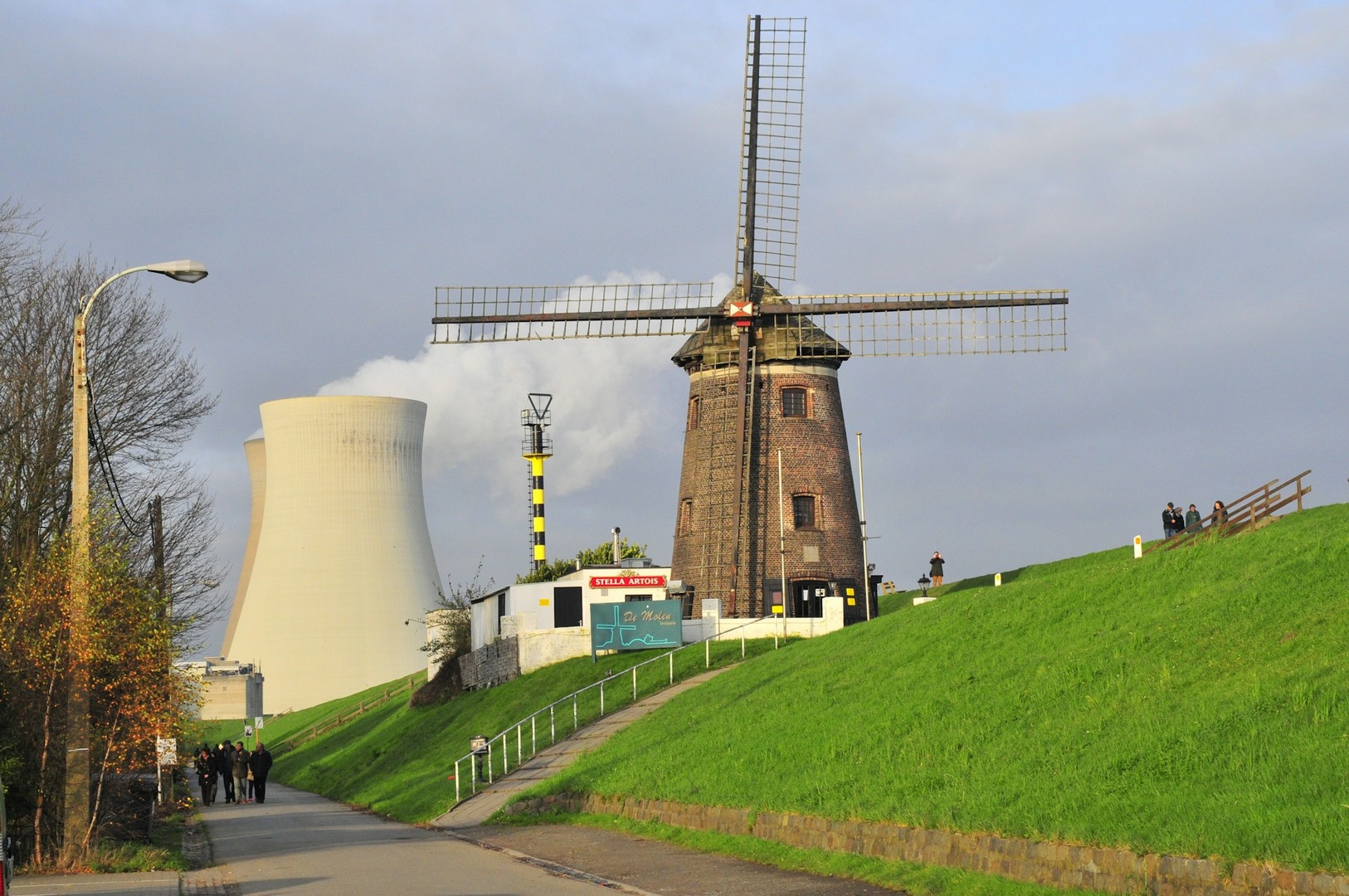
Green Party members have voted to drop the party’s position on nuclear phase-out, reflecting a shift in energy policy. The motion commits the Green Party of England and Scotland to treat nuclear projects as equal alongside other low-carbon tech. Their electricity policy, however, still favors wind and solar power. New nuclear reactors would be considered case by case as new projects come up.
Green MP Carla Denyer admitted that nuclear has a role in a country’s move toward a renewable-based electricity system. She sees great potential in existing nuclear plants, since most of their emissions are in the past, as construction is the most emissions-intensive part of nuclear energy. That leads to caution on new projects of this kind.
Green’s previous opposition also rested on its founding principle against nuclear weapons. The unfolding climate crisis has become a starker problem for the party.
Related Articles
Here is a list of articles selected by our Editorial Board that have gained significant interest from the public:
Largest tech names challenge UK regulators

Meta, TikTok, and X oppose Ofcom, a British regulator, over the amount of data it demands under the country’s new online safety regime. It’s one of the first loud concerns over the Online Safety Act from 2023. It had set tougher standards for social media platforms to protect users, specifically children, from harmful and illegal content.
February brought information notices from Ofcom. Tech companies had to disclose their moderation metrics: how many posts faced deletion or restriction and how many users were exposed to harmful content. In response, platforms complained that the notices were a major regulatory burden without a clearly defined purpose. Ofcom insisted the information was actually necessary for evaluations.
A court hearing on the issue concludes on Wednesday, and a separate case over fees and penalties from Meta is scheduled for next week.

France and Germany take a firm stance on threat-posing imports

A joint letter from Emmanuel Macron and Friedrich Merz calls for action on trade threats. It states that the European Commission needs the power to act decisively on trade confrontations, while making it harder for EU capitals to block action. It may be part of the preparation for Trade Commissioner Maroš Sefčovič’s talks in Beijing this week, which aim to rebalance the EU’s trading relations with China.
Merz and Macron claimed in their joint position paper that the EU’s existing trade defense practices are not sufficient in the modern market. It proposes a lean, non-bureaucratic approach to complement the trade frameworks.
The joint letter doesn’t point fingers, but it clearly addresses the bloc’s dependence on China, valued at a €1 billion trade deficit every day. The existing Anti-Coercion Instrument gives the Commission powers to restrict imports, but only after months of investigations and with a qualified majority of EU governments in support. In practice, the instrument barely resembles a lean decision-maker, and that’s a proposed change in a nutshell.
Editor’s Note: The opinions expressed here by the authors are their own, not those of impakter.com — Cover Photo Credit: Wikimedia Commons