
Today’s ESG Updates
- Google and Apple’s Verification Nightmare: Facing an enormous number of lawsuits, tech companies have begun lobbying for influence in how age-verification laws are being written. Companies aim to stop private lawsuits by passing responsibility for prosecution to state Attorneys General. Driven by ‘privacy’ claims and First Amendment infringement for minors.
- Russia Latches on to Chinese E.V.s in Time of Shortage: As the war in Ukraine takes an increasing toll on Russia’s ability to produce and procure fuels, fuel shortages mount. Government subsidies and incentives have created a boom in electric vehicle sales.
- Australian Climate Secretary Speaks Out: Fighting the allegation of impartiality, in what is supposed to be an apolitical role, Australia’s secretary for Climate Change, Energy, the Environment and Water seeks to fight climate misinformation.
- Trump Brokers Deal With Europe and G7: Trump, threatening diesel export bans on a heavily reliant Europe, has pushed for a release of emergency diesel stocks from European countries.
Apple and Google push for age verification laws
Tech companies are threatened by thousands of lawsuits, many of them involving platform safety and impact on children’s mental health. Lobbyists for Google and Apple in Washington have begun an effort to push state lawmakers to adopt online safety laws for minors that would shield them from responsibility.
The fight centers on the App Store Accountability Act, which would require app stores to verify users’ ages and obtain parental consent before accessing content.
In Arizona, Google is pushing for a version of the bill that mirrors California’s age-verification law, the Digital Age Assurance Act. The DAAA makes operating system providers, such as Apple and Google, responsible for verifying users’ age. However, the DAAA also only allows the state attorney general to bring civil penalties against the operating systems. This shields them from civil claims, barring private lawsuits.
After a version of the ASAA was introduced in Arizona, a lobbyist who said he was working with Google and Apple circulated a bill dubbed the Mobile Ecosystem Responsibility Act, or MERA. The bill states that only the Attorney General will have authority to enforce the act, and that nothing in the bill can “serve as the basis for a private right of action.”
But state attorneys have not shied away from bringing litigation against tech companies. In a case handled by New Mexico’s Department of Justice, a state judge ordered Meta to pay $567 million on top of a $375 million jury verdict holding the company liable for child endangerment. 47 states won a separate case against Meta, holding them liable for $17 billion, forcing them to implement changes supporters say would make the platforms safer for minors
The Kansas Chamber of Commerce, a group that represents business interests, suggested similar alterations to the ASAA. But Apple lobbyists questioned who would be held liable under the law, and pushed for some responsibility to move to app developers. On the other hand, companies such as Facebook’s Meta have supported the legislation placing the liability on app stores rather than apps such as Meta’s. Meta’s lobbyists contacted Georgie state Senator Bill Cowsert, the ASAA’s lead sponsor in that state, to offer talking points and background information to support the bill.
Versions of the ASAA have passed in Utah, Texas, and Alabama. But it has been opposed through lawsuits from tech industry groups claiming it restricts minors’ First Amendment rights, limiting free expression without parental consent. Bills pitched by Google and Apple also rely on self-identification for age-restricted apps, methods opposed by child safety activists. But the AASA requires methods that include restrictions on children obtaining access to certain apps without parental consent. Tech companies have also vocalised privacy concerns over who holds verification information, a factor that supports pushing verification onto app stores themselves.
An Apple spokesperson stated the company is “committed to protecting children online while maintaining our long-standing commitment to protecting privacy.” Google’s senior director of government affairs and public policy stated: “We are committed to empowering parents, protecting privacy, and keeping young people safe online, and we welcome legislation that furthers those goals.”
Klimado – Navigating climate complexity just got easier. Klimado offers a user-friendly platform for tracking local and global environmental shifts, making it an essential tool for climate-aware individuals and organizations.
Chinese E.V.s become a favourite in fuel-starved Russia
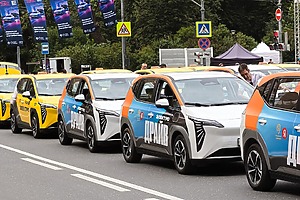
Russia has long been a top oil producer. But shortages, prompted by Ukrainian strikes on fuel refineries, have strained the government into allowing the sale of low-quality fuel, which can cause early breakdown of some cars. According to a crowdsourced tool, Gdebenz, last Friday only 46 percent of gas stations across Russia were even selling fuel. This has dropped as low as a quarter earlier this year due to Ukrainian military action on refineries. These conditions have motivated the country to turn to electric vehicles, despite long distances between cities.
Russia has slowly become more E.V. friendly since 2022, when the government began implementing subsidies for fast-charging stations and grid connections. From 2023, building codes required infrastructure for Electric Vehicles in new buildings. The number of public charging stations has ballooned from 1,500 in 2022 to 8,000 this year. In many regions, fully electric vehicles are now exempt from the ‘transport tax’ paid by owners of other vehicles. In Moscow and other cities, electric vehicles do not have to pay the exorbitant parking fees, as high as $9.50 per hour. Electric vehicles are eligible for government subsidies and can skip toll fees on most highways.
E.V. sales have exploded in other parts of the world, largely because of the prolonged war in Iran. E.V. are set to account for 29 percent of new car purchases, the highest ever, and sales have risen in more than 90 countries, including Brazil, Australia, India and South Korea.
Many Russian car factories used to produce for Western brands, but after the beginning of the war in Ukraine, they were abandoned. Now they assemble Chinese cars. By the end of September, vehicles capable of running without gas reached 11.5 percent of the Russian car market.
Related Articles
Here is a list of articles selected by our Editorial Board that have gained significant interest from the public:
Chief climate public servant says Australia will tackle misinformation
Mike Kaiser is the secretary of the Department of Climate Change, Energy, the Environment and Water, a department the right-wing nationalist party One Nation has called to be abolished. The more realistic centre-right federal opposition wants to repeal much of the Kaiser Department’s work. But as a public servant, Kaiser’s department is supposed to be neutral, this is despite Kaiser’s previous role as an Australian Labor Party official. He has stated he thinks public servants like himself “should be more vocal in the public arena.”
Kaiser is leading the fight against misinformation. A problem he says is “slowing the renewable energy rollout, which is demonstrably to the detriment of the country and energy.” In Australia, public servants are apolitical; legislation requires secretaries and staff to be impartial or face consequences. In 2019, a former public servant was found to be lawfully fired over partisan social media posts on immigration made under a pseudonym.
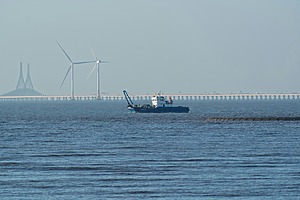
Kaiser’s department has set up a cross-agency work group on the subject of climate misinformation. Prominent examples of misinformation include a claim made by President Donald Trump that offshore wind farms kill whales. Addressing claims of impartiality, Kaiser responded that “There’s a red line that you can’t cross as a public servant but it’s pretty bloody obvious where it is, it’s hard to cross it.”

G7 Countries Will Release Oil and Fuel Reserves
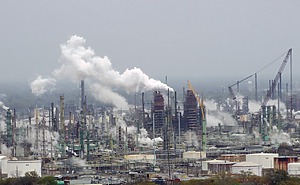
Under the leadership of Donald Trump, G7 countries agreed on Friday to release 100 million barrels of diesel and crude oil from emergency reserves. Countries also committed to refrain from imposing export restrictions.
The Trump administration warned of a potential ban on US diesel exports unless the European Union released emergency stocks. Europe is increasingly reliant on US diesel and has increased imports after supply disruptions from the Gulf as a result of the Iran war.
Trump later told reporters at the White House that the US would not impose a diesel ban, and that it was never really under consideration. This is despite Trump’s mentions of the possibility in the last few weeks and his expressed personal support of the ban.
The release will begin immediately lasting four months. So far, there is no official breakdown of what amounts or fossil fuel products that constitutes. EU governments discussed on Friday a proposal by France for European countries to release 50 million barrels of diesel, 17% of the EU’s total emergency stocks, according to three sources familiar with the discussions.
Editor’s Note: The opinions expressed here by the authors are their own, not those of impakter.com — Cover Photo Credit: Sanket Mishra