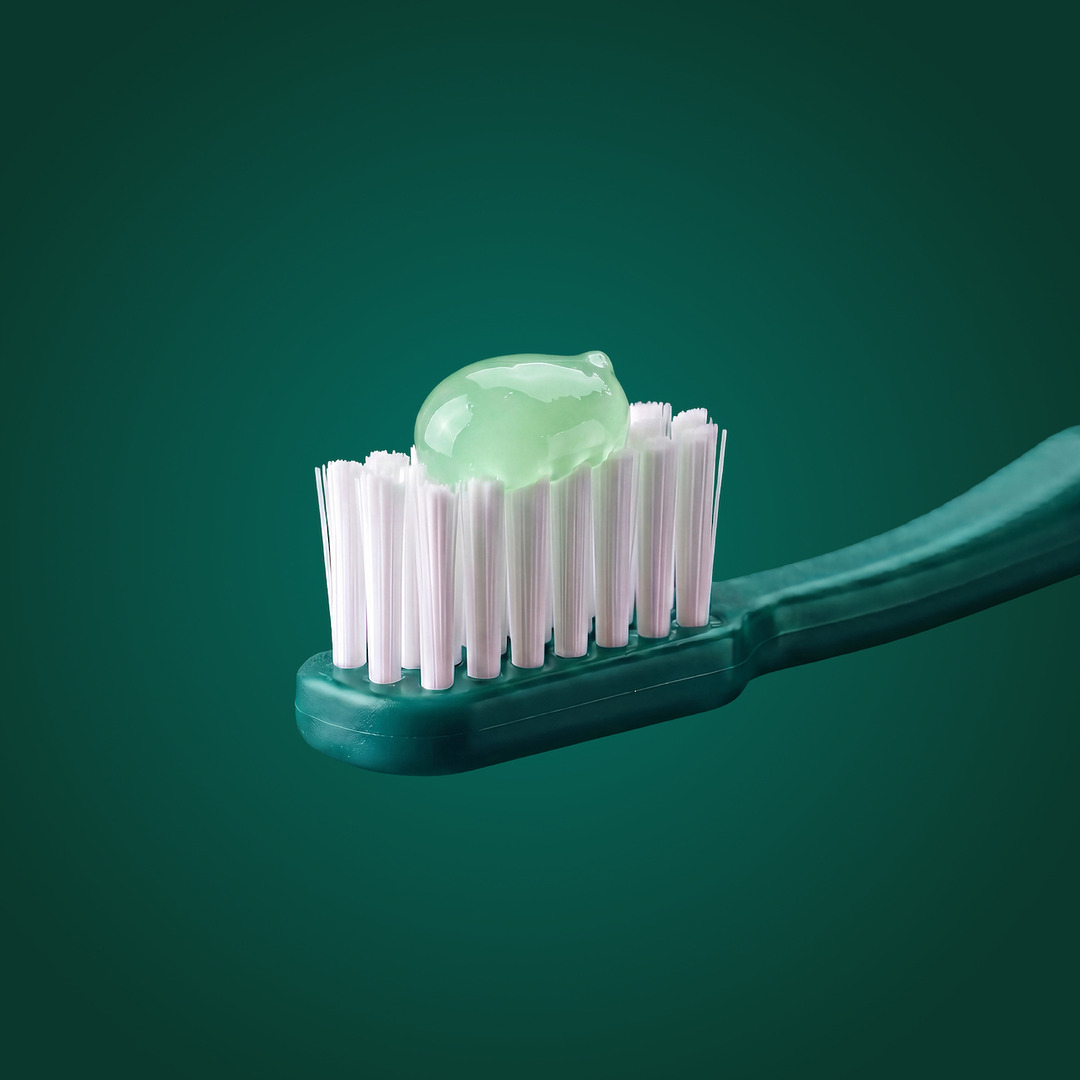
For most of my career my job as a surgeon has been to rebuild people’s faces, jaws and teeth, not to think about toothpaste. Sensitive teeth were never meant to be my problem. But this is one of those small, everyday pains that nags at you once you notice it, and the more I looked at how we treat it, the more it bothered me.
Tooth sensitivity is one of the most common complaints in a dental surgery, and one of the least well served. In research we commissioned before launching, 87% of UK adults said they had felt it at some point. The pain is real, it is widespread, and the way we treat it has barely changed; most sensitive toothpastes on the shelf today rely on chemistry that was settled in the 1990s. So this is really a story about a gap I kept tripping over, and the research that came from an unlikely direction to fill it.
Why sensitive teeth are so hard to treat
To understand the gap, it helps to know what causes the pain. Under the enamel, dentine is full of microscopic channels called dentinal tubules, which run towards the nerve. When enamel wears down or the gum recedes, those tubules open to the mouth. The most widely accepted explanation for sensitivity, the hydrodynamic theory, is that fluid moving inside these open tubules triggers the sharp, stabbing pain we feel from something hot, cold, sweet or acidic.
Existing products tackle this in one of two ways. Some numb the nerve. Others slowly block the tubules over days or weeks of repeated brushing. Both can help. The problem is that the protection is often short-lived. The layer that blocks the tubules tends to wash away, sometimes after a single sip of water. Reviews of the evidence make the same point: tubule occlusion is the mainstay of treatment, but the long-term result is uncertain or takes many weeks to see an effect.
That is the gap. Patients have been managing their sensitivity, not resolving it. They reapply, they avoid cold drinks, they wince through an ice cream, and they assume that is simply how it has to be. It does not have to be that way, but nobody had given the underlying material a serious rethink.
The research came from a different field
I did not set out to make toothpaste. My research was in bone grafting, finding better ways to help the body rebuild bone and teeth. The starting point for OZEN was not a dental lab at all. It was a conversation with my brother, who is a sculptor. I was helping him look into unusual materials for his work when we came across aerogels.
Aerogels are among the lightest solid materials known. They are up to around 99% air, with a structure so fine and porous that they are sometimes called “frozen smoke.” They were developed decades ago and adopted by aerospace engineers for their insulating properties. NASA has used them to insulate spacecraft and even to capture comet dust. What caught my attention was not the space history but the chemistry. An aerogel has an enormous internal surface area and is highly reactive, which makes it very good at carrying and delivering other materials.
I invented an aerogel of my own for bone grafting. It could rapidly produce the same mineral that bone and teeth are made of, helping them heal and rebuild. Seeing that work is what turned my mind to sensitive teeth. If an aerogel could support the body’s own mineral repair in bone, could the same principle protect the surface of a tooth and hold that protection in place?
What the research produced
Over roughly ten years of research and development, we developed AeroGraft, an aerogel designed for the mouth. The idea is straightforward, even if the material behind it is not. When it meets saliva, it reacts and helps seal the open dentinal tubules. At the same time it releases calcium and phosphate, the natural building blocks of enamel, forming a protective mineral layer over the exposed surface. It behaves less like a paste that sits on the tooth and more like a varnish that builds up each time you brush or apply it, and it holds up in acidic conditions rather than dissolving away.
Two things mattered to me in the research: speed and staying power. In our testing the technology acted many times faster than existing sensitivity formulas, offering protection within minutes rather than days. And because the layer is designed to build up and resist acid, it lasts rather than washing off at the first drink. In a consumer trial of 1,140 adults, 84% said it outperformed the sensitive toothpaste they were already using. As far as I am aware, it is the first sensitivity technology to hold a live patent in nearly thirty years. That work became the basis of the brand I co-founded, OZEN.
Consumer health deserves the same evidence bar as medicine
My frustration as a clinician was never that older treatments did nothing. It was that the category had stopped asking whether it could do better. Sensitivity was treated as a minor, solved problem, so the formulas stayed the same and the marketing did the heavy lifting. Consumer health should be held to the same standard we expect in medicine: claims that rest on a clear mechanism and on data, not on repetition. If a product says it protects your teeth, it should be able to show what it does and how long the effect lasts.
Related Articles
Here is a list of articles selected by our Editorial Board that have gained significant interest from the public:
That is also why cross-disciplinary research matters. The answer to a stubborn dental problem did not come from dentistry. It came from materials science, from aerospace, and from a project on bone. Progress in health often works like that. The useful idea is sitting in a neighbouring field, waiting for someone to carry it across.
The cost of leaving it alone
Sensitivity sounds trivial to people who do not have it. It is not trivial to those who do. I have seen patients turn up at A&E because the pain was severe enough to frighten them. Treating the cause rather than masking the symptom is a modest ambition, but it changes something real in people’s daily lives. The science to close it already exists. It just needed someone to look in a different direction, and to insist that “good enough” from the 1990s is no longer good enough now.
I have spent ten years on this, longer than on anything else in my working life. I did not expect a sculptor’s studio and a bone-grafting project to lead me to a tube of toothpaste, but I am glad they did. The people who live with this deserved someone to take it seriously, and that, in the end, is the whole reason I kept going.
Editor’s Note: The opinions expressed here by the authors are their own, not those of impakter.com — Cover Photo Credit: OZEN.