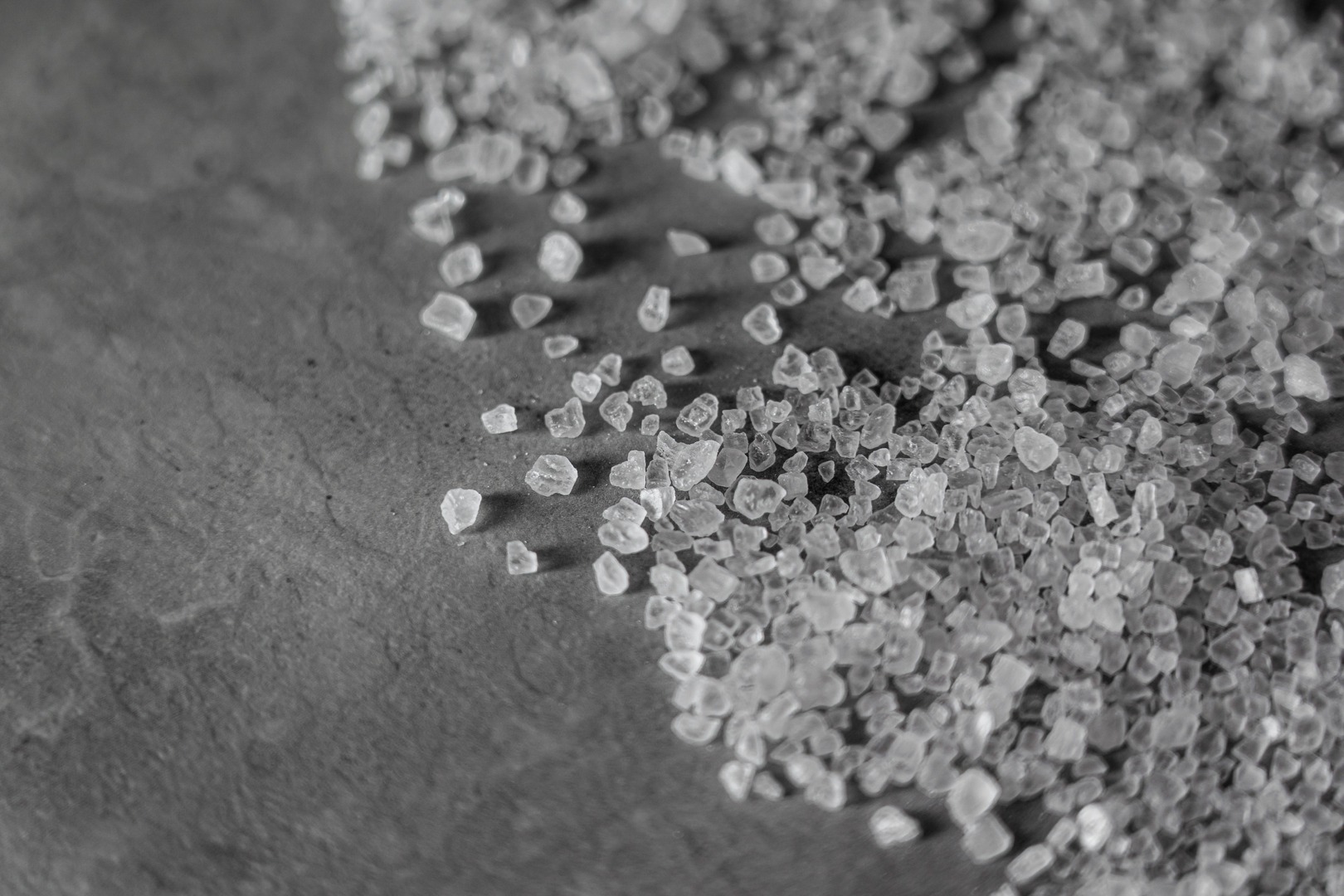
Across many regions, the growing dependence on ultra-processed foods, sugary beverages, and highly salted products has become a significant health concern. That said, there is good news in providing two important micronutrient needs via salt. After decades of development and steadfast commitment by advocates and experts, common table salt can be fortified with both iron and iodine. Remarkably, the per-person cost to do this is only 15 to 20 U.S. cents a year. Iron deficiency anemia remains the most prevalent nutritional disorder worldwide.
This needs to be widely acknowledged and supported by the public and private sectors — and consumers. Despite income growth in several parts of the world, anemia rates have not declined significantly. It is a story worth telling but also serves as an example of how something worthwhile can happen.
A brief micronutrient history
In 2012, the Copenhagen Consensus Center organized a panel of expert economists, including four Nobel laureates, and asked them to analyze the costs and benefits of different approaches to tackling the world’s major problems and determine the most effective ways to spend a hypothetical $75 billion. At the top of the list of sixteen worthy investments, ahead of agricultural, educational initiatives, and other public health investments, was “bundled micronutrient interventions to fight hunger and improve education.”
Salt has long been recognized as an excellent vehicle for delivering iodine, preventing goiter, and supporting fetal and infant development. Nearly 80% of the table salt consumed worldwide is iodized. The universal, consistent use of salt makes it an unparalleled vehicle for delivering nutrients across populations. Another important micronutrient, iron, can now also be delivered through salt, ensuring steady intakes of iron across entire populations
Over the last five years, Double Fortified Salt (DFS) has generated growing interest and recognition of the benefits and acceptance by the public sector, the private sector, and consumers. DFS can build on the infrastructure already in place in most countries to iodize salt and deliver iron and other micronutrients at incrementally small cost.
Double-fortified salt
Double-fortified salt is table salt that contains the standard iodine fortification (usually as potassium iodate or potassium iodide) plus an added, bioavailable form of iron — commonly microencapsulated ferrous fumarate or ferrous sulfate — engineered so that the iron does not react with iodine or cause unacceptable sensory changes in the salt or foods cooked with it.
The objective is for an everyday, universally consumed food item (salt) to serve as a reliable, predictable vehicle for supplying both iron (to prevent iron deficiency and iron-deficiency anemia) and iodine (to prevent iodine deficiency disorders, such as goiter and cognitive deficits). Typical DFS formulations aim to supply roughly 20-30% of daily iron needs through normal salt intakes, depending on the formulation and the population’s salt consumption, and the full recommended daily iodine requirement.
Health benefits
Providing a steady daily dose of bioavailable iron to populations that consume iodized salt — 89% of the global population consumes iodized salt — reduces harmful iron deficiency, particularly important among women of reproductive age and young children. There’s also evidence that it can improve cognition among children. Iodized salt — already a global public-health success — continues to prevent iodine deficiency disorders in DFS.
Iron deficiency anemia (IDA) in children and adolescents affects attention and learning; thus, reducing IDA can boost educational performance. For adults, reduced anemia is associated with improved work capacity and productivity. And economic modeling suggests that population-level improvements in iron status can yield gains in livelihoods in low- and middle-income settings where anemia constrains economic output.
And there is the very pragmatic benefit in delivering two micronutrients through one staple food: It reduces delivery complexity and supply chain costs compared with separate supplementation campaigns.
This can be achieved even as we aim to reduce salt consumption to reduce hypertension and other health risks. As salt intake decreases, nutrient dosages can be adjusted to ensure adequate intake.
Where double-fortified salt is available now or planned
India is the single largest and most prominent adopter of DFS. Multiple Indian states have integrated DFS into social safety net programs and public distribution systems (PDS). Evaluations show high uptake where DFS has been distributed through such channels; for example, programs in Gujarat and Madhya Pradesh now reach millions of beneficiaries with positive reports on acceptability.
In addition to the free public programs, thanks to the Government’s subsidy, the cost of adding iron to iodized salt to consumers at the market is negligible (one additional U.S. cent per year). India’s regulatory agencies have developed PDS standards and guidance for DFS formulation and quality control (the latter is problematic in some areas), helping to scale local production and procurement. In short, India is currently the largest consumer market for DFS.
Beyond India, several other countries have been part of DFS pilots, research studies, or program proposals, including:
- Bangladesh and Indonesia: Strategic plans have been developed by nutrition agencies and funders in both countries. Indonesia has begun testing with a high-quality product.
- Kenya and parts of East Africa: Small-scale commercial introductions and partnership projects have been carried out. Some regional producers and multinational actors have tried to introduce fortified salt variants.
- Nigeria and other West African countries: Several countries are considered potentially high-impact markets for a commercial product.
- Latin America: Argentina already has double-fortified salt in the market. Other countries like Peru are also considering introduction.
Private sector engagement
As indicated by the African examples above, the commercialization of double-fortified salt is being pursued in some countries, with or without its inclusion in subsidized or free public distribution programs. The global salt industry is a mix of large, diversified mineral and chemical companies and national/regional producers. Major multinational companies that produce salt include:
- Tata Chemicals (India) — major producer of table salt and promoter of fortified salt products in India and selected export markets. Other large table salt producers in India are also entering the market in a limited manner.
- Morton Salt, Cargill, Compass Minerals — large producers in North America with iodized salt portfolios; their product lines emphasize iodized salt but not yet DFS on a large scale.
- K+S, Salins Group, ICL and other regional players — key suppliers in various geographic areas and potential fortification partners. Their product lines at present span industrial, de-icing, and food-grade salts.
Without question, the corporation most actively involved in DFS is Tata Chemicals/Tata Salt, engaged in India and elsewhere. Beyond its activities in India, Tata has pursued fortified salt products in East Africa and partnered with governmental nutrition agencies to support public subsidized or free distribution.
In other countries, DFS production is currently concentrated in a few specialist mills or pilot plants, not integrated into conventional table-salt divisions of large global companies. The reasons are complex, but one impediment is that DFS requires specialized encapsulation and mixing technology, as well as its own packaging and marketing.
Another facet is that companies make micro-encapsulated iron premixes, testing equipment, and packaging machinery. These are also commercial partners that enable DFS production and often work with salt mills to implement the technology and quality control required for DFS.
New expansion plans
In November 2025, Tata Chemicals’ board approved significant capital expenditures for capacity expansion in India (in the states of Gujarat and Tamil Nadu), reinforcing the company’s domestic manufacturing footprint and its ability to leverage its fortified salt lines among other products.
Additionally, some market research firms are forecasting growth in global fortified salts (including DFS) over the coming decade, viewing DFS as a niche within table salt markets, especially in countries with public fortification policies or above-average consumer demand for fortified foods.
In recent years, technology has been developed and tested to enable the addition of micronutrients to salt: Vitamin B12, Folic Acid, and Zinc. Ethiopia has already scaled up a salt fortified with iodine and folic acid.
Related Articles
Here is a list of articles selected by our Editorial Board that have gained significant interest from the public:
Public and private sector strategies
There have been various related efforts to support DFS, including a joint initiative by the Food and Agriculture Organization of the United Nations (FAO) and the World Health Organization (WHO) to support community practice efforts to reduce anemia.
At country level, DFS has historically relied on government procurement for social safety nets (school meals, public distribution systems, maternal/child welfare programs). Government purchases for these purposes create predictable volumes that attract investment in production lines and distribution — for producers who meet quality and price requirements.
Much of the DFS scale-up to date has involved donor funding, technical assistance, and public-private partnerships. Donors and technical agencies have helped underwrite pilot factories, support regulatory development, and have sometimes subsidized initial procurement to reduce private investment risks. Such collaborations have helped the transition from pilot to larger-scale production and distribution. Notable partners included Nutrition International (previously the Micronutrient Initiative), GAIN, Tata Trusts, Gates Foundation, Global Affairs Canada, and academic research organizations.
Another potential market for DFS is health-conscious consumers in economically more advantaged countries. This approach has proved somewhat challenging to date because consumers rarely distinguish among salt varieties and because the sensory acceptability of a new product must be nearly identical to ordinary salt. Where retail demand can be established, however, private brands will be able to build markets, especially in urban centers with higher purchasing power.
What this means now and in the future
Double-fortified salt, as with many newer products, sits at the intersection of nutrition science, industrial technology, and public policy. Its promise — adding iron to an already universal vehicle for iodine delivery — is supported by a body of clinical and programmatic evidence indicating that DFS can reduce iron deficiency and maintain iodine sufficiency when produced and distributed under appropriate quality control.
The pace and breadth of future expansion will depend on four linked inter-factors:
- technological improvements and standardized quality control that reliably prevent discoloration and nutrient loss;
- predictable demand, most reliably created through government procurement for safety nets;
- affordable pricing and financing mechanisms to bridge the annual 15-20 U.S. cents per person differences between DFS and salt that is only iodized, and
- partnerships among government, donors, technical agencies, and industry to underwrite initial scale-up and monitoring.
If challenges to technological improvements, predictable demand creation, affordable pricing, and partnerships between the public and private sector entities are addressed, DFS will, most importantly, become a durable, cost-effective component of integrated micronutrient strategies in many countries still grappling with iodine and iron deficiencies and iron-deficiency anemia.
** **
James Levinson, former Director of MIT’s International Nutrition Program, Professor at the International Food and Nutrition Center at Tufts University, former Head of USAID’s Office of Nutrition, and (together with Alan Berg) one of the earliest published advocates of iron fortification of salt, contributed to this article.
Editor’s Note: The opinions expressed here by the authors are their own, not those of impakter.com