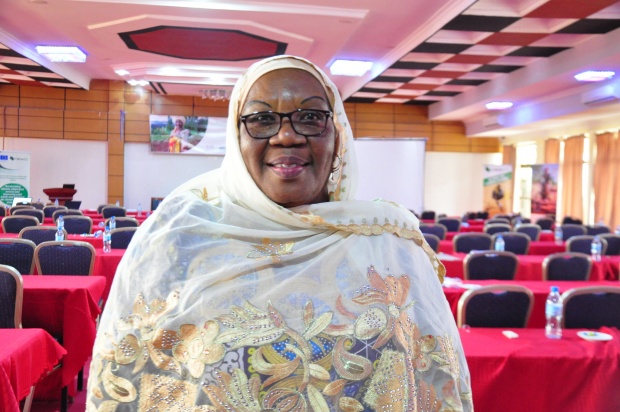
 Tanzania’s Women Parliamentarian Group came together to explore pathways for mainstreaming gender into climate adaptation planning.
Article in collaboration with: CGIAR Research Program on Climate Change, Agriculture and Food Security (CCAFS) seeks to address the increasing challenge of global warming and declining food security on agricultural practices, policies and measures through strategic, broad-based global partnerships.
Climate change has been described as a wicked problem, with complexities, feedback loops and tipping points that can cause damage in the most undeserving of places. Across Tanzania, the climate crisis manifests in the form of higher temperatures, an increase in the frequency and magnitude of droughts and floods, and rising sea levels.
Related topics: East African Policy Makers Advocate for Gender in Climate Policy – Political Empowerment of Women in Africa: Influence or Number? – Specialized Economic Zones (SEZs) in Africa: Exporting Production, Performance, and Perils
Women face disproportionate impacts of the climate emergency, due to unequal rights and socio-economic status compared to men, meaning climate impacts will widen the gender gap. The World Bank estimates the gender productivity gap in Tanzania alone is $105 million. This gap could be decreased if national policies, programs, and plans enable women to use agriculture to lift themselves and their families out of poverty and contribute to economic growth, as well as through targeted adaptation and mitigation measures that are gender-responsive. The Bank of America predicts that such approaches could have positive economic impacts, estimating that achieving women’s equality could boost global gross domestic product (GDP) by up to 31 percent.
Mainstreaming gender and climate
In light of these challenging dynamics, Members of Parliament (MPs) came together in September 2019 for an awareness training on gender mainstreaming in climate change adaptation in Tanzania, with the objective to:
- Enhance the knowledge of MPs on gender to facilitate the smooth implementation of the established gender-sensitive policies, plans and strategies at national and sub-national levels.
- Provide an opportunity for MPs to understand the critical role gender plays in implementing climate change actions.
- Strengthen the knowledge of MPs regarding methods and tools that can facilitate the implementation, monitoring and evaluation of gender-responsive policies, plans and strategies.
- Provide a platform for MPs to kickstart the process of brainstorming on the revision of Tanzania’s Gender and Climate Change Action Plan.
The climate stakes
Extreme weather events have already led to major economic costs in Tanzania, estimated at USD$200 million per year for the agricultural sector alone (CIAT and World Bank (2017): Climate-Smart Agriculture in Tanzania), reducing long-term growth and affecting millions of people and their livelihoods. The net economic costs of addressing climate change impacts could be equivalent to one to two percent of the GDP per year by 2030.
In the past two decades, the country has experienced rising temperatures with frequent and severe droughts. Since 1960, average annual temperatures increased by 1.0ºC with projections to increase between 1.7°C and 2.5°C in semi-arid areas (SAs) by 2030. Mean temperature and rainfall changes including increased variability of rainfall will have devastating effects on agriculture, food security, and ecosystems.
Strides forward in the climate-gender nexus
While the Government of Tanzania has developed an extensive policy repertoire to address the complex challenges at the nexus of gender and climate, implementation is still lagging, particularly with regards to gender-sensitive adaptation and mitigation strategies. The MPs gathered at the gender and climate mainstreaming training, therefore, agreed to enable the implementation process through the following agreements:
- Generate evidence to support engagement with MPs to increase their understanding on climate change and its impacts in Tanzania;
- Identify gender and climate change champions to advocate for gender and climate change mainstreaming into national and district development planning and budgeting.
- Enhance the capacity of MPs to effectively participate in the review process of the Gender and Climate Change Action Plan.
- Support some MPs to attend the upcoming Commonwealth Parliamentary Conference, held in Uganda on 22-29 September 2019, to share the outcomes of this seminar.
- Strengthen engagement with MPs, relevant ministries, departments and agencies, District Executive Councils, CSOs and other actors at different levels in the design and implementation of climate change actions.
Once implemented, these actions could serve as important enablers moving gender-responsive climate policies from theory to practice across Tanzania.
About the author:Shakwaanande Natai is National Coordinator at the Tanzania Climate Smart Agriculture Alliance (TCSAA). Madaka Tumbo is Hydrologist at the Global Water Partnership (GWP) and Lecturer at the Water Institute (WI). Winifred Masiko is Member of the African Working Group on Gender and Climate Change (AWGGCC) and Consultant at The Skills Gallery. Henry Mahoo is Chairperson at the TCSAA and Professor at the Sokoine University of Agriculture (SUA).
EDITOR’S NOTE: The opinions expressed here by Impakter.com columnists are their own, not those of Impakter.com. Photo Credit: C. Njuguna (IITA)