Agriculture is the foundation of civilization. Agriculture has provided relative food security that has allowed villages, towns, and nations to develop. For the past ten thousand years, during the entire Holocene era, the climate has been relatively mild, stable, and predictable allowing agriculture to exist. Farmers knew when to plant in the spring and harvest in the fall. But whenever the temperature of the planet deviated from the pre-industrial Holocene baseline, like during the Little Ice Age, bad things happened such as crop failures, famine, and wars. And at such times, ‘survival of the fittest’ takes on an essential and poignant meaning.
Historian Philipp Blom wrote, Nature’s Mutiny, detailing the disasters that befell humanity during the Little Ice Age in the 17th century. Now, we have deviated about 1°F above the Holocene baseline, and bad things are happening globally. It’s only going to get worse.
Charles Darwin, the famed British biologist developed the theory of evolution, describing how species transition over time to adapt to changing environments. Many people assumed that he coined the term, ‘survival of the fittest.’ But in actuality, it was Hebert Spencer, an English biologist, philosopher, and sociologist, who developed the phrase after reading Darwin’s On Origin of the Species. Spencer introduced the term in his book, The Principles of Biology, and applied it to Darwin’s concept of natural selection.
They interpreted ‘fittest’ to mean individuals that are the strongest, most able to adapt, and to reproduce, ensuring the survival of their genes. This definition implies that people should be out for themselves; rugged individualism and all that. Richard Dawkins expanded upon this concept in his book The Selfish Gene.
‘Survival of the fittest’ in the world of the very small, at the microbial level
Let’s turn to the microbial level and examine ‘survival of the fittest’ and antibiotic resistance.
Antibiotics are the foundation of modern medicine. Without safe and effective antibiotics, many of the treatments that we take for granted, like elective surgeries, become too dangerous to do because of the high risk of infection. Just as climate change threatens agriculture and civilization, so too antibiotic resistance threatens modern medicine.
Many of our antibiotics come from soil microbes. Some ancient peoples figured this out. For example, ancient Nubians consumed tetracycline in their beer. The red soils of Jordan contained antibiotics and were used to treat skin infections by ancient Jordanians.
For many years, scientists had assumed that soil bacteria used antibiotics as a form of chemical warfare against each other. (It’s quite telling that humans assume that all organisms fight wars against each other.) But recent discoveries suggest that bacteria use minute amounts of antibiotics to communicate with each other, and bacteria naturally possess antibiotic resistance genes.
Indeed, recent discoveries suggest that antibiotic resistance is ancient and everywhere. Our overuse of antibiotics in humans, animals, and crops is worsening global antibiotic resistance. It appears that the bacteria are very nicely communicating and collaborating with each other by sharing resistance genes against our onslaught of antibiotic use.
Plus, the massive amounts of fecal waste that we and our domestic animals produce are affecting global microbial ecosystems in ways that we don’t understand. Collectively, we produce an estimated 4 trillion kilograms of fecal wastes each year. Eighty percent of this fecal waste comes from our domesticated animals which contaminates soils, water, and crops and can serve as hotspots for antimicrobial resistance.
Right now, the bacteria are winning in our struggle against antibiotic resistance.
The question is: Are we fit to survive as a species?
Civilizations of the past provide cautionary tales of collapse from climate change and other calamities.
Jared Diamond, the Pulitzer Prize-winning author and professor of geography at UC Los Angeles, detailed how civilizations fell in his book, Collapse. How Societies Choose to Fail or Succeed. The causes are many, but it’s important to note that political, social, and economic factors often impede adaptive responses. Adam McKay’s movie satire Don’t Look Up is a scathing commentary on our lack of action despite recognizing the dire threats facing us.
Sadly, the economic interests of certain industries have delayed investment in more sustainable and planet-friendly forms of energy.
Unlike previous civilizations, the threats we face in the 21st century are global.
Perhaps our notion of ‘survival of the fittest’ as a zero-sum game, meaning that one’s gain is another’s loss, should not be how we approach our survival strategy.
Brian Hare, an anthropologist at Duke University, and Vanessa Woods, a journalist and his wife, wrote the book, Survival of the Friendliest, in which they argue that social and cooperative species are most adaptive and likely to survive long-term. They give the example of dogs, which are friendly to humans, and are faring much better as a species than wolves, which are endangered. They emphasize cross-group friendships, democracy, empathy, and communication as keys to human survival.
How are we faring in our collective struggle for survival?
So far, poorly.
Autocrats like President Putin of Russia are threatening war. President Bolsonaro of Brazil has been destroying the Amazon rainforest. The fossil fuel industry has been hindering global efforts to address climate change as evidenced during the COP26 meeting in Glasgow, Scotland last November 2021. This list goes on…
In the US, we are fighting amongst ourselves rather than working collaboratively to address the problems that we’ve created. There are many reasons for our divisions: greed, sociopathy, corruption, and tribalism, to name a few.
These negativities require in-depth analyses to do them justice. One such analysis is Isabel Wilkerson’s book, Caste, the Origins of our Discontents, which examines racism, as an important root cause of U.S. societal dysfunction. It should be required reading for all Americans.
We must recognize our common humanity in our struggle for survival. The 1996 film Independence Day was an uplifting battle of humans versus aliens; the humans won because they all worked together. Our threats are on much longer timescales and require global cooperation on a level that we’ve never achieved as a species before.
What do we do?
First, we need to recognize that this is a global, existential crisis, and we need to rise to the occasion. Business cannot continue as usual. Young people around the world understand this and are trying to influence decision-making through many actions. They need everyone’s help.
We need to hold our political and corporate leaders accountable for their decisions. Honesty and transparency are mandatory.
Civilization requires civility. Hate speech must not be tolerated.
Unfortunately, hate sells. And those who have been peddling it for decades have been profiting enormously at everyone’s expense.
Social media, ‘infotainment’ masquerading as news, and shock radio have corrupted public discourse by spreading misinformation and conspiracy theories. This situation has had disastrous consequences during the deadly COVID-19 pandemic; those who watch Fox News and other conservative media outlets have been more likely to refuse vaccination and die from the disease compared to those who don’t watch it.
Those who sell hate and misinformation need to be held accountable. Freedom of speech allows people to say hateful things but not to spread misinformation that kills people.
The government can’t shut down these media outlets but perhaps class action lawsuits can. Families whose loved ones died from COVID-19 because they refused vaccination—based on misinformation from media outlets—should join forces and sue these outlets the way tobacco companies were sued over their disinformation campaigns on their deadly products.
The US has had a great influence on world affairs, particularly in the post-WWII era. Currently, however, its internal divisions have greatly hindered its influence. Some believe that it’s in a ‘cold’ Civil War. Certainly, the US hasn’t been as divided as it currently is since the Civil War. Families have been torn apart over political differences.
The Fairness Doctrine (1949-87) won’t reverse the damage that’s been done to civil discourse, but it should be reinstated. It requires broadcasters to provide a balanced debate rather than spew propaganda and hate speech. The public has a right to fact-based information given in an impartial way. Our discourse has become toxic, contributing to violent behavior that has no place in civil society.
We live in rapidly changing, technologically advanced societies. People need to be scientifically literate to be fully engaged members of society. Public education needs to teach critical thinking skills so that people are less likely to fall for misinformation. They should learn about statistics and risk.
Civics needs to be reinstated in education so that people know how their government works. They should know what their government should be doing to protect their health and well-being during a crisis. Public health is a fundamental role of government, and electing honest, trustworthy political leaders is essential for saving lives during public health crises.
Finally, everyone needs to understand that their health is inextricably linked to the health of animals, plants, environments, and ecosystems (i.e. One Health). From the air we breathe to the plants and animals we eat, to the water we drink, we depend on a healthy planet to live. One Health provides a roadmap for global sustainability and survival and should be an integral part of the UN’s Sustainable Development goals.
Fortunately, the concept of One Health turned global in 2021 and was unanimously adopted by WHO member countries; and now it should become an explicit and active guiding principle of all governments’ public health policies.
The stakes couldn’t be higher. The question is, will we pull together as a species and save civilization? Or will we go down fighting each other? It’s up to us.
Survival of the fittest.
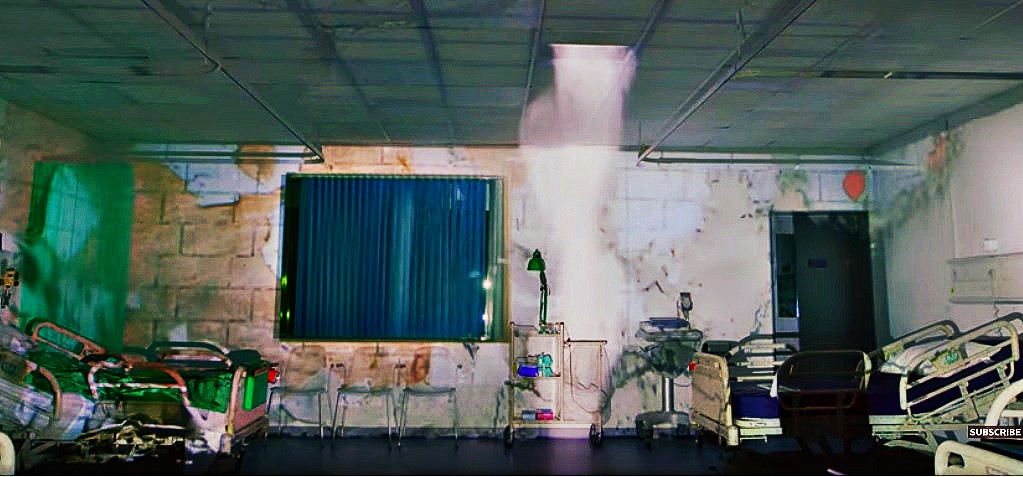
Editor’s Note: The opinions expressed here by Impakter.com contributors are their own, not those of Impakter.com. — Featured Photo: screenshot from Financial Times video about antimicrobial resistance, an issue displaced by Covid from public attention.