The first case of monkeypox in this current outbreak, linked to travel in Nigeria, was recorded in the UK on May 7. Infections have since been found across Europe, Australia, the United States, and the Middle East.
As of May 25, Our World in Data has confirmed 346 cases in 22 countries outside of Africa.
The monkeypox virus is endemic in Western and Central African countries, but more recent cases in countries where monkeypox is a rare occurrence have, to the surprise of the scientific community, not been traced back to Africa. Scientists who have monitored numerous outbreaks in Africa are therefore confused by this unusual spread of monkeypox and concerned about the new cases not being linked to Africa.
CDC says some of the monkeypox cases in the U.S. had no travel history, indicating community spread
— BNO News Live (@BNODesk) May 26, 2022
“I’m stunned by this. Every day I wake up and there are more countries infected. This is not the kind of spread we’ve seen in West Africa, so there may be something new happening in the West,”
– World Health Organisation (WHO) virologist Oyewale Tomori.
What is Monkeypox? Origins, Transmission, Symptoms, Treatment
Monkeypox is a zoonotic virus, which means it is spread to humans from infected animals’ blood, fluids, or lesions. The virus derives its name from its first identification in laboratory monkeys in 1958 (before it was first identified in a human in 1970), but it is in fact rarely spread through monkeys and instead mostly through contact with rodents such as squirrels, rats and mice in rural parts of the Democratic Republic of Congo.
There have also been outbreaks in Gabon, Côte d’Ivoire, Liberia, Nigeria, Benin, Cameroon, Sierra Leone and South Sudan. The first outbreak outside of Africa was recorded in 2003 in the US, where infected pet prairie dogs imported from Ghana had been housed with infected rodents. There have since been only a few reports of monkeypox cases that were linked to travel.
Humans can transmit monkeypox through close contact with an infected person’s skin lesions, or objects they have recently contaminated. Current research is examining whether the virus can also be spread via airborne particles.
Monkeypox is not known to be a sexually transmitted virus, but WHO virologist Oyewale Tomori also said that viruses that had not initially been known to be sexually transmitted via sex, like Ebola, were later proven to be sexually transmittable after research on the patterns of spread, which could end up being true of the monkeypox virus.
At present, it seems that the majority of new cases have spread through close contact related to sex, with a disproportionate concentration amongst gay or bisexual men.
On @BBCWorld @hans_kluge explains that #monkeypox is spread through close personal contact with infected people – including, but not limited to sexual contact. To stay safe, practice safe sex, good hygiene if caring for someone with monkeypox & isolate if you have symptoms pic.twitter.com/sTT5oSA4BM
— WHO/Europe (@WHO_Europe) May 22, 2022
And according to CDC Director Rochelle Walensky, who urged for an approach “guided by science, not by stigma,” a disproportionate section of the US monkeypox cases “are within gay, bisexual men and other men who have sex with men,”
It is still unknown why this is the case, but there is an ongoing investigation into cases from events in Europe, such as a recent Gay Pride event in the Canary Islands, which was attended by 80,000 people. The transmission statistics could also partially be explained as a result of more traveling taking place since COVID restrictions were relaxed.
Related Articles: What Shakespeare Can Teach Us About Pandemics | Global Warming Puts Us on the Verge of Virus Spillover
Regardless, anyone is at equal risk of infection, and the World Health Organisation wrote on their website on Wednesday that “Anyone who has close contact with someone who is infectious is at risk” of contracting the virus, with children, pregnant women and immunocompromised people at particular risk.
The WHO listed symptoms of Monkeypox to be fever, headaches, chills, muscle aches, exhaustion, blistering rashes and lesions on the face or genitals. The current strain is thought to be related to a strain found in West Africa, which has a death rate of around 1%.
Diagnosis is usually based on clinical symptoms, but can also be detected via a PCR test of the lesion fluids. The monkeypox virus is part of a family of “‘DNA” viruses. Unlike RNA viruses, such as SARS-CoV-2 that causes COVID-19, DNA viruses mutate at a much lower rate.
The latest updates and potential preventative treatment
For most people, Monkeypox symptoms resolve on their own in a few weeks without any treatment but rest, fluids and good nutrition. Swedish infectious diseases professor Rolf Gustafson told broadcaster SVT that it was “very difficult” to imagine the situation worsening.
“I do not think there will be an epidemic in any way. There is nothing to suggest that at present,” he said.
There is currently no specific vaccine available for monkeypox, however, the smallpox vaccine has been shown to offer 85% protection against monkeypox as they are part of the same viral family. Older generations vaccinated against smallpox will therefore have some protection against monkeypox, but monkeypox could spread more easily in younger, unvaccinated generations.
Christian Happi, director of the African Centre of Excellence for Genomics of Infectious Diseases, pointed out that the suspension of smallpox vaccinations after 1980 “could be helping monkeypox spread in nations with no kind of immunity to monkeypox”.
Research is subsequently now being undertaken on the need for vaccination to control monkeypox, which could be particularly necessary for at-risk workers such as laboratory personnel and rapid response teams. Germany, for instance, has already ordered 40,000 doses of the Imvanex smallpox vaccine to be prepared if the outbreak worsens.
Some antiviral drugs are also being developed such as the tecovirimat agent for smallpox, which the European Medical Association (EMA) recommended for use on monkeypox.
What will happen next?
While it is possible that the outbreak’s first patient caught the disease in Africa, the exceptionality of the rise of these cases worldwide must not be underplayed.
Last Friday, the WHO’s European chief Hans Kluge revealed his concerns that monkeypox could spread over the summer months, saying:
“With mass gatherings, festivals and parties, I am concerned that transmission could accelerate, as the cases currently being detected are among those engaging in sexual activity, and the symptoms are unfamiliar to many.”
Dr Hans Kluge said he was “concerned transmission could accelerate" as a result of mass gatherings this summer https://t.co/B2bhdfwMQw
— Buzz.ie (@buzzdotie) May 21, 2022
This is concerning in a scientific sense, and Dr Ibrahima Soce Fall said that there were “still so many unknowns in terms of the dynamics of transmission, the clinical features (and) the epidemiology.”
According to Shabir Mahdi, a vaccinology professor at the University of Witwatersrand, Johannesburg, a detailed investigation of the outbreak in Europe is now critical.
“We need to really understand how this first started and why the virus is now gaining traction. In Africa, there have been very controlled and infrequent outbreaks of monkeypox. If that’s now changing, we really need to understand why,” Mahdi said.
On a more optimistic note, WHO’s Tomori hopes that the appearance of monkeypox cases across Europe and other countries will further scientific understanding of the disease, which is needed. Although it is likely that more cases will be identified over the coming weeks and months, this outbreak of monkeypox is unlikely to cause another pandemic like SARS-CoV-2.
The WHO is holding daily meetings on the infection and is monitoring the situation globally. Scientists have known about monkeypox for many years and understand its structure and replication process. The virus spreads more slowly than the COVID virus and its symptoms are easier to recognise, so infections can be more easily identified. The smallpox vaccine and other treatments can become available if needed.
However, it is necessary that more research and subsequent prevention strategies are put in place to get virus numbers under control and break the chain of transmission.
Monkeypox can be contained if we act now, WHO says https://t.co/eRhZUzeuoO pic.twitter.com/z0ZabbPqAr
— Reuters (@Reuters) May 27, 2022
More widely, the monkeypox outbreak off the back of COVID-19 reflects the importance of a global preparedness against zoonotic spillover events and the need for support for the One Health concept. While we continue to encroach on animal environments and cause climate change, zoonotic infections will likely increase in frequency.
With that in mind, we urgently need to get better at strategically preventing viruses and developing rapid deployment vaccines. It is also important that nobody who is infected is stigmatised, for their well-being and to help the continued monitoring of the outbreak.
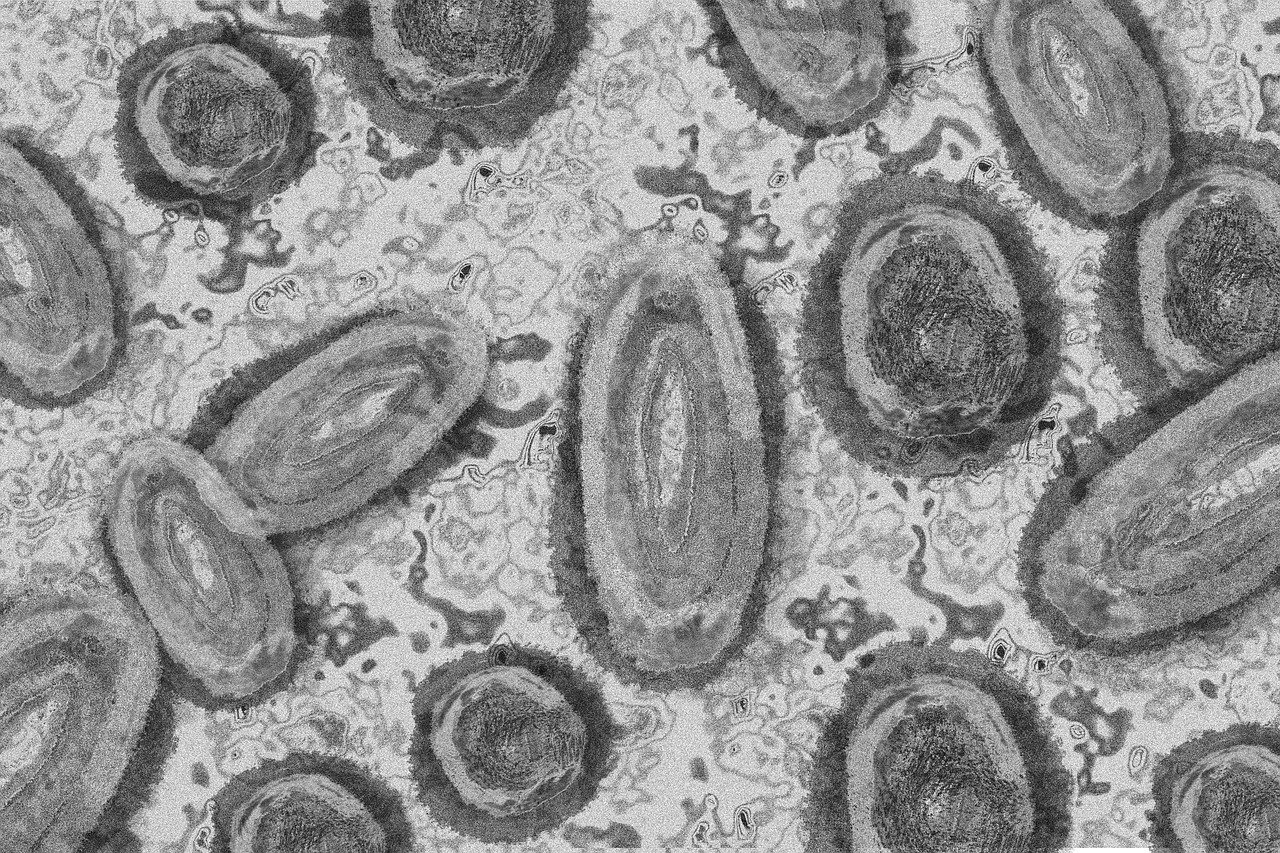
Editor’s Note: The opinions expressed here by Impakter.com columnists are their own, not those of Impakter.com — In the Featured Photo: Monkeypox virus. Featured Photo Credit: Pixabay.