In a tale of three dates — ICE Operation Midway Blitz on September 30, No Kings Day protests on October 18, and Election Day on November 4 — we can see how Americans have developed effective tactics and strategies for preserving democracy.
The Midway Blitz
In its eleventh month, Trump’s second term cascades with acts of cruelty carried out by his ICE storm troopers, FBI and Border Police upon anyone they can find who is brown and speaks with a Spanish accent, particularly targeting Blue (democratic voting) cities with predominantly Black populations.
Take Chicago, a city against which Trump has a particular animus going back to its rejection of the huge letters spelling out his name on his tower building, and where his lawless and punitive actions have been resisted to the teeth in city-wide protests backed by both the Mayor, Brandon Johnson, and by JB Pritzger, the Governor of Illinois.
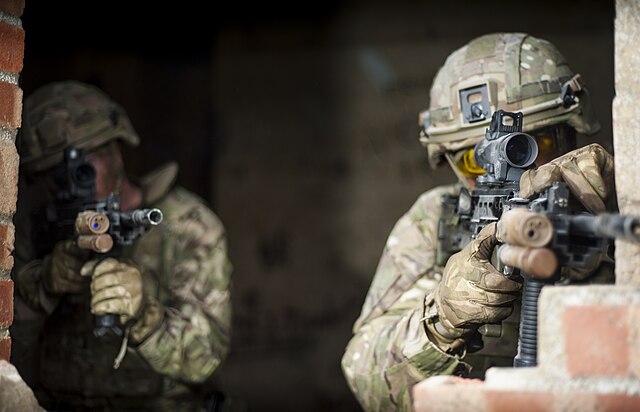
Operation Midway Blitz began on September 30 when, purportedly looking for “Venezuelan gang members,” 300 masked ICE agents and Border Police repelled from a helicopter onto the roof of an apartment building in an Hispanic neighborhood, broke into and trashed apartments, set a biting dog on one resident and drove men, women into the street, separating their children and setting off “flash bangs” (explosive grenades).
Although they detained 37 people without a warrant, some of them U.S. citizens, Pro Publica reported that “Federal prosecutors have not filed criminal charges against anyone who was arrested. Nor have they revealed any evidence showing that two immigrants arrested in the building belonged to the Tren de Aragua gang, or even provided their names.. . this assault was a purely performative drama meant to intimidate all immigrants.”

As Trump’s cruel actions escalated, we remembered the “good Germans” who remained silent during Hitler’s atrocities and wondered if we would do any better. Instead, like the Nazi bombing of London and other UK cities during World War Two, the attack that was meant to terrify the common people into cowering obedience stiffened everyone’s backbone instead, while producing passionate resistance. So it was in Chicago when crowds of people rushed to defend their neighbors against traumatizing brutality and brazen lawlessness.
Take Chicago’s Orange Whistle Project. Residents blow whistles to warn each other when ICE agents are spotted nearby so that undocumented neighbors have time to seek safety. Bystanders get out their cell phones to document episodes of brutality and to notify legal support networks. Here are some instructions that neighbors share “For Documenting Federal Agents”:
- Stay at least an arm’s length away from an officer as you film. If they tell you to back up, film yourself doing so.
- Film horizontally to make sure you’re capturing as much happening as possible.
- Narrate what you are seeing as detailed as possible.
As Chicago’s Midway Blitz continued for weeks, neighbors formed themselves into volunteer circles to generate whistles on their computers and to contact advocacy groups for distribution, sometimes in plastic bags along with a simple code to let people know where ICE cars are approaching and what residences they are targeting.
The Chicago Tribune hailed the Orange Whistle Project as “part of a broader movement of ‘small acts with huge consequences,’ emphasizing community resilience in the face of militarized enforcement.” Contrarian editor Jen Rubin characterizes the resistors as “just ordinary people, neighbors, parents and workers who chose to act when their communities were threatened.”
Collective Effervescence
While our protests are often angry and our protest signs vituperative, a lot of what we have been getting up to is just plain fun. At our “No Kings” rally on October 18, when I stood with a crowd of about 1,000 people holding funny and serious and heartfelt and insistent protest signs while we waved our American flags and cheered every time a car honked, a bubbly feeling prickled pleasantly from my toes to my scalp, a sensation which Christian Kronsted identifies as “collective effervescence, the joy of doing something in a a crowd.”
Trump had nastily termed us “terrorists, rioters, violent people, Marxists, and members of Antifa,” which made me giggle when a lady came along with an “I am Aunt Tifa” sign; he called us “bad people” and sent an AI generated video over social media depicting himself as a (crowned) pilot spewing excrement (his?) down on a protest below.
But there we were, all seven million of us going our brilliantly non-violent way (not one of us, besides a couple of MAGA provocateurs, was arrested), exercising our First Amendment rights with a brio producing nation-wide collective effervescence.

The friend who went with me had felt down in the dumps over Trump’s seemingly unstoppable democratic demolition derby, but on that busy boulevard she perked right up, waving her flag and shouting her heartfelt appreciation to every motorist who honked in concurrence.
When I got home to watch television, my glee was buoyed by the squads of inflatable frogs bouncing on their toes in front of masked Ice Officers, not to mention little pods of inflatable unicorns, sharks, panda bears, and chickens. I noticed that when a row of frogs broke into a line dance, one of the ICE Snipers on the roof moved his legs (ever so slightly) in rhythm.
These frog squads and their inflatable cohort constitute what Gary Shteyngart calls a “humorous form of protest, known as tactical frivolity.” Making fun of the deadly-serious masked and militarized Brown Shirts whom Trump had loosed upon our cities deflates their menace: “frivolity and absurdity,” notes Shteygart, “are kryptonite to authoritarians who project the stern-father archetype to their followers.”
The next day my daughter, who is every bit as liberal and progressive as I am, dropped by and we had a talk about what a blow to our hearts the demolition of the East Wing of the White House felt like.
“But what good do all those protests do,” she worried, “he just keeps on destroying everything!”
First, consider the scope of the protests organized by progressive groups like Indivisible, 50501, and MoveOn into 2,600 marches in all 50 states, with demonstrations abroad as well. We can take heart from George Lakey’s Global Nonviolence Action Database, which shows how peaceable protestors in dictatorship after dictatorship — Egypt, South Korea, East Germany, Chile, etc. — have used nonviolence to overthrow tyrants.
There is a formula called the 3.5% rule that when 3.5% of the population of a country protest nonviolently against an authoritarian government, that government is likely to fall. The rule was formulated by Erica Chenoweth in 2013 from an idea of political scientist Mark Lichbach in his 1995 book “The Rebel’s Dilemma: Economics, Cognition, and Society.”
“Can Nonviolent Struggle Defeat a Dictator,” asks George Lakey, providing a database that “emphatically says yes.” He is referring to the Global Nonviolent Action Database out of Swarthmore college, which is based on 1,400 cases from over 100 countries. Other scholars argue for a higher 12% threshold. Where we stand right now is that the 7 million people who marched on October 18, 2025, constitute 2.33% of the U.S. population of 300 million. Considering that 8% reported that they attended a protest, we may be doing even better.
Related Articles
Here is a list of articles selected by our Editorial Board that have gained significant interest from the public:
Electoral Outcomes
Chicago is but one example of U.S. cities and towns where individuals, community groups, advocacy and faith organizations have figured out effective, creative and (yes!) zany ways to resist the tyranny rising up all around us. The vast numbers of protesters who came out on October 18, and the plethora of community resistors against Trump’s military invasions of blue cities, should have prepared us for what happened on November 4; despite all of the doom and gloom he had fomented, we nonetheless found ourselves delightfully surprised by the scope of our victory.
Basically, we won everything: governorships in Virginia and New Jersey, California’s Proposition 50 to counter Texas’s redistricting to Republican advantage — all by much larger margins than we had expected, and a plethora of lesser offices from coast to coast like school and library boards, county commissions, and utility boards, many in districts that had voted for Trump in the last election but now swung heavily Democratic. A lot of it had to do with Trump’s dismally unaffordable economy as well as the widespread reaction against his hatred for democracy and deliberate social cruelties.
The Rule of Law
As Operation Midway Blitz continued through October, more than 600 detainees were held in the Broadview Detention Center near Chicago, a facility not intended for overnight use, where people were crowded up against each other in cells with overflowing toilets and no beds.
Protestors massed outside every day to speak out against illegal arrests and against conditions which Judge Robert We. Getteman described as “disturbing, disgusting and unconstitutional,” citing lack of attorney access and excessively coercive treatment. U.S. District Judge Jeffrey Cummings ordered the release of hundreds of detainees and demanded accountability reports from federal agencies.
I do not have any doubt that the huge, nation-wide protests that have drawn thousands of people into the streets with their creative signs and “tactically frivolous” costumes, along with courts’ adherence to the rule of law, have been the basis for subsequent electoral victory and our hope that, perhaps sooner than later, the dark night of our nation’s plunge into authoritarianism can be replaced by the rebirth of democracy.
As presidential (JFK, LBJ) speech writer Dick Goodwin remarked about the role of non-violent marches in bringing about Civil Rights legislation:
“In democracy, life on the streets is the horse and the government the cart.”
Editor’s Note: The opinions expressed here by Impakter.com columnists are their own, not those of Impakter.com — In the Cover Photo: Protester holding a “No Kings” sign during a 50501 movement protest in the Capitol Square, Columbus, Ohio, February 17, 2025. Cover Photo Credit: Wikimedia Commons.