Today’s ESG Updates
- States Sue Trump Over Endangered Species Rollback: Twenty states and D.C. challenge new federal rules that narrow habitat protections, arguing the changes favor drilling and development over decades of wildlife conservation gains.
- Thailand Bets $1.52B on Rooftop Solar for a Million Homes: Bangkok’s new subsidy and financing scheme aims to turn households into small-scale power producers by using state-backed loans repaid through electricity sales instead of upfront costs.
- Clean Hydrogen Investment Crosses $130 Billion Worldwide: A new Hydrogen Council report shows most committed projects are already under construction, even as costs and weak demand continue to stall green hydrogen’s hardest-to-decarbonise applications.
- Google Ties $15.1B Finland Expansion to Nuclear Power: The tech giant’s largest European investment pairs new AI data centres with a 22-year deal for nuclear electricity, its first contract outside the U.S.
States sue Trump administration over endangered species protection
Led by Washington, California, Maryland, and Massachusetts, twenty states and Washington, D.C., have filed two federal lawsuits against the Trump administration over new rules that scale back protections under the Endangered Species Act. One suit targets a narrowed definition of “harm” that allows drilling, mining, and similar activities to proceed in critical habitats as long as they aren’t specifically aimed at harming a protected species. The second lawsuit challenges two rules: one that eliminates automatic protections for newly threatened species unless wildlife officials create species-specific rules. The other requires regulators to weigh business costs before designating critical habitat.
The states argue the changes violate federal environmental law and undercut a statute credited with pulling species like the bald eagle and California condor back from extinction. The Interior Department has defended the rules as correcting decades of regulatory overreach.
Klimado – Navigating climate complexity just got easier. Klimado offers a user-friendly platform for tracking local and global environmental shifts, making it an essential tool for climate-aware individuals and organizations.
Thailand launches $1.52 billion rooftop solar programme for one million households
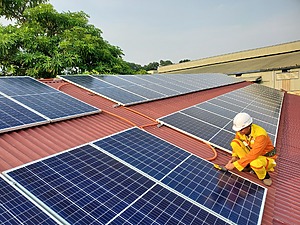
Thailand will roll out a $1.52 billion rooftop solar programme in mid-October. The initiative aims to turn households into small-scale electricity producers while shielding them from volatile energy costs. Finance Minister Ekniti Nitithanprapas said the scheme initially targets one million households, with the Interior Ministry weighing an expansion to 1.5 million.
Eligible households can receive subsidies of roughly $1,520 per installation, plus tax exemptions on certain imported solar components. State-owned lenders, including the Government Savings Bank and Bank for Agriculture and Agricultural Cooperatives, will finance upfront costs, with repayments deducted from electricity sales revenue. This will potentially eliminate the need for households to invest directly.
Officials estimate a five-kilowatt system could earn low-usage households about $30 monthly from surplus power. Supporting grid upgrades, including smart meters and battery storage, will be critical to accommodating the rise in distributed generation.
Related Articles
Here is a list of articles selected by our Editorial Board that have gained significant interest from the public:
Global clean hydrogen investment surpasses $130 billion
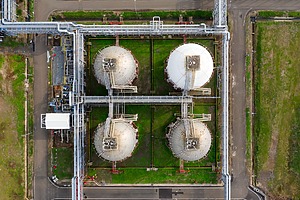
Global investment in clean hydrogen projects has surpassed $130 billion, as governments increasingly treat the fuel as a lever for energy security and industrial growth alongside emissions reduction. The Hydrogen Council’s Global Hydrogen Compass 2026 report, released at the Hydrogen Energy Ministerial Meeting in Tokyo, reported this figure.
The investment spans more than 570 committed projects with a combined capacity of roughly 6.9 million metric tons of clean hydrogen annually, with about 90% already under construction or operational. China leads in renewable hydrogen capacity, Europe ranks second in investment, and the U.S. leads in low-carbon hydrogen deployment.
Existing policies could support 6 million tons of annual demand by 2030, potentially rising to 11 million tons with fuller implementation. Still, high production costs and weak demand have forced developers to scale back or cancel green hydrogen projects, particularly in steelmaking and long-haul transport.

Google signs Nordic nuclear deal to power $15.1 billion Finland AI expansion

Google will invest at least $15.1 billion in Finland over 2027 and 2028, its largest European investment, to fund three new data centres in northern Finland. This move includes grid upgrades, clean energy capacity, and battery projects supporting Gemini, Search, Maps, and YouTube.
The deal includes a 22-year power purchase agreement with utility Fortum, securing up to 50% of output from the Loviisa nuclear plant – Google’s first nuclear energy contract outside the U.S. Fortum said the agreement extends the plant’s operating life through 2050. Following the announcement, its shares jumped 15.5% to their highest level in over four years.
Google expects the project to add roughly $4.2 billion to Finland’s GDP during construction and support about 7,000 annual jobs once operational. Prime Minister Petteri Orpo backed the investment while addressing concerns over electricity supply and pricing. The deal reflects growing competition among tech firms for low-carbon power to fuel AI expansion.
___________________________________________________________________________________
Editor’s Note: The opinions expressed here by the authors are their own, not those of impakter.com — Cover Photo Credit: Ron Bird