Impakter
  • Environment
    • Biodiversity
    • Climate Change
    • Circular Economy
    • Energy
  • FINANCE
    • ESG News
    • Sustainable Finance
    • Business
  • TECH
    • Start-up
    • AI & Machine Learning
    • Green Tech
  • Industry News
    • Entertainment
    • Food and Agriculture
    • Health
    • Politics & Foreign Affairs
    • Philanthropy
    • Science
    • Sport
  • Editorial Series
    • SDGs Series
    • Shape Your Future
    • Sustainable Cities
      • Copenhagen
      • San Francisco
      • Seattle
      • Sydney
  • About us
    • Our Story
    • Team
    • Partners
    • Write for Impakter
    • Contact Us
    • Privacy Policy
No Result
View All Result
  • Environment
    • Biodiversity
    • Climate Change
    • Circular Economy
    • Energy
  • FINANCE
    • ESG News
    • Sustainable Finance
    • Business
  • TECH
    • Start-up
    • AI & Machine Learning
    • Green Tech
  • Industry News
    • Entertainment
    • Food and Agriculture
    • Health
    • Politics & Foreign Affairs
    • Philanthropy
    • Science
    • Sport
  • Editorial Series
    • SDGs Series
    • Shape Your Future
    • Sustainable Cities
      • Copenhagen
      • San Francisco
      • Seattle
      • Sydney
  • About us
    • Our Story
    • Team
    • Partners
    • Write for Impakter
    • Contact Us
    • Privacy Policy
No Result
View All Result
Impakter
No Result
View All Result

From Where I Stand: Maria Judite da Silva Ballerio

byUN Women
September 5, 2017
in Equal Rights, Philanthropy, SDG Series, United Nations
EDITOR’S NOTE:  THIS PIECE IS AUTHORED BY UN WOMEN AS PART OF THE SERIES “FROM WHERE I STAND”, WHICH CAPTURES PEOPLES STORIES AND THEIR DAILY SUSTAINABLE DEVELOPMENT CHALLENGES FROM AROUND THE WORLD. SEE THE FULL SERIES HERE. 

I have a niece who has had the Zika virus. She’s indigenous. Women in Brazil are in a state of panic. Indigenous communities are very distant and isolated, sometimes without any means of communication. Indigenous women have not been told how the Zika virus is transmitted. They do not know how to handle outbreaks. How can an indigenous woman, who does not live in a capitalist culture, get products to prevent mosquito bites? How can these women, who do not have television or access to mass communication, learn about this virus and its transmission or prevention?

They are being hit by this virus with a total lack of knowledge.

We work to raise awareness among indigenous women, firstly about this virus, how it is transmitted and how to avoid infection; and secondly, for women who’ve already been infected, we tell them it’s not a curse but an illness like any other. For affected women, we teach them how to work with indigenous health organizations.

I do this work with COAPIMA, an organization that coordinates the indigenous organizations of the state of Maranhão. I also work with a network of indigenous youth that is using information technologies to spread information, by email, Internet and text messages. We also partner with a broader network of indigenous women across the Americas.

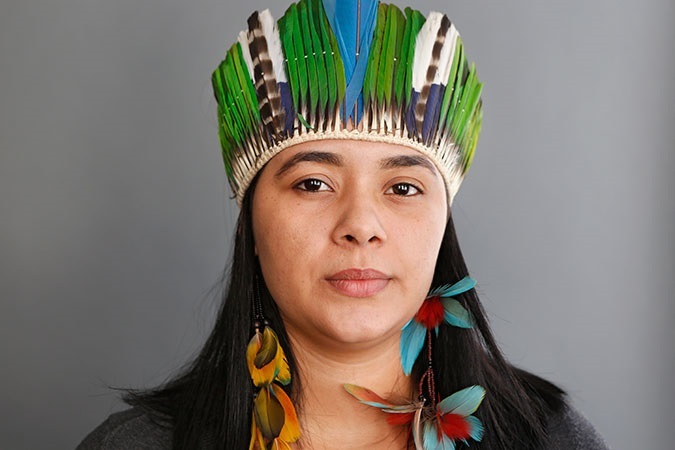
Maria Judite da Silva Ballerio, 21, is an indigenous woman from the Guajajajara community, Maranhão, Brazil. She is a political advisor for the Coordination of Indigenous Organizations of Maranhão (COAPIMA), raising awareness at the local level among indigenous women on health and women’s rights. UN Women is mobilizing a variety of networks and grass-roots organizations to provide information on zika and support, to prevent and minimize infection in their communities. UN Women is also providing information through mass media, including radio programmes in the Amazon region, as well as offline products, such as 50,000 flyers being shared with various networks, including Articulação de Povos Indigenas do Brasil (APIB), a national-level indigenous rights organization affiliated with COAPIMA. Sustainable Development Goal 3 aims to ensure healthy lives for all, including by ending preventable deaths of newborns and children under 5 years of age and ending epidemics including tropical and other communicable diseases.

Impakter Editors note: Over the next two months, every Tuesday, Impakter will be republishing selected articles from the UN Women “From Where I Stand” Editorial Series.  Featured Photo Credit: Ryan Brown/UN Women
Share: Facebook X LinkedIn
Tags: Climate ChangecultureEducationEqual RightsFrom Where I StandGender equalityhealthIndigenous RightsMaria Judite da Silva BallerionatureSDGssustainable development goalsUN WomenUnited NationswomenZika Virus
Previous Post

A Vision of Sustainable Development

Next Post

Exploring the Futility of Care for Charlie Gard

Related Posts

United Nations General Assembly Hall in the UN Headquarters
Politics & Foreign Affairs

Peace First: Why the Next UN Secretary-General Must Recenter the Organization on Its Founding Purpose

April 30, 2026
Closing the Gender Gap in Agrifood Systems Can Help Reduce Food Insecurity and Boost Global GDP
Climate Change

Closing the Gender Gap in Agrifood Systems Can Help Reduce Food Insecurity and Boost Global GDP

March 20, 2026
UN Reform: Considering the Options and Alternatives
Politics & Foreign Affairs

UN Reform: Considering the Options and Alternatives

March 18, 2026
Next Post

Exploring the Futility of Care for Charlie Gard

Related News

ESG news regarding Germany’s decarbonization investment, stalled windfarm projects in the US, EC blocks Huawei solar, and the end of a Biden-era climate rule

Germany to Invest €5 Billion in Heavy Industry Decarbonization

May 6, 2026
ESG news regarding Norway’s fish farming and its growing nutrient pollution problem, EU planning expanded free emissions permits to ease industry costs, methane emissions staying near record highs despite available solutions, and Chile landfill leading global methane emissions from human-made sites.

Norway Salmon Farming Waste Matches Sewage of Millions

May 5, 2026

Impakter informs you through the ESG news site and empowers your business CSRD compliance and ESG compliance with its Klimado SaaS ESG assessment tool marketplace that can be found on: www.klimado.com

Registered Office Address

Klimado GmbH
Niddastrasse 63,

60329, Frankfurt am Main, Germany


IMPAKTER is a Klimado GmbH website

Impakter is a publication that is identified by the following International Standard Serial Number (ISSN) is the following 2515-9569 (Printed) and 2515-9577 (online – Website).


Office Hours - Monday to Friday

9.30am - 5.00pm CEST


Email

stories [at] impakter.com

By Audience

  • TECH
    • Start-up
    • AI & MACHINE LEARNING
    • Green Tech
  • ENVIRONMENT
    • Biodiversity
    • Energy
    • Circular Economy
    • Climate Change
  • INDUSTRY NEWS
    • Entertainment
    • Food and Agriculture
    • Health
    • Politics & Foreign Affairs
    • Philanthropy
    • Science
    • Sport
    • Editorial Series

ESG/Finance Daily

  • ESG News
  • Sustainable Finance
  • Business

About Us

  • Team
  • Partners
  • Write for Impakter
  • Contact Us
  • Privacy Policy

© 2026 IMPAKTER. All rights reserved.

No Result
View All Result
  • Environment
    • Biodiversity
    • Climate Change
    • Circular Economy
    • Energy
  • FINANCE
    • ESG News
    • Sustainable Finance
    • Business
  • TECH
    • Start-up
    • AI & Machine Learning
    • Green Tech
  • Industry News
    • Entertainment
    • Food and Agriculture
    • Health
    • Politics & Foreign Affairs
    • Philanthropy
    • Science
    • Sport
  • Editorial Series
    • SDGs Series
    • Shape Your Future
    • Sustainable Cities
      • Copenhagen
      • San Francisco
      • Seattle
      • Sydney
  • About us
    • Our Story
    • Team
    • Partners
    • Write for Impakter
    • Contact Us
    • Privacy Policy

© 2026 IMPAKTER. All rights reserved.